Video

Filter by

Filters
Topic
Reset
Discipline(s)
Reset
Organisation(s)
Reset
Licence
Reset
101 - 108 of 108 results

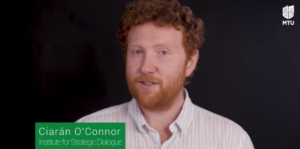
In this video Ciarán O’Connor for the Institute of Strategic Dialogue guides us through a case study of how false information was used to undermine confidence in the Irish local elections in June 2024.

In today’s digital age, information spreads fast—yet not all of it is true or trustworthy. Knowing the differences between misinformation, disinformation, and malinformation is key to thinking critically online.
In the video below Ciarán O’Connor from the Institute of Strategic Dialogue discusses the disinformation ecosystem in Ireland.

This is an interactive multimedia open educational resource (OER), created using H5P, on the topic of Open Education. It has been developed by the Department of Technology Enhanced Learning at Munster Technological University.

The purpose of which is to give an overview of OEPs, using interactive features of H5P

A video that discusses how Artificial Intelligence is impacting the way disinformation is created and spread to manipulate public opinion. It also outlines importance of Media Literacy education and regulatory measures, referencing Ireland’s Online Safety and Media Regulation Act and the EU’s Digital Services Act.

AI and Regulation

CC BY-NC

A video that explains how social media recommender algorithms work. It will help learners be more aware of how their social media content is delivered. The content is relevant to third level students, adult education and older secondary school students.

The video examines the impact of digital technology on the wellbeing of children and young people. It highlights ethics and legislation relating to social media platforms and Gen AI. It will be of interest to educators in third level, adult education and older school children. Content warning: it includes references to upsetting examples.

This video provides a step-by-step guide on how to submit your SATLE-funded Open Educational Resources (OER) to Ireland’s National Resource Hub. It outlines the submission process, key requirements, and best practices to ensure your resources are accessible, discoverable, and aligned with national open education goals. Whether you're new to the Hub

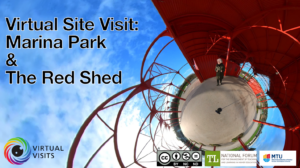
In this 360 immersive video, Dr Mary Moloney – head of the Department of Civil, Structural and Environmental Engineering at Munster Technological University – gives a guided tour of the "Red Shed" at Cork City's Marina Park. Dr Moloney highlights key structural features.

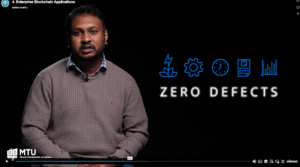
This video explores practical enterprise applications of blockchain technology, highlighting real-world use cases in supply chain, finance, and data security.

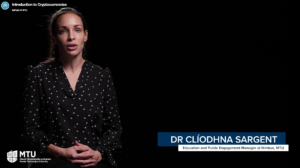
This video provides a clear and accessible introduction to cryptocurrencies, explaining what they are, how they function, and their role in today’s digital economy. Designed for beginners, it offers a foundational overview for learners exploring blockchain technology and digital finance.

This resource captures insights through zine making from workshop participants at the Education after the algorithm symposium hosted at DCU on 21 February 2025, facilitated by Kate Molloy and Clare Thomson.

Symposium: https://hackthiscourse.com/symposium/?=1#/

Slides: https://docs.google.com/presentation/d/1TpNdJxnLij-bi8bInJfxJwAegR_JjKVa/edit?

This video serves as a guide for undergraduate engineering students, explaining soil mechanics fundamentals and demonstrating the liquid limit test. The tutorial emphasises hands-on procedures, equipment usage, and data interpretation, ensuring clarity for academic and practical applications in geotechnical engineering.

This series of videos presents an abstract from the Croí process where individuals are guided to define their personal (or core) and professional values, and to identify actions they can take that will help them to develop a career that better aligns their personal and professional values and lives.

Student interns explaining how to use Artificial Intelligence in a way that upholds Academic Integrity.
This suite of short videos was create by our student interns in 2023. The videos are a useful resources for students and staff.
The topics covered include Academic Integrity resources at DkIT, Academic Integrity and Group Work, and Academic Integrity and Artificial Intelligence.

Student interns explaining how the importance of academic integrity in group work.
This suite of short videos was created by our student interns in 2023. The videos are a useful resource for students and staff.

This suite of short videos was created by our student interns in 2023. The videos are a useful resource for students and staff. The topics covered include Academic Integrity resources at DkIT, Academic Integrity and Group Work, and Academic Integrity and Artificial Intelligence.

The 10-dot Matrix is a quick and easy way to assess how well employability is embedded in classroom activities or module assessments. The video explains how to use 10 key criteria (4 graduate attribute criteria and 6 employability criteria), to quantitatively or qualitatively measure employability in your module or programme.

This seminar presented an overview of current policy, research and practice relating to student wellbeing in higher education and how the curriculum can be leveraged to enhance wellbeing. It showcased a range of innovative curricular wellbeing initiatives in UCC and MTU.

A brief showcase of existing MTU Crawford initiatives that nurture wellness within teaching and learning, followed by an online talk and Q&A, delivered by Rhonda Schaller (Pratt Institute, Brooklyn). Rhonda is a Fulbright Specialist in contemplative and wellbeing pedagogy.

The aim of TEACH CoLab is to increase staff competency to engage in collaborative online learning across disciplines and beyond institutional and national boundaries to address societal challenges. The time has never been more opportune to examine the place of health in the lives of humanity and examine it from multiple perspectives, enabled by online technologies. Perhaps for the first time, health and people are at the heart of politics and at the centre of global debate in our COVID19 world and the landscape has changed forever, particularly in relation to the power of online learning. TEACH CoLab builds the capacity of staff in digital pedagogies to examine themes related to health, community, determinants of health, and human rights. It enables sharing within the School of Health Sciences, across the Institute and with community and academic partners in Ireland and the US.

The TU Dublin IMPACT initiative transformed teaching and learning (T&L) through:

1. A repository that collates new and existing quality open access educational resources (OER) was established, supported by a bespoke peer review model that encourages an evidence-based approach to T&L OER creation.
2, A teaching team culture within a University-wide engaged learning community was launched, recognising and encouraging best practice in programme design to enhance the student experience. Staff who teach were supported through continuous professional development (CPD) through an associated CDPD framework.
3. A rigorous ‘As Is’ review captured the breadth of University T&L projects (past, present and pipeline projects), explored areas of alignment to, and identified gaps within, the TU Dublin T&L strategy and the student experience.
4. A model to drive sustainable awareness of, and interest and enthusiasm in, T&L was established and included a communication strategy that showcases learning enhancement project findings across TU Dublin.
5. An operating model that supports the sustainable integration of ongoing T&L project outcomes into T&L policy, process and practice, was developed through consultation and collaboration across the initiative.
Ultimately the initiative galvanised our innovative T&L practice for student success through widening our community, enhancing our capacity and changing culture.

Bookended by puberty and culturally defined adult roles, it is now established that adolescence extends from age 10 to age 24. Funded by the National Forum SATLE2019 scheme, and launched during VIT&L 2021 week, the new Canvas course Brainpower developed by Dr. Eithne Hunt (Occupational Science & Occupational Therapy / Graduate Attributes Programme, UCC); Dr. Samantha Dockray (Applied Psychology, UCC); and Professor Yvonne Nolan (Anatomy & Neuroscience, UCC) with input from students and higher education staff explores the ramifications of this research and gives participants an opportunity to reflect on what this information may mean for them within their work or role in higher education.

The inner workings of the adolescent brain and how these workings develop and are expressed in behaviours and engagement with the external world have been the focus of an explosion of research inquiry. Seated in the pre-frontal cortex of the brain, cognitive abilities such as decision-making, planning, self-control, social interaction and self-awareness are only fully developed by the mid-twenties. In addition, the brain regions governing risk-taking and reward are intensely active in adolescence, and so influence behaviour, which is also shaped by context and expectations of others.

To realise student success, higher education (HE) institutions must take into account that the majority of their students are still adolescents, without fully developed cognitive, social, emotional and self-regulatory capacities, living and learning in a socio-cultural environment that offers less external regulation than ever before. The knowledge that many students in higher education are in developmental transition spotlights opportunities to construct academic and campus contexts that supports this transition.

Brainpower is a free, online, self-paced course, focusing on harnessing the power and potential of adolescent brain and behaviour for enhanced learning, wellbeing and student success in higher education. Within each of the six modules (each approximately 60 minutes duration) there is a variety of instructive media, including recorded Panopto lectures, videos and short readings. Supplemental information in the form of suggested reading lists, podcasts, and videos is provided. The Brainpower modules are provided in a predefined sequence with content unlocked step by step. Modules will be unlocked once the previous module is completed. 

Chaired by National Forum board member, Professor Paul McSweeney (Vice-president for Learning and Teaching at UCC) who introduces the fifth and final stage of our Gasta Marathon led by Gasta Master, Dr Tom Farrelly (MTU). The session also features our second poster showcase.

The final Scholarship Hour is followed by the closing session of VIT&L Week where participants were invited to review the week’s activities through exploring the visual note-taking developed in real-time during each day of VIT&L Week to capture and share ideas discussed and explored by the National Forum and its partners from the Irish higher education sector.

Chaired by National Forum board member, Professor Jacqueline McCormack (Vice President of Online Development at IT Sligo), the fourth Scholarship Hour opens with National Forum Teaching and Learning Research Fellow, Professor Chris Lynch (UCC), sharing his initial research findings on findings from his research into Working with Higher Education Institutions and Professional and Regulatory Bodies to Enhance the Competencies of Future Professionals.

This presentation is followed by the fourth stage of our Gasta Marathon led by Gasta Master, Dr Tom Farrelly (MTU).

Chaired by National Forum board member, Dr Leo Casey (Director of Learning & Teaching and Education Programmes at NCI), the second Scholarship Hour opens with National Forum Teaching and Learning Research Fellow, Dr Brett Becker(UCD), sharing his initial findings from his research into Teaching and Learning for the Next Era of Digital Innovation.

This presentation is followed by the second stage of our Gasta Marathon led by Gasta Master, Dr Tom Farrelly (MTU).

Chaired by National Forum board member Lewis Purser (Director, Learning & Teaching and Academic Affairs, at the IUA), the first Scholarship Hour opens with National Forum Teaching and Learning Research Fellow, Associate Professor Geraldine O’Neill (UCD), sharing her initial findings from her research into Work-based Assessment: Exploring Barriers and Solutions to an Emerging Assessment Challenge.

This presentation is followed by the first stage of our Gasta Marathon led by Gasta Master, Dr Tom Farrelly (MTU).

Chair of the National Forum, Lynn Ramsey officially opens VIT&L Week. The keynote speaker is Prof Frank Coton (Senior Vice Principal and Deputy Vice Chancellor (Academic) at University of Glasgow and international advisor to the Board of the National Forum. Prof Coton shares his thoughts on Why Valuing Teaching and Learning is VITAL.

This session leads into VIT&L Week’s first Scholarship Hour.

VIT&L Week Opening Event

CC BY

The National Forum for the Enhancement of Teaching and Learning in Higher Education in partnership with the Higher Education Authority hosts an online launch of a new resource ‘Seven Cs for Embedding Student Success: A Toolkit for Higher Education Institutions’ designed to support the sustainable enhancement of student success across the sector. We are delighted to have Minister for Further and Higher Education, Research, Innovation and Science, Simon Harris TD formally launch the resource. 

Learning Analytics: What Works?

This webinar explores innovative approaches to harnessing data, and the growing recognition of its potential to support whole-of-institution strategies for student success.

Learning Analytics: Innovative Practices

Recording of the webinar ‘Learning Analytics: Innovative Practices’ from November 2019, including brief, thought-provoking presentations on maximising the power of data for students, staff who teach and institutions. Presentations from WIT, DCU and from the Erasmus+ OFLA (Onwards from Learning Analytics) project.

Embedding Data Use for Supporting Students

The National Forum’s ‘Embedding Data Use for Supporting Students’ webinar took place on Tuesday 28 April 2020. It is the third in an ongoing National Forum webinar series that looks at effective practices for using data to support students.

Webinar: Data Literacy

At this event, key INDEx findings in relation to data privacy and data protection, informed by close to 30,000 students and staff who teach from across Irish higher education, are summarised and then explored with respect to teaching and learning, institutional policies, digital and data literacies, and student-staff partnership.

Webinar: What is the Future for the Assessment of Learning through Final Examinations? Part 1

This webinar shared and debated a range of perspectives from students, staff, senior managers and other stakeholders on assessment of learning through a final examination. Few areas of teaching and learning were more under the spotlight in recent months than assessment. Across institutional communities, the experience of selecting and designing alternative assessments had a number of impacts on attitudes and intentions for the future. This webinar shared and debated a range of perspectives from students, staff, senior managers and other stakeholders on assessment of learning through a final examination.

Introduction to Open Educational Resources (OER) & Open Licensing

A National Forum webinar -Introduction to Open Educational Resources (OER) & Open Licensing- took place on 11 June 2019. The webinar provided an overview of open licensing using Creative Commons licenses and featured the published resource, the National Forum Open Licensing Toolkit (itself an OER).

EdTech Seminar Series - Professor Frank Rennie

In this interactive session, some lessons are shared, with participants encouraged to raise questions and comments to exchange practical options for utilising digital solutions to enhance Higher Education.

EdTech Seminar Series - Dr Donna Lanclos

The intention of the work is to help academic staff connect and learn from each other, as well as providing insights into what people are doing in digital teaching and learning spaces, and what support in terms of technology, space, and professional development will facilitate excellent and engaged teaching and learning experiences, for staff and students alike.

GASTA Goes Global 2

This year saw the return of the highly popular “Gasta Goes Global” ed-tech event. “Gasta” is a high-energy, high-participation event format created and popularised by Dr Tom Farrelly of Munster Technological University.

GASTA Goes Global 2

CC BY
Open Education Now

Open Education Now. The potential benefits of open education are often considered in three areas: expanding access to education, enhancing pedagogy, and advancing equity.

Open Education Now

CC BY-SA
Using OER and OEP for Teaching and Learning

The potential benefits of using open educational resources and practices (OER and OEP) in higher education include improving access, furthering equity and enhancing teaching, learning and assessment. The National Forum supports the use of OER and OEP in a range of ways (see www.teachingandlearning.ie/open).

Understanding OER

A visual explanation on the basics of Open Educational Resources (OER).

Understanding OER

CC BY
Learning Design in the Eye of the Storm

A webinar which addresses the following questions: During the session, we will also discuss the questions: What is learning design in 2021 and post-pandemic? How does learning design differ from instructional design? What is next for the learning designer? What is the future of the learning designer’s role? Where does the learner designer fit in the new digital learning ecology? What barriers do learning designers face? How can reflective learning design improve student experience?

Supporting online learners & group work

A webinar session focused on supporting Online Learners & Group Work. This is particularly of high value to learn how to work in an online environment, and how to consider group work.

EDTL Approach: Consider your Students

An EDTL webinar presenting the importance of student partnership underpinning the EDTL project, with students being the heart and core feeding through each of the themes of the work.