In this webinar, Dr. Dara Cassidy suggests helpful approaches for educators to consider when planning for effective online course design and delivery.
Benefit of this resource and how to make the best use of it
On-campus teaching is often divided into well-understood and distinct teaching and learning activity “types”. Module and programme descriptors in turn typically encompass things like lectures, tutorials and practical sessions, each of which becomes associated with a particular time and place and a well-rehearsed set of more granular activities. In the online environment, however, our students are not always clear on what to do and, unless intentionally planned for, many of the invisible supports they consciously and unconsciously rely on in the on-campus environment may no longer be readily available to them. For teaching staff too there may be uncertainty around how to perform their role and support different teaching and learning activities online. In this talk Dr Cassidy looks more closely on these kinds of issues and, based on research into issues and concepts of online presence and online community, suggests ways we can better plan for effective online course design and delivery.
?
This citation is automatically generated and may require adjustment. Always verify it against your style guide.
Cassidy, D. (2021). Edtech seminar series – dr dara cassidy. National Resource Hub (Ireland). Retrieved from: https://hub.teachingandlearning.ie/resource/edtech-seminar-series-dr-dara-cassidy/ License: Creative Commons Attribution (CC BY).
Adapting this resource? Share your version!
If you have modified or adopted this resource, share your version here. Tracking adaptations helps us measure impact and connects others with useful updates.
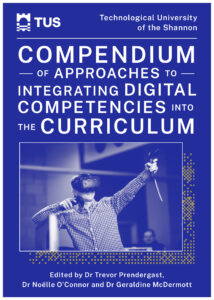
The Technological University of the Shannon (TUS) Compendium of Approaches to Integrating Digital Competencies into the Curriculum exemplifies the University’s commitment to embedding digital capability development across teaching, learning, and assessment.
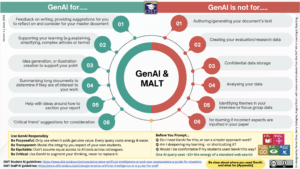
A 1-page guide, co-created by lecturers, tutors & students on DkIT's MA in Learning and Teaching, showing where GenAI can, and can't, support particular postgraduate research/skill development (*reflecting practice 2025-26). Includes student-informed prompts on responsible, sustainable use. An editable PowerPoint supports adaptation to own context.
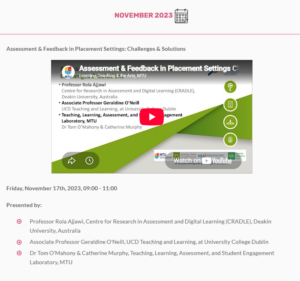
MTU researchers, together with national and international researchers, presented local, national, and global insights into the challenges and opportunities of assessment and feedback in work placement settings.
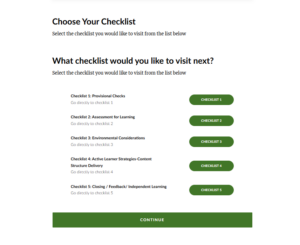
Teaching and Assessment for Learning Checklists aimed at early career & seasoned lecturers. The checklists provide guidance & reliable curated resources for lecturers who want to deliver an engaging and positive learning experience for their students. They act as a guide to check existing approaches, and help analyse how improvements can be made.