

A staff guide to choosing assessment approaches that support learning.
Filter by
Filter by

A staff guide to choosing assessment approaches that support learning.
A staff guide to designing feedback processes in which students interpret information, make evaluative judgements and act to improve their learning.
A toolkit for staff reviewing assessment design through principles of effective learning.
A student guide explaining how assessment contributes to learning and achievement.
A report outlining pedagogical recommendations for redesigning an online doctoral research-integrity module.
A student guide to reviewing and improving work through self-assessment and peer feedback.
A student handbook covering study routines in hybrid learning and preparation for digital and open-book assessment.
A staff guide to designing assessment tasks with greater authenticity.
A student guide to understanding and using feedback.
A student guide to authentic assessment and its relationship with learning beyond university.
A Y1Feedback case study describing automated, immediate feedback for novice programmers through Moodle’s Virtual Programming Lab, including implementation lessons and student responses.
A student guide to using rubrics to understand assessment expectations, review drafts and interpret feedback.
A teaching case study on using a business simulation to introduce sustainability decisions in a first-year marketing module.
A disciplinary report reviewing digital teaching, learning and assessment practices in Health Sciences.
A disciplinary report reviewing digital teaching, learning and assessment practices in Science, Technology, Education and Mathematics.
A report combining doctoral-student and postgraduate teaching-director feedback on Trinity’s research integrity module.
A project reflection on using digital technologies to improve first-year feedback, describing early case studies, evaluation findings and implementation challenges.
A disciplinary report reviewing digital teaching, learning and assessment practices in Arts, Humanities & Social Sciences.
A Y1Feedback case study on designing a coherent assessment and feedback approach across a humanities programme, connecting module tasks, programme outcomes and first-year student support.
A framework for planning professional development in digital teaching, learning and assessment.
A teaching guide supporting discussion of worldviews, beliefs, values, inequality and climate justice.
A teaching case study on a virtual reality pump laboratory in mechanical engineering.
A teaching guide helping educators introduce complex systems, formulate sustainability problems and explore risk responses.
A teaching guide for examining misinformation and disinformation in sustainability debates.
An account of MTU’s approach to academic integrity and critical AI literacy for first-year students, informed by student feedback and staff practice.
A staff guide to self and peer assessment, including how students can develop evaluative judgement by reviewing their own work and the work of others.
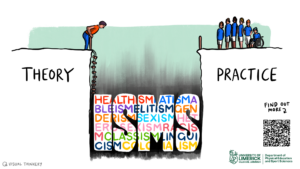
This open educational resource supports pre-service teachers in developing practical approaches to social justice in Physical Education. Through visual case studies, reflective prompts, and introductory concepts, it encourages critical reflection, collaborative discussion, and informed decision-making based on authentic school placement experiences
Team Tool is an open educational resource (OER) designed to support equitable,
e ective teamwork in higher education. It was developed in response to persistent
challenges in collaborative work, including uneven contribution, lack of
accountability and student dislike and anxiety around group projects.
Ireland’s Higher Education Authority (HEA) has been working with the sector to move from immediate responses to generative AI towards a more shared understanding of its implications for teaching and learning. This includes how students learn, how educators teach and how institutions approach assessment, integrity and inclusion. The HEA has brought together student representatives, staff, institutional leaders and wider stakeholders to consider how GenAI is influencing teaching, learning and assessment and what kinds of support, guidance and shared understanding are needed.
Speaker
Colin Lowry is Senior Manager for Teaching and Learning, Enhancement and Digital Innovation at Ireland’s Higher Education Authority. His work spans digital transformation, artificial intelligence, open education, professional development and education for sustainable development. He contributes to national teaching and learning initiatives, including Ireland’s National Resource Hub for Open Educational Resources, OpenCourses.ie and related professional development and recognition programmes. Colin has been closely involved in the Ireland’s national response on generative AI in higher education, supporting sectoral consultation, evidence-informed guidance and national dialogue on its implications for teaching, learning and assessment. His previous work includes research on technology acceptance and advisory roles in digital strategy, service design, change management and technology adoption.
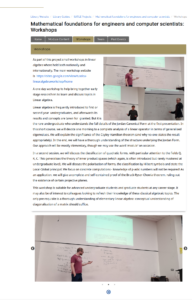
As part of this project small workshops in linear algebra where held both nationally and internationally. The main workshop website is https://sites.google.com/view/tusdcu-linearalgebraworkshop/home
A one day workshop to help bring together early stage researchers to learn and discuss topics in Linear algebra.
Project NOURISH is a campus-based nutrition and health intervention, originally designed for MTU staff. This was designed as part of a broader research study to investigate how to enable healthier dietary behaviours within university environments.
An open educational resource that supports academic, professional, and support staff to build more neuro-inclusive teaching, services, and policies in higher education. This resource was conceptualised & developed through the experiences of neurodivergent students in third-level education, with co-creation at the heart of every stage of the process
The resource comprises of a literature review and an executive summary, developed as part of the Maynooth University Leadership and EducAtion Framework (LEAF) initiative. It explores how education frameworks can enhance teaching, learning and curriculum design in higher education, supporting inclusive, sustainable and values-led academic practice.
This resource describes the rational for, design of and implementation details associated with an initiative designed to support early career academic staff adopt evidence-based, active and inclusive learning strategies to enhance learning for ALL students.
Reimagining Assessment & Feedback Together (RAFT) is MTU initiative developed to transforming assessment practices. This volume documents twenty-four situated, discipline-specific attempts to rethink assessment and feedback through student partnership and action research.
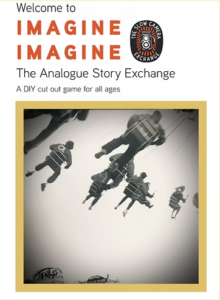
Imagine Imagine is a DIY cutout game for all ages made up of 192 photo cards. Using these cards, players are invited to create stories of their own. A downloadable pdf file of the game, instructions, and an image gallery can be found on the website.
A VR-enabled AI Embodied Virtual Agent (EVA) that allows students to ask topic-related questions and receive context-aware responses, providing real-time support for both theoretical and practical labs, offering personalised learning experiences.
Capture-the-Flag (CTF) challenges to help learners explore real-world cybersecurity/STEM scenarios through gamified learning. By applying key concepts in a fun, interactive environment, participants will deepen their understanding of essential cybersecurity knowledge while collaborating with peers. CTFs are crucial for developing real-world skills.
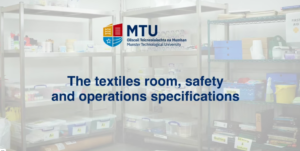
This is a series of 10 instructional videos covering Standard Operating Procedures (SOP’s) for the safe use of equipment specifically designed for textiles.
This video explores practical enterprise applications of blockchain technology, highlighting real-world use cases in supply chain, finance, and data security.
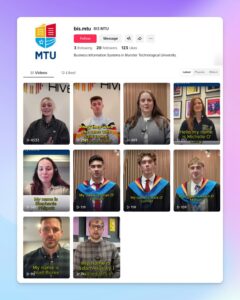
Short-form video interviews with MTU Business Information Systems graduates showcasing diverse career paths, designed to support professional identity development. These TikTok-style exemplars help students connect personal values with authentic career journeys, achieving 62,539+ views across social media platforms.

A self-paced resource introducing Articulate Rise 360, an authoring tool for creating interactive, mobile-responsive e-learning content. Covers content design principles, interaction types, accessibility features, and publishing workflows. Designed primarily for instructional designers, educators, and professionals new to Rise.

A foundational resource covering essential Microsoft 365 applications (Word, PowerPoint, Excel, Teams, OneDrive) used throughout academic and professional contexts. Covers basic functionality, collaboration features, and cloud storage management. The primary intended audience is university students.

A self-study resource addressing healthy relationships with digital technology, addressing digital addiction, privacy concerns, work-life balance, and digital identity management. Includes scenarios exploring real wellbeing challenges. Emphasises positive and negative impacts of digital participation. The primary audience is university students.

An interactive resource on effective digital communication across synchronous and asynchronous platforms, netiquette principles, formal vs. informal contexts, and platform-specific communication norms. The primary intended audience is university students.
A self-paced resource teaching video planning (pre-production), recording (production), editing (post-production), and ethical considerations for academic video use. Covers accessibility in video (captions, descriptions), equipment options, and practical workflows suited to diverse contexts. The primary intended audience is students.
A 45-minute comprehensive foundational lesson on digital accessibility principles, inclusive content creation, and available assistive technologies at university level. Collaboration with Educational Assistive Technology Centre, UL, launched for Global Accessibility Awareness Day. The primary intended audience is students.

A foundational, interactive guide to spreadsheet essentials covering data entry, formatting, basic formulas, functions, and chart creation. Features keyboard navigation, accessibility options, and read-aloud functionality for inclusive learning. Designed for beginners and those seeking a refresher. The primary intended audience is students.
This lightning talk for NORFest 2025 introduces researchers to the benefits and impact of using OE Practices to disseminate and promote Open Research outputs. It introduces key concepts in open education, and provides practical tips on how to apply OE practices with a focus on reusability; licensing and copyright; and content co-creation.

These presentation slides, developed by Dr Amanda Platt and Colette Murphy (Ulster University) for the Advancing Quality and Leadership in Sustainable Higher Education workshop hosted by the Higher Education Authority (HEA), provide a detailed institutional case study of how Ulster University has systematically embedded Education for Sustainable Development (ESD) across all aspects of academic quality and curriculum design.
The slides outline Ulster’s six-year journey, highlighting strategic milestones including the development of the Integrated Curriculum Design Framework (ICDF), alignment with institutional strategies and sector frameworks such as QAA and Advance HE guidance, and successful accreditation under the SOS-UK Responsible Futures programme. They also illustrate how ESD principles have been built into programme approval, staff development, and quality enhancement processes—ensuring sustainability is embedded as a core academic value. The presentation provides an overview of Ulster’s commitment to collaboration, transparency, and evidence-based practice, offering valuable insights for institutions seeking to align ESD with academic standards, curriculum assurance, and sector quality codes.

These presentation slides, created and delivered by Dr Alex Ryan (Learning Energy) for the Advancing Quality and Leadership in Sustainable Higher Education workshop hosted by the Higher Education Authority (HEA), introduce the principles and practice of Anti-Greenwash Education within the context of Education for Sustainable Development (ESD).
The slides outline findings from the QAA-funded project Students Driving Curriculum Quality for Sustainability and provide a visual summary of how student-led approaches can strengthen transparency, quality, and credibility in sustainability education. They include key concepts, activity prompts, examples of course evaluation frameworks, and student feedback on applying ESD quality principles.
The workshop offered a structured overview of how institutions can embed authentic, evidence-based ESD across courses and policies, connecting workshop learning to wider sector priorities and the Government of Ireland’s ESD to 2030 Strategy.

This open resource presents over 140 real-world academic integrity and ethical dilemma scenarios co-created by students and staff. Designed for educators, trainers, and learners, it supports interactive discussions, gamified learning, and scenario-based teaching in ethics and integrity education across disciplines.

In 2024/25 research was undertaken in higher education institutions in Ireland to explore commuter students’ experiences and to consider changes that would improve their experiences and outcomes. It addressed the questions: i. How does being a commuter student impact on student experiences and outcomes in higher education institutions in Ireland? ii. How can higher education institutions improve the experience and outcomes of commuter students? The study combined a semi-structured review and thematic analysis of the websites of the seven higher education institutions (HEIs) in Ireland, with two online ‘town hall focus groups’ (THFGs) involving 33 participants: six staff and 27 students, eight of whom were trained as facilitators and ‘jurors’ to reflect on the evidence heard. The THFGs addressed the key research questions, collecting individual responses via an online form; small groups discussed the topics and then a commuter student facilitator reported key points from their discussion into the main room. Commuter students generally found the experience of commuting to be quite negative, with few advantages. Furthermore, they felt their on-campus experience is not designed to facilitate their engagement. Students find that the organisation and delivery of the academic experience does not accommodate their needs, and they have few opportunities to engage with the wider student experience.

In Ireland around 40% of students remain in the family home – with their parents, partner or children – while participating in higher education (HE) and commute to their higher education institution (HEI). In 2024-25, the Technological Higher Education Association, now the Technological Universities Association (TUA) and the N-TUTORR Student Empowerment project leadership team, worked in partnership with Professor Liz Thomas, University of York. This resulted in an innovative project to explore commuter students’ experiences in Irish HEIs, and to consider changes that would improve the experience and outcomes for commuter students.
This Irish study builds on qualitative research undertaken in the UK (Thomas & Jones 2017). This found that commuter students are poorly defined, but self-identified commuters experienced commuting to be more tiring, stressful, and expensive than they imagined. They also reported lower engagement in some elements of the academic experience, and in the enhancement and social domains. Available secondary evidence finds that commuter student status is often correlated with not only poorer engagement but also lower outcomes, such as continuation, completion, attainment, and progression to graduate employment.
The study reported here addressed the following two questions:
i. How does being a commuter student impact on student experiences and outcomes in technological HEIs in Ireland
ii. How can technological HEIs improve the experience and outcomes of commuter students?
The study combined a semi-structured review and thematic analysis of the websites of the seven technological HEIs in Ireland, with two online ‘town hall focus groups’ (THFGs) involving 33 participants: six staff and 27 students, eight of whom were trained as facilitators and ‘jurors’ to reflect on the evidence heard. The THFGs addressed the key research questions, collecting individual responses via an online form; small groups discussed the topics and then a commuter student facilitator reported key points from their discussion into the main room. Ethical approval was secured from the University of York and participating HEIs.

This resource presents AVINA, an automated visual novel generator using large language models to transform multiple-choice questions into interactive learning narratives. Designed for educators and students, it supports gamified training in academic integrity and ethical decision-making through adaptive storytelling and experiential learning.

Blender is a free and open-source 3D creation suite that supports Windows, macOS, Linux, and other platforms. It is widely used for creating animated films, visual effects, 3D models for printing, motion graphics, video games, and virtual reality content. This guide acts as an introduction to becoming familiar with Blender.

In 2024/25 research was undertaken in higher education institutions in Ireland to explore commuter students’ experiences and to consider changes that would improve their experiences and outcomes. It addressed the questions: i. How does being a commuter student impact on student experiences and outcomes in higher education institutions in Ireland? ii. How can higher education institutions improve the experience and outcomes of commuter students? The study combined a semi-structured review and thematic analysis of the websites of the seven higher education institutions (HEIs) in Ireland, with two online ‘town hall focus groups’ (THFGs) involving 33 participants: six staff and 27 students, eight of whom were trained as facilitators and ‘jurors’ to reflect on the evidence heard. The THFGs addressed the key research questions, collecting individual responses via an online form; small groups discussed the topics and then a commuter student facilitator reported key points from their discussion into the main room.

In 2024/25 research was undertaken in higher education institutions in Ireland to explore commuter students’ experiences and to consider changes that would improve their experiences and outcomes. It addressed the questions: i. How does being a commuter student impact on student experiences and outcomes in higher education institutions in Ireland? ii. How can higher education institutions improve the experience and outcomes of commuter students? The study combined a semi-structured review and thematic analysis of the websites of the seven higher education institutions (HEIs) in Ireland, with two online ‘town hall focus groups’ (THFGs) involving 33 participants: six staff and 27 students, eight of whom were trained as facilitators and ‘jurors’ to reflect on the evidence heard. The THFGs addressed the key research questions, collecting individual responses via an online form; small groups discussed the topics and then a commuter student facilitator reported key points from their discussion into the main room. Commuter students generally found the experience of commuting to be quite negative, with few advantages. Furthermore, they felt their on-campus experience is not designed to facilitate their engagement. Students find that the organisation and delivery of the academic experience does not accommodate their needs, and they have few opportunities to engage with the wider student experience.

In 2024/25 research was undertaken in higher education institutions in Ireland to explore commuter students’ experiences and to consider changes that would improve their experiences and outcomes. It addressed the questions: i. How does being a commuter student impact on student experiences and outcomes in higher education institutions in Ireland? ii. How can higher education institutions improve the experience and outcomes of commuter students? The study combined a semi-structured review and thematic analysis of the websites of the seven higher education institutions (HEIs) in Ireland, with two online ‘town hall focus groups’ (THFGs) involving 33 participants: six staff and 27 students, eight of whom were trained as facilitators and ‘jurors’ to reflect on the evidence heard. The THFGs addressed the key research questions, collecting individual responses via an online form; small groups discussed the topics and then a commuter student facilitator reported key points from their discussion into the main room.

This resource provides an immersive look at the process of timber frame house construction in Ireland, captured through 3D scans, 360° photography, and video. Learners can virtually step inside a live build and explore each stage, from foundations and frame erection through to services and finishes.

This paper describes the foundational principles and design details of the student-staff partnership initiative launched by the Co-creating Inclusive and Equitable Teaching & Learning project, led by Dr. Anna Santucci and situated within the Centre for the Integration of Research, Teaching and Learning (CIRTL) at University College Cork (UCC).

This 12 lesson open course provides an introduction to the AI Fluency Framework and the four competencies of Delegation, Description, Discernment, and Diligence. c. 70 mins videos plus ungraded exercises & projects and reference handouts. Co-developed by University College Cork, Ringling College and Anthropic with support by HEA.
This playlist showcases real-world insights from BIS graduates, students, and employers, highlighting career paths, work placement experiences, and industry connections. Designed for prospective and current students, it offers an authentic look at how MTU’s BIS programme supports career development and professional growth.

It is with great pleasure that we present the proceedings from the
“Enhancing Academic Integrity: From Ideas to Action” conference, hosted
by CCT College Dublin on 3rd and 4th September 2024. This collection
represents the culmination of thoughtful discourse, innovative research, and
collaborative spirit that defined our gathering.

The VISIEN Framework Document is a strategic guide for integrating immersive technologies (AR, VR, MR, XR) into higher education. It offers practical guidance on curriculum integration, accessibility, collaboration, skill development, institutional readiness, and more to support transformative teaching, learning, and research.

Weekly Spanish conjugation planner to help anyone struggling with verbs.

This resource captures key insights from a full-day workshop held on 8 May 2025, hosted by the Higher Education Authority (HEA) and led by internationally recognised expert Dr Alison Cook-Sather. The event focused on the transformative potential of authentic student-staff partnerships as a strategic approach to advancing student engagement, success, and institutional effectiveness.
Attended by academic staff, institutional leaders, student success professionals, and sector partners from across Ireland, the workshop featured a combination of keynote presentations, lightning talks, and interactive sessions. Through real-world examples and hands-on activities, participants explored how to build meaningful, inclusive, and sustainable collaboration between students and staff.
For the full event schedule and a complete list of lightning talk contributors to this slide deck, visit the workshop schedule.

This document provides a summary of the book “MÉTODO DE LOS RELOJES. GRAMÁTICA DESCRIPTIVA DEL ESPAÑOL” authored by Manuel Perez Saiz, which serves as the foundation for the UCC Spanish grammar course.

While Generative AI technologies have existed for many years, recent rapid advances in the field have pushed these technologies into mainstream use across society. As higher education institutions grappled with these new technologies, initial responses focused on potentially significant threats to academic integrity. However, as our understandings have evolved, there is an increasing awareness that these developing technologies also present opportunities for teaching, learning, assessment and research in higher education.
Against this rapidly evolving backdrop, we in the Centre for Academic Practice (Trinity College Dublin) found ourselves faced with new challenges. How could we best support our educators to respond to the challenges of GenAI? How might we influence and support strategic initiatives and policy development regarding GenAI for teaching, learning and assessment at the institutional level? Conscious that our colleagues across the sector were facing similar challenges, we decided to initiate a cross-institutional collaboration with teaching and learning leaders from across the sector, where we could tackle this together!

Conference posting using the game of snakes and ladders as a metaphor for the students as partners approach to research as presented the 2023 ISSOTL (International Society for the Scholarship of Teaching and Learning) conference.

This live resource provides multimodal guides on how to use T&L digital tools and technologies.

This short guide provides an overview of GenAI and a longer discussion of how assessments can be (re)designed to integrate or limit the use of GenAI by students. It includes examples from teaching practice at University College Cork.

This online tutorial introduces the fundamentals of Generative AI and LLMs, explaining their functionality, capabilities, and limitations. It explores key applications, ethical considerations, and practical examples, providing learners with a foundational understanding of how these technologies impact education and creativity.

This OER describes, in comic strip style, Maynooth University UDL & U Campaign.

This OER describes, in comic strip style, the work of the Maynooth University UDL T&L Fellows.

This OER is from a collection of ‘MU: UDL & U’ Plus One resources created by Maynooth University colleagues with the support of HEA PATH4 funding.

This OER is from a collection of ‘MU: UDL & U’ Plus One resources created by Maynooth University colleagues with the support of HEA PATH4 funding.

This OER is from a collection of ‘MU: UDL & U’ Plus One resources created by Maynooth University colleagues with the support of HEA PATH4 funding.

This OER is from a collection of ‘MU: UDL & U’ Plus One resources created by Maynooth University colleagues with the support of HEA PATH4 funding.

This OER is from a collection of ‘MU: UDL & U’ Plus One resources created by Maynooth University colleagues with the support of HEA PATH4 funding.

This OER is from a collection of ‘MU: UDL & U’ Plus One resources created by Maynooth University colleagues with the support of HEA PATH4 funding.

This OER is from a collection of ‘MU: UDL & U’ Plus One resources created by Maynooth University colleagues with the support of HEA PATH4 funding.

This OER is from a collection of ‘MU: UDL & U’ Plus One resources created by Maynooth University colleagues with the support of HEA PATH4 funding.

This OER is from a collection of ‘MU: UDL & U’ Plus One resources created by Maynooth University colleagues with the support of HEA PATH4 funding.

This OER is from a collection of ‘MU: UDL & U’ Plus One resources created by Maynooth University colleagues with the support of HEA PATH4 funding.

This OER is from a collection of ‘MU: UDL & U’ Plus One resources created by Maynooth University colleagues with the support of HEA PATH4 funding.

This OER notes four WEC-Inspired Ideas for Understanding Writing and the Curriculum.

This OER provides a brief overview of the ways in which institutions can support WEC programmes.

This OER provides a brief overview of potential considerations for colleagues considering the introduction or development of WEC.

This OER provides an overview of the benefits of Writing-Enriched Curriculum (WEC) for both faculty and students.

This OER provides a brief overview of the research underpinning Writing Enriched Curriculum (WEC).

This OER provides a brief overview of the principles and themes which typically underpin WEC work.

This OER provides a brief description of Writing-Enriched Curriculum.

MAFAPS is a courses dealing with the issues related to de-carbonisation of merchant shipping worldwide. The subject matter includes the handling, storage and combustion of alternative fuels and the use of alternative power systems such as fuel cells.

The Transition Makers Toolbox is a collaborative initiative of the Institute for Interdisciplinary Studies (IIS) at the University of Amsterdam and the alliance of Technical University Eindhoven, Wageningen University & Research, Utrecht University and University Medical Centre Utrecht (EWUU), supported by the Teaching & Learning Centre of the University of Amsterdam and Liberal Arts and Sciences and University College Utrecht at Utrecht University. Together with teachers from 9 higher education institutions across the Netherlands, we have developed these tools to empower your students to contribute to tackling complex societal challenges.

The is a self-paced course to help students develop a basic understanding of universal design and Part M (Access and Use) of the Building Regulations in buildings and the basic application of the requirements of Part M in the design and technical resolution of buildings and the built environment.

This is a student facing guide that staff can use to help students to understand how to submit an assignment to Moodle using Yuja.

This collection of resources explain how Mahara can be use in practical terms as an e-portfolio. The resources are a collection of staff and student facing guides.