Remote teaching: a practical guide with tools, tips, and techniques. Through each of the chapters that follow, this online pressbook walks you through the steps of converting to a remote courses.
Benefit of this resource and how to make the best use of it
As stated by the authors, “the purpose of this guide is to support efforts to plan courses to be offered using remote instruction, identifying a set of tools with supporting examples that can be customized for courses. We are inspired by courses from Faculties of Science—the University of Ottawa’s Faculty in particular—but elements of this work should apply readily to many courses in other environments. We also recognize that this emergency involves profound changes to every part of the university experience. Many of us must work under challenging circumstances at home to deliver something that we may have never seen before, let alone created. To be blunt, this transition is stressful. This guide is intended to take some of the sting out of the process of having to work under such strange and challenging conditions.”
This work is licensed under a CC BY-NC-SA license, allowing sharing and adaptation for non-commercial use with proper attribution, provided derivative works use the same license.
?
This citation is automatically generated and may require adjustment. Always verify it against your style guide.
Flynn, A., & Kerr, J. (2021). Remote teaching: a practical guide with tools, tips, and techniques. National Resource Hub (Ireland). Retrieved from: https://hub.teachingandlearning.ie/resource/remote-teaching-a-practical-guide-with-tools-tips-and-techniques/ License: Creative Commons Attribution-NonCommercial-ShareAlike (CC BY-NC-SA).
Adapting this resource? Share your version!
If you have modified or adopted this resource, share your version here. Tracking adaptations helps us measure impact and connects others with useful updates.
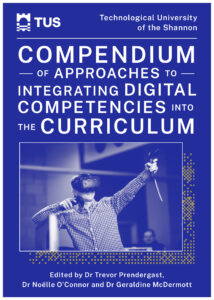
The Technological University of the Shannon (TUS) Compendium of Approaches to Integrating Digital Competencies into the Curriculum exemplifies the University’s commitment to embedding digital capability development across teaching, learning, and assessment.
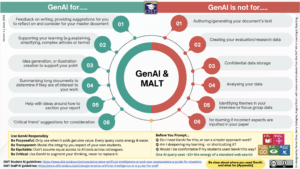
A 1-page guide, co-created by lecturers, tutors & students on DkIT's MA in Learning and Teaching, showing where GenAI can, and can't, support particular postgraduate research/skill development (*reflecting practice 2025-26). Includes student-informed prompts on responsible, sustainable use. An editable PowerPoint supports adaptation to own context.
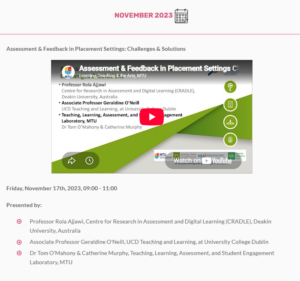
MTU researchers, together with national and international researchers, presented local, national, and global insights into the challenges and opportunities of assessment and feedback in work placement settings.
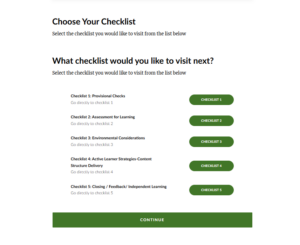
Teaching and Assessment for Learning Checklists aimed at early career & seasoned lecturers. The checklists provide guidance & reliable curated resources for lecturers who want to deliver an engaging and positive learning experience for their students. They act as a guide to check existing approaches, and help analyse how improvements can be made.