Digital Learning

Filter by

Filters
Topic
Reset
Discipline(s)
Reset
Organisation(s)
Reset
Licence
Reset
Format
Reset
201 - 241 of 241 results

Project NOURISH is a campus-based nutrition and health intervention, originally designed for MTU staff. This was designed as part of a broader research study to investigate how to enable healthier dietary behaviours within university environments.

This is an interactive multimedia open educational resource (OER), created using H5P, on the topic of Open Education. It has been developed by the Department of Technology Enhanced Learning at Munster Technological University.

The purpose of which is to give an overview of OEPs, using interactive features of H5P

The purpose of this resource is to allow Moodle teachers to quickly create quizzes for Moodle. Users can quickly select between questions types through a single interface and export their questions as an XML file which can be imported into Moodle.

Moodle Quiz XML Builder

CC 0

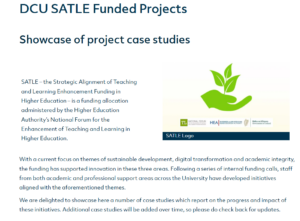
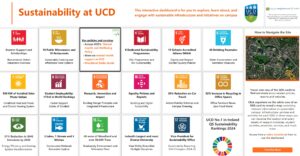
This resource showcases initiatives from both academic and professional support areas across DCU, which have been funded under SATLE – the Strategic Alignment of Teaching and Learning Enhancement Funding in Higher Education. Examples are provided under the themes of Education for Sustainable Development, Digital transformation & Academic Integrity

Slides for a digital wellbeing workshop that enables effective navigation of the digital world by
– exploring research on problematic internet use,
– offers workshop participants an opportunity to reflect on their own technology use
– uses the science of habits and the tiny habits methodology to promote more mindful use of digital technology

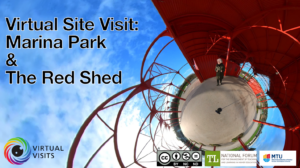
In this 360 immersive video, Dr Mary Moloney – head of the Department of Civil, Structural and Environmental Engineering at Munster Technological University – gives a guided tour of the "Red Shed" at Cork City's Marina Park. Dr Moloney highlights key structural features.

This video explores practical enterprise applications of blockchain technology, highlighting real-world use cases in supply chain, finance, and data security.

This video provides a clear and accessible introduction to cryptocurrencies, explaining what they are, how they function, and their role in today’s digital economy. Designed for beginners, it offers a foundational overview for learners exploring blockchain technology and digital finance.

A self-paced resource introducing Articulate Rise 360, an authoring tool for creating interactive, mobile-responsive e-learning content. Covers content design principles, interaction types, accessibility features, and publishing workflows. Designed primarily for instructional designers, educators, and professionals new to Rise.

A self-study resource addressing healthy relationships with digital technology, addressing digital addiction, privacy concerns, work-life balance, and digital identity management. Includes scenarios exploring real wellbeing challenges. Emphasises positive and negative impacts of digital participation. The primary audience is university students.

A self-paced resource teaching video planning (pre-production), recording (production), editing (post-production), and ethical considerations for academic video use. Covers accessibility in video (captions, descriptions), equipment options, and practical workflows suited to diverse contexts. The primary intended audience is students.

A 45-minute comprehensive foundational lesson on digital accessibility principles, inclusive content creation, and available assistive technologies at university level. Collaboration with Educational Assistive Technology Centre, UL, launched for Global Accessibility Awareness Day. The primary intended audience is students.

A foundational, interactive guide to spreadsheet essentials covering data entry, formatting, basic formulas, functions, and chart creation. Features keyboard navigation, accessibility options, and read-aloud functionality for inclusive learning. Designed for beginners and those seeking a refresher. The primary intended audience is students.

Practical self-paced lesson introducing effective prompt writing techniques for students new to genAI tools. Covers prompt structure, iteration, critical evaluation of output, and ethical considerations. Teaches effective genAI communication techniques. Primary intended audience is university students.

An interactive, beginner-level, asynchronous resource designed to equip students with foundational knowledge on genAI ethics, applications, and academic use. It covers genAI fundamentals, responsible use, academic integrity considerations, and practical scenarios. The primary intended audience is university students.

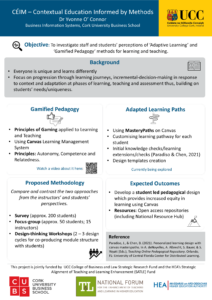
This poster offers educators an overview of designing a syllabus on the Canvas learning management system that supports personalised learning pathways. It highlights (1) a gamified pedagogy grounded in gaming principles and (2) adaptive learning strategies using MasteryPaths.

BSEditor is a multi-platform software tool designed to aid educators in the creation of computer-based quiz questions. It provides a powerful editor to easily control every detail of a question, from integration of files and images, to elaborate scoring approaches.

The Manifesto for Generative AI in Higher Education is a living resource for educators, students, and institutions. It invites reflection and dialogue across thirty statements exploring teaching, ethics, and imagination – helping higher education navigate AI with curiosity, integrity, and humanity.

This resource presents AVINA, an automated visual novel generator using large language models to transform multiple-choice questions into interactive learning narratives. Designed for educators and students, it supports gamified training in academic integrity and ethical decision-making through adaptive storytelling and experiential learning.

Blender is a free and open-source 3D creation suite that supports Windows, macOS, Linux, and other platforms. It is widely used for creating animated films, visual effects, 3D models for printing, motion graphics, video games, and virtual reality content. This guide acts as an introduction to becoming familiar with Blender.

The Data Loom: Crafting Stories with Code, Yarn and Print is an open educational resource that reimagines data visualisation through tangible, artistic, and embodied practices. Instead of visualising numbers on screens, this project guides learners to materialise datasets using yarn, a miniature 3D-printed loom, and the art of weaving.

The report – Generative AI in Higher Education Teaching and Learning: Sectoral Perspectives – was commissioned as part of the Higher Education Authority’s evidence-led approach to policy development.

The report captures the views of staff, students, and leaders across the Irish higher education system on the opportunities and challenges posed by artificial intelligence.

It brings together insights from ten thematic focus groups and a leadership summit, involving over 80 participants from across Ireland’s higher education institutions, alongside student representatives and sectoral stakeholders.

Generative AI Guidance Microsite provides resources and guidance to staff and students on the appropriate use of Generative AI in teaching and learning at MIC.

Ideation Arcana is a visual ideation tool designed to assist learners—especially those new to open-ended creative projects—in generating and refining ideas. It does so by offering a structured yet playful approach to thinking, inspired by the layout and concept of tarot cards.

This GenAI Learning Hub was developed with students, for students, to support the responsible and effective use of generative AI. Topics are divided across three main sections to aid understanding of GenAI before use, during use, and in relation to assessment. While aimed at students, this resource will be useful to anyone using GenAI.

GenAI Learning Hub

CC BY-NC

This resource captures insights through zine making from workshop participants at the Education after the algorithm symposium hosted at DCU on 21 February 2025, facilitated by Kate Molloy and Clare Thomson.

Symposium: https://hackthiscourse.com/symposium/?=1#/

Slides: https://docs.google.com/presentation/d/1TpNdJxnLij-bi8bInJfxJwAegR_JjKVa/edit?

This resource portal is dedicated to providing centralised access to policies, guidelines, and resources for teaching and learning in higher education in the context of generative artificial intelligence. The curated policies and frameworks offer authoritative guidance and practical support to inform and enhance institutional practice.

This 12 lesson open course provides an introduction to the AI Fluency Framework and the four competencies of Delegation, Description, Discernment, and Diligence. c. 70 mins videos plus ungraded exercises & projects and reference handouts. Co-developed by University College Cork, Ringling College and Anthropic with support by HEA.

It is with great pleasure that we present the proceedings from the
“Enhancing Academic Integrity: From Ideas to Action” conference, hosted
by CCT College Dublin on 3rd and 4th September 2024. This collection
represents the culmination of thoughtful discourse, innovative research, and
collaborative spirit that defined our gathering.

The VISIEN Framework Document is a strategic guide for integrating immersive technologies (AR, VR, MR, XR) into higher education. It offers practical guidance on curriculum integration, accessibility, collaboration, skill development, institutional readiness, and more to support transformative teaching, learning, and research.

This strategic report will focus on the global trend towards flexible, hybrid working and its impact for Digital Leadership in Higher Education in Ireland and beyond. We examine the wider implications of hybrid learning and working for Higher Education and situate this current globalised trend in its historical context.

Author

Dr Maren Deepwell is an award-winning independent consultant with organisations and leaders in education and the not-for-profit sector as an executive troubleshooter, strate-gic advisor and coach. Dr Deepwell’s particular expertise lies in authentic leadership and unconventional career development, digital wellbeing and sustainability. From 2012- 2023 Dr Deepwell was the Chief Executive of the Association for Learning Technology, the UK’s leading professional for Learning Technology. In this role Dr Deepwell led the organisation working with 350+ volunteers from across sectors often in collaboration with ILTA, ALT’s counterpart in Ireland.

This report explores the role of micro and digital credentialing in Irish higher education. It addresses the ambiguity around the term ‘microcredential’ and argues for adopting technical standards like Open Badges v3 to establish a clear and interoperable framework.

The report encourages the Irish Technical University sector to recognise a broader spectrum of the student experience beyond traditional academic achievements. It examines emerging technologies for their potential to support flexible, secure learning pathways, ensuring that student skills and achievements are accessible and verifiable. Additionally, the report considers global examples, including initiatives from the European Digital Credentials for Learning, analysing how they can be integrated into the Irish context to support lifelong learning and workforce readiness.

Author

Doug Belshaw, Laura Hilliger, and John Bevan are co-founders of We Are Open Co-op, a collective focused on digital education, open technologies, and community-driven innovation. We Are Open Co-op draws on extensive experience to develop credentialing solutions that support lifelong and broad learning for diverse groups. The co-op is committed to openness, collaboration, and using technology to improve learning opportunities and promote inclusive educational practices.

We Are Open Co-op website: https://weareopen.coop

Commissioned by the N-TUTORR National Digital Leadership Network.

This report examines five key topics that are influencing new models of teaching and learning. The 2020 Covid-19 pandemic saw a significant shift to online learning and while this raised the profile of online education, the practice since then has been a return to the on campus model, although this has often led to reports of empty lecture halls as students continue to embrace the flexibility of hybrid models. Since 2022 the advent of Artificial Intelligence, in particular Large Language Models, has led to considerable reflection in higher education on the use of essays and exams in assessment and how to best incorporate these tools into teaching. The impact of these two factors, the pandemic and AI, place Higher Education Institutions (HEIs) in the position of having to satisfy their current student base, with an economic model largely constructed around the physical campus, while also developing models that will provide robust and flexible models for students in the future.

Author

Martin Weller is Emeritus Professor of Educational Technology, at the Open University. He is the former Chair of the Open Programme, the Open University’s flexible, multidisciplinary degree, and Director of the GO-GN, a global network of Doctoral students in the area of open education. He developed the OU’s first fully online course in 1999, which attracted over 15,000 students annually. He is the author of the books The Digital Scholar, 25 Years of Ed Tech and Metaphors of Ed Tech.

He maintains a popular blog at blog.edtechie.net

Commissioned by the N-TUTORR National Digital Leadership Network.

The horizon-scanning report will provide a critical analysis of extant knowledge related to academic integrity as a commitment to six underpinning values of honesty, trust, fairness, respect, responsibility and courage (ICAI, 2021), guiding ethical behaviour across the tripartite domains of teaching, research and administration, and as impacted by rapidly evolving digital technologies, especially artificial intelligence (AI) tools. It will provide recommendations for university leaders navigating institutional best practice and policy for academic integrity in special reference to higher education’s digital transformation (McGill/JISC, 2023), and as germane to institutional and national strategic priorities for the Irish sector and, its community of technological universities.

Authors

Richard Watermeyer is Professor of Higher Education and Co-Director of the Centre for Higher Education Transformations at the University of Bristol. He is by training and orientation a sociologist of higher education; author of well over 100 academic articles, chapters, books and commissioned reports focused on policy and practice challenges and transformations in higher education; and the recipient of research funding for leadership of 19 (inter)national higher education research studies. Richard’s current research focus is on the sociological analyses of digital disruption in global higher education contexts. In this oeuvre he has acted as the Deputy Director of the (£1m) Digital Futures of Work programme (https://digitalfuturesofwork.com) and led an international research team into the effects of digital transitioning and AI adoption in global higher education. Such work has also featured in such analyses of the impacts of generative AI adoption by UK academic researchers (Watermeyer et al. 2024, forthcoming); in recent keynote addresses to the Research in Distance Education and E-Learning and Academic Practice and Technology conferences; and commentary pieces featured by Nature (https://www. nature.com/articles/d41586-024-00115-7) and the LSE (https://blogs.lse.ac.uk/impactofsocialsciences/2024/01/22/if-generative-ai-is-saving-academics-time-what-are-they-doing-with-it/).

Danielle Guizzo is Associate Professor in Economics Education and staff researcher of the Centre for Higher Education Transformations at the University of Bristol. Her research expertise is on the political economy of higher education and the state of academic labour and knowledge production in the light of technological and economic transformations, using a combination of historical and qualitative methods to understand change. Danielle has authored 25 academic articles, co-edited a book and has written several book chapters, reports, and briefs for policymakers. She was awarded the 2024 Clarence E. Ayres scholar award from the Association for Evolutionary Economics for her research on the ceremonialism of higher education from an economic-institutionalist perspective, and has secured research grants as a P-I on the impact of research assessment tools over economics research (funded by the ESRC Rebuilding Macroeconomics Initiative) and as a co-I on how academics have been using technologies in the Covid pandemic (funded by the Royal Economics Society). Danielle has also acted as a consultant for Brazil’s Ministry of Education on the review of Brazil’s national research assessment, and as an Advisory Board member of the Review of the Subject Benchmark Statement for Economics in the UK.

Lara Dzabolova is a PhD researcher at the School of Education at the University of Bristol. Previously, Lara led the Centre for Sustainable Development within the Department of Innovation at a local university in her hometown. Her work was focused on developing sustainability-centred curriculum and research with UN WTO and UN SDSN through digital learning and communication tools.

Commissioned by the N-TUTORR National Digital Leadership Network.

This report critically examines how the demographic and socio-economic composition of the current and near-future post-compulsory student community intersect with technological, pedagogical, and governance challenges in higher education.

Author

Peter Bryant is a Professor of Business Education and Associate Dean (Education) at the University of Sydney Business School, Australia. He is an award-winning academic with international expertise in designing and delivering successful strategic educational change in both business and social sciences institutions in Australia and the UK. He has thirty years of teaching and research experience in both the UK and Australia at both vocational and higher education levels, in the areas of higher education strategy, educational innovation, online learning and creative industries management.

Commissioned by the N-TUTORR National Digital Leadership Network.

This horizon scanning report examines the evolving landscape of academic and institutional integrity in higher education. It traces the historical development of academic and institutional integrity concepts, analyses current international best practices, and forecasts future challenges and opportunities. The report highlights how technological advancements, globalization, and changing educational models have transformed the nature of academic misconduct and institutional responses. Key issues addressed include contract cheating, AI-generated content, and credential fraud. The study synthesizes insights from literature reviews and related documents to provide a comprehensive overview of innovative strategies employed by leading institutions worldwide. These range from integrity-focused curriculum design to generative artificial intelligence.

Authors

Sarah Elaine Eaton is a Professor and research chair at the Werklund School of Education at the University of Calgary (Canada). She is an award-winning educator, researcher, and leader. She leads transdisciplinary research teams focused on the ethical implications of advanced technology use in educational contexts. Dr. Eaton also holds a concurrent appointment as an Honorary Associate Professor, Deakin University, Australia.

Beatriz Antonieta Moya, Ph.D. in Educational Research from the University of Calgary, specializes in ethics, leadership in higher education, and artificial intelligence. Awarded the 2023 Outstanding Student Award by the European Network for Academic Integrity, her work focuses on the Scholarship of Teaching and Learning (SoTL) and fostering ethical practices. She has co-authored peer-reviewed publications on academic integrity policy and AI ethics in education and regularly leads workshops and presentations internationally, highlighting her commitment to promoting integrity in higher education through interdisciplinary research and leadership.

Commissioned by the N-TUTORR National Digital Leadership Network.
Generative AI (GAI) presents significant challenges and opportunities to the higher education sector, from the threat to academic integrity to the promise of personalised learning at scale. This report focuses on three key areas: the impact of GAI on current teaching and assessment practices, current applications and the shift to more learner- centred approaches; emerging GAI pedagogy, international best practices and early research findings on risks; and GAI and digital transformation, international regulation and the future skills agenda.

Author
Mairéad Pratschke is Visiting Professor at the London School of Economics and Political Science (LSE) Data Science Institute (DSI); and Research Fellow and Advisory Board member at the USA’s National Science Foundation-funded National AI Institute for Adult Education and Online Learning (AI-ALOE). Author of Generative AI and Education (2024), Mairéad has delivered keynote talks on generative AI and education in Ireland, the UK, Canada, the USA, Lebanon, the Netherlands, Portugal, Spain, South Africa and Singapore.

Author website: https://maireadpratschke.com/

Commissioned by the N-TUTORR National Digital Leadership Network.
The increasing digitalisation of higher education institutions brings with it a range of new opportunities and risks. This report draws on international examples and best practices to synthesise the typical challenges and provide insights into potential solutions. This includes examining existing practices in educational technology acquisition and management within the public education sector, including procurement practices and the shift towards outsourcing and SaaS services. From there new challenges are explored, such as responding to external forces, managing new forms of risk, balancing efficiencies with educational quality, and maintaining diverse educational technology portfolios.

Author

Anne-Marie Scott is an education consultant with international expertise in digital, online, and open education. She was Deputy Provost of Athabasca University (Canada), and previously at the University of Edinburgh (UK) where she led many major digital and open education initiatives. She serves as a member of the Government of British Columbia’s Digital Learning Advisory Committee and is the CFO (Treasurer) of the Open Source Initiative, the non-profit which stewards global definitions of open source software and open source artificial intelligence. She currently teaches critical approaches to educational technology as adjunct faculty at Royal Roads University (Canada).

Commissioned by the N-TUTORR National Digital Leadership Network.
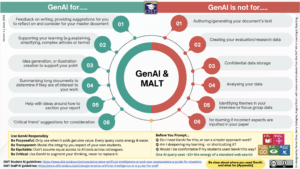
In this report we present a detailed examination of current AI use and considerations for its safe and ethical deployment. We conclude with horizon scanning and recommendations for educational establishments beginning to incorporate AI.

Authors

Dr James Ransom is a higher education specialist whose work looks at how universities can help adapt to and solve challenges facing society, including rapid technological change. He is an Honorary Senior Research Fellow at UCL Institute of Education, Head of Research at the National Centre for Entrepreneurship in Education (NCEE), and a Specialist Advisor on higher education to the European Bank for Reconstruction and Development. Previous work includes projects for the British Council, the Royal Society, and the British Academy, as well as jobs in policy at Universities UK, UNESCO, and the Association of Commonwealth Universities.

Dr Richard Whittle is an expert in the economics of Artificial Intelligence. He researches Artificial Intelligence and Human Decision-Making and has published in world-leading journals such as Work Employment and Society, Public Administration, and the Cambridge Journal of Economics. Richard led the technical research for the Greater Manchester Independent Prosperity Review, and he is an academic advisor to the Manchester Digital Strategy. Richard has received research funding from numerous sources, including the Economic and Social Research Council (ESRC), UK Research and Innovation (UKRI), Research England, and the Money Advice Service, and he has been the recipient of a personal Capabilities in Academic Policy Engagement (CAPE) fellowship hosted at the Institute of Innovation and Public Purpose, UCL.

Commissioned by the N-TUTORR National Digital Leadership Network.
This document provides a summary of the book “MÉTODO DE LOS RELOJES. GRAMÁTICA DESCRIPTIVA DEL ESPAÑOL” authored by Manuel Perez Saiz, which serves as the foundation for the UCC Spanish grammar course.

This Toolkit was created by students at University College Dublin, for students, to break down sustainability in a way that’s simple and easy to understand. Climate change is something that affects all of us—no matter what you’re studying, where you’re from, or what you do. It’s here, and it’s impacting our world—but many of us aren’t sure what we can do about it.

The purpose of this toolkit is a starting point for what students need to learn about living more sustainably on and off campus. We hope it’ll inspire students to take small steps that make a big impact, and they can do it all at their own pace. You can access the Moodle page to view the Toolkit. There are also Zip files of the SCORM packages used to create the Toolkit (Part 1 and Part 2) that can be downloaded and imported into a Virtual Learning Environment.

• Part 1: Climate Change → Watch short Youtube videos followed by a little quiz to brush up on your sustainability knowledge.
• Part 2: What Can You Do? → Find tips and tricks to incorporate sustainability into your day-to-day life, this is a resource tool to help you get started!

This open course is designed to facilitate the development of your Artificial Intelligence (AI) literacy so that you can explore and innovate using Generative AI (GenAI) within your teaching, learning, and assessment practices.

In light of the potential opportunities and challenges of these technologies, this course will facilitate you in exploring the fundamentals of GenAI and AI Literacy, whilst focusing on an ethical practice. You will consider innovative ways in which you can respond to the challenges arising from the impact of these technologies in Higher Education.

Completion of this course will support you in developing a GenAI teaching strategy to apply to your own practice.

The case studies highlight the excellent teaching and learning practices that are in place across MIC. Each case study provides a detailed description of the approaches implemented, the benefits and challenges of such approaches, and tips for those who wish to implement similar approaches in their own teaching.

This short guide provides an overview of GenAI and a longer discussion of how assessments can be (re)designed to integrate or limit the use of GenAI by students. It includes examples from teaching practice at University College Cork.
Recognizing the transformative potential of AI, the ICDE Quality Network has developed this report as a key initiative to explore its application in teaching and learning globally. This endeavour underscores the Network’s commitment to advancing quality education by promoting the responsible integration of AI.
This online tutorial introduces the fundamentals of Generative AI and LLMs, explaining their functionality, capabilities, and limitations. It explores key applications, ethical considerations, and practical examples, providing learners with a foundational understanding of how these technologies impact education and creativity.

Digital Skills for Success in the Workplace is a five-unit, self-paced online course which equips learners with key digital literacy skills that are essential to study and work in rapidly evolving online environments.

Publication created by our 2024 summer interns in DkIT.
Giving power back to class reps! This book will be a useful resource for all our student reps to use as a guide and for training purposes also.

This faculty guide aims to help educators navigate and understand GenAI’s potential role in higher education. Created for faculty who want to explore AI tools and their implications for teaching and learning, the resource allows educators to learn at their own pace about the opportunities and challenges of these technologies.

We are delighted to welcome you to ‘You can UDL it!’ This collection brings together case studies from educators across DkIT, who have successfully implemented Universal Design for Learning (UDL) in their own practice. UDL provides a framework for making learning, teaching and assessment more inclusive, and helps to support all our learners.

In the denouement of the COVID-19 pandemic, talk of a return to “normalcy” in higher education belies the great challenges and ongoing disruptions that yet lie ahead for many institutions. Public perceptions of the value of postsecondary education continue their downward slide, placing institutions in the position of having to demonstrate their worth and find solutions to declining enrollments. Data and analytics capabilities continue to evolve, introducing new opportunities and new risks to the institution. Chief among these capabilities, generative AI promises to change teaching and learning in ways many of us have yet to fully understand or prepare for.

For this year’s teaching and learning Horizon Report, expert panelists’ discussions highlighted and wrestled with these present and looming challenges for higher education. This report summarizes the results of those discussions and serves as one vantage point on where our future may be headed.

MAFAPS is a courses dealing with the issues related to de-carbonisation of merchant shipping worldwide. The subject matter includes the handling, storage and combustion of alternative fuels and the use of alternative power systems such as fuel cells.

This collection of resources explain how Mahara can be use in practical terms as an e-portfolio. The resources are a collection of staff and student facing guides.

Making Use of Mahara

CC BY-NC-SA

This is a collection of supporting articles and videos that help staff to understand the relationship between Generative AI and Academic Integrity. These resources help staff to make sense of how authorship on assignments might be identified and understood.

Future proof your curriculum by embedding sustainability into your teaching practice or further integrating the Sustainable Development Goals (SDGs) into your curriculum. The SDG digital toolkit project will give you concise actionable resources to achieve this result while providing insights into the underpinning theories.

SDG Toolkit

CC BY-NC

This publication collects the posters shared at the 2023 Learning and Teaching Showcase at University College Cork, 5 December 2023. The posters are grouped into five themes: student engagement, inclusive teaching, academic integrity, digital education and education for sustainable development.

The Toolkit includes an introduction to generative AI and lexicon of terms, guidelines for ethical use, recommended adjustments to common modes of assessment to mitigate against the potential risk of unethical use, and discipline-specific case studies of good practice that share innovative forms of learning, teaching and/or assessment.

All the ingredients for an instant inclusion resource for students in your VLE.
Itʼs already assembled so download it and edit for your own context.
1.Inclusive technology options in Google and Microsoft Tools and more.
2.Awareness of UDL and how technology gives us options regarding reading, writing and more.
3. Digital Accessibility Skills

This is a short introduction to ChatGPT for people teaching in higher education, created in January 2023 and updated until this version was saved in February 2023. The resource is a slide deck which you are free to modify and update (since this is a fast-moving topic). No prior knowledge of AI or chatbots is necessary to use the slides.

Artificial Intelligence (AI) technologies and related automated decision-making processes are becoming increasingly embedded in the tissue of digital societies. Their impact cuts across different political, social, economic, cultural, and environmental aspects of our lives. On the one hand, AI can be used to drive economic growth, enable smart and low-carbon cities, and optimize the management of scarce resources such as food, water and energy. On the other hand, AI can also be used in a manner that infringes on human rights and fundamental freedoms, such as freedom of expression and privacy, and risks exacerbating existing socioeconomic and gender inequalities. Furthermore, the implementation of AI systems may lead to values-driven dilemmas and complex problems, often requiring trade-offs that can only be addressed through broad societal consensus.

This guide focuses on the question of how the development of AI policies can be made inclusive. Multistakeholder approaches to policymaking are part of the answer because they create the space for learning, deliberation, and the development of informed solutions. They help decision makers consider diverse viewpoints and expertise, prevent capture by vested interests, and counteract polarization of policy discourse. A multistakeholder approach to AI policy development and the consultation of stakeholders from different backgrounds and expertise are necessary to be able to develop a relevant and applicable policy for the national context.

The objective of this guide is to support policymakers in ministries and parliaments in the design and implementation of inclusive AI policies, while empowering stakeholders including civil society, businesses, technical community, academia, media, and citizens, to participate in and influence these policy processes

The report includes a ‘baseline’ of the challenges, practices and new developments during the pandemic, examples of research and innovation in online assessment, and the supportive (or non-supportive) national policies and frameworks that define the context of assessment for the institutions. It also includes practical examples (‘Good practices’) from SIG members that can help, if not inspire developing better practice and new thinking in other member institutions.

This Facilitator Checklist has been compiled from our experience as facilitators delivering the PACT Open Course with the National Forum. From our reflection, we created this resource to aid fellow facilitators save time and outlined key pre-Course, during-Course, and post-Course activities essential to the smooth running of all Open Courses.

This resource is a digital toolkit to support students in health and social care professions who are learning clinical and professional competencies through technology (including telepractice and simulation). The toolkit includes interactive resources to support learning and enhance technology-enabled practice education.

This OER investigates the role of digital technology in the acquisition of practical skills in health sciences. While it is commonly accepted that theoretical knowledge can be imparted using technology, how best to use technology to support practical skill acquisition is a growing area which presents many opportunities.

Show your students maths at work outside the classroom in Maths Week
This October, show your students how maths is relevant to their everyday lives with I’m a Mathematician!
Connect your students with people working in a diverse range of careers which use maths in this student-led enrichment activity.
Explore more: https://imamathematician.ie

The toolkit is a set of 8 modules, delivered and accessible asynchronously, online, incorporating elements of information literacy, critical thinking and academic writing skills to allow students prepare for and complete an assignment in line with best practice in academic integrity.

Assignment Toolkit

CC BY