New Learning and Teaching Models through Digital Transformation

Creator(s) (alphabetical)

Martin Weller

Organisation(s)

National Digital Leadership Network

Discipline(s)

Teaching and Learning

Topic(s)

Digital Learning

License

CC BY-NC

Media Format

PDF

Date Submitted

Submitted by

Export Resource Data

Description

This report examines five key topics that are influencing new models of teaching and learning. The 2020 Covid-19 pandemic saw a significant shift to online learning and while this raised the profile of online education, the practice since then has been a return to the on campus model, although this has often led to reports of empty lecture halls as students continue to embrace the flexibility of hybrid models. Since 2022 the advent of Artificial Intelligence, in particular Large Language Models, has led to considerable reflection in higher education on the use of essays and exams in assessment and how to best incorporate these tools into teaching. The impact of these two factors, the pandemic and AI, place Higher Education Institutions (HEIs) in the position of having to satisfy their current student base, with an economic model largely constructed around the physical campus, while also developing models that will provide robust and flexible models for students in the future.

Author

Martin Weller is Emeritus Professor of Educational Technology, at the Open University. He is the former Chair of the Open Programme, the Open University’s flexible, multidisciplinary degree, and Director of the GO-GN, a global network of Doctoral students in the area of open education. He developed the OU’s first fully online course in 1999, which attracted over 15,000 students annually. He is the author of the books The Digital Scholar, 25 Years of Ed Tech and Metaphors of Ed Tech.

He maintains a popular blog at blog.edtechie.net

Commissioned by the N-TUTORR National Digital Leadership Network.
Benefit of this resource and how to make the best use of it

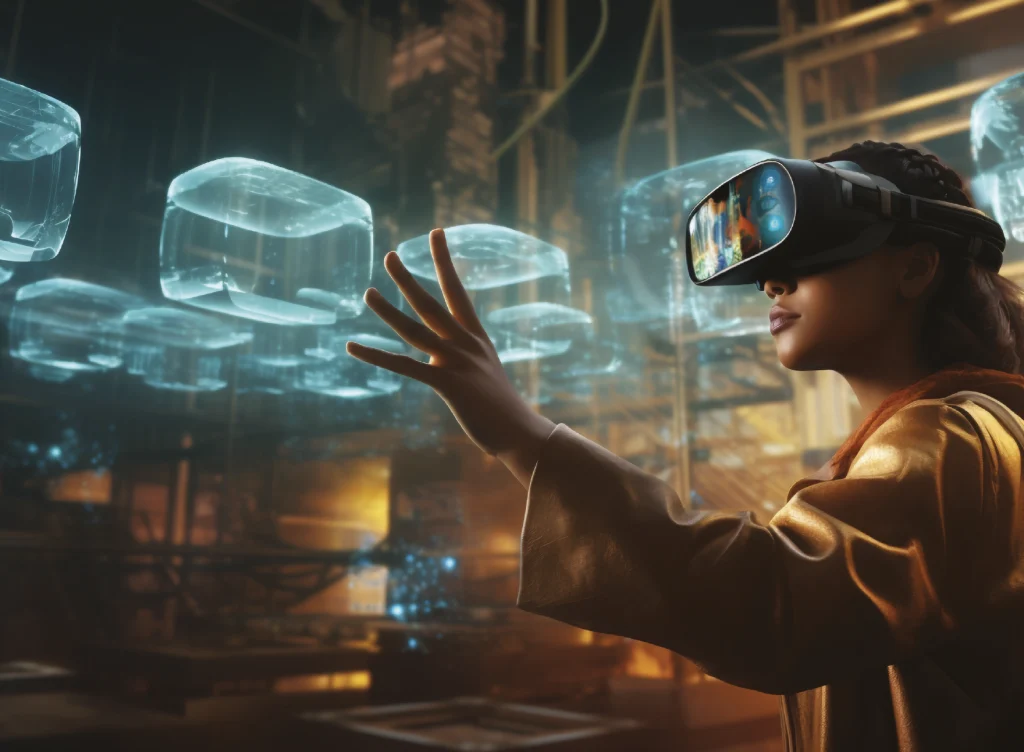
This report looks at five topics in this change, namely Hybrid and Blended Modes for Learning and Working, Microcredentials, Generative AI, Extended Reality and Adaptive and Personalised learning. The state of the art for each of this is synthesised and a practical example for each provided.

Creative Commons Attribution-NonCommercial (CC BY-NC)

This work is licensed under a CC BY-NC license, permitting sharing and adaptation for non-commercial purposes with proper attribution.

https://creativecommons.org/licenses/by-nc/4.0/
? This citation is automatically generated and may require adjustment. Always verify it against your style guide.
Weller, M. (02/04/2025). New learning and teaching models through digital transformation. National Resource Hub (Ireland). Retrieved from: https://hub.teachingandlearning.ie/resource/new-learning-and-teaching-models-through-digital-transformation/ License: Creative Commons Attribution-NonCommercial (CC BY-NC).

Adapting this resource? Share your version!

If you have modified or adopted this resource, share your version here. Tracking adaptations helps us measure impact and connects others with useful updates.

Related OER

Project NOURISH is a campus-based nutrition and health intervention, originally designed for MTU staff. This was designed as part of a broader research study to investigate how to enable healthier dietary behaviours within university environments.

This is an interactive multimedia open educational resource (OER), created using H5P, on the topic of Open Education. It has been developed by the Department of Technology Enhanced Learning at Munster Technological University.

The purpose of which is to give an overview of OEPs, using interactive features of H5P

The purpose of this resource is to allow Moodle teachers to quickly create quizzes for Moodle. Users can quickly select between questions types through a single interface and export their questions as an XML file which can be imported into Moodle.

Moodle Quiz XML Builder

CC 0