The Data Loom: Crafting Stories with Code, Yarn and Print is an open educational resource that reimagines data visualisation through tangible, artistic, and embodied practices. Instead of visualising numbers on screens, this project guides learners to materialise datasets using yarn, a miniature 3D-printed loom, and the art of weaving.
Benefit of this resource and how to make the best use of it
This project provides practical guides for the field of data materialisation, guiding learners to transform abstract data into tangible woven fabrics. By designing and making 3D printed Mini-looms and tools, participants will learn how to transform information, such as daily emotions, sleep patterns, or exercise activities, into colourful, solid yarn-knitted patterns.
This resource is aimed at a wide range of interdisciplinary audiences, from creative students and digital humanities researchers to educators and textile artists. It provides a novel, reflective, and healing approach to data interaction beyond the screen, fostering a more personalised and concrete understanding of the information that shapes our lives. No expertise is required; the only requirement is to be curious about seeing, feeling and interpreting data from a completely new perspective. This guide is designed to provide completely independent content, providing clear and understandable guidance to anyone eager to explore interdisciplinary content such as craftsmanship, data, and narrative. Although this guide is fully comprehensive on its own, Xingchen Huang’s “Blender Beginner’s Guide“, also published by UCC, is an excellent in-depth look at Blender and can be paired with this book.
Creative Commons Zero (CC0)
This work has been dedicated to the public domain under a CC0 license, allowing unrestricted use, distribution, and adaptation without attribution.
?
This citation is automatically generated and may require adjustment. Always verify it against your style guide.
Mahnken, K., & Chen, Y. (25/07/2025). The data loom: crafting stories with code, yarn and print. National Resource Hub (Ireland). Retrieved from: https://hub.teachingandlearning.ie/resource/the-data-loom-crafting-stories-with-code-yarn-and-print/ License: Creative Commons Zero (CC0).
Adapting this resource? Share your version!
If you have modified or adopted this resource, share your version here. Tracking adaptations helps us measure impact and connects others with useful updates.
The Technological University of the Shannon (TUS) Compendium of Approaches to Integrating Digital Competencies into the Curriculum exemplifies the University’s commitment to embedding digital capability development across teaching, learning, and assessment.
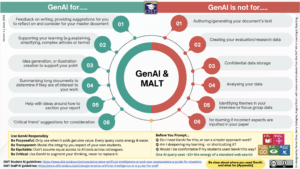
A 1-page guide, co-created by lecturers, tutors & students on DkIT's MA in Learning and Teaching, showing where GenAI can, and can't, support particular postgraduate research/skill development (*reflecting practice 2025-26). Includes student-informed prompts on responsible, sustainable use. An editable PowerPoint supports adaptation to own context.
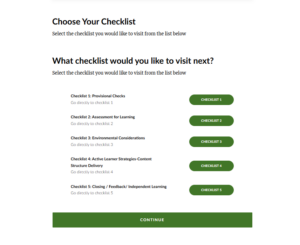
Teaching and Assessment for Learning Checklists aimed at early career & seasoned lecturers. The checklists provide guidance & reliable curated resources for lecturers who want to deliver an engaging and positive learning experience for their students. They act as a guide to check existing approaches, and help analyse how improvements can be made.
Team Tool is an open educational resource (OER) designed to support equitable,
e ective teamwork in higher education. It was developed in response to persistent
challenges in collaborative work, including uneven contribution, lack of
accountability and student dislike and anxiety around group projects.