

A staff guide to using rubrics as learning tools.
Filter by
Filter by

A student guide explaining how assessment contributes to learning and achievement.
Printable assessment cards for exploring and discussing a range of assessment methods.
A staff guide to choosing assessment approaches that support learning.
A staff guide to designing feedback processes in which students interpret information, make evaluative judgements and act to improve their learning.
A toolkit for staff reviewing assessment design through principles of effective learning.
A Y1Feedback case study describing automated, immediate feedback for novice programmers through Moodle’s Virtual Programming Lab, including implementation lessons and student responses.
A student guide to understanding and using feedback.
A student guide to authentic assessment and its relationship with learning beyond university.
A disciplinary report reviewing digital teaching, learning and assessment practices in Health Sciences.
A student guide to using rubrics to understand assessment expectations, review drafts and interpret feedback.
A disciplinary report reviewing digital teaching, learning and assessment practices in Science, Technology, Education and Mathematics.
A teaching case study on using a business simulation to introduce sustainability decisions in a first-year marketing module.
A project poster introducing a learning analytics dashboard that analyses weekly student reflections from SHLAM².
A report combining doctoral-student and postgraduate teaching-director feedback on Trinity’s research integrity module.
A report outlining pedagogical recommendations for redesigning an online doctoral research-integrity module.
A student guide to reviewing and improving work through self-assessment and peer feedback.
A student handbook covering study routines in hybrid learning and preparation for digital and open-book assessment.
A staff guide to designing assessment tasks with greater authenticity.
A project reflection on using digital technologies to improve first-year feedback, describing early case studies, evaluation findings and implementation challenges.
A disciplinary report reviewing digital teaching, learning and assessment practices in Arts, Humanities & Social Sciences.
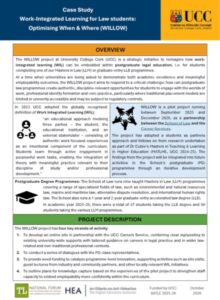
This case study provides reflections on the WILLOW project at University College Cork (UCC), which is a strategic initiative to reimagine how work-integrated learning (WIL) can be embedded within postgraduate legal education, i.e. for students completing a Masters in Law (LLM) or graduate-entry LLB.
A conference poster paper explaining the Student Success Toolbox approach to digital readiness, flexible-learner transition and the use of eight preparation tools.
A Y1Feedback case study on designing a coherent assessment and feedback approach across a humanities programme, connecting module tasks, programme outcomes and first-year student support.
A research article using the project’s international-student survey to identify preparation needs around academic study, daily life and social adjustment in Ireland.
A framework for planning professional development in digital teaching, learning and assessment.
A teaching guide supporting discussion of worldviews, beliefs, values, inequality and climate justice.
A qualitative study of students’ understandings of academic integrity and uncertainty about acceptable GenAI use.
A teaching case study on a virtual reality pump laboratory in mechanical engineering.
A teaching guide helping educators introduce complex systems, formulate sustainability problems and explore risk responses.
A teaching guide for examining misinformation and disinformation in sustainability debates.
An account of MTU’s approach to academic integrity and critical AI literacy for first-year students, informed by student feedback and staff practice.
A staff guide to self and peer assessment, including how students can develop evaluative judgement by reviewing their own work and the work of others.
A conference paper presenting Y1Feedback findings on first-year feedback practice and outlining technology-enabled approaches for strengthening student transition.
This resource supports inclusive teacher education through findings from the PREP-In project. It combines student and professional perspectives, placement portfolio insights, co-created classroom vignettes and practical recommendations. Designed for teacher educators, student teachers, school mentors and SEN professionals.
Unlocking Inclusion: Toolkit for Universal Design in Higher Education, is a practical step-by-step ‘how-to guide’ to assist the higher education sector to create inclusive institutions where all students belong. Predicated on the incremental nature of mainstreaming participation of under-represented students in higher education, this updated Toolkit uses the lens of student diversity to inform and guide the design of an inclusive educational experience that embraces all students equitably.
This technical report accompanies ALTITUDE, the National Charter for Universal Design in Tertiary Education. It explains the rationale for the Charter, its development and consultation process, its strategic enablers and four pillars, and its alignment with international, national and institutional policy. It also provides guidance for adoption and implementation across further and higher education.
Prepared by Dr Joanne Banks with direction and input from the ALTITUDE Working Group. Published by AHEAD Educational Press, 2024.
The purpose of these protocols is to assist student teachers and cooperating teachers in schools to have professional conversations together during regular tutorial meetings. Each document requires the use of GenAI but can generate insights or interactions that would be difficult to emulate in paired discussion.
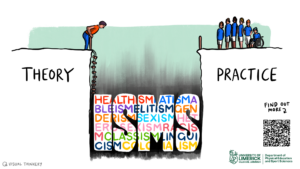
This open educational resource supports pre-service teachers in developing practical approaches to social justice in Physical Education. Through visual case studies, reflective prompts, and introductory concepts, it encourages critical reflection, collaborative discussion, and informed decision-making based on authentic school placement experiences
The HEA ESD Self-Evaluation Tool is a voluntary, developmental resource that supports higher education institutions in reviewing and strengthening whole-of-institution Education for Sustainable Development. It helps institutions undertake structured reflection on current strengths, gaps and progression, identify local priorities and plan practical next steps.
The tool is organised around the five ESD to 2030 Priority Action Areas. For each area, it provides developmental descriptors across three broad stages of practice: Emerging, Established and Leading. It is intended to support dialogue, planning and quality enhancement.
This resource sets out five strategic enablers that can support the implementation of Education for Sustainable Development across all areas of a higher education institution:
1. Collaboration and commitment
2. Holistic and transformational practice, scholarship and leadership
3. Capacity-building and professional development
4. Student partnership, engagement and leadership
5. Reciprocal learning communities
The Enablers translate national and international ESD commitments into shared language, strategic direction and practical prompts for higher education. They address curriculum, pedagogy, assessment, campus operations, governance, leadership, professional learning, student partnership, research and reciprocal engagement with communities.
The resource is designed to support institutional reflection, planning and enhancement rather than prescribe a single model. It recognises institutional autonomy, diversity of mission and disciplinary differences.
This overview introduces the Higher Education Authority’s Education for Sustainable Development (ESD) Framework for Higher Education: a connected suite of resources supporting whole-of-institution ESD across Irish higher education. It explains the Framework’s purpose, its relationship to national and international ESD priorities, and how its component resources work together to provide strategic direction, sector evidence, structured reflection, thematic insight and opportunities for peer learning.
The Framework connects curriculum, campus operations, governance, research and community engagement. It is intended for institutional leaders, educators, professional staff, students and representative bodies, ESD and sustainability leads, teaching and learning units, quality and enhancement teams, community partners and policy stakeholders.
This open educational resource provides a step-by-step guide to cataloguing three-dimensional physical objects — primarily material samples — in Koha, the open-source Library Management System.
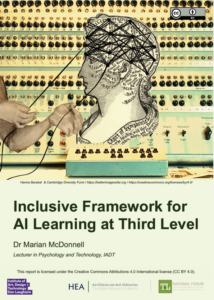
This OER is targeted at lecturers and describes an inclusive framework to integrate artificial intelligence (AI) learning design at third level.
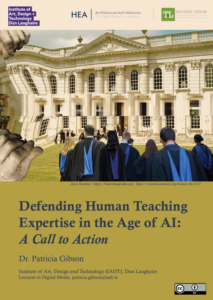
This report draws on Patricia Gibson’s research around critical approaches to Artificial Intelligence (AI) in Education and the increasing automation of Educational Technologies (EdTech).
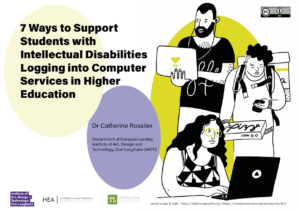
This resource was created to share the learning from teaching adults with intellectual disabilities (ID) in IADT college as part of a national suite of pilot projects.
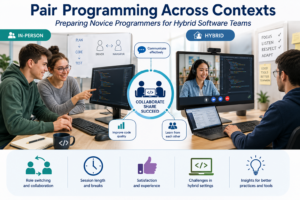
This OER presents findings from a comparative study of novice programmers engaging in face-to-face and hybrid pair programming. It explores collaboration patterns, role switching, satisfaction, and challenges, offering evidence-based insights for educators seeking to prepare students for effective teamwork in modern hybrid software development.
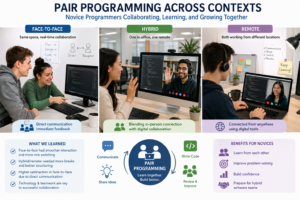
This OER explores novice programmers’ experiences of pair programming across face-to-face, hybrid, and remote settings. It provides insights into collaboration, role switching, satisfaction, and challenges, helping educators and students understand how to effectively prepare learners for modern hybrid software development environments.
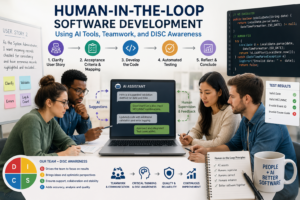
This OER guides students through human-in-the-loop software development, demonstrating how AI tools can be effectively supervised, refined, and integrated across the Software Lifecycle. Designed for computing educators and learners, it combines agile practice, teamwork, DISC awareness, testing, and critical reflection on human–AI collaboration.
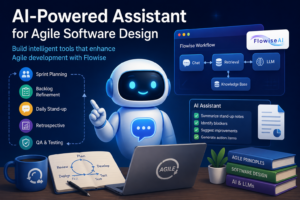
This OER introduces students to designing and developing AI-powered assistants for agile software development using Flowise (no code). Learners as a team explore Retrieval Augmented Generation (RAG) and agent-based systems, applying AI to real-world agile practices while considering technical design, evaluation, and cost-aware decision-making
Enhancing Student Engagement and Belonging through Collaborative Partnership is a Higher Education Authority report prepared by a UCD research team led by Professor Barbara Dooley. The resource provides an evidence-informed framework for strengthening student belonging across Irish higher education institutions. Drawing on staff interviews, Healthy Campus survey responses, and analysis of Healthy Campus and NStEP case studies, it identifies practical approaches to improving student engagement, wellbeing and inclusion.
The report frames belonging as a multidimensional and co-constructed experience shaped by social, academic, personal and environmental factors. It highlights that student belonging is affected not only by relationships and participation, but also by structural issues such as housing, commuting, financial pressure, campus spaces, timetable design and access to supports.
The resource is particularly useful for staff and student partners working on Healthy Campus, student success, student engagement, access, inclusion, mental health promotion, orientation, peer support, student partnership and campus development initiatives.
This project presents an innovative engineering assessment framework integrating generative AI through a poster portfolio, AI reflection, and oral interview. It supports critical thinking, validation skills, and ethical AI use, and is designed for undergraduate engineering educators and students in project-based learning contexts.
Purpose of the MTU Student Guidelines
Supports Academic Integrity Principles and MTU’s Academic Integrity Policy by:
1. Explaining what academic integrity is.
2. Helping students avoid bad decisions during assessments.
3. Outlines and signposts supports available across MTU
The work presented in this practice paper illustrates how the use of immersive 360o
video and photographs, viewed in virtual reality headsets or via 360o media players,
can enhance and broaden student knowledge and experience when undertaking
Project Based Learning (PBL) assignments.
The resource comprises of a literature review and an executive summary, developed as part of the Maynooth University Leadership and EducAtion Framework (LEAF) initiative. It explores how education frameworks can enhance teaching, learning and curriculum design in higher education, supporting inclusive, sustainable and values-led academic practice.
Academic Integrity Handbook for MTU staff.
Chapters:
1. Upholding Academic Integrity and Preventing Academic Misconduct
2. Detecting Academic Misconduct
3. Dealing with Academic Misconduct
Conference presentation outlining findings regarding trends in first-year student engagement.
Conference presentation – European Access Network, University of Galway, June 2025.
Opening address to one-day national symposium arising from SATLE project.
This resource describes the rational for, design of and implementation details associated with an initiative designed to support early career academic staff adopt evidence-based, active and inclusive learning strategies to enhance learning for ALL students.
This guideline document seeks to support the implementation of MTU policies and procedures which underpin Academic Integrity and help to address the implications of Generative Artificial Intelligence on assessment practices.
In this research article we investigated possible correlations between
students’ discipline areas and their experiences of academic integrity in MTU.
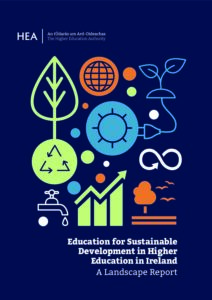
This landscape report provides an overview of Education for Sustainable Development (ESD) practice across the higher education sector in Ireland. It draws together publicly available institutional strategies, HEA Performance Framework Agreements 2024–2028, Climate Action Roadmaps and ESD to 2030 progress reports to outline current approaches to embedding ESD.
Structured as a series of institutional case studies, the report highlights how ESD is being addressed across teaching and learning, research, engagement and whole-institution practice, and identifies opportunities for collaboration and shared learning across the sector.
Reimagining Assessment & Feedback Together (RAFT) is MTU initiative developed to transforming assessment practices. This volume documents twenty-four situated, discipline-specific attempts to rethink assessment and feedback through student partnership and action research.
This discussion paper explores how student success in higher education is understood, defined and supported in contemporary Irish and international contexts. It brings together international research, national policy and insights from student focus groups conducted in Ireland in 2025 to examine success beyond traditional metrics such as retention, progression and completion.
The paper presents a holistic and relational view of student success, foregrounding belonging, mattering, agency and wellbeing alongside academic and outcomes-based measures. It situates student success as simultaneously student-defined, institution-enabled and outcomes-oriented, and considers the implications of this framing for teaching, learning, policy and system-level practice.
This report presents findings from the HEA Student Success Survey 2025, capturing how students across Ireland define, experience and achieve success in higher education. Based on responses from over 3,400 students across publicly funded higher education institutions, it provides a national, student-centred perspective on success.
The report explores students’ definitions of success, the supports and enablers that help them thrive, and the barriers that can hinder progress. It highlights the relational and holistic nature of student success, encompassing academic achievement alongside well-being, belonging, personal growth and future readiness.
This document sets out a detailed, values-led framework to support the ethical adoption of generative artificial intelligence (gen AI) in teaching and learning across Irish higher education. It builds on the HEA Generative AI Policy Framework by translating high-level principles into concrete provisions to guide institutional policy, governance and educational practice.
The principles address five core areas: academic integrity, equity and inclusion, critical engagement and AI literacy, privacy and data governance, and sustainable pedagogy. Together, they provide institutions with a practical reference for navigating the ethical, pedagogical and organisational challenges associated with generative AI, while safeguarding academic standards, student rights and institutional autonomy.
This policy framework provides national guidance for the responsible and values-based use of generative artificial intelligence (gen AI) in teaching and learning within Irish higher education. It is designed to support educators, academic leaders and professional staff in making informed decisions about the adoption and integration of gen AI technologies in educational practice.
The framework focuses specifically on teaching and learning, addressing issues such as academic integrity, assessment design, equity and inclusion, AI literacy, privacy and data governance, and sustainable pedagogy. It sets out five core principles to guide institutional policy development and practice, while allowing for local adaptation and institutional autonomy.
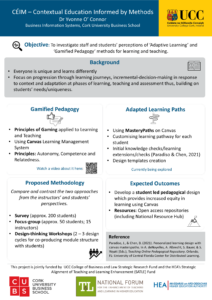
This poster offers educators an overview of designing a syllabus on the Canvas learning management system that supports personalised learning pathways. It highlights (1) a gamified pedagogy grounded in gaming principles and (2) adaptive learning strategies using MasteryPaths.

In 2018, the Glucksman Library at the University of Limerick launched Leganto, a reading list management tool designed to streamline access to academic resources for students. Leganto ensures equitable access to academic content, helping students engage with reliable sources and easing their transition into university-level study.
This case study collection presents an interdisciplinary University College Dublin initiative exploring how key competencies for Education for Sustainable Development (ESD) can be embedded in higher education teaching, learning and assessment. It introduces UNESCO’s sustainability competencies alongside metacognitive development and the I-SEE learning strategies: Introducing, Signposting, Enabling and Evaluating.
Four detailed case studies demonstrate how these approaches have been applied in clinical nutrition and dietetics, education, rural placemaking and public health nutrition. Using student-centred, collaborative, action-oriented and critically reflective approaches, the case studies engage learners with authentic, real-world problems. Each includes information on its context, intended learning outcomes, teaching and assessment strategies, impact and practical lessons, demonstrating how ESD can be made relevant across a wide range of disciplines, including subjects not traditionally associated with sustainability.
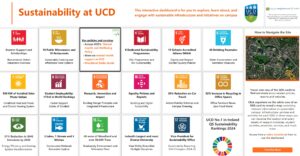
This scientific paper describes the co-creation of the UCD sustainability dashboard – the first transferable template to support geographically-specific SDG monitoring within HEIs. This paper contributes to debates on the need for spatial reporting of actions towards sustainability, to meaningfully recognise local SDG implementation progress.

The Manifesto for Generative AI in Higher Education is a living resource for educators, students, and institutions. It invites reflection and dialogue across thirty statements exploring teaching, ethics, and imagination – helping higher education navigate AI with curiosity, integrity, and humanity.

These presentation slides, developed by Dr Amanda Platt and Colette Murphy (Ulster University) for the Advancing Quality and Leadership in Sustainable Higher Education workshop hosted by the Higher Education Authority (HEA), provide a detailed institutional case study of how Ulster University has systematically embedded Education for Sustainable Development (ESD) across all aspects of academic quality and curriculum design.
The slides outline Ulster’s six-year journey, highlighting strategic milestones including the development of the Integrated Curriculum Design Framework (ICDF), alignment with institutional strategies and sector frameworks such as QAA and Advance HE guidance, and successful accreditation under the SOS-UK Responsible Futures programme. They also illustrate how ESD principles have been built into programme approval, staff development, and quality enhancement processes—ensuring sustainability is embedded as a core academic value. The presentation provides an overview of Ulster’s commitment to collaboration, transparency, and evidence-based practice, offering valuable insights for institutions seeking to align ESD with academic standards, curriculum assurance, and sector quality codes.

These presentation slides, created and delivered by Dr Alex Ryan (Learning Energy) for the Advancing Quality and Leadership in Sustainable Higher Education workshop hosted by the Higher Education Authority (HEA), introduce the principles and practice of Anti-Greenwash Education within the context of Education for Sustainable Development (ESD).
The slides outline findings from the QAA-funded project Students Driving Curriculum Quality for Sustainability and provide a visual summary of how student-led approaches can strengthen transparency, quality, and credibility in sustainability education. They include key concepts, activity prompts, examples of course evaluation frameworks, and student feedback on applying ESD quality principles.
The workshop offered a structured overview of how institutions can embed authentic, evidence-based ESD across courses and policies, connecting workshop learning to wider sector priorities and the Government of Ireland’s ESD to 2030 Strategy.

In 2024/25 research was undertaken in higher education institutions in Ireland to explore commuter students’ experiences and to consider changes that would improve their experiences and outcomes. It addressed the questions: i. How does being a commuter student impact on student experiences and outcomes in higher education institutions in Ireland? ii. How can higher education institutions improve the experience and outcomes of commuter students? The study combined a semi-structured review and thematic analysis of the websites of the seven higher education institutions (HEIs) in Ireland, with two online ‘town hall focus groups’ (THFGs) involving 33 participants: six staff and 27 students, eight of whom were trained as facilitators and ‘jurors’ to reflect on the evidence heard. The THFGs addressed the key research questions, collecting individual responses via an online form; small groups discussed the topics and then a commuter student facilitator reported key points from their discussion into the main room. Commuter students generally found the experience of commuting to be quite negative, with few advantages. Furthermore, they felt their on-campus experience is not designed to facilitate their engagement. Students find that the organisation and delivery of the academic experience does not accommodate their needs, and they have few opportunities to engage with the wider student experience.

In Ireland around 40% of students remain in the family home – with their parents, partner or children – while participating in higher education (HE) and commute to their higher education institution (HEI). In 2024-25, the Technological Higher Education Association, now the Technological Universities Association (TUA) and the N-TUTORR Student Empowerment project leadership team, worked in partnership with Professor Liz Thomas, University of York. This resulted in an innovative project to explore commuter students’ experiences in Irish HEIs, and to consider changes that would improve the experience and outcomes for commuter students.
This Irish study builds on qualitative research undertaken in the UK (Thomas & Jones 2017). This found that commuter students are poorly defined, but self-identified commuters experienced commuting to be more tiring, stressful, and expensive than they imagined. They also reported lower engagement in some elements of the academic experience, and in the enhancement and social domains. Available secondary evidence finds that commuter student status is often correlated with not only poorer engagement but also lower outcomes, such as continuation, completion, attainment, and progression to graduate employment.
The study reported here addressed the following two questions:
i. How does being a commuter student impact on student experiences and outcomes in technological HEIs in Ireland
ii. How can technological HEIs improve the experience and outcomes of commuter students?
The study combined a semi-structured review and thematic analysis of the websites of the seven technological HEIs in Ireland, with two online ‘town hall focus groups’ (THFGs) involving 33 participants: six staff and 27 students, eight of whom were trained as facilitators and ‘jurors’ to reflect on the evidence heard. The THFGs addressed the key research questions, collecting individual responses via an online form; small groups discussed the topics and then a commuter student facilitator reported key points from their discussion into the main room. Ethical approval was secured from the University of York and participating HEIs.

In 2024/25 research was undertaken in higher education institutions in Ireland to explore commuter students’ experiences and to consider changes that would improve their experiences and outcomes. It addressed the questions: i. How does being a commuter student impact on student experiences and outcomes in higher education institutions in Ireland? ii. How can higher education institutions improve the experience and outcomes of commuter students? The study combined a semi-structured review and thematic analysis of the websites of the seven higher education institutions (HEIs) in Ireland, with two online ‘town hall focus groups’ (THFGs) involving 33 participants: six staff and 27 students, eight of whom were trained as facilitators and ‘jurors’ to reflect on the evidence heard. The THFGs addressed the key research questions, collecting individual responses via an online form; small groups discussed the topics and then a commuter student facilitator reported key points from their discussion into the main room.

In 2024/25 research was undertaken in higher education institutions in Ireland to explore commuter students’ experiences and to consider changes that would improve their experiences and outcomes. It addressed the questions: i. How does being a commuter student impact on student experiences and outcomes in higher education institutions in Ireland? ii. How can higher education institutions improve the experience and outcomes of commuter students? The study combined a semi-structured review and thematic analysis of the websites of the seven higher education institutions (HEIs) in Ireland, with two online ‘town hall focus groups’ (THFGs) involving 33 participants: six staff and 27 students, eight of whom were trained as facilitators and ‘jurors’ to reflect on the evidence heard. The THFGs addressed the key research questions, collecting individual responses via an online form; small groups discussed the topics and then a commuter student facilitator reported key points from their discussion into the main room. Commuter students generally found the experience of commuting to be quite negative, with few advantages. Furthermore, they felt their on-campus experience is not designed to facilitate their engagement. Students find that the organisation and delivery of the academic experience does not accommodate their needs, and they have few opportunities to engage with the wider student experience.

In 2024/25 research was undertaken in higher education institutions in Ireland to explore commuter students’ experiences and to consider changes that would improve their experiences and outcomes. It addressed the questions: i. How does being a commuter student impact on student experiences and outcomes in higher education institutions in Ireland? ii. How can higher education institutions improve the experience and outcomes of commuter students? The study combined a semi-structured review and thematic analysis of the websites of the seven higher education institutions (HEIs) in Ireland, with two online ‘town hall focus groups’ (THFGs) involving 33 participants: six staff and 27 students, eight of whom were trained as facilitators and ‘jurors’ to reflect on the evidence heard. The THFGs addressed the key research questions, collecting individual responses via an online form; small groups discussed the topics and then a commuter student facilitator reported key points from their discussion into the main room.

This resource provides an immersive look at the process of timber frame house construction in Ireland, captured through 3D scans, 360° photography, and video. Learners can virtually step inside a live build and explore each stage, from foundations and frame erection through to services and finishes.
This document describes the first timetable coordinators workshop held in MTU in March 2025.

This toolkit is designed to provide educators in Higher Education with practical, adaptable tools and strategies for fostering sustainable wellbeing in their teaching through curriculum, assessment and pedagogy.

The report – Generative AI in Higher Education Teaching and Learning: Sectoral Perspectives – was commissioned as part of the Higher Education Authority’s evidence-led approach to policy development.
The report captures the views of staff, students, and leaders across the Irish higher education system on the opportunities and challenges posed by artificial intelligence.
It brings together insights from ten thematic focus groups and a leadership summit, involving over 80 participants from across Ireland’s higher education institutions, alongside student representatives and sectoral stakeholders.

Contested development is an educational game about urban planning and the environment.
It is designed for use with college students and the public.
Play through stages of the planning process, encounter the real life challenges and solutions faced by teams and try to be first to market!
This resource is for basic introduction team play.

The Higher Education Authority (HEA) is developing a National Professional Recognition Framework for Teaching and Learning to support the recognition of teaching excellence across the sector. The framework builds on the Professional Development Framework (2016) and aims to provide clear, nationally agreed benchmarks for effective teaching practice. It will help inform career development, support institutional processes, and promote a shared understanding of teaching quality in Irish higher education.

These are worksheet outlines for a series of Design Intention Workshops. These sheets are designed to facilitate workshops and critique sessions.

This compendium comprehensively brings together the components needed by higher education institutions (HEIs) when developing comprehensive frameworks for managing cases of academic misconduct. It serves as both a practical guide and a reflective resource, aimed at strengthening and promoting a culture of academic integrity.

It is with great pleasure that we present the proceedings from the
“Enhancing Academic Integrity: From Ideas to Action” conference, hosted
by CCT College Dublin on 3rd and 4th September 2024. This collection
represents the culmination of thoughtful discourse, innovative research, and
collaborative spirit that defined our gathering.

The VISIEN Framework Document is a strategic guide for integrating immersive technologies (AR, VR, MR, XR) into higher education. It offers practical guidance on curriculum integration, accessibility, collaboration, skill development, institutional readiness, and more to support transformative teaching, learning, and research.

Weekly Spanish conjugation planner to help anyone struggling with verbs.

This resource captures key insights from a full-day workshop held on 8 May 2025, hosted by the Higher Education Authority (HEA) and led by internationally recognised expert Dr Alison Cook-Sather. The event focused on the transformative potential of authentic student-staff partnerships as a strategic approach to advancing student engagement, success, and institutional effectiveness.
Attended by academic staff, institutional leaders, student success professionals, and sector partners from across Ireland, the workshop featured a combination of keynote presentations, lightning talks, and interactive sessions. Through real-world examples and hands-on activities, participants explored how to build meaningful, inclusive, and sustainable collaboration between students and staff.
For the full event schedule and a complete list of lightning talk contributors to this slide deck, visit the workshop schedule.

This strategic report will focus on the global trend towards flexible, hybrid working and its impact for Digital Leadership in Higher Education in Ireland and beyond. We examine the wider implications of hybrid learning and working for Higher Education and situate this current globalised trend in its historical context.
Author
Dr Maren Deepwell is an award-winning independent consultant with organisations and leaders in education and the not-for-profit sector as an executive troubleshooter, strate-gic advisor and coach. Dr Deepwell’s particular expertise lies in authentic leadership and unconventional career development, digital wellbeing and sustainability. From 2012- 2023 Dr Deepwell was the Chief Executive of the Association for Learning Technology, the UK’s leading professional for Learning Technology. In this role Dr Deepwell led the organisation working with 350+ volunteers from across sectors often in collaboration with ILTA, ALT’s counterpart in Ireland.

This report explores the role of micro and digital credentialing in Irish higher education. It addresses the ambiguity around the term ‘microcredential’ and argues for adopting technical standards like Open Badges v3 to establish a clear and interoperable framework.
The report encourages the Irish Technical University sector to recognise a broader spectrum of the student experience beyond traditional academic achievements. It examines emerging technologies for their potential to support flexible, secure learning pathways, ensuring that student skills and achievements are accessible and verifiable. Additionally, the report considers global examples, including initiatives from the European Digital Credentials for Learning, analysing how they can be integrated into the Irish context to support lifelong learning and workforce readiness.
Author
Doug Belshaw, Laura Hilliger, and John Bevan are co-founders of We Are Open Co-op, a collective focused on digital education, open technologies, and community-driven innovation. We Are Open Co-op draws on extensive experience to develop credentialing solutions that support lifelong and broad learning for diverse groups. The co-op is committed to openness, collaboration, and using technology to improve learning opportunities and promote inclusive educational practices.
We Are Open Co-op website: https://weareopen.coop
Commissioned by the N-TUTORR National Digital Leadership Network.

This report examines five key topics that are influencing new models of teaching and learning. The 2020 Covid-19 pandemic saw a significant shift to online learning and while this raised the profile of online education, the practice since then has been a return to the on campus model, although this has often led to reports of empty lecture halls as students continue to embrace the flexibility of hybrid models. Since 2022 the advent of Artificial Intelligence, in particular Large Language Models, has led to considerable reflection in higher education on the use of essays and exams in assessment and how to best incorporate these tools into teaching. The impact of these two factors, the pandemic and AI, place Higher Education Institutions (HEIs) in the position of having to satisfy their current student base, with an economic model largely constructed around the physical campus, while also developing models that will provide robust and flexible models for students in the future.
Author
Martin Weller is Emeritus Professor of Educational Technology, at the Open University. He is the former Chair of the Open Programme, the Open University’s flexible, multidisciplinary degree, and Director of the GO-GN, a global network of Doctoral students in the area of open education. He developed the OU’s first fully online course in 1999, which attracted over 15,000 students annually. He is the author of the books The Digital Scholar, 25 Years of Ed Tech and Metaphors of Ed Tech.
He maintains a popular blog at blog.edtechie.net
Commissioned by the N-TUTORR National Digital Leadership Network.

The horizon-scanning report will provide a critical analysis of extant knowledge related to academic integrity as a commitment to six underpinning values of honesty, trust, fairness, respect, responsibility and courage (ICAI, 2021), guiding ethical behaviour across the tripartite domains of teaching, research and administration, and as impacted by rapidly evolving digital technologies, especially artificial intelligence (AI) tools. It will provide recommendations for university leaders navigating institutional best practice and policy for academic integrity in special reference to higher education’s digital transformation (McGill/JISC, 2023), and as germane to institutional and national strategic priorities for the Irish sector and, its community of technological universities.
Authors
Richard Watermeyer is Professor of Higher Education and Co-Director of the Centre for Higher Education Transformations at the University of Bristol. He is by training and orientation a sociologist of higher education; author of well over 100 academic articles, chapters, books and commissioned reports focused on policy and practice challenges and transformations in higher education; and the recipient of research funding for leadership of 19 (inter)national higher education research studies. Richard’s current research focus is on the sociological analyses of digital disruption in global higher education contexts. In this oeuvre he has acted as the Deputy Director of the (£1m) Digital Futures of Work programme (https://digitalfuturesofwork.com) and led an international research team into the effects of digital transitioning and AI adoption in global higher education. Such work has also featured in such analyses of the impacts of generative AI adoption by UK academic researchers (Watermeyer et al. 2024, forthcoming); in recent keynote addresses to the Research in Distance Education and E-Learning and Academic Practice and Technology conferences; and commentary pieces featured by Nature (https://www. nature.com/articles/d41586-024-00115-7) and the LSE (https://blogs.lse.ac.uk/impactofsocialsciences/2024/01/22/if-generative-ai-is-saving-academics-time-what-are-they-doing-with-it/).
Danielle Guizzo is Associate Professor in Economics Education and staff researcher of the Centre for Higher Education Transformations at the University of Bristol. Her research expertise is on the political economy of higher education and the state of academic labour and knowledge production in the light of technological and economic transformations, using a combination of historical and qualitative methods to understand change. Danielle has authored 25 academic articles, co-edited a book and has written several book chapters, reports, and briefs for policymakers. She was awarded the 2024 Clarence E. Ayres scholar award from the Association for Evolutionary Economics for her research on the ceremonialism of higher education from an economic-institutionalist perspective, and has secured research grants as a P-I on the impact of research assessment tools over economics research (funded by the ESRC Rebuilding Macroeconomics Initiative) and as a co-I on how academics have been using technologies in the Covid pandemic (funded by the Royal Economics Society). Danielle has also acted as a consultant for Brazil’s Ministry of Education on the review of Brazil’s national research assessment, and as an Advisory Board member of the Review of the Subject Benchmark Statement for Economics in the UK.
Lara Dzabolova is a PhD researcher at the School of Education at the University of Bristol. Previously, Lara led the Centre for Sustainable Development within the Department of Innovation at a local university in her hometown. Her work was focused on developing sustainability-centred curriculum and research with UN WTO and UN SDSN through digital learning and communication tools.
Commissioned by the N-TUTORR National Digital Leadership Network.

Data-driven decision-making is transforming industries like education, healthcare, and finance by harnessing big data and AI. This report explores the critical shift from traditional decision support to AI-powered automation and highlights how these changes impact organisations and society. The report discusses the technology and skills that are currently driving the digital economy and also attempts to reveal what comes next.
Authors
Dr Andrew Pope is a Senior Lecturer and researcher at Cork University Business School, UCC, where he specialises in design and technology. Andrew is Co-Director of the MSc Design and Development of Digital Business and teaches on the MSc Business Analytics programme in UCC. Andrew is the recipient of both the UCC President’s Award for Teaching Excellence and the Irish Academy of Management’s Outstanding Educator Award. Andrew has over 20 years of research experience, collaborating on publicly and privately funded research projects.
Dr Simon Woodworth is a lecturer in Business Information Systems and a Co-Director of the MSc in Business Analytics. He has 15 years’ industry experience in the telecommunications sector, followed by 20 years as an academic. He is Co-Director of the Health Information Systems Research Centre and Lead Investigator in the The Irish Centre for Maternal and Child Health Research. He teaches technical topics including Python Programming, Software Development and Operations and Mobile Application Development. His research interests are focused on Health Informatics and Cyber Security.
Dr Huanhuan Xiong is a lecturer in Information Systems for Sustainable & Responsible Business, and also a senior researcher in Financial Services Innovation Centre, at university College Cork (UCC), Ireland. Currently she serves as a co-director of the MSc Design and Development of Digital Business postgraduate programme. Since 2020, Dr Huanhuan Xiong is the lead researcher in Financial Service Innovation Centre (FSIC), her research areas include but not limited to: big data analytics, decision making, financial well-being, financial resilience.
Commissioned by the N-TUTORR National Digital Leadership Network.

This report critically examines how the demographic and socio-economic composition of the current and near-future post-compulsory student community intersect with technological, pedagogical, and governance challenges in higher education.
Author
Peter Bryant is a Professor of Business Education and Associate Dean (Education) at the University of Sydney Business School, Australia. He is an award-winning academic with international expertise in designing and delivering successful strategic educational change in both business and social sciences institutions in Australia and the UK. He has thirty years of teaching and research experience in both the UK and Australia at both vocational and higher education levels, in the areas of higher education strategy, educational innovation, online learning and creative industries management.
Commissioned by the N-TUTORR National Digital Leadership Network.

This horizon scanning report examines the evolving landscape of academic and institutional integrity in higher education. It traces the historical development of academic and institutional integrity concepts, analyses current international best practices, and forecasts future challenges and opportunities. The report highlights how technological advancements, globalization, and changing educational models have transformed the nature of academic misconduct and institutional responses. Key issues addressed include contract cheating, AI-generated content, and credential fraud. The study synthesizes insights from literature reviews and related documents to provide a comprehensive overview of innovative strategies employed by leading institutions worldwide. These range from integrity-focused curriculum design to generative artificial intelligence.
Authors
Sarah Elaine Eaton is a Professor and research chair at the Werklund School of Education at the University of Calgary (Canada). She is an award-winning educator, researcher, and leader. She leads transdisciplinary research teams focused on the ethical implications of advanced technology use in educational contexts. Dr. Eaton also holds a concurrent appointment as an Honorary Associate Professor, Deakin University, Australia.
Beatriz Antonieta Moya, Ph.D. in Educational Research from the University of Calgary, specializes in ethics, leadership in higher education, and artificial intelligence. Awarded the 2023 Outstanding Student Award by the European Network for Academic Integrity, her work focuses on the Scholarship of Teaching and Learning (SoTL) and fostering ethical practices. She has co-authored peer-reviewed publications on academic integrity policy and AI ethics in education and regularly leads workshops and presentations internationally, highlighting her commitment to promoting integrity in higher education through interdisciplinary research and leadership.
Commissioned by the N-TUTORR National Digital Leadership Network.