A. Hickey, C. O’Faolain, J. Healy, K. Nolan, E. Doheny and P. Cuffe, “A Threat Assessment Framework for Screening the Integrity of University Assessments in the Era of Large Language Models”, presented at 8th IEEE International Forum on Research and Technologies for Society and Industry Innovation, Lecco, Italy, September 2024
Benefit of this resource and how to make the best use of it
Since late 2022, the sudden growth in the availability and capabilities of generative artificial intelligence tools, such as Large Language Models, has raised concerns about the threat they pose to the integrity of assessment in educational institutions. Such models are constantly evolving and improving, making the task of understanding exactly what they can do more difficult. Recognising this challenge, this paper establishes a Large Language Model exposure framework to qualitatively and quantitatively examine the assessment strategies of university modules to provide a high-level estimated indication of the exposure of these modules to potential dishonest use of such models in the completion of their assessments and coursework. This framework may be used and adapted when planning and reviewing teaching and learning practices and policies.
This work is licensed under a CC BY-SA license, allowing adaptation and sharing with proper attribution, provided derivative works use the same license.
?
This citation is automatically generated and may require adjustment. Always verify it against your style guide.
Hickey, A., Faoláin, C. Ó., Doheny, E., Healy, J., Nolan, K., & Cuffe, P. (2025). A threat assessment framework for screening the integrity of university assessments in the era of large language models. National Resource Hub (Ireland). Retrieved from: https://hub.teachingandlearning.ie/resource/a-threat-assessment-framework-for-screening-the-integrity-of-university-assessments-in-the-era-of-large-language-models/ License: Creative Commons Attribution-ShareAlike (CC BY-SA).
Adapting this resource? Share your version!
If you have modified or adopted this resource, share your version here. Tracking adaptations helps us measure impact and connects others with useful updates.
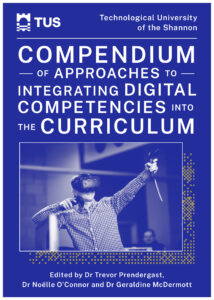
The Technological University of the Shannon (TUS) Compendium of Approaches to Integrating Digital Competencies into the Curriculum exemplifies the University’s commitment to embedding digital capability development across teaching, learning, and assessment.
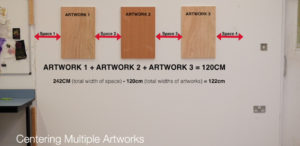
These video resources outline basic hanging and levelling methods used in the hanging and display of a variety of wall-based artworks, as well as demonstrating safe operation procedures for basic hand tools such as a drill, jigsaw, sander and nail gun.
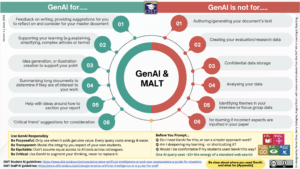
A 1-page guide, co-created by lecturers, tutors & students on DkIT's MA in Learning and Teaching, showing where GenAI can, and can't, support particular postgraduate research/skill development (*reflecting practice 2025-26). Includes student-informed prompts on responsible, sustainable use. An editable PowerPoint supports adaptation to own context.
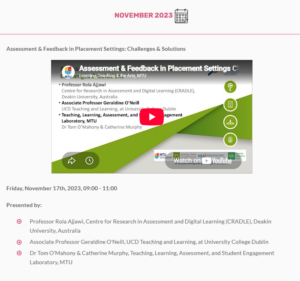
MTU researchers, together with national and international researchers, presented local, national, and global insights into the challenges and opportunities of assessment and feedback in work placement settings.