The Technological University of the Shannon (TUS) Compendium of Approaches to Integrating Digital Competencies into the Curriculum exemplifies the University’s commitment to embedding digital capability development across teaching, learning, and assessment.
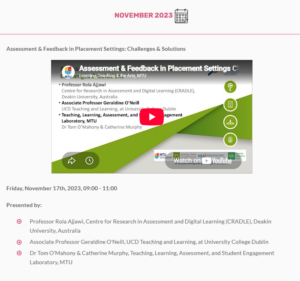
MTU researchers, together with national and international researchers, presented local, national, and global insights into the challenges and opportunities of assessment and feedback in work placement settings.
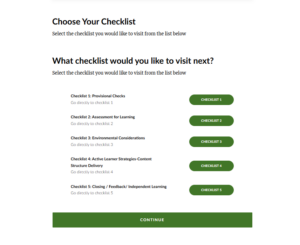
Teaching and Assessment for Learning Checklists aimed at early career & seasoned lecturers. The checklists provide guidance & reliable curated resources for lecturers who want to deliver an engaging and positive learning experience for their students. They act as a guide to check existing approaches, and help analyse how improvements can be made.
This open educational resource provides a step-by-step guide to cataloguing three-dimensional physical objects — primarily material samples — in Koha, the open-source Library Management System.
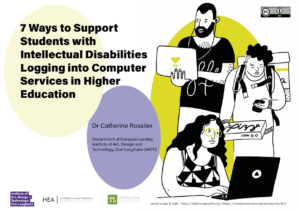
This resource was created to share the learning from teaching adults with intellectual disabilities (ID) in IADT college as part of a national suite of pilot projects.
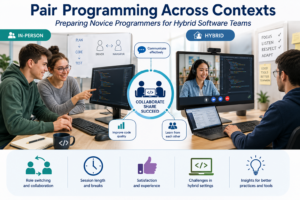
This OER presents findings from a comparative study of novice programmers engaging in face-to-face and hybrid pair programming. It explores collaboration patterns, role switching, satisfaction, and challenges, offering evidence-based insights for educators seeking to prepare students for effective teamwork in modern hybrid software development.
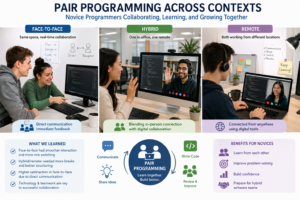
This OER explores novice programmers’ experiences of pair programming across face-to-face, hybrid, and remote settings. It provides insights into collaboration, role switching, satisfaction, and challenges, helping educators and students understand how to effectively prepare learners for modern hybrid software development environments.
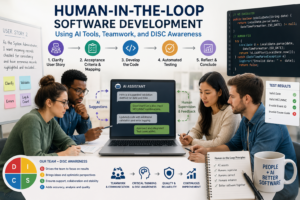
This OER guides students through human-in-the-loop software development, demonstrating how AI tools can be effectively supervised, refined, and integrated across the Software Lifecycle. Designed for computing educators and learners, it combines agile practice, teamwork, DISC awareness, testing, and critical reflection on human–AI collaboration.
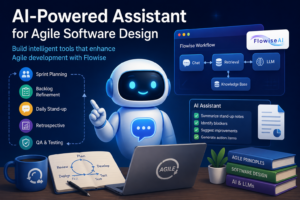
This OER introduces students to designing and developing AI-powered assistants for agile software development using Flowise (no code). Learners as a team explore Retrieval Augmented Generation (RAG) and agent-based systems, applying AI to real-world agile practices while considering technical design, evaluation, and cost-aware decision-making
In this video Ciarán O’Connor for the Institute of Strategic Dialogue guides us through a case study of how false information was used to undermine confidence in the Irish local elections in June 2024.
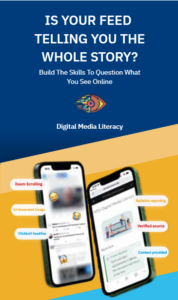
In today’s digital age, information spreads fast—yet not all of it is true or trustworthy. Knowing the differences between misinformation, disinformation, and malinformation is key to thinking critically online.
In the video below Ciarán O’Connor from the Institute of Strategic Dialogue discusses the disinformation ecosystem in Ireland.
This is an interactive multimedia open educational resource (OER), created using H5P, on the topic of Open Education. It has been developed by the Department of Technology Enhanced Learning at Munster Technological University.
The purpose of which is to give an overview of OEPs, using interactive features of H5P
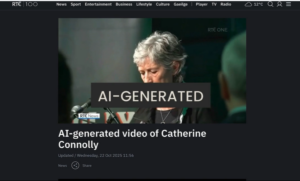
A video that discusses how Artificial Intelligence is impacting the way disinformation is created and spread to manipulate public opinion. It also outlines importance of Media Literacy education and regulatory measures, referencing Ireland’s Online Safety and Media Regulation Act and the EU’s Digital Services Act.
This interactive online resource is a set of eight units to support learners in their online information ecosystem. It is a mix of text, images, video, audio and interactive tasks. The resource can be accessed directly via the link provided or embedded in any Learning Management System compatible with SCORM files.
A video that explains how social media recommender algorithms work. It will help learners be more aware of how their social media content is delivered. The content is relevant to third level students, adult education and older secondary school students.
The video examines the impact of digital technology on the wellbeing of children and young people. It highlights ethics and legislation relating to social media platforms and Gen AI. It will be of interest to educators in third level, adult education and older school children. Content warning: it includes references to upsetting examples.
Reimagining Assessment & Feedback Together (RAFT) is MTU initiative developed to transforming assessment practices. This volume documents twenty-four situated, discipline-specific attempts to rethink assessment and feedback through student partnership and action research.
This resource contains a number of Capture The Flag (CTF) Challenges to be used for gamified learning of cyber security topics. There is a selection of 10 challenges that increase in difficulty. Included is a Writeups document explaining how these challenges are solved.
Capture-the-Flag (CTF) challenges to help learners explore real-world cybersecurity/STEM scenarios through gamified learning. By applying key concepts in a fun, interactive environment, participants will deepen their understanding of essential cybersecurity knowledge while collaborating with peers. CTFs are crucial for developing real-world skills.
This video explores practical enterprise applications of blockchain technology, highlighting real-world use cases in supply chain, finance, and data security.
This video provides a clear and accessible introduction to cryptocurrencies, explaining what they are, how they function, and their role in today’s digital economy. Designed for beginners, it offers a foundational overview for learners exploring blockchain technology and digital finance.
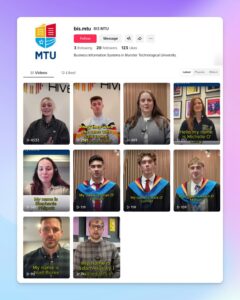
Short-form video interviews with MTU Business Information Systems graduates showcasing diverse career paths, designed to support professional identity development. These TikTok-style exemplars help students connect personal values with authentic career journeys, achieving 62,539+ views across social media platforms.
A self-paced resource introducing Articulate Rise 360, an authoring tool for creating interactive, mobile-responsive e-learning content. Covers content design principles, interaction types, accessibility features, and publishing workflows. Designed primarily for instructional designers, educators, and professionals new to Rise.
A foundational resource covering essential Microsoft 365 applications (Word, PowerPoint, Excel, Teams, OneDrive) used throughout academic and professional contexts. Covers basic functionality, collaboration features, and cloud storage management. The primary intended audience is university students.
A self-study resource addressing healthy relationships with digital technology, addressing digital addiction, privacy concerns, work-life balance, and digital identity management. Includes scenarios exploring real wellbeing challenges. Emphasises positive and negative impacts of digital participation. The primary audience is university students.
An interactive resource on effective digital communication across synchronous and asynchronous platforms, netiquette principles, formal vs. informal contexts, and platform-specific communication norms. The primary intended audience is university students.
A self-paced resource teaching video planning (pre-production), recording (production), editing (post-production), and ethical considerations for academic video use. Covers accessibility in video (captions, descriptions), equipment options, and practical workflows suited to diverse contexts. The primary intended audience is students.
A 45-minute comprehensive foundational lesson on digital accessibility principles, inclusive content creation, and available assistive technologies at university level. Collaboration with Educational Assistive Technology Centre, UL, launched for Global Accessibility Awareness Day. The primary intended audience is students.
A foundational, interactive guide to spreadsheet essentials covering data entry, formatting, basic formulas, functions, and chart creation. Features keyboard navigation, accessibility options, and read-aloud functionality for inclusive learning. Designed for beginners and those seeking a refresher. The primary intended audience is students.
Practical self-paced lesson introducing effective prompt writing techniques for students new to genAI tools. Covers prompt structure, iteration, critical evaluation of output, and ethical considerations. Teaches effective genAI communication techniques. Primary intended audience is university students.
An interactive, beginner-level, asynchronous resource designed to equip students with foundational knowledge on genAI ethics, applications, and academic use. It covers genAI fundamentals, responsible use, academic integrity considerations, and practical scenarios. The primary intended audience is university students.
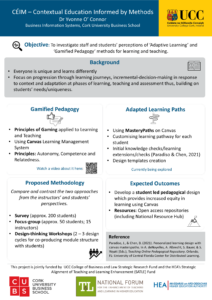
This poster offers educators an overview of designing a syllabus on the Canvas learning management system that supports personalised learning pathways. It highlights (1) a gamified pedagogy grounded in gaming principles and (2) adaptive learning strategies using MasteryPaths.
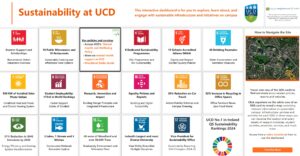
This scientific paper describes the co-creation of the UCD sustainability dashboard – the first transferable template to support geographically-specific SDG monitoring within HEIs. This paper contributes to debates on the need for spatial reporting of actions towards sustainability, to meaningfully recognise local SDG implementation progress.
BSEditor is a multi-platform software tool designed to aid educators in the creation of computer-based quiz questions. It provides a powerful editor to easily control every detail of a question, from integration of files and images, to elaborate scoring approaches.
Blender is a free and open-source 3D creation suite that supports Windows, macOS, Linux, and other platforms. It is widely used for creating animated films, visual effects, 3D models for printing, motion graphics, video games, and virtual reality content. This guide acts as an introduction to becoming familiar with Blender.
The resource is a template for surveying students about their timetabling experiences. The survey was deployed in MTU, but the template is free to be copied and adapted as needed.
Ideation Arcana is a visual ideation tool designed to assist learners—especially those new to open-ended creative projects—in generating and refining ideas. It does so by offering a structured yet playful approach to thinking, inspired by the layout and concept of tarot cards.
Ffrendi is an online, browser-based tool that makes it easier to learn and generate CSS visually. The name comes from the idea to provide a friendly frontend for learning and applying CSS.
The HTML & CSS Cheat Sheet is a quick-reference site designed to support first-year web development students. It gathers together all the key terminology and concepts introduced during the semester, making it easier to revise and apply them when building websites.
This GenAI Learning Hub was developed with students, for students, to support the responsible and effective use of generative AI. Topics are divided across three main sections to aid understanding of GenAI before use, during use, and in relation to assessment. While aimed at students, this resource will be useful to anyone using GenAI.
Cognitive Bias Lab is an interactive platform designed to help learners explore and practice recognizing cognitive biases. Through simulations, quizzes, and role-play scenarios, it supports critical thinking, decision-making skills, and classroom discussions in psychology, education, and media literacy.
This 12 lesson open course provides an introduction to the AI Fluency Framework and the four competencies of Delegation, Description, Discernment, and Diligence. c. 70 mins videos plus ungraded exercises & projects and reference handouts. Co-developed by University College Cork, Ringling College and Anthropic with support by HEA.
This playlist showcases real-world insights from BIS graduates, students, and employers, highlighting career paths, work placement experiences, and industry connections. Designed for prospective and current students, it offers an authentic look at how MTU’s BIS programme supports career development and professional growth.
The VISIEN Framework Document is a strategic guide for integrating immersive technologies (AR, VR, MR, XR) into higher education. It offers practical guidance on curriculum integration, accessibility, collaboration, skill development, institutional readiness, and more to support transformative teaching, learning, and research.
This OER index provides a selection of recent, high quality OER of varying content types (including articles, podcasts, presentations and textbooks), which are potentially relevant to TUS staff and students.
During the Spring trimester of 2024, in the UCD ‘Robotics Design Project’ (EEEN10020) module with 54 first-year undergraduate engineering students, we deliberately revised the assessment strategy. We evolved a take-home assignment into a pair of supervised in-class exercises.
This online tutorial introduces the fundamentals of Generative AI and LLMs, explaining their functionality, capabilities, and limitations. It explores key applications, ethical considerations, and practical examples, providing learners with a foundational understanding of how these technologies impact education and creativity.
The Facilitating Learning with Animation and Multimedia Engagement (FLAME) project provides a framework to easily design, author, produce and publish rich interactive 3D media to support teaching and learning. The media can be viewed on any device with a web browser.
Publication created by our 2024 summer interns in DkIT.
Stepping out in Dundalk! This book will be a useful resource for our cohort international students someone useful tips on life on and off campus.
This comprehensive, interactive and user-friendly online dashboard maps UCD infrastructure, activities and initiatives that have a sustainability remit, to raise awareness and promote sustainable practices on campus.
Digital Skills for Success in the Workplace is a five-unit, self-paced online course which equips learners with key digital literacy skills that are essential to study and work in rapidly evolving online environments.
Publication created by our 2024 summer interns in DkIT.
Giving power back to class reps! This book will be a useful resource for all our student reps to use as a guide and for training purposes also.
This faculty guide aims to help educators navigate and understand GenAI’s potential role in higher education. Created for faculty who want to explore AI tools and their implications for teaching and learning, the resource allows educators to learn at their own pace about the opportunities and challenges of these technologies.
This self-directed resource has been designed to help students navigate and understand the basics of GenAI. Exploring the resource at their own pace will give students an opportunity to focus on understanding some fundamental GenAI concepts, while also considering the pros and cons of using GenAI in their studies.
We are delighted to welcome you to ‘You can UDL it!’ This collection brings together case studies from educators across DkIT, who have successfully implemented Universal Design for Learning (UDL) in their own practice. UDL provides a framework for making learning, teaching and assessment more inclusive, and helps to support all our learners.
This series of videos presents an abstract from the Croí process where individuals are guided to define their personal (or core) and professional values, and to identify actions they can take that will help them to develop a career that better aligns their personal and professional values and lives.
Curricular approaches to well-being are important and impactful, as universal supports for all students. This OER is a padlet of resources and talks from the April 2024 jointly hosted UCC and MTU seminar on this critical area for teaching and learning enhancement in Irish higher education.
This report has been prepared for circulation across the Green-Campus Network, Higher Education Authority and the National Forum for the Enhancement of Teaching and Learning in Higher Education. It can also act as a resource for individuals who are interested in ESD and sustainability.
Future proof your curriculum by embedding sustainability into your teaching practice or further integrating the Sustainable Development Goals (SDGs) into your curriculum. The SDG digital toolkit project will give you concise actionable resources to achieve this result while providing insights into the underpinning theories.
This publication collects the posters shared at the 2023 Learning and Teaching Showcase at University College Cork, 5 December 2023. The posters are grouped into five themes: student engagement, inclusive teaching, academic integrity, digital education and education for sustainable development.
The Toolkit includes an introduction to generative AI and lexicon of terms, guidelines for ethical use, recommended adjustments to common modes of assessment to mitigate against the potential risk of unethical use, and discipline-specific case studies of good practice that share innovative forms of learning, teaching and/or assessment.
The Academic Integrity, Academic Misconduct, and Resources pages of the UCC Skills Centre website contain guidance for students on these topics, including a series of short videos, “The Minute Methods: Academic Integrity Skills” that cover a range of topics from the principles of academic integrity to the pitfalls of essay mills.
This OER provides teaching and learning material in technologies applied to sustainability and resilience system design solutions, in particular, electronics prototypes involving sensors and actuators.
Your Brainpower is a free, online, self-paced course, focusing on harnessing the power and potential of adolescent [age 10 – 24 years] brain and behaviour for enhanced learning, wellbeing, and student success in higher education.
Via the lens of graduate attribute development this toolkit highlights best examples of employability activities for higher education curriculum. Designed to enhance employability skills development as class activities and module assessments, namely via the Employability Superfoods, lecturers can enhance students’ employability learning with ease.
This seminar presented an overview of current policy, research and practice relating to student wellbeing in higher education and how the curriculum can be leveraged to enhance wellbeing. It showcased a range of innovative curricular wellbeing initiatives in UCC and MTU.
This Forum Insight summarises the background and preliminary findings from the research undertaken by Brett Becker of University College Dublin as part of his National Forum Teaching and Learning Research…
Recording of National Forum Seminar December 2021 with Lee O Farrell, UCD; Mary Loftus, IT Sligo; and, Prof James Pickering & Dr Bronwen Swinnerton, University of Leeds (UK), chaired by Damien Raftery, IT Carlow
‘AT Hive’ is a web based resource by AHEAD that aims to impart information about the large area of Assistive Technology that supports students students with disabilities. These technologies and tools help people who may have challenges with reading, writing, organisation, motivation as well as much more so explore the wide range of apps and tools.
Transform higher education and student learning. Open textbooks are licensed by authors and publishers to be freely used and adapted. Download, edit and distribute them at no cost.
The Open Data listed in data.gov.ie is published by Government Departments and Public Bodies. Many datasets are individually published and updated by public organisations. Other datasets are harvested daily from existing, domain-specific data catalogues.
This Compendium of Active Learning Strategies for Student Engagement serves as a helpful collaborative resource with ideas for continuing to improve practice and enhancing student engagement.