The purpose of these protocols is to assist student teachers and cooperating teachers in schools to have professional conversations together during regular tutorial meetings. Each document requires the use of GenAI but can generate insights or interactions that would be difficult to emulate in paired discussion.
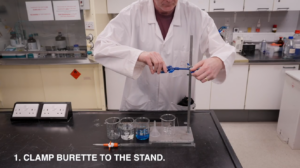
Demonstration of basic laboratory techniques, with the ability to stop, rewind and watch again. Aimed at 1st year students with no chemistry or limited experience
The Technological University of the Shannon (TUS) Compendium of Approaches to Integrating Digital Competencies into the Curriculum exemplifies the University’s commitment to embedding digital capability development across teaching, learning, and assessment.
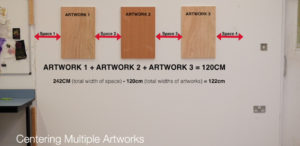
These video resources outline basic hanging and levelling methods used in the hanging and display of a variety of wall-based artworks, as well as demonstrating safe operation procedures for basic hand tools such as a drill, jigsaw, sander and nail gun.
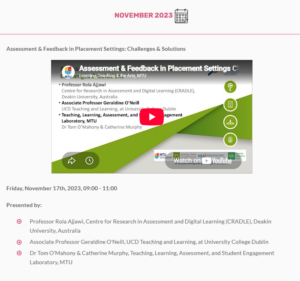
MTU researchers, together with national and international researchers, presented local, national, and global insights into the challenges and opportunities of assessment and feedback in work placement settings.
This book is designed specifically for students studying at the Technological University of the Shannon – Midlands Midwest, Ireland. It presents a step-by-step practical guide to academic writing, referencing and presentation, with clear explanations and structured approaches with examples that support the development of clear and concise writing.
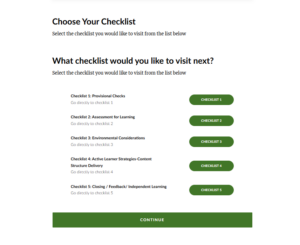
Teaching and Assessment for Learning Checklists aimed at early career & seasoned lecturers. The checklists provide guidance & reliable curated resources for lecturers who want to deliver an engaging and positive learning experience for their students. They act as a guide to check existing approaches, and help analyse how improvements can be made.
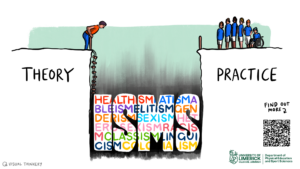
This open educational resource supports pre-service teachers in developing practical approaches to social justice in Physical Education. Through visual case studies, reflective prompts, and introductory concepts, it encourages critical reflection, collaborative discussion, and informed decision-making based on authentic school placement experiences
This report draws on Patricia Gibson’s research around critical approaches to Artificial Intelligence (AI) in Education and the increasing automation of Educational Technologies (EdTech).
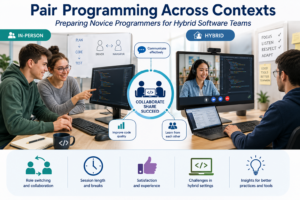
This OER presents findings from a comparative study of novice programmers engaging in face-to-face and hybrid pair programming. It explores collaboration patterns, role switching, satisfaction, and challenges, offering evidence-based insights for educators seeking to prepare students for effective teamwork in modern hybrid software development.
Through a thought-and-action mapping strategy known as interactive management, the current research modelled a unique, collaborative "pathway of impact influences" to describe such considerations from the perspectives of TUS higher management and external stakeholders.
This book of abstracts presents an overview of the research summaries from students across the RUN-EU network who participated in the RUN-EU Student Research Colloquium 2025.This event brought together students, researchers, and academics from across Europe, creating a dynamic platform to showcase cutting-edge research.
This OER explores the use of Inspiration Mind Mapping software to support student learning through demonstrations and training sessions with Applied Social Care and LSAD students.
This is an interactive multimedia open educational resource (OER), created using H5P, on the topic of Open Education. It has been developed by the Department of Technology Enhanced Learning at Munster Technological University.
The purpose of which is to give an overview of OEPs, using interactive features of H5P
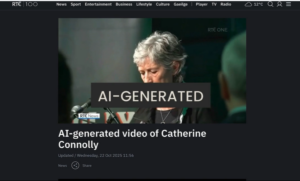
A video that discusses how Artificial Intelligence is impacting the way disinformation is created and spread to manipulate public opinion. It also outlines importance of Media Literacy education and regulatory measures, referencing Ireland’s Online Safety and Media Regulation Act and the EU’s Digital Services Act.
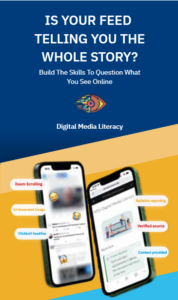
This interactive online resource is a set of eight units to support learners in their online information ecosystem. It is a mix of text, images, video, audio and interactive tasks. The resource can be accessed directly via the link provided or embedded in any Learning Management System compatible with SCORM files.
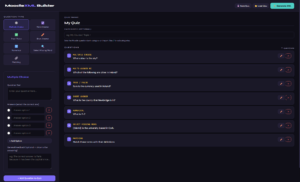
The purpose of this resource is to allow Moodle teachers to quickly create quizzes for Moodle. Users can quickly select between questions types through a single interface and export their questions as an XML file which can be imported into Moodle.
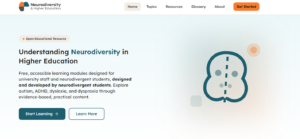
An open educational resource that supports academic, professional, and support staff to build more neuro-inclusive teaching, services, and policies in higher education. This resource was conceptualised & developed through the experiences of neurodivergent students in third-level education, with co-creation at the heart of every stage of the process
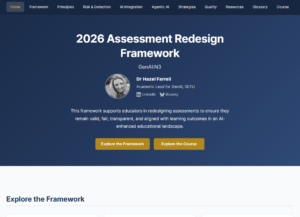
This OER presents an updated Assessment Redesign Framework for higher education in the age of GenAI. It supports educators and programme teams in designing valid, transparent, and scalable assessments, integrating AI literacy, process-focused approaches, and guidance on AI detection, large cohorts, and emerging agentic AI challenges.
This Pressbook features an interactive tool that helps you plan and structure your essay step by step. The book provides a clear starting point to reduce stress, prevent overwhelm, and support different learning preferences through examples, , quick guides, and PowerPoint videos with voiceover. This resource is a living document.
Purpose of the MTU Student Guidelines
Supports Academic Integrity Principles and MTU’s Academic Integrity Policy by:
1. Explaining what academic integrity is.
2. Helping students avoid bad decisions during assessments.
3. Outlines and signposts supports available across MTU
Conor Moynihan, Senior Engineer John Sisk & Sons. Structural Engineering @MTU Alumnus. In this video we meet Conor who graduated from MTU and is now a senior Engineer with Sisks in the UK.
Virtual Visit to Munster Technological University (MTU) – Join us on a visit to some of our campuses of MTU. Here we visit the Bishopstown campus, The National Maritime College (NMCI) and the Kerry North Campus.
The work presented in this practice paper illustrates how the use of immersive 360o
video and photographs, viewed in virtual reality headsets or via 360o media players,
can enhance and broaden student knowledge and experience when undertaking
Project Based Learning (PBL) assignments.
This resource showcases initiatives from both academic and professional support areas across DCU, which have been funded under SATLE – the Strategic Alignment of Teaching and Learning Enhancement Funding in Higher Education. Examples are provided under the themes of Education for Sustainable Development, Digital transformation & Academic Integrity
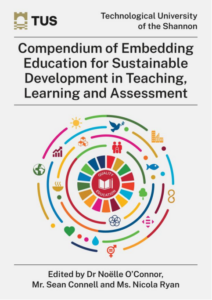
The Technological University of the Shannon (TUS) Compendium of Embedding Education for Sustainable Development (ESD) showcases the University’s commitment to integrating sustainability across teaching, learning and assessment. It is the first compendium of its kind in an Irish higher education institution.
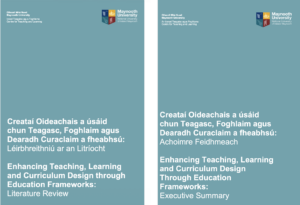
The resource comprises of a literature review and an executive summary, developed as part of the Maynooth University Leadership and EducAtion Framework (LEAF) initiative. It explores how education frameworks can enhance teaching, learning and curriculum design in higher education, supporting inclusive, sustainable and values-led academic practice.
This video provides a step-by-step guide on how to submit your SATLE-funded Open Educational Resources (OER) to Ireland’s National Resource Hub. It outlines the submission process, key requirements, and best practices to ensure your resources are accessible, discoverable, and aligned with national open education goals. Whether you're new to the Hub
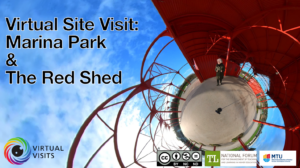
In this 360 immersive video, Dr Mary Moloney – head of the Department of Civil, Structural and Environmental Engineering at Munster Technological University – gives a guided tour of the "Red Shed" at Cork City's Marina Park. Dr Moloney highlights key structural features.
This video explores practical enterprise applications of blockchain technology, highlighting real-world use cases in supply chain, finance, and data security.
This video provides a clear and accessible introduction to cryptocurrencies, explaining what they are, how they function, and their role in today’s digital economy. Designed for beginners, it offers a foundational overview for learners exploring blockchain technology and digital finance.
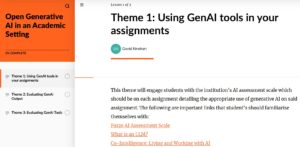
This lesson is designed to aid students in understanding how to engage generative AI in an academic setting without breaching academic integrity policy.
This OER provides a practical Grammar translation and TBLT toolkit for Mandarin teaching, including 15 lesson plans and 50+ task kits. It helps educators in low-time contexts enhance students’ oral proficiency and plurilingual awareness through ready-to-use, adaptable resources.
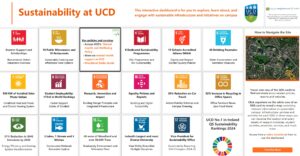
This scientific paper describes the co-creation of the UCD sustainability dashboard – the first transferable template to support geographically-specific SDG monitoring within HEIs. This paper contributes to debates on the need for spatial reporting of actions towards sustainability, to meaningfully recognise local SDG implementation progress.
BSEditor is a multi-platform software tool designed to aid educators in the creation of computer-based quiz questions. It provides a powerful editor to easily control every detail of a question, from integration of files and images, to elaborate scoring approaches.
The Manifesto for Generative AI in Higher Education is a living resource for educators, students, and institutions. It invites reflection and dialogue across thirty statements exploring teaching, ethics, and imagination – helping higher education navigate AI with curiosity, integrity, and humanity.
This resource presents AVINA, an automated visual novel generator using large language models to transform multiple-choice questions into interactive learning narratives. Designed for educators and students, it supports gamified training in academic integrity and ethical decision-making through adaptive storytelling and experiential learning.
The resource is a template for surveying students about their timetabling experiences. The survey was deployed in MTU, but the template is free to be copied and adapted as needed.
This toolkit is designed to provide educators in Higher Education with practical, adaptable tools and strategies for fostering sustainable wellbeing in their teaching through curriculum, assessment and pedagogy.
This resource captures insights through zine making from workshop participants at the Education after the algorithm symposium hosted at DCU on 21 February 2025, facilitated by Kate Molloy and Clare Thomson.
This paper describes the foundational principles and design details of the student-staff partnership initiative launched by the Co-creating Inclusive and Equitable Teaching & Learning project, led by Dr. Anna Santucci and situated within the Centre for the Integration of Research, Teaching and Learning (CIRTL) at University College Cork (UCC).
Dataset originating from collaborative autoethnographic study "What does researcher independence and the hidden curriculum mean for postdocs?". It comprises individual narratives written by the three authors, and the transcript of an online discussion.
This resource portal is dedicated to providing centralised access to policies, guidelines, and resources for teaching and learning in higher education in the context of generative artificial intelligence. The curated policies and frameworks offer authoritative guidance and practical support to inform and enhance institutional practice.
The Toolkit for Teacher Educators to Embrace Social Justice Pedagogies offers a comprehensive resource for fostering equity-driven approaches in teacher education for teacher educators. The resource is tailored to embed social justice approaches within physical education teacher education programs.
This compendium comprehensively brings together the components needed by higher education institutions (HEIs) when developing comprehensive frameworks for managing cases of academic misconduct. It serves as both a practical guide and a reflective resource, aimed at strengthening and promoting a culture of academic integrity.
This e-book reports on a SATLE-funded project to explore the use of immersive technologies in Higher Education. It includes case studies, practical guidance and a brief review of the literature on immersive learning from the project team. It is intended for those considering using VR in their teaching, and for those who support learning.
It is with great pleasure that we present the proceedings from the
“Enhancing Academic Integrity: From Ideas to Action” conference, hosted
by CCT College Dublin on 3rd and 4th September 2024. This collection
represents the culmination of thoughtful discourse, innovative research, and
collaborative spirit that defined our gathering.
The VISIEN Framework Document is a strategic guide for integrating immersive technologies (AR, VR, MR, XR) into higher education. It offers practical guidance on curriculum integration, accessibility, collaboration, skill development, institutional readiness, and more to support transformative teaching, learning, and research.
The course is targeted at senior leaders to support the implementation of universal design and the adoption of the national ALTITUDE Charter https://www.mtu.ie/universal-design/ and aims to complement the existing Digital Badge for Universal Design in Teaching & Learning https://www.ahead.ie/udl-digital-badge and the Digital Badge Universal Design Beyond the Classroom https://www.ahead.ie/journal/Launch-Universal-Design-Beyond-the-Classroom-Digital-Course-and-Digital-Badge
TUS Sensory Awareness Guide delves into the often-overlooked challenges faced by individuals with sensory processing challenges, especially in academic settings. It focuses on creating sensory-friendly environments and offers actionable advice on everything from classroom settings to other student facing roles.
This infographic provides insights and tools to support OER use based on feedback from Teaching staff using the DOERs Project OER Institutional Survey.
This ebook provides a selection of OER which align with teaching and learning within our university to showcase the flexibility, adaptability and potential of OER. Subject areas which are explored include: 3D printing; immersive technology; lightboard and team based learning.
This OER index provides a selection of recent, high quality OER of varying content types (including articles, podcasts, presentations and textbooks), which are potentially relevant to TUS staff and students.
This survey was adapted from a North American Faculty OER Survey Toolkit for use in the Irish Higher Education context. It was used across the DOERs project partner sites to audit staff Open Educational Resources and Open Educational Practices awareness and practices. We encourage other institutions to adapt this tool to meet their needs.
Two modules are available on this page one for educators and one for mentors to learn how to engage in mentoring sessions with students. The page also has access to the Community Mentoring Handbook (for mentors), Mentee Toolkit (for second-level students taking part in sessions) and the Adult Ed Handbook(for adult learners taking part in sessions).
This Toolkit was created by students at University College Dublin, for students, to break down sustainability in a way that’s simple and easy to understand. Climate change is something that affects all of us—no matter what you’re studying, where you’re from, or what you do. It’s here, and it’s impacting our world—but many of us aren’t sure what we can do about it.
The purpose of this toolkit is a starting point for what students need to learn about living more sustainably on and off campus. We hope it’ll inspire students to take small steps that make a big impact, and they can do it all at their own pace. You can access the Moodle page to view the Toolkit. There are also Zip files of the SCORM packages used to create the Toolkit (Part 1 and Part 2) that can be downloaded and imported into a Virtual Learning Environment.
• Part 1: Climate Change → Watch short Youtube videos followed by a little quiz to brush up on your sustainability knowledge.
• Part 2: What Can You Do? → Find tips and tricks to incorporate sustainability into your day-to-day life, this is a resource tool to help you get started!
The case studies highlight the excellent teaching and learning practices that are in place across MIC. Each case study provides a detailed description of the approaches implemented, the benefits and challenges of such approaches, and tips for those who wish to implement similar approaches in their own teaching.
Recognizing the transformative potential of AI, the ICDE Quality Network has developed this report as a key initiative to explore its application in teaching and learning globally. This endeavour underscores the Network’s commitment to advancing quality education by promoting the responsible integration of AI.
A. Hickey, C. O’Faolain, J. Healy, K. Nolan, E. Doheny and P. Cuffe, “A Threat Assessment Framework for Screening the Integrity of University Assessments in the Era of Large Language Models”, presented at 8th IEEE International Forum on Research and Technologies for Society and Industry Innovation, Lecco, Italy, September 2024
This online tutorial introduces the fundamentals of Generative AI and LLMs, explaining their functionality, capabilities, and limitations. It explores key applications, ethical considerations, and practical examples, providing learners with a foundational understanding of how these technologies impact education and creativity.
The Facilitating Learning with Animation and Multimedia Engagement (FLAME) project provides a framework to easily design, author, produce and publish rich interactive 3D media to support teaching and learning. The media can be viewed on any device with a web browser.
Publication created by our 2024 summer interns in DkIT.
Stepping out in Dundalk! This book will be a useful resource for our cohort international students someone useful tips on life on and off campus.
The HEART project explored the impact of generative AI on 3rd-level education in Ireland, using modules delivered in the UCD School of Biology and Environmental Science (SBES) at University College Dublin. We wish to thank the Strategic Alignment of Teaching and Learning Enhancement (SATLE) fund for making this project possible.
This comprehensive, interactive and user-friendly online dashboard maps UCD infrastructure, activities and initiatives that have a sustainability remit, to raise awareness and promote sustainable practices on campus.
Digital Skills for Success in the Workplace is a five-unit, self-paced online course which equips learners with key digital literacy skills that are essential to study and work in rapidly evolving online environments.
Publication created by our 2024 summer interns in DkIT.
Giving power back to class reps! This book will be a useful resource for all our student reps to use as a guide and for training purposes also.
This faculty guide aims to help educators navigate and understand GenAI’s potential role in higher education. Created for faculty who want to explore AI tools and their implications for teaching and learning, the resource allows educators to learn at their own pace about the opportunities and challenges of these technologies.
An interdisciplinary team of academic and professional services staff collaborated to create a quality framework to scaffold stakeholder engagement in the development of physical learning spaces within Munster Technological University.
This self-directed resource has been designed to help students navigate and understand the basics of GenAI. Exploring the resource at their own pace will give students an opportunity to focus on understanding some fundamental GenAI concepts, while also considering the pros and cons of using GenAI in their studies.
Gerry Duffy, internationally renowned runner, writer, keynote speaker, working with global brands on high performance, leadership, strategy, and people performance, works through a session on ‘How to achieve what you want – and why you should’ as part of the FYMMO programme in IADT.
This project website enables students to champion the core values of academic integrity among their peers. These values comprise honesty, trust, fairness, respect, responsibility and courage, values to be cultivated in association with an ethos of compassion and concern.
We are delighted to welcome you to ‘You can UDL it!’ This collection brings together case studies from educators across DkIT, who have successfully implemented Universal Design for Learning (UDL) in their own practice. UDL provides a framework for making learning, teaching and assessment more inclusive, and helps to support all our learners.
This series of videos presents an abstract from the Croí process where individuals are guided to define their personal (or core) and professional values, and to identify actions they can take that will help them to develop a career that better aligns their personal and professional values and lives.
Curricular approaches to well-being are important and impactful, as universal supports for all students. This OER is a padlet of resources and talks from the April 2024 jointly hosted UCC and MTU seminar on this critical area for teaching and learning enhancement in Irish higher education.