

MTU researchers, together with national and international researchers, presented local, national, and global insights into the challenges and opportunities of assessment and feedback in work placement settings.
Filter by
Filter by
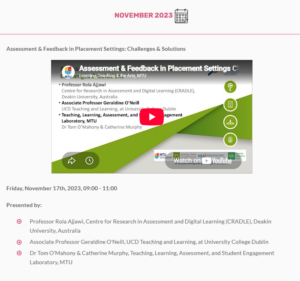
MTU researchers, together with national and international researchers, presented local, national, and global insights into the challenges and opportunities of assessment and feedback in work placement settings.
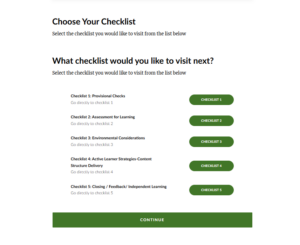
Teaching and Assessment for Learning Checklists aimed at early career & seasoned lecturers. The checklists provide guidance & reliable curated resources for lecturers who want to deliver an engaging and positive learning experience for their students. They act as a guide to check existing approaches, and help analyse how improvements can be made.

This case study outlines a first-year intervention at SETU Waterford using a timetabled weekly session to tackle common causes of academic failure such as time management, assessment planning. and study skills. It is intended for programme teams seeking practical, low-resource approaches to improving student progression and retention.
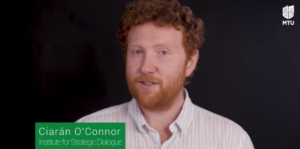
In this video Ciarán O’Connor for the Institute of Strategic Dialogue guides us through a case study of how false information was used to undermine confidence in the Irish local elections in June 2024.
In today’s digital age, information spreads fast—yet not all of it is true or trustworthy. Knowing the differences between misinformation, disinformation, and malinformation is key to thinking critically online.
In the video below Ciarán O’Connor from the Institute of Strategic Dialogue discusses the disinformation ecosystem in Ireland.
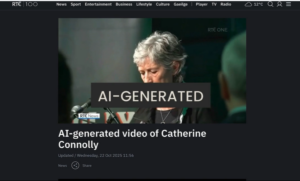
A video that discusses how Artificial Intelligence is impacting the way disinformation is created and spread to manipulate public opinion. It also outlines importance of Media Literacy education and regulatory measures, referencing Ireland’s Online Safety and Media Regulation Act and the EU’s Digital Services Act.
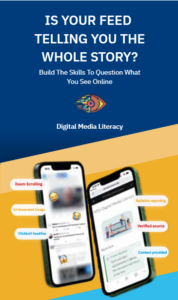
This interactive online resource is a set of eight units to support learners in their online information ecosystem. It is a mix of text, images, video, audio and interactive tasks. The resource can be accessed directly via the link provided or embedded in any Learning Management System compatible with SCORM files.

A video that explains how social media recommender algorithms work. It will help learners be more aware of how their social media content is delivered. The content is relevant to third level students, adult education and older secondary school students.

The video examines the impact of digital technology on the wellbeing of children and young people. It highlights ethics and legislation relating to social media platforms and Gen AI. It will be of interest to educators in third level, adult education and older school children. Content warning: it includes references to upsetting examples.
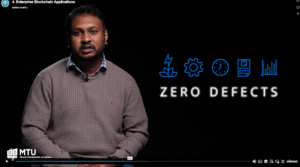
This video explores practical enterprise applications of blockchain technology, highlighting real-world use cases in supply chain, finance, and data security.
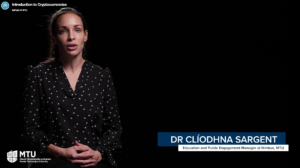
This video provides a clear and accessible introduction to cryptocurrencies, explaining what they are, how they function, and their role in today’s digital economy. Designed for beginners, it offers a foundational overview for learners exploring blockchain technology and digital finance.
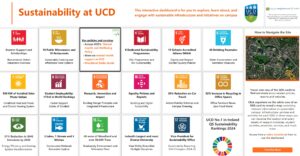
This scientific paper describes the co-creation of the UCD sustainability dashboard – the first transferable template to support geographically-specific SDG monitoring within HEIs. This paper contributes to debates on the need for spatial reporting of actions towards sustainability, to meaningfully recognise local SDG implementation progress.

The resource is a template for surveying students about their timetabling experiences. The survey was deployed in MTU, but the template is free to be copied and adapted as needed.
This document describes the first timetable coordinators workshop held in MTU in March 2025.

Contested development is an educational game about urban planning and the environment.
It is designed for use with college students and the public.
Play through stages of the planning process, encounter the real life challenges and solutions faced by teams and try to be first to market!
This resource is for basic introduction team play.

Cognitive Bias Lab is an interactive platform designed to help learners explore and practice recognizing cognitive biases. Through simulations, quizzes, and role-play scenarios, it supports critical thinking, decision-making skills, and classroom discussions in psychology, education, and media literacy.

This Pressbook converts and enhances the PDF resources from Social Care Ireland’s Guide to the Standards of Proficiency for Social Care Workers, making them more accessible, searchable, and interactive in a live digital format.

The VISIEN Framework Document is a strategic guide for integrating immersive technologies (AR, VR, MR, XR) into higher education. It offers practical guidance on curriculum integration, accessibility, collaboration, skill development, institutional readiness, and more to support transformative teaching, learning, and research.

This OER index provides a selection of recent, high quality OER of varying content types (including articles, podcasts, presentations and textbooks), which are potentially relevant to TUS staff and students.

This Toolkit was created by students at University College Dublin, for students, to break down sustainability in a way that’s simple and easy to understand. Climate change is something that affects all of us—no matter what you’re studying, where you’re from, or what you do. It’s here, and it’s impacting our world—but many of us aren’t sure what we can do about it.
The purpose of this toolkit is a starting point for what students need to learn about living more sustainably on and off campus. We hope it’ll inspire students to take small steps that make a big impact, and they can do it all at their own pace. You can access the Moodle page to view the Toolkit. There are also Zip files of the SCORM packages used to create the Toolkit (Part 1 and Part 2) that can be downloaded and imported into a Virtual Learning Environment.
• Part 1: Climate Change → Watch short Youtube videos followed by a little quiz to brush up on your sustainability knowledge.
• Part 2: What Can You Do? → Find tips and tricks to incorporate sustainability into your day-to-day life, this is a resource tool to help you get started!

This resource provides the videos and PowerPoint presentations from the Navigating the New Frontier: Generative AI and Academic Integrity Conference.

This online tutorial introduces the fundamentals of Generative AI and LLMs, explaining their functionality, capabilities, and limitations. It explores key applications, ethical considerations, and practical examples, providing learners with a foundational understanding of how these technologies impact education and creativity.

Publication created by our 2024 summer interns in DkIT.
Stepping out in Dundalk! This book will be a useful resource for our cohort international students someone useful tips on life on and off campus.

This OER is from a collection of ‘MU: UDL & U’ Plus One resources created by Maynooth University colleagues with the support of HEA PATH4 funding.

This OER is from a collection of ‘MU: UDL & U’ Plus One resources created by Maynooth University colleagues with the support of HEA PATH4 funding.

This OER is from a collection of ‘MU: UDL & U’ Plus One resources created by Maynooth University colleagues with the support of HEA PATH4 funding.

This OER is from a collection of ‘MU: UDL & U’ Plus One resources created by Maynooth University colleagues with the support of HEA PATH4 funding.

This OER is from a collection of ‘MU: UDL & U’ Plus One resources created by Maynooth University colleagues with the support of HEA PATH4 funding.

This OER is from a collection of ‘MU: UDL & U’ Plus One resources created by Maynooth University colleagues with the support of HEA PATH4 funding.

This OER is from a collection of ‘MU: UDL & U’ Plus One resources created by Maynooth University colleagues with the support of HEA PATH4 funding.

This OER is from a collection of ‘MU: UDL & U’ Plus One resources created by Maynooth University colleagues with the support of HEA PATH4 funding.

This OER is from a collection of ‘MU: UDL & U’ Plus One resources created by Maynooth University colleagues with the support of HEA PATH4 funding.

This OER is from a collection of ‘MU: UDL & U’ Plus One resources created by Maynooth University colleagues with the support of HEA PATH4 funding.

This OER notes four WEC-Inspired Ideas for Understanding Writing and the Curriculum.

This OER provides a brief overview of the ways in which institutions can support WEC programmes.

This OER provides a brief overview of potential considerations for colleagues considering the introduction or development of WEC.

This OER provides an overview of the benefits of Writing-Enriched Curriculum (WEC) for both faculty and students.

This OER provides a brief overview of the research underpinning Writing Enriched Curriculum (WEC).

This OER provides a brief overview of the principles and themes which typically underpin WEC work.

This OER provides a brief description of Writing-Enriched Curriculum.

This comprehensive, interactive and user-friendly online dashboard maps UCD infrastructure, activities and initiatives that have a sustainability remit, to raise awareness and promote sustainable practices on campus.

Digital Skills for Success in the Workplace is a five-unit, self-paced online course which equips learners with key digital literacy skills that are essential to study and work in rapidly evolving online environments.

Publication created by our 2024 summer interns in DkIT.
Giving power back to class reps! This book will be a useful resource for all our student reps to use as a guide and for training purposes also.

This faculty guide aims to help educators navigate and understand GenAI’s potential role in higher education. Created for faculty who want to explore AI tools and their implications for teaching and learning, the resource allows educators to learn at their own pace about the opportunities and challenges of these technologies.

Science Literacy Competence Framework for Undergraduate and Postgraduate Curriculum

Science Literacy in the Post-Truth Era – Project Background

We are delighted to welcome you to ‘You can UDL it!’ This collection brings together case studies from educators across DkIT, who have successfully implemented Universal Design for Learning (UDL) in their own practice. UDL provides a framework for making learning, teaching and assessment more inclusive, and helps to support all our learners.

This series of videos presents an abstract from the Croí process where individuals are guided to define their personal (or core) and professional values, and to identify actions they can take that will help them to develop a career that better aligns their personal and professional values and lives.

Curricular approaches to well-being are important and impactful, as universal supports for all students. This OER is a padlet of resources and talks from the April 2024 jointly hosted UCC and MTU seminar on this critical area for teaching and learning enhancement in Irish higher education.

This report has been prepared for circulation across the Green-Campus Network, Higher Education Authority and the National Forum for the Enhancement of Teaching and Learning in Higher Education. It can also act as a resource for individuals who are interested in ESD and sustainability.

Future proof your curriculum by embedding sustainability into your teaching practice or further integrating the Sustainable Development Goals (SDGs) into your curriculum. The SDG digital toolkit project will give you concise actionable resources to achieve this result while providing insights into the underpinning theories.

This publication collects the posters shared at the 2023 Learning and Teaching Showcase at University College Cork, 5 December 2023. The posters are grouped into five themes: student engagement, inclusive teaching, academic integrity, digital education and education for sustainable development.

The Toolkit includes an introduction to generative AI and lexicon of terms, guidelines for ethical use, recommended adjustments to common modes of assessment to mitigate against the potential risk of unethical use, and discipline-specific case studies of good practice that share innovative forms of learning, teaching and/or assessment.

The Academic Integrity, Academic Misconduct, and Resources pages of the UCC Skills Centre website contain guidance for students on these topics, including a series of short videos, “The Minute Methods: Academic Integrity Skills” that cover a range of topics from the principles of academic integrity to the pitfalls of essay mills.

The research literature on children’s testimony in the courtroom, and the factors that either help or hinder consistent and accurate accounts, is a vast one. This short booklet, will benefit child services training and self study.

This lecture presents students, and professionals who are training in crime statistics reporting, with a concrete tutorial in how to critically evaluate government crime statistics with reference to public data collected from public surveys on their recounted experiences of crime.

This tutorial explicates three critical examples of how psychology informs legal professionals of the problems that human behaviour brings to law and its practice.

This workbook takes the student on a conceptual journey aiding their understanding of what is meant by the quantitative-qualitative research process in contemporary legal empirical research. Although, of interest to social science students, the particular worked examples relate to how to do research on law, legal policy and review.

This lecture addresses core issues in choosing a research topic for undergraduate and first time researchers to consider. Often final year undergraduate students find this task a difficult one. Step by step the the lecture connects the student to core concepts, pressure points and key readings to foster their idea and focus their decision.

The barriers to peace in terrorist societies can seem senseless to outside observers, and students of psychology and social sciences aim to gain knowledge to understand why. We present a role play exercise in which students take the perspective of terrorists or landowners based on the N. Ireland conflict, to promote their understanding.

This notebook presents an introductory overview to the cognitive perspective on the psychology of human behaviour for social science students.

Your Brainpower is a free, online, self-paced course, focusing on harnessing the power and potential of adolescent [age 10 – 24 years] brain and behaviour for enhanced learning, wellbeing, and student success in higher education.

Via the lens of graduate attribute development this toolkit highlights best examples of employability activities for higher education curriculum. Designed to enhance employability skills development as class activities and module assessments, namely via the Employability Superfoods, lecturers can enhance students’ employability learning with ease.

This resource is a digital toolkit to support students in health and social care professions who are learning clinical and professional competencies through technology (including telepractice and simulation). The toolkit includes interactive resources to support learning and enhance technology-enabled practice education.

This seminar presented an overview of current policy, research and practice relating to student wellbeing in higher education and how the curriculum can be leveraged to enhance wellbeing. It showcased a range of innovative curricular wellbeing initiatives in UCC and MTU.

Drawing on this knowledge, and expertise in occupational science/therapy, psychology and neuroscience, the ‘DOTS – Developmental Opportunities for Transitions in Students’ seminar sought to inform stakeholders of the biobehavioural transitions that influence undergraduate wellbeing and academic achievement in the current socio-cultural climate.