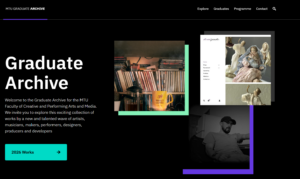
The Graduate Archive Website is a permanent collection of final year artworks and performances across the MTU Faculty of Creative and Performing Arts and Media.
The Archive showcases all works in full detail, which allows the works to function as high quality research material, and creates a key resource for teaching and learning.
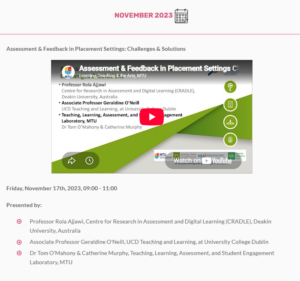
MTU researchers, together with national and international researchers, presented local, national, and global insights into the challenges and opportunities of assessment and feedback in work placement settings.
Team Tool is an open educational resource (OER) designed to support equitable,
e ective teamwork in higher education. It was developed in response to persistent
challenges in collaborative work, including uneven contribution, lack of
accountability and student dislike and anxiety around group projects.
This open educational resource provides a step-by-step guide to cataloguing three-dimensional physical objects — primarily material samples — in Koha, the open-source Library Management System.
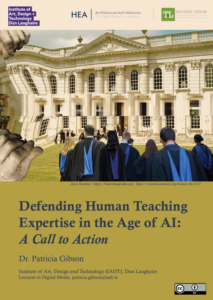
This report draws on Patricia Gibson’s research around critical approaches to Artificial Intelligence (AI) in Education and the increasing automation of Educational Technologies (EdTech).
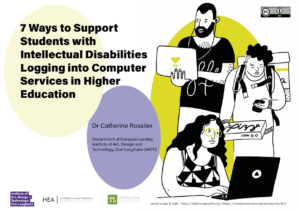
This resource was created to share the learning from teaching adults with intellectual disabilities (ID) in IADT college as part of a national suite of pilot projects.
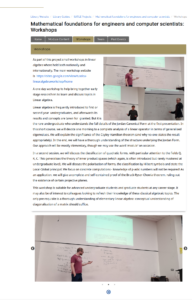
As part of this project small workshops in linear algebra where held both nationally and internationally. The main workshop website is https://sites.google.com/view/tusdcu-linearalgebraworkshop/home
A one day workshop to help bring together early stage researchers to learn and discuss topics in Linear algebra.
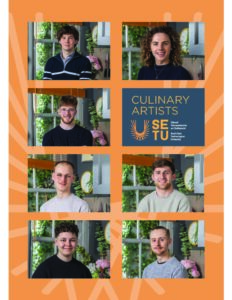
As part of the Media & Visual Arts module on the 4th year of the Bachelor of Arts in Culinary Arts programme, students are working on food imagery, promotion and design.
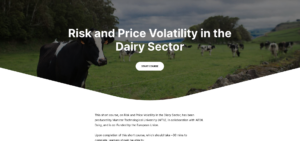
A video based course exploring dairy price volatility and risk management in the EU dairy sector. Developed through the Irish Dairy Centre of Vocational Excellence (Erasmus+), it covers causes, consequences, policy responses, and practical tools. Suitable for learners, industry professionals, and educators in agri-food and related disciplines.
Project NOURISH is a campus-based nutrition and health intervention, originally designed for MTU staff. This was designed as part of a broader research study to investigate how to enable healthier dietary behaviours within university environments.
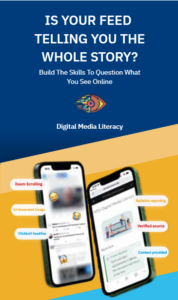
This interactive online resource is a set of eight units to support learners in their online information ecosystem. It is a mix of text, images, video, audio and interactive tasks. The resource can be accessed directly via the link provided or embedded in any Learning Management System compatible with SCORM files.
This text is accessible to anyone interested in the brain. It is specifically targeted to students and instructors of undergraduate neuroscience or biopsychology courses. It encourages an active exploration of the intersection of neuroscience with other disciplines through a large number of activities, demonstrations, and reflection prompts.
An open educational resource that supports academic, professional, and support staff to build more neuro-inclusive teaching, services, and policies in higher education. This resource was conceptualised & developed through the experiences of neurodivergent students in third-level education, with co-creation at the heart of every stage of the process
This OER presents an updated Assessment Redesign Framework for higher education in the age of GenAI. It supports educators and programme teams in designing valid, transparent, and scalable assessments, integrating AI literacy, process-focused approaches, and guidance on AI detection, large cohorts, and emerging agentic AI challenges.
This Pressbook features an interactive tool that helps you plan and structure your essay step by step. The book provides a clear starting point to reduce stress, prevent overwhelm, and support different learning preferences through examples, , quick guides, and PowerPoint videos with voiceover. This resource is a living document.
This resource describes the rational for, design of and implementation details associated with an initiative designed to support early career academic staff adopt evidence-based, active and inclusive learning strategies to enhance learning for ALL students.
Slides for a digital wellbeing workshop that enables effective navigation of the digital world by
– exploring research on problematic internet use,
– offers workshop participants an opportunity to reflect on their own technology use
– uses the science of habits and the tiny habits methodology to promote more mindful use of digital technology
A VR-enabled AI Embodied Virtual Agent (EVA) that allows students to ask topic-related questions and receive context-aware responses, providing real-time support for both theoretical and practical labs, offering personalised learning experiences.
This resource contains a number of Capture The Flag (CTF) Challenges to be used for gamified learning of cyber security topics. There is a selection of 10 challenges that increase in difficulty. Included is a Writeups document explaining how these challenges are solved.
A self-paced resource introducing Articulate Rise 360, an authoring tool for creating interactive, mobile-responsive e-learning content. Covers content design principles, interaction types, accessibility features, and publishing workflows. Designed primarily for instructional designers, educators, and professionals new to Rise.
A foundational resource covering essential Microsoft 365 applications (Word, PowerPoint, Excel, Teams, OneDrive) used throughout academic and professional contexts. Covers basic functionality, collaboration features, and cloud storage management. The primary intended audience is university students.
A self-study resource addressing healthy relationships with digital technology, addressing digital addiction, privacy concerns, work-life balance, and digital identity management. Includes scenarios exploring real wellbeing challenges. Emphasises positive and negative impacts of digital participation. The primary audience is university students.
An interactive resource on effective digital communication across synchronous and asynchronous platforms, netiquette principles, formal vs. informal contexts, and platform-specific communication norms. The primary intended audience is university students.
A self-paced resource teaching video planning (pre-production), recording (production), editing (post-production), and ethical considerations for academic video use. Covers accessibility in video (captions, descriptions), equipment options, and practical workflows suited to diverse contexts. The primary intended audience is students.
A 45-minute comprehensive foundational lesson on digital accessibility principles, inclusive content creation, and available assistive technologies at university level. Collaboration with Educational Assistive Technology Centre, UL, launched for Global Accessibility Awareness Day. The primary intended audience is students.
A foundational, interactive guide to spreadsheet essentials covering data entry, formatting, basic formulas, functions, and chart creation. Features keyboard navigation, accessibility options, and read-aloud functionality for inclusive learning. Designed for beginners and those seeking a refresher. The primary intended audience is students.
Practical self-paced lesson introducing effective prompt writing techniques for students new to genAI tools. Covers prompt structure, iteration, critical evaluation of output, and ethical considerations. Teaches effective genAI communication techniques. Primary intended audience is university students.
An interactive, beginner-level, asynchronous resource designed to equip students with foundational knowledge on genAI ethics, applications, and academic use. It covers genAI fundamentals, responsible use, academic integrity considerations, and practical scenarios. The primary intended audience is university students.
BSEditor is a multi-platform software tool designed to aid educators in the creation of computer-based quiz questions. It provides a powerful editor to easily control every detail of a question, from integration of files and images, to elaborate scoring approaches.
Blender is a free and open-source 3D creation suite that supports Windows, macOS, Linux, and other platforms. It is widely used for creating animated films, visual effects, 3D models for printing, motion graphics, video games, and virtual reality content. This guide acts as an introduction to becoming familiar with Blender.
The Data Loom: Crafting Stories with Code, Yarn and Print is an open educational resource that reimagines data visualisation through tangible, artistic, and embodied practices. Instead of visualising numbers on screens, this project guides learners to materialise datasets using yarn, a miniature 3D-printed loom, and the art of weaving.
The HTML & CSS Cheat Sheet is a quick-reference site designed to support first-year web development students. It gathers together all the key terminology and concepts introduced during the semester, making it easier to revise and apply them when building websites.
This GenAI Learning Hub was developed with students, for students, to support the responsible and effective use of generative AI. Topics are divided across three main sections to aid understanding of GenAI before use, during use, and in relation to assessment. While aimed at students, this resource will be useful to anyone using GenAI.
Cognitive Bias Lab is an interactive platform designed to help learners explore and practice recognizing cognitive biases. Through simulations, quizzes, and role-play scenarios, it supports critical thinking, decision-making skills, and classroom discussions in psychology, education, and media literacy.
This compendium comprehensively brings together the components needed by higher education institutions (HEIs) when developing comprehensive frameworks for managing cases of academic misconduct. It serves as both a practical guide and a reflective resource, aimed at strengthening and promoting a culture of academic integrity.
This 12 lesson open course provides an introduction to the AI Fluency Framework and the four competencies of Delegation, Description, Discernment, and Diligence. c. 70 mins videos plus ungraded exercises & projects and reference handouts. Co-developed by University College Cork, Ringling College and Anthropic with support by HEA.
This Pressbook converts and enhances the PDF resources from Social Care Ireland’s Guide to the Standards of Proficiency for Social Care Workers, making them more accessible, searchable, and interactive in a live digital format.
The VISIEN Framework Document is a strategic guide for integrating immersive technologies (AR, VR, MR, XR) into higher education. It offers practical guidance on curriculum integration, accessibility, collaboration, skill development, institutional readiness, and more to support transformative teaching, learning, and research.
TUS Sensory Awareness Guide delves into the often-overlooked challenges faced by individuals with sensory processing challenges, especially in academic settings. It focuses on creating sensory-friendly environments and offers actionable advice on everything from classroom settings to other student facing roles.