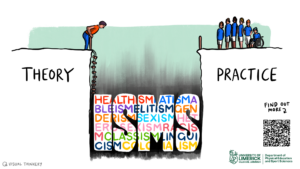
This open educational resource supports pre-service teachers in developing practical approaches to social justice in Physical Education. Through visual case studies, reflective prompts, and introductory concepts, it encourages critical reflection, collaborative discussion, and informed decision-making based on authentic school placement experiences
Comparing student and educator perceptions of generative artificial intelligence for teaching, learning and assessment: results from two institutional surveys
This opinion article outlines the alignment between patient-clinician consultations in healthcare and student-investigator meetings focused on academic misconduct
A self-paced resource introducing Articulate Rise 360, an authoring tool for creating interactive, mobile-responsive e-learning content. Covers content design principles, interaction types, accessibility features, and publishing workflows. Designed primarily for instructional designers, educators, and professionals new to Rise.
A foundational resource covering essential Microsoft 365 applications (Word, PowerPoint, Excel, Teams, OneDrive) used throughout academic and professional contexts. Covers basic functionality, collaboration features, and cloud storage management. The primary intended audience is university students.
A self-study resource addressing healthy relationships with digital technology, addressing digital addiction, privacy concerns, work-life balance, and digital identity management. Includes scenarios exploring real wellbeing challenges. Emphasises positive and negative impacts of digital participation. The primary audience is university students.
An interactive resource on effective digital communication across synchronous and asynchronous platforms, netiquette principles, formal vs. informal contexts, and platform-specific communication norms. The primary intended audience is university students.
A self-paced resource teaching video planning (pre-production), recording (production), editing (post-production), and ethical considerations for academic video use. Covers accessibility in video (captions, descriptions), equipment options, and practical workflows suited to diverse contexts. The primary intended audience is students.
A 45-minute comprehensive foundational lesson on digital accessibility principles, inclusive content creation, and available assistive technologies at university level. Collaboration with Educational Assistive Technology Centre, UL, launched for Global Accessibility Awareness Day. The primary intended audience is students.
A foundational, interactive guide to spreadsheet essentials covering data entry, formatting, basic formulas, functions, and chart creation. Features keyboard navigation, accessibility options, and read-aloud functionality for inclusive learning. Designed for beginners and those seeking a refresher. The primary intended audience is students.
Practical self-paced lesson introducing effective prompt writing techniques for students new to genAI tools. Covers prompt structure, iteration, critical evaluation of output, and ethical considerations. Teaches effective genAI communication techniques. Primary intended audience is university students.
An interactive, beginner-level, asynchronous resource designed to equip students with foundational knowledge on genAI ethics, applications, and academic use. It covers genAI fundamentals, responsible use, academic integrity considerations, and practical scenarios. The primary intended audience is university students.
This paper entitled 'Developing an Academic Integrity Policy and Academic Misconduct Procedures in an Era of Generative Artificial Intelligence: Five Tips for Success' may be of interest to policy developers and educators in further and higher education and training organisations as they adapt to challenge of AI.
In 2018, the Glucksman Library at the University of Limerick launched Leganto, a reading list management tool designed to streamline access to academic resources for students. Leganto ensures equitable access to academic content, helping students engage with reliable sources and easing their transition into university-level study.
The University of Limerick Academic Integrity and GenAI toolkit is a curated suite of resources developed to support ethical academic practices in the evolving landscape of Generative AI.
The Toolkit for Teacher Educators to Embrace Social Justice Pedagogies offers a comprehensive resource for fostering equity-driven approaches in teacher education for teacher educators. The resource is tailored to embed social justice approaches within physical education teacher education programs.
This open course is designed to facilitate the development of your Artificial Intelligence (AI) literacy so that you can explore and innovate using Generative AI (GenAI) within your teaching, learning, and assessment practices.
In light of the potential opportunities and challenges of these technologies, this course will facilitate you in exploring the fundamentals of GenAI and AI Literacy, whilst focusing on an ethical practice. You will consider innovative ways in which you can respond to the challenges arising from the impact of these technologies in Higher Education.
Completion of this course will support you in developing a GenAI teaching strategy to apply to your own practice.
While Generative AI technologies have existed for many years, recent rapid advances in the field have pushed these technologies into mainstream use across society. As higher education institutions grappled with these new technologies, initial responses focused on potentially significant threats to academic integrity. However, as our understandings have evolved, there is an increasing awareness that these developing technologies also present opportunities for teaching, learning, assessment and research in higher education.
Against this rapidly evolving backdrop, we in the Centre for Academic Practice (Trinity College Dublin) found ourselves faced with new challenges. How could we best support our educators to respond to the challenges of GenAI? How might we influence and support strategic initiatives and policy development regarding GenAI for teaching, learning and assessment at the institutional level? Conscious that our colleagues across the sector were facing similar challenges, we decided to initiate a cross-institutional collaboration with teaching and learning leaders from across the sector, where we could tackle this together!
The potential benefits of using open educational resources and practices (OER and OEP) in higher education include improving access, furthering equity and enhancing teaching, learning and assessment. The National Forum supports the use of OER and OEP in a range of ways (see www.teachingandlearning.ie/open).
Digilanguages is a project funded by Ireland’s National Forum for the Enhancement of Teaching & Learning, which aims to offer flexible support for language learners during various transition periods.
In this video, Niall presents how he has used an educational mobile app for taking attendance and the impact this has had on the engagement of his students as a result.