The Technological University of the Shannon (TUS) Compendium of Approaches to Integrating Digital Competencies into the Curriculum exemplifies the University’s commitment to embedding digital capability development across teaching, learning, and assessment.
This book is designed specifically for students studying at the Technological University of the Shannon – Midlands Midwest, Ireland. It presents a step-by-step practical guide to academic writing, referencing and presentation, with clear explanations and structured approaches with examples that support the development of clear and concise writing.
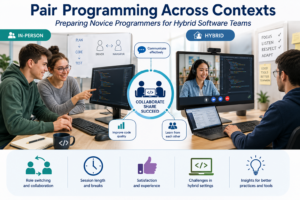
This OER presents findings from a comparative study of novice programmers engaging in face-to-face and hybrid pair programming. It explores collaboration patterns, role switching, satisfaction, and challenges, offering evidence-based insights for educators seeking to prepare students for effective teamwork in modern hybrid software development.
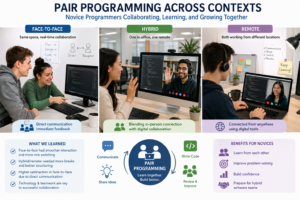
This OER explores novice programmers’ experiences of pair programming across face-to-face, hybrid, and remote settings. It provides insights into collaboration, role switching, satisfaction, and challenges, helping educators and students understand how to effectively prepare learners for modern hybrid software development environments.
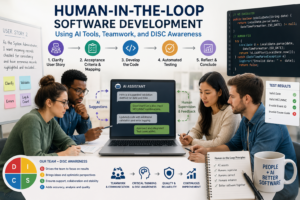
This OER guides students through human-in-the-loop software development, demonstrating how AI tools can be effectively supervised, refined, and integrated across the Software Lifecycle. Designed for computing educators and learners, it combines agile practice, teamwork, DISC awareness, testing, and critical reflection on human–AI collaboration.
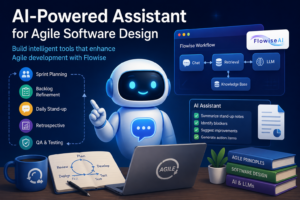
This OER introduces students to designing and developing AI-powered assistants for agile software development using Flowise (no code). Learners as a team explore Retrieval Augmented Generation (RAG) and agent-based systems, applying AI to real-world agile practices while considering technical design, evaluation, and cost-aware decision-making
Through a thought-and-action mapping strategy known as interactive management, the current research modelled a unique, collaborative "pathway of impact influences" to describe such considerations from the perspectives of TUS higher management and external stakeholders.
As part of this project small workshops in linear algebra where held both nationally and internationally. The main workshop website is https://sites.google.com/view/tusdcu-linearalgebraworkshop/home
A one day workshop to help bring together early stage researchers to learn and discuss topics in Linear algebra.
This book of abstracts presents an overview of the research summaries from students across the RUN-EU network who participated in the RUN-EU Student Research Colloquium 2025.This event brought together students, researchers, and academics from across Europe, creating a dynamic platform to showcase cutting-edge research.
This OER explores the use of Inspiration Mind Mapping software to support student learning through demonstrations and training sessions with Applied Social Care and LSAD students.
This Pressbook features an interactive tool that helps you plan and structure your essay step by step. The book provides a clear starting point to reduce stress, prevent overwhelm, and support different learning preferences through examples, , quick guides, and PowerPoint videos with voiceover. This resource is a living document.
This Podcast Series has been developed by CPID Staff involved in teaching and engaging in educational research. It consists of podcasts with well-known educational academics and experts, exploring various educational concepts/topics taught on programmes offered by the CPID, and on SATLE funded educational research projects.
This e-book reports on a SATLE-funded project to explore the use of immersive technologies in Higher Education. It includes case studies, practical guidance and a brief review of the literature on immersive learning from the project team. It is intended for those considering using VR in their teaching, and for those who support learning.
This Pressbook converts and enhances the PDF resources from Social Care Ireland’s Guide to the Standards of Proficiency for Social Care Workers, making them more accessible, searchable, and interactive in a live digital format.
TUS Sensory Awareness Guide delves into the often-overlooked challenges faced by individuals with sensory processing challenges, especially in academic settings. It focuses on creating sensory-friendly environments and offers actionable advice on everything from classroom settings to other student facing roles.
This compendium captures examples of internationalisation of the home curriculum in TUS. It includes cases of internationalised modules; teaching and assessment practices that promote inclusive learning; collaborative learning and teaching projects involving international partners; and co-curricular intercultural competence initiatives.
This publication will be a helpful, collaborative resource to all teaching staff at and beyond TUS. It may also generate further ideas for improving practice and enhancing student engagement. This first compendium has led to further publications where ‘pedagogical communities of practice’ continue to share our knowledge.
This practitioner guide is designed to offer an overall framework for successfully developing and facilitating group work processes. It guides the novice practitioner through each stage of the process. It signposts associated challenges and provides suggestions for helpful responses.