Health and Welfare

Sort by

Filter by

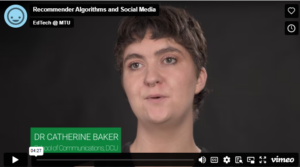
A video that explains how social media recommender algorithms work. It will help learners be more aware of how their social media content is delivered. The content is relevant to third level students, adult education and older secondary school students.

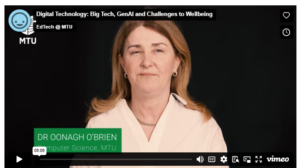
The video examines the impact of digital technology on the wellbeing of children and young people. It highlights ethics and legislation relating to social media platforms and Gen AI. It will be of interest to educators in third level, adult education and older school children. Content warning: it includes references to upsetting examples.

This resource showcases initiatives from both academic and professional support areas across DCU, which have been funded under SATLE – the Strategic Alignment of Teaching and Learning Enhancement Funding in Higher Education. Examples are provided under the themes of Education for Sustainable Development, Digital transformation & Academic Integrity

Slides for a digital wellbeing workshop that enables effective navigation of the digital world by
– exploring research on problematic internet use,
– offers workshop participants an opportunity to reflect on their own technology use
– uses the science of habits and the tiny habits methodology to promote more mindful use of digital technology

BSEditor is a multi-platform software tool designed to aid educators in the creation of computer-based quiz questions. It provides a powerful editor to easily control every detail of a question, from integration of files and images, to elaborate scoring approaches.

The resource is a template for surveying students about their timetabling experiences. The survey was deployed in MTU, but the template is free to be copied and adapted as needed.

The VISIEN Framework Document is a strategic guide for integrating immersive technologies (AR, VR, MR, XR) into higher education. It offers practical guidance on curriculum integration, accessibility, collaboration, skill development, institutional readiness, and more to support transformative teaching, learning, and research.

This OER index provides a selection of recent, high quality OER of varying content types (including articles, podcasts, presentations and textbooks), which are potentially relevant to TUS staff and students.

TUS OER Index

CC BY

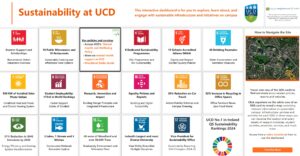
This Toolkit was created by students at University College Dublin, for students, to break down sustainability in a way that’s simple and easy to understand. Climate change is something that affects all of us—no matter what you’re studying, where you’re from, or what you do. It’s here, and it’s impacting our world—but many of us aren’t sure what we can do about it.

The purpose of this toolkit is a starting point for what students need to learn about living more sustainably on and off campus. We hope it’ll inspire students to take small steps that make a big impact, and they can do it all at their own pace. You can access the Moodle page to view the Toolkit. There are also Zip files of the SCORM packages used to create the Toolkit (Part 1 and Part 2) that can be downloaded and imported into a Virtual Learning Environment.

• Part 1: Climate Change → Watch short Youtube videos followed by a little quiz to brush up on your sustainability knowledge.
• Part 2: What Can You Do? → Find tips and tricks to incorporate sustainability into your day-to-day life, this is a resource tool to help you get started!

Publication created by our 2024 summer interns in DkIT.
Stepping out in Dundalk! This book will be a useful resource for our cohort international students someone useful tips on life on and off campus.

Stepping out in Dundalk!

CC BY-NC