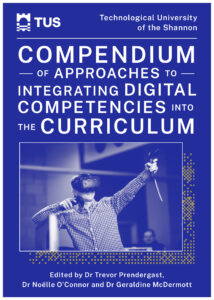
The Technological University of the Shannon (TUS) Compendium of Approaches to Integrating Digital Competencies into the Curriculum exemplifies the University’s commitment to embedding digital capability development across teaching, learning, and assessment.
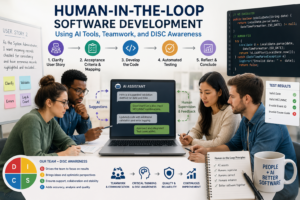
This OER guides students through human-in-the-loop software development, demonstrating how AI tools can be effectively supervised, refined, and integrated across the Software Lifecycle. Designed for computing educators and learners, it combines agile practice, teamwork, DISC awareness, testing, and critical reflection on human–AI collaboration.
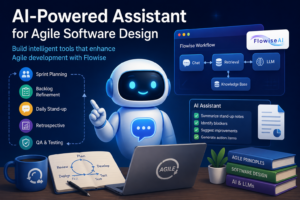
This OER introduces students to designing and developing AI-powered assistants for agile software development using Flowise (no code). Learners as a team explore Retrieval Augmented Generation (RAG) and agent-based systems, applying AI to real-world agile practices while considering technical design, evaluation, and cost-aware decision-making
On Successful Completion of the event the students should be able to:
Critically evaluate design publication processes especially food styling for food photography and print.
Develop a professional e-publication suitable for wide spread distribution
Generate & adhere to a design brief.
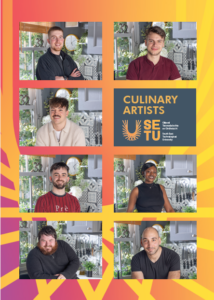
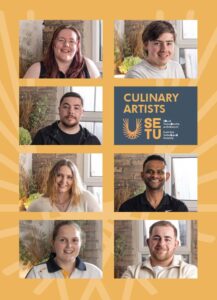
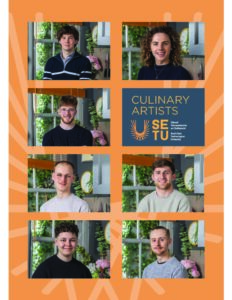
As part of the Media & Visual Arts module on the 4th year of the Bachelor of Arts in Culinary Arts programme, students are working on food imagery, promotion and design.
As part of the Media & Visual Arts module on the 4th year of the Bachelor of Arts in Culinary Arts programme, students are working on food imagery, promotion and design.
This is an interactive multimedia open educational resource (OER), created using H5P, on the topic of Open Education. It has been developed by the Department of Technology Enhanced Learning at Munster Technological University.
The purpose of which is to give an overview of OEPs, using interactive features of H5P
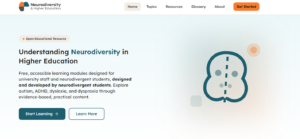
An open educational resource that supports academic, professional, and support staff to build more neuro-inclusive teaching, services, and policies in higher education. This resource was conceptualised & developed through the experiences of neurodivergent students in third-level education, with co-creation at the heart of every stage of the process
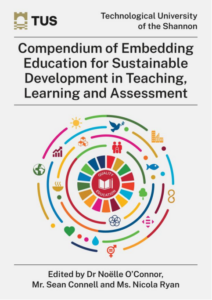
The Technological University of the Shannon (TUS) Compendium of Embedding Education for Sustainable Development (ESD) showcases the University’s commitment to integrating sustainability across teaching, learning and assessment. It is the first compendium of its kind in an Irish higher education institution.
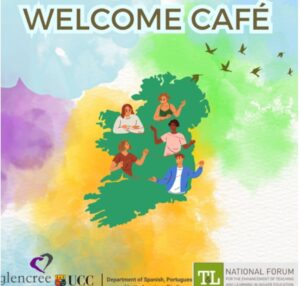
This toolkit draws on our experiences facilitating a SATLE-funded community-engaged learning project that brought students of the School of Languages, Literatures, and Cultures (UCC) together with people in Cork seeking international protection for a series of three wellbeing and creativity workshops.
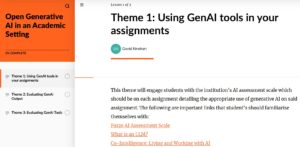
This lesson is designed to aid students in understanding how to engage generative AI in an academic setting without breaching academic integrity policy.
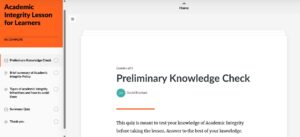
This lesson is designed to teach students about academic integrity from understanding the principles and encouraging a perspective that they are equal partners in upholding academic integrity.
This open resource presents over 140 real-world academic integrity and ethical dilemma scenarios co-created by students and staff. Designed for educators, trainers, and learners, it supports interactive discussions, gamified learning, and scenario-based teaching in ethics and integrity education across disciplines.
The University of Limerick Academic Integrity and GenAI toolkit is a curated suite of resources developed to support ethical academic practices in the evolving landscape of Generative AI.
This GenAI Learning Hub was developed with students, for students, to support the responsible and effective use of generative AI. Topics are divided across three main sections to aid understanding of GenAI before use, during use, and in relation to assessment. While aimed at students, this resource will be useful to anyone using GenAI.
This resource captures insights through zine making from workshop participants at the Education after the algorithm symposium hosted at DCU on 21 February 2025, facilitated by Kate Molloy and Clare Thomson.
This paper describes the foundational principles and design details of the student-staff partnership initiative launched by the Co-creating Inclusive and Equitable Teaching & Learning project, led by Dr. Anna Santucci and situated within the Centre for the Integration of Research, Teaching and Learning (CIRTL) at University College Cork (UCC).
The VISIEN Framework Document is a strategic guide for integrating immersive technologies (AR, VR, MR, XR) into higher education. It offers practical guidance on curriculum integration, accessibility, collaboration, skill development, institutional readiness, and more to support transformative teaching, learning, and research.
This infographic provides insights and tools to support OER use based on feedback from Teaching staff using the DOERs Project OER Institutional Survey.
Two modules are available on this page one for educators and one for mentors to learn how to engage in mentoring sessions with students. The page also has access to the Community Mentoring Handbook (for mentors), Mentee Toolkit (for second-level students taking part in sessions) and the Adult Ed Handbook(for adult learners taking part in sessions).