This 12 lesson open course provides an introduction to the AI Fluency Framework and the four competencies of Delegation, Description, Discernment, and Diligence. c. 70 mins videos plus ungraded exercises & projects and reference handouts. Co-developed by University College Cork, Ringling College and Anthropic with support by HEA.
Benefit of this resource and how to make the best use of it
This 12 lesson open course provides an introduction to the AI Fluency Framework and the four competencies of Delegation, Description, Discernment, and Diligence. The course can be used by educators, academic developers, instructional designers, and others to build personal AI Fluency and apply it in their professional practice, and also to share directly with students to help them build AI Fluency and apply it in their academic setting. The AI Fluency Framework is both a useful descriptive framework for critically discussing human-AI interaction and an applied normative framework for skill-building. The course exercises can be adapted for formative and summative assessment. The summary handouts are conveniently presented in slide-friendly form for building presentations.
This work is licensed under a CC BY-NC-SA license, allowing sharing and adaptation for non-commercial use with proper attribution, provided derivative works use the same license.
?
This citation is automatically generated and may require adjustment. Always verify it against your style guide.
Anthropic/Anthropic, J. F. R. D. (28/05/2025). Ai fluency: framework and foundations. National Resource Hub (Ireland). Retrieved from: https://hub.teachingandlearning.ie/resource/ai-fluency-framework-and-foundations/ License: Creative Commons Attribution-NonCommercial-ShareAlike (CC BY-NC-SA).
Adapting this resource? Share your version!
If you have modified or adopted this resource, share your version here. Tracking adaptations helps us measure impact and connects others with useful updates.
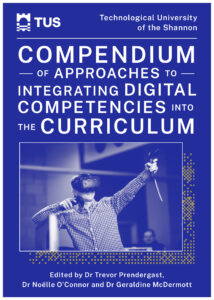
The Technological University of the Shannon (TUS) Compendium of Approaches to Integrating Digital Competencies into the Curriculum exemplifies the University’s commitment to embedding digital capability development across teaching, learning, and assessment.
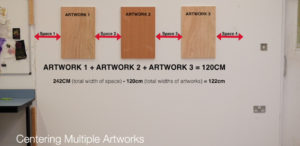
These video resources outline basic hanging and levelling methods used in the hanging and display of a variety of wall-based artworks, as well as demonstrating safe operation procedures for basic hand tools such as a drill, jigsaw, sander and nail gun.
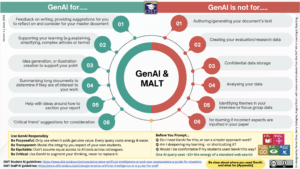
A 1-page guide, co-created by lecturers, tutors & students on DkIT's MA in Learning and Teaching, showing where GenAI can, and can't, support particular postgraduate research/skill development (*reflecting practice 2025-26). Includes student-informed prompts on responsible, sustainable use. An editable PowerPoint supports adaptation to own context.
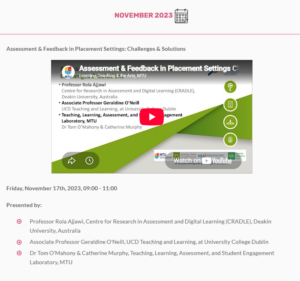
MTU researchers, together with national and international researchers, presented local, national, and global insights into the challenges and opportunities of assessment and feedback in work placement settings.