Submitting Your SATLE Funded Open Educational Resources to the National Resource Hub

[favorite_button]

Creator(s) (alphabetical)

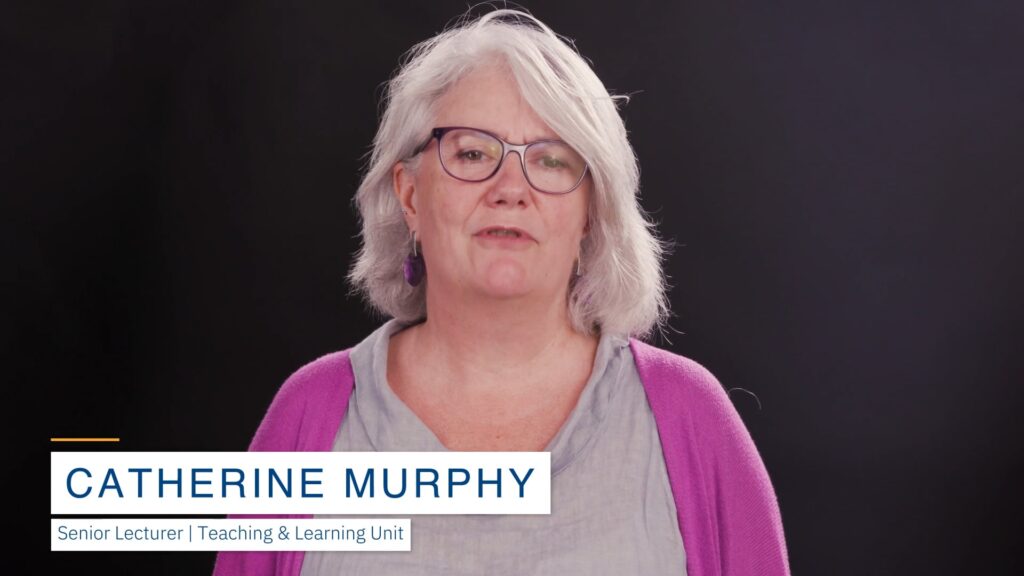
Catherine Murphy

Organisation(s)

Munster Technological University

Discipline(s)

Education, Teaching & Learning

Topic(s)

Teaching and Learning Practice

License

CC BY-SA

Media Format

Video

Date Submitted

Submitted by

Export Resource Data

Description

This video provides a step-by-step guide on how to submit your SATLE-funded Open Educational Resources (OER) to Ireland’s National Resource Hub. It outlines the submission process, key requirements, and best practices to ensure your resources are accessible, discoverable, and aligned with national open education goals. Whether you're new to the Hub
Benefit of this resource and how to make the best use of it

This is an information video. It may be of use to others in supporting peers in how to use, create submit OERs to repositories, such as the National Resource Hub.

Creative Commons Attribution-ShareAlike (CC BY-SA)

This work is licensed under a CC BY-SA license, allowing adaptation and sharing with proper attribution, provided derivative works use the same license.

https://creativecommons.org/licenses/by-sa/4.0/
? This citation is automatically generated and may require adjustment. Always verify it against your style guide.
Murphy, C. (02/07/2025). Submitting your satle funded open educational resources to the national resource hub. National Resource Hub (Ireland). Retrieved from: https://hub.teachingandlearning.ie/resource/submitting-your-satle-funded-open-educational-resources-to-the-national-resource-hub/ License: Creative Commons Attribution-ShareAlike (CC BY-SA).

Adapting this resource? Share your version!

If you have modified or adopted this resource, share your version here. Tracking adaptations helps us measure impact and connects others with useful updates.

Related OER

This resource contains a number of Capture The Flag (CTF) Challenges to be used for gamified learning of cyber security topics. There is a selection of 10 challenges that increase in difficulty. Included is a Writeups document explaining how these challenges are solved.

A self-paced resource introducing Articulate Rise 360, an authoring tool for creating interactive, mobile-responsive e-learning content. Covers content design principles, interaction types, accessibility features, and publishing workflows. Designed primarily for instructional designers, educators, and professionals new to Rise.

Leading Change Together: Case Studies from the Teaching & Learning Conference 2025 is a collection of case studies showcasing practice-led examples from the HEA Teaching & Learning Conference 2025, held under the theme “Leading Change Together: Building the Future of Teaching and Learning in Higher Education”. The resource brings together institutional and practitioner contributions spanning topics such as inclusive learning design, education for sustainable development, professional learning, digital innovation and AI in teaching and learning. It illustrates how collaborative practice across Irish higher education is shaping future-focused approaches to enhancing teaching and learning.

This document sets out a detailed, values-led framework to support the ethical adoption of generative artificial intelligence (gen AI) in teaching and learning across Irish higher education. It builds on the HEA Generative AI Policy Framework by translating high-level principles into concrete provisions to guide institutional policy, governance and educational practice.

The principles address five core areas: academic integrity, equity and inclusion, critical engagement and AI literacy, privacy and data governance, and sustainable pedagogy. Together, they provide institutions with a practical reference for navigating the ethical, pedagogical and organisational challenges associated with generative AI, while safeguarding academic standards, student rights and institutional autonomy.