This video explains what simulation is and how it can be utilised to promote interdisciplinary learning between students across three healthcare disciplines. It presents an individual who has had an acute cardiac episode, she is receiving care from a Cardiac Nurse, Physiotherapist and Dietician.
Benefit of this resource and how to make the best use of it
This video illustrates the interdisciplinary simulation which was designed and implemented to promote learning. The simulation scenario was co-designed by stakeholders, academics, clinicians, postgraduate students, patients, and educational technologists through a World Café participatory workshop. The co-design phase engaged academics, clinicians, postgraduate students, patients, and educational technologists through a World Café participatory workshop.
Participants co-designed:
● Technology enhanced preparatory learning (pre-simulation) using the H5P authoring
tool to provide background knowledge and introduce interdisciplinary concepts. This is also available on the T&L Hub.
● Simulation scenarios, informed by the International Nursing Association for Clinical
Simulation and Learning framework.
Thematic analysis identified three key themes:
1. Importance of effective communication.
2. Straightforward, transparent information sharing.
3. Patient centred approach.
The video shows facilitators using the PEARLS (Promoting Excellence and Reflective Learning in Simulation) debriefing model to ensure consistent, high-quality reflection. All materials followed UDL principles.
?
This citation is automatically generated and may require adjustment. Always verify it against your style guide.
Cusack, T. (28/08/2025). Technology assisted interdisciplinary learning for advanced education in cardiorespiratory care: simulation. National Resource Hub (Ireland). Retrieved from: https://hub.teachingandlearning.ie/resource/technology-assisted-interdisciplinary-learning-for-advanced-education-in-cardiorespiratory-care-simulation/ License: Creative Commons Attribution-NonCommercial (CC BY-NC).
Adapting this resource? Share your version!
If you have modified or adopted this resource, share your version here. Tracking adaptations helps us measure impact and connects others with useful updates.
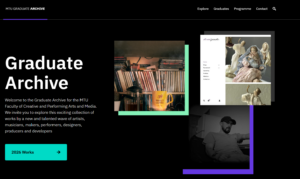
The Graduate Archive Website is a permanent collection of final year artworks and performances across the MTU Faculty of Creative and Performing Arts and Media.
The Archive showcases all works in full detail, which allows the works to function as high quality research material, and creates a key resource for teaching and learning.
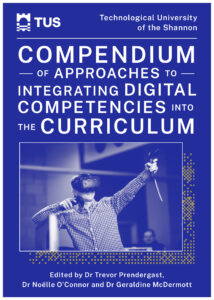
The Technological University of the Shannon (TUS) Compendium of Approaches to Integrating Digital Competencies into the Curriculum exemplifies the University’s commitment to embedding digital capability development across teaching, learning, and assessment.
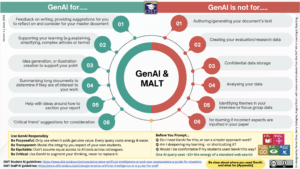
A 1-page guide, co-created by lecturers, tutors & students on DkIT's MA in Learning and Teaching, showing where GenAI can, and can't, support particular postgraduate research/skill development (*reflecting practice 2025-26). Includes student-informed prompts on responsible, sustainable use. An editable PowerPoint supports adaptation to own context.
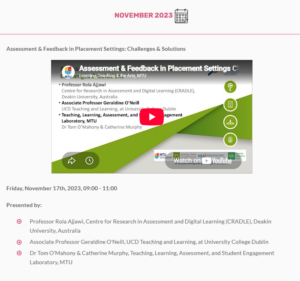
MTU researchers, together with national and international researchers, presented local, national, and global insights into the challenges and opportunities of assessment and feedback in work placement settings.