This OER investigates the role of digital technology in the acquisition of practical skills in health sciences. While it is commonly accepted that theoretical knowledge can be imparted using technology, how best to use technology to support practical skill acquisition is a growing area which presents many opportunities.
Benefit of this resource and how to make the best use of it
This project provides those who teach with a tool which will enable them to consider effective ways of using technology to support their practical teaching. By listening and learning from staff and student experiences of what worked well and what didn’t work well, this project recommends methods and approaches to maximise digital tools and
the opportunities they present. By providing examples of how staff have successfully integrated technology into their practical skill teaching, this project aims to promote positive attitudes towards digital tools within medical education. It will outline methods to overcome barriers to effective teaching using technology and how to respond to the needs of those who learn. It will also highlight several different ways in which technology can be used, thereby shaping attitudes and broadening knowledge in this expanding area.
Similarly this OER will provide students with tips to get the most from digitally supported teaching of practical skills. The presence of the student voice throughout this project supported the development of key considerations and recommendations to improve the student learning experience and ensure student success.
?
This citation is automatically generated and may require adjustment. Always verify it against your style guide.
O'Brien, A., & Forde, C. (2022). Depth – digitally enhanced practical teaching in the health sciences. National Resource Hub (Ireland). Retrieved from: https://hub.teachingandlearning.ie/resource/depth-digitally-enhanced-practical-teaching-in-the-health-sciences/ License: Creative Commons Attribution (CC BY).
Adapting this resource? Share your version!
If you have modified or adopted this resource, share your version here. Tracking adaptations helps us measure impact and connects others with useful updates.
This is an interactive multimedia open educational resource (OER), created using H5P, on the topic of Open Education. It has been developed by the Department of Technology Enhanced Learning at Munster Technological University.
The purpose of which is to give an overview of OEPs, using interactive features of H5P
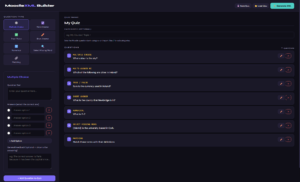
The purpose of this resource is to allow Moodle teachers to quickly create quizzes for Moodle. Users can quickly select between questions types through a single interface and export their questions as an XML file which can be imported into Moodle.
This Pressbook features an interactive tool that helps you plan and structure your essay step by step. The book provides a clear starting point to reduce stress, prevent overwhelm, and support different learning preferences through examples, , quick guides, and PowerPoint videos with voiceover. This resource is a living document.
Purpose of the MTU Student Guidelines
Supports Academic Integrity Principles and MTU’s Academic Integrity Policy by:
1. Explaining what academic integrity is.
2. Helping students avoid bad decisions during assessments.
3. Outlines and signposts supports available across MTU