Professional Development

Sort by

Filter by

The HEA Education for Sustainable Development Spotlight Series 2025: Case Studies Compendium brings together 115 case studies from higher education institutions across Ireland. It showcases how universities and colleges are integrating sustainability and the UN Sustainable Development Goals into teaching, research, curriculum design, assessment practices and community engagement. It offers a comprehensive picture of national ESD activity and provides an accessible resource for educators and policymakers seeking examples of practice-based innovation.

This lightning talk for NORFest 2025 introduces researchers to the benefits and impact of using OE Practices to disseminate and promote Open Research outputs. It introduces key concepts in open education, and provides practical tips on how to apply OE practices with a focus on reusability; licensing and copyright; and content co-creation.

These presentation slides, developed by Dr Amanda Platt and Colette Murphy (Ulster University) for the Advancing Quality and Leadership in Sustainable Higher Education workshop hosted by the Higher Education Authority (HEA), provide a detailed institutional case study of how Ulster University has systematically embedded Education for Sustainable Development (ESD) across all aspects of academic quality and curriculum design.

The slides outline Ulster’s six-year journey, highlighting strategic milestones including the development of the Integrated Curriculum Design Framework (ICDF), alignment with institutional strategies and sector frameworks such as QAA and Advance HE guidance, and successful accreditation under the SOS-UK Responsible Futures programme. They also illustrate how ESD principles have been built into programme approval, staff development, and quality enhancement processes—ensuring sustainability is embedded as a core academic value. The presentation provides an overview of Ulster’s commitment to collaboration, transparency, and evidence-based practice, offering valuable insights for institutions seeking to align ESD with academic standards, curriculum assurance, and sector quality codes.

These presentation slides, created and delivered by Dr Alex Ryan (Learning Energy) for the Advancing Quality and Leadership in Sustainable Higher Education workshop hosted by the Higher Education Authority (HEA), introduce the principles and practice of Anti-Greenwash Education within the context of Education for Sustainable Development (ESD).

The slides outline findings from the QAA-funded project Students Driving Curriculum Quality for Sustainability and provide a visual summary of how student-led approaches can strengthen transparency, quality, and credibility in sustainability education. They include key concepts, activity prompts, examples of course evaluation frameworks, and student feedback on applying ESD quality principles.

The workshop offered a structured overview of how institutions can embed authentic, evidence-based ESD across courses and policies, connecting workshop learning to wider sector priorities and the Government of Ireland’s ESD to 2030 Strategy.

This curated collection includes key materials, toolkits, and reports from the Anti-Greenwash Education initiative, developed to support quality, transparency, and integrity in Education for Sustainable Development (ESD). It provides direct access to the education kit, training resources, worked examples, film series, sector review, and action guidance, along with related reports and international frameworks informing current ESD policy and practice.

The resource is designed for students, course representatives, and staff engaged in sustainability education and quality enhancement. It connects practical learning tools with wider evidence on ESD trends, student demand for sustainability, and institutional quality frameworks, offering an overview of current developments in the field.

This resource was shared as part of the Advancing Quality and Leadership in Sustainable Higher Education workshop hosted by the Higher Education Authority (HEA) and facilitated by Dr Alex Ryan. The workshop supported Irish higher education institutions in strategically implementing high-quality ESD in alignment with the Government of Ireland’s ESD to 2030 Strategy and the HEA’s ESD programme objectives.

The resource is a template for surveying students about their timetabling experiences. The survey was deployed in MTU, but the template is free to be copied and adapted as needed.

The report – Generative AI in Higher Education Teaching and Learning: Sectoral Perspectives – was commissioned as part of the Higher Education Authority’s evidence-led approach to policy development.

The report captures the views of staff, students, and leaders across the Irish higher education system on the opportunities and challenges posed by artificial intelligence.

It brings together insights from ten thematic focus groups and a leadership summit, involving over 80 participants from across Ireland’s higher education institutions, alongside student representatives and sectoral stakeholders.

The Higher Education Authority (HEA) is developing a National Professional Recognition Framework for Teaching and Learning to support the recognition of teaching excellence across the sector. The framework builds on the Professional Development Framework (2016) and aims to provide clear, nationally agreed benchmarks for effective teaching practice. It will help inform career development, support institutional processes, and promote a shared understanding of teaching quality in Irish higher education.

This paper describes the foundational principles and design details of the student-staff partnership initiative launched by the Co-creating Inclusive and Equitable Teaching & Learning project, led by Dr. Anna Santucci and situated within the Centre for the Integration of Research, Teaching and Learning (CIRTL) at University College Cork (UCC).

This 12 lesson open course provides an introduction to the AI Fluency Framework and the four competencies of Delegation, Description, Discernment, and Diligence. c. 70 mins videos plus ungraded exercises & projects and reference handouts. Co-developed by University College Cork, Ringling College and Anthropic with support by HEA.

This e-book reports on a SATLE-funded project to explore the use of immersive technologies in Higher Education. It includes case studies, practical guidance and a brief review of the literature on immersive learning from the project team. It is intended for those considering using VR in their teaching, and for those who support learning.

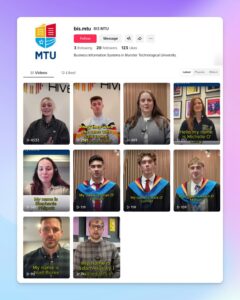
This playlist showcases real-world insights from BIS graduates, students, and employers, highlighting career paths, work placement experiences, and industry connections. Designed for prospective and current students, it offers an authentic look at how MTU’s BIS programme supports career development and professional growth.

It is with great pleasure that we present the proceedings from the
“Enhancing Academic Integrity: From Ideas to Action” conference, hosted
by CCT College Dublin on 3rd and 4th September 2024. This collection
represents the culmination of thoughtful discourse, innovative research, and
collaborative spirit that defined our gathering.

The VISIEN Framework Document is a strategic guide for integrating immersive technologies (AR, VR, MR, XR) into higher education. It offers practical guidance on curriculum integration, accessibility, collaboration, skill development, institutional readiness, and more to support transformative teaching, learning, and research.

This resource captures key insights from a full-day workshop held on 8 May 2025, hosted by the Higher Education Authority (HEA) and led by internationally recognised expert Dr Alison Cook-Sather. The event focused on the transformative potential of authentic student-staff partnerships as a strategic approach to advancing student engagement, success, and institutional effectiveness.

Attended by academic staff, institutional leaders, student success professionals, and sector partners from across Ireland, the workshop featured a combination of keynote presentations, lightning talks, and interactive sessions. Through real-world examples and hands-on activities, participants explored how to build meaningful, inclusive, and sustainable collaboration between students and staff.

For the full event schedule and a complete list of lightning talk contributors to this slide deck, visit the workshop schedule.

TUS Sensory Awareness Guide delves into the often-overlooked challenges faced by individuals with sensory processing challenges, especially in academic settings. It focuses on creating sensory-friendly environments and offers actionable advice on everything from classroom settings to other student facing roles.

This survey was adapted from a North American Faculty OER Survey Toolkit for use in the Irish Higher Education context. It was used across the DOERs project partner sites to audit staff Open Educational Resources and Open Educational Practices awareness and practices. We encourage other institutions to adapt this tool to meet their needs.

Two modules are available on this page one for educators and one for mentors to learn how to engage in mentoring sessions with students. The page also has access to the Community Mentoring Handbook (for mentors), Mentee Toolkit (for second-level students taking part in sessions) and the Adult Ed Handbook(for adult learners taking part in sessions).

Community Mentoring Resources

CC 0

This open course is designed to facilitate the development of your Artificial Intelligence (AI) literacy so that you can explore and innovate using Generative AI (GenAI) within your teaching, learning, and assessment practices.

In light of the potential opportunities and challenges of these technologies, this course will facilitate you in exploring the fundamentals of GenAI and AI Literacy, whilst focusing on an ethical practice. You will consider innovative ways in which you can respond to the challenges arising from the impact of these technologies in Higher Education.

Completion of this course will support you in developing a GenAI teaching strategy to apply to your own practice.