CC BY

Sort by

Filter by

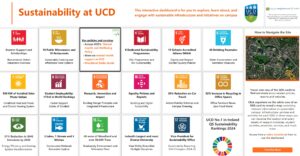
The HEA Education for Sustainable Development Spotlight Series 2025: Case Studies Compendium brings together 115 case studies from higher education institutions across Ireland. It showcases how universities and colleges are integrating sustainability and the UN Sustainable Development Goals into teaching, research, curriculum design, assessment practices and community engagement. It offers a comprehensive picture of national ESD activity and provides an accessible resource for educators and policymakers seeking examples of practice-based innovation.

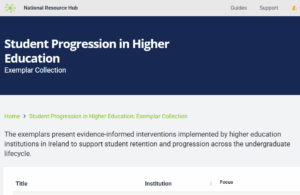
A collection of case studies of evidence-informed interventions implemented by higher education institutions in Ireland to support student retention and progression across the undergraduate lifecycle. These exemplars are presented here as a national evidence base of student progression initiatives.

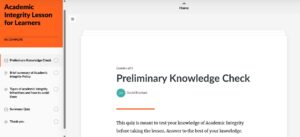
This lesson is designed to teach students about academic integrity from understanding the principles and encouraging a perspective that they are equal partners in upholding academic integrity.

This curated collection includes key materials, toolkits, and reports from the Anti-Greenwash Education initiative, developed to support quality, transparency, and integrity in Education for Sustainable Development (ESD). It provides direct access to the education kit, training resources, worked examples, film series, sector review, and action guidance, along with related reports and international frameworks informing current ESD policy and practice.

The resource is designed for students, course representatives, and staff engaged in sustainability education and quality enhancement. It connects practical learning tools with wider evidence on ESD trends, student demand for sustainability, and institutional quality frameworks, offering an overview of current developments in the field.

This resource was shared as part of the Advancing Quality and Leadership in Sustainable Higher Education workshop hosted by the Higher Education Authority (HEA) and facilitated by Dr Alex Ryan. The workshop supported Irish higher education institutions in strategically implementing high-quality ESD in alignment with the Government of Ireland’s ESD to 2030 Strategy and the HEA’s ESD programme objectives.

The report – Generative AI in Higher Education Teaching and Learning: Sectoral Perspectives – was commissioned as part of the Higher Education Authority’s evidence-led approach to policy development.

The report captures the views of staff, students, and leaders across the Irish higher education system on the opportunities and challenges posed by artificial intelligence.

It brings together insights from ten thematic focus groups and a leadership summit, involving over 80 participants from across Ireland’s higher education institutions, alongside student representatives and sectoral stakeholders.

Ideation Arcana is a visual ideation tool designed to assist learners—especially those new to open-ended creative projects—in generating and refining ideas. It does so by offering a structured yet playful approach to thinking, inspired by the layout and concept of tarot cards.

The Higher Education Authority (HEA) is developing a National Professional Recognition Framework for Teaching and Learning to support the recognition of teaching excellence across the sector. The framework builds on the Professional Development Framework (2016) and aims to provide clear, nationally agreed benchmarks for effective teaching practice. It will help inform career development, support institutional processes, and promote a shared understanding of teaching quality in Irish higher education.

This report presents the findings and recommendations of the 2025 Expert Group review of the Irish National Framework for Student Success in Higher Education. Commissioned by the HEA, it explores how the framework and accompanying toolkit have been engaged with across the sector and outlines a renewed vision for student success that is inclusive, strategic, and evidence-informed.

This resource portal is dedicated to providing centralised access to policies, guidelines, and resources for teaching and learning in higher education in the context of generative artificial intelligence. The curated policies and frameworks offer authoritative guidance and practical support to inform and enhance institutional practice.

This compendium comprehensively brings together the components needed by higher education institutions (HEIs) when developing comprehensive frameworks for managing cases of academic misconduct. It serves as both a practical guide and a reflective resource, aimed at strengthening and promoting a culture of academic integrity.

This OER index provides a selection of recent, high quality OER of varying content types (including articles, podcasts, presentations and textbooks), which are potentially relevant to TUS staff and students.

TUS OER Index

CC BY

This survey was adapted from a North American Faculty OER Survey Toolkit for use in the Irish Higher Education context. It was used across the DOERs project partner sites to audit staff Open Educational Resources and Open Educational Practices awareness and practices. We encourage other institutions to adapt this tool to meet their needs.

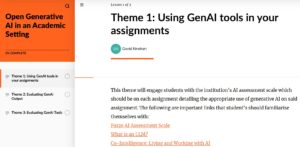
This open course is designed to facilitate the development of your Artificial Intelligence (AI) literacy so that you can explore and innovate using Generative AI (GenAI) within your teaching, learning, and assessment practices.

In light of the potential opportunities and challenges of these technologies, this course will facilitate you in exploring the fundamentals of GenAI and AI Literacy, whilst focusing on an ethical practice. You will consider innovative ways in which you can respond to the challenges arising from the impact of these technologies in Higher Education.

Completion of this course will support you in developing a GenAI teaching strategy to apply to your own practice.

Recognizing the transformative potential of AI, the ICDE Quality Network has developed this report as a key initiative to explore its application in teaching and learning globally. This endeavour underscores the Network’s commitment to advancing quality education by promoting the responsible integration of AI.