In this webinar, we will identify whether OERs were a solution or being used in the last year in education; and how OERs may be used in the future.
Benefit of this resource and how to make the best use of it
During the last year, with education restrictions due to the global pandemic, when educational organizations across the globe were forced to move online under demanding timelines and with budget constraints, many educators have relied on open educational resources OERs to fill a critical need. Open education and OERs have been used for two decades at different education levels, not always gaining full traction in schools or higher education. In this webinar, we will identify whether OERs were a solution or being used in the last year in education; and how OERs may be used in the future. In our quest for shaping the future of higher education, do we consider open education a solution and OERs and practices as part of the education ecosystem? What problems might OERs help educators resolve and how we can harness the value of OERs for higher education? Can we consider the future of education is open and, if yes, what strategies can we use to make this happen? Three dynamic and insightful speakers with extended experiences and whose voices are valued and command attention in the education community, will try to inspire us for how to share and collaborate our way through the storm that has encapsulated higher education.
?
This citation is automatically generated and may require adjustment. Always verify it against your style guide.
Creelman, A., Andone, D., Highton, M., & Downes, S. (2021). Sharing and collaborating our way out of the storm. National Resource Hub (Ireland). Retrieved from: https://hub.teachingandlearning.ie/resource/sharing-and-collaborating-our-way-out-of-the-storm/ License: Creative Commons Attribution (CC BY).
Adapting this resource? Share your version!
If you have modified or adopted this resource, share your version here. Tracking adaptations helps us measure impact and connects others with useful updates.
This is an interactive multimedia open educational resource (OER), created using H5P, on the topic of Open Education. It has been developed by the Department of Technology Enhanced Learning at Munster Technological University.
The purpose of which is to give an overview of OEPs, using interactive features of H5P
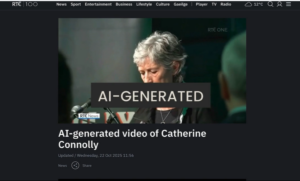
A video that discusses how Artificial Intelligence is impacting the way disinformation is created and spread to manipulate public opinion. It also outlines importance of Media Literacy education and regulatory measures, referencing Ireland’s Online Safety and Media Regulation Act and the EU’s Digital Services Act.
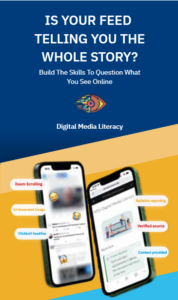
This interactive online resource is a set of eight units to support learners in their online information ecosystem. It is a mix of text, images, video, audio and interactive tasks. The resource can be accessed directly via the link provided or embedded in any Learning Management System compatible with SCORM files.
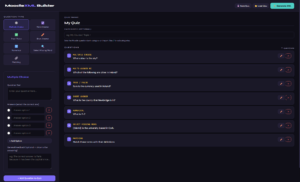
The purpose of this resource is to allow Moodle teachers to quickly create quizzes for Moodle. Users can quickly select between questions types through a single interface and export their questions as an XML file which can be imported into Moodle.