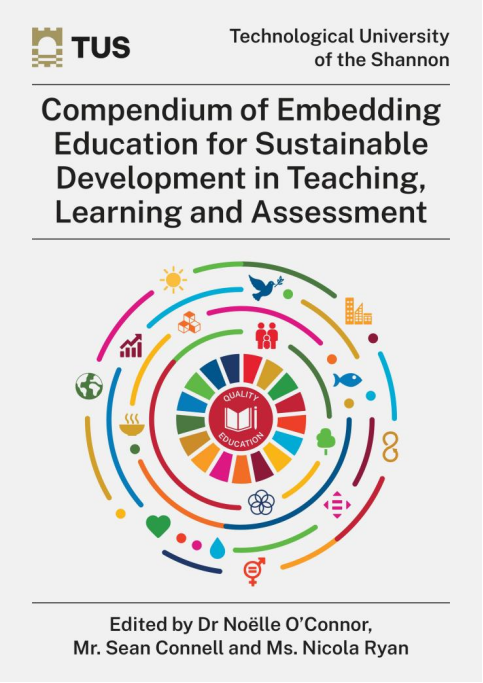
The Technological University of the Shannon (TUS) is deeply committed to embedding Education for Sustainable Development (ESD) across all facets of university life. The TUS Compendium of Embedding Education for Sustainable Development in Teaching, Learning and Assessment exemplifies this commitment by showcasing a range of innovative practices, pedagogical approaches, research initiatives, and extra curricular activities that are transforming how sustainability is taught, experienced, and lived across our campuses. It is worth noting that this is the first ESD compendium in any Irish higher education institution. Rooted in the belief that ESD is a key driver of systemic change, this compendium highlights how TUS integrates sustainability principles into programme design, teaching, and assessment, while also embracing the wider learning environment. It aligns with the ESD for 2030 Priority Action Areas, addressing policy advancement, educator capacity building, learning transformation, youth empowerment, and local-level action.
Section 1 explores the critical role of funded research projects in accelerating ESD implementation, enabling real-world impact through interdisciplinary collaboration and evidence-based innovation. These projects help embed sustainability across curricula while enhancing community and global engagement.
Section 2 focuses on embedding ESD into programme and module design, promoting active, values-based learning that equips students with the knowledge, skills, and attitudes needed to become sustainability-minded graduates. It emphasises the importance of aligning learning outcomes, content, and methodologies with the Sustainable Development Goals (SDGs).
Section 3 highlights the vibrant landscape of extra-curricular initiatives that support sustainability learning beyond the classroom. Through student societies, events, workshops, and community-led projects, learners and staff alike are empowered to become change agents in their institutions and communities.
Section 4 addresses the integration of ESD into teaching and assessment strategies, showcasing how active and problem-based learning, authentic assessments, and student-led inquiry can foster critical thinking, creativity, and action-oriented learning. By sharing best practices, case studies, and reflections from across TUS, this compendium serves as a practical guide and an inspirational resource for educators, students, and stakeholders. It reflects TUS’s ambition to create a university-wide culture of sustainability, where every student is equipped to contribute to a more just, inclusive, and a sustainable future.