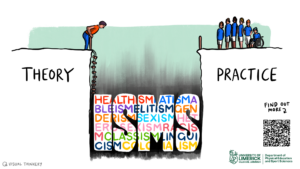
This open educational resource supports pre-service teachers in developing practical approaches to social justice in Physical Education. Through visual case studies, reflective prompts, and introductory concepts, it encourages critical reflection, collaborative discussion, and informed decision-making based on authentic school placement experiences
The HEA ESD Self-Evaluation Tool is a voluntary, developmental resource that supports higher education institutions in reviewing and strengthening whole-of-institution Education for Sustainable Development. It helps institutions undertake structured reflection on current strengths, gaps and progression, identify local priorities and plan practical next steps.
The tool is organised around the five ESD to 2030 Priority Action Areas. For each area, it provides developmental descriptors across three broad stages of practice: Emerging, Established and Leading. It is intended to support dialogue, planning and quality enhancement.
This resource sets out five strategic enablers that can support the implementation of Education for Sustainable Development across all areas of a higher education institution:
1. Collaboration and commitment
2. Holistic and transformational practice, scholarship and leadership
3. Capacity-building and professional development
4. Student partnership, engagement and leadership
5. Reciprocal learning communities
The Enablers translate national and international ESD commitments into shared language, strategic direction and practical prompts for higher education. They address curriculum, pedagogy, assessment, campus operations, governance, leadership, professional learning, student partnership, research and reciprocal engagement with communities.
The resource is designed to support institutional reflection, planning and enhancement rather than prescribe a single model. It recognises institutional autonomy, diversity of mission and disciplinary differences.
This overview introduces the Higher Education Authority’s Education for Sustainable Development (ESD) Framework for Higher Education: a connected suite of resources supporting whole-of-institution ESD across Irish higher education. It explains the Framework’s purpose, its relationship to national and international ESD priorities, and how its component resources work together to provide strategic direction, sector evidence, structured reflection, thematic insight and opportunities for peer learning.
The Framework connects curriculum, campus operations, governance, research and community engagement. It is intended for institutional leaders, educators, professional staff, students and representative bodies, ESD and sustainability leads, teaching and learning units, quality and enhancement teams, community partners and policy stakeholders.
As part of this project small workshops in linear algebra where held both nationally and internationally. The main workshop website is https://sites.google.com/view/tusdcu-linearalgebraworkshop/home
A one day workshop to help bring together early stage researchers to learn and discuss topics in Linear algebra.
A video based course exploring dairy price volatility and risk management in the EU dairy sector. Developed through the Irish Dairy Centre of Vocational Excellence (Erasmus+), it covers causes, consequences, policy responses, and practical tools. Suitable for learners, industry professionals, and educators in agri-food and related disciplines.
In this video Ciarán O’Connor for the Institute of Strategic Dialogue guides us through a case study of how false information was used to undermine confidence in the Irish local elections in June 2024.
In today’s digital age, information spreads fast—yet not all of it is true or trustworthy. Knowing the differences between misinformation, disinformation, and malinformation is key to thinking critically online.
In the video below Ciarán O’Connor from the Institute of Strategic Dialogue discusses the disinformation ecosystem in Ireland.
This is an interactive multimedia open educational resource (OER), created using H5P, on the topic of Open Education. It has been developed by the Department of Technology Enhanced Learning at Munster Technological University.
The purpose of which is to give an overview of OEPs, using interactive features of H5P
A video that explains how social media recommender algorithms work. It will help learners be more aware of how their social media content is delivered. The content is relevant to third level students, adult education and older secondary school students.
The video examines the impact of digital technology on the wellbeing of children and young people. It highlights ethics and legislation relating to social media platforms and Gen AI. It will be of interest to educators in third level, adult education and older school children. Content warning: it includes references to upsetting examples.
This resource showcases initiatives from both academic and professional support areas across DCU, which have been funded under SATLE – the Strategic Alignment of Teaching and Learning Enhancement Funding in Higher Education. Examples are provided under the themes of Education for Sustainable Development, Digital transformation & Academic Integrity
This Podcast Series has been developed by CPID Staff involved in teaching and engaging in educational research. It consists of podcasts with well-known educational academics and experts, exploring various educational concepts/topics taught on programmes offered by the CPID, and on SATLE funded educational research projects.
The Technological University of the Shannon (TUS) Compendium of Embedding Education for Sustainable Development (ESD) showcases the University’s commitment to integrating sustainability across teaching, learning and assessment. It is the first compendium of its kind in an Irish higher education institution.
The resource comprises of a literature review and an executive summary, developed as part of the Maynooth University Leadership and EducAtion Framework (LEAF) initiative. It explores how education frameworks can enhance teaching, learning and curriculum design in higher education, supporting inclusive, sustainable and values-led academic practice.
Slides for a digital wellbeing workshop that enables effective navigation of the digital world by
– exploring research on problematic internet use,
– offers workshop participants an opportunity to reflect on their own technology use
– uses the science of habits and the tiny habits methodology to promote more mindful use of digital technology
This landscape report provides an overview of Education for Sustainable Development (ESD) practice across the higher education sector in Ireland. It draws together publicly available institutional strategies, HEA Performance Framework Agreements 2024–2028, Climate Action Roadmaps and ESD to 2030 progress reports to outline current approaches to embedding ESD.
Structured as a series of institutional case studies, the report highlights how ESD is being addressed across teaching and learning, research, engagement and whole-institution practice, and identifies opportunities for collaboration and shared learning across the sector.
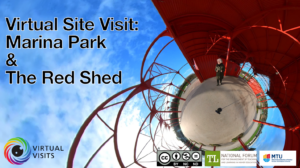
In this 360 immersive video, Dr Mary Moloney – head of the Department of Civil, Structural and Environmental Engineering at Munster Technological University – gives a guided tour of the "Red Shed" at Cork City's Marina Park. Dr Moloney highlights key structural features.
This toolkit draws on our experiences facilitating a SATLE-funded community-engaged learning project that brought students of the School of Languages, Literatures, and Cultures (UCC) together with people in Cork seeking international protection for a series of three wellbeing and creativity workshops.
The HEA Education for Sustainable Development Spotlight Series 2025: Case Studies Compendium brings together 115 case studies from higher education institutions across Ireland. It showcases how universities and colleges are integrating sustainability and the UN Sustainable Development Goals into teaching, research, curriculum design, assessment practices and community engagement. It offers a comprehensive picture of national ESD activity and provides an accessible resource for educators and policymakers seeking examples of practice-based innovation.
This case study collection presents an interdisciplinary University College Dublin initiative exploring how key competencies for Education for Sustainable Development (ESD) can be embedded in higher education teaching, learning and assessment. It introduces UNESCO’s sustainability competencies alongside metacognitive development and the I-SEE learning strategies: Introducing, Signposting, Enabling and Evaluating.
Four detailed case studies demonstrate how these approaches have been applied in clinical nutrition and dietetics, education, rural placemaking and public health nutrition. Using student-centred, collaborative, action-oriented and critically reflective approaches, the case studies engage learners with authentic, real-world problems. Each includes information on its context, intended learning outcomes, teaching and assessment strategies, impact and practical lessons, demonstrating how ESD can be made relevant across a wide range of disciplines, including subjects not traditionally associated with sustainability.
This OER provides a practical Grammar translation and TBLT toolkit for Mandarin teaching, including 15 lesson plans and 50+ task kits. It helps educators in low-time contexts enhance students’ oral proficiency and plurilingual awareness through ready-to-use, adaptable resources.
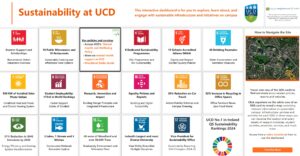
This scientific paper describes the co-creation of the UCD sustainability dashboard – the first transferable template to support geographically-specific SDG monitoring within HEIs. This paper contributes to debates on the need for spatial reporting of actions towards sustainability, to meaningfully recognise local SDG implementation progress.
These presentation slides, developed by Dr Amanda Platt and Colette Murphy (Ulster University) for the Advancing Quality and Leadership in Sustainable Higher Education workshop hosted by the Higher Education Authority (HEA), provide a detailed institutional case study of how Ulster University has systematically embedded Education for Sustainable Development (ESD) across all aspects of academic quality and curriculum design.
The slides outline Ulster’s six-year journey, highlighting strategic milestones including the development of the Integrated Curriculum Design Framework (ICDF), alignment with institutional strategies and sector frameworks such as QAA and Advance HE guidance, and successful accreditation under the SOS-UK Responsible Futures programme. They also illustrate how ESD principles have been built into programme approval, staff development, and quality enhancement processes—ensuring sustainability is embedded as a core academic value. The presentation provides an overview of Ulster’s commitment to collaboration, transparency, and evidence-based practice, offering valuable insights for institutions seeking to align ESD with academic standards, curriculum assurance, and sector quality codes.
These presentation slides, created and delivered by Dr Alex Ryan (Learning Energy) for the Advancing Quality and Leadership in Sustainable Higher Education workshop hosted by the Higher Education Authority (HEA), introduce the principles and practice of Anti-Greenwash Education within the context of Education for Sustainable Development (ESD).
The slides outline findings from the QAA-funded project Students Driving Curriculum Quality for Sustainability and provide a visual summary of how student-led approaches can strengthen transparency, quality, and credibility in sustainability education. They include key concepts, activity prompts, examples of course evaluation frameworks, and student feedback on applying ESD quality principles.
The workshop offered a structured overview of how institutions can embed authentic, evidence-based ESD across courses and policies, connecting workshop learning to wider sector priorities and the Government of Ireland’s ESD to 2030 Strategy.
This curated collection includes key materials, toolkits, and reports from the Anti-Greenwash Education initiative, developed to support quality, transparency, and integrity in Education for Sustainable Development (ESD). It provides direct access to the education kit, training resources, worked examples, film series, sector review, and action guidance, along with related reports and international frameworks informing current ESD policy and practice.
The resource is designed for students, course representatives, and staff engaged in sustainability education and quality enhancement. It connects practical learning tools with wider evidence on ESD trends, student demand for sustainability, and institutional quality frameworks, offering an overview of current developments in the field.
This resource was shared as part of the Advancing Quality and Leadership in Sustainable Higher Education workshop hosted by the Higher Education Authority (HEA) and facilitated by Dr Alex Ryan. The workshop supported Irish higher education institutions in strategically implementing high-quality ESD in alignment with the Government of Ireland’s ESD to 2030 Strategy and the HEA’s ESD programme objectives.
This toolkit is designed to provide educators in Higher Education with practical, adaptable tools and strategies for fostering sustainable wellbeing in their teaching through curriculum, assessment and pedagogy.
This resource captures insights through zine making from workshop participants at the Education after the algorithm symposium hosted at DCU on 21 February 2025, facilitated by Kate Molloy and Clare Thomson.
This open-source course has 8 short modules to provide an introduction to circular economy in tourism and regenerative tourism. It is aimed at tourism businesses, those diversifying into tourism or working with/in tourism.
Cognitive Bias Lab is an interactive platform designed to help learners explore and practice recognizing cognitive biases. Through simulations, quizzes, and role-play scenarios, it supports critical thinking, decision-making skills, and classroom discussions in psychology, education, and media literacy.
The Toolkit for Teacher Educators to Embrace Social Justice Pedagogies offers a comprehensive resource for fostering equity-driven approaches in teacher education for teacher educators. The resource is tailored to embed social justice approaches within physical education teacher education programs.
Two modules are available on this page one for educators and one for mentors to learn how to engage in mentoring sessions with students. The page also has access to the Community Mentoring Handbook (for mentors), Mentee Toolkit (for second-level students taking part in sessions) and the Adult Ed Handbook(for adult learners taking part in sessions).
An experimental ‘eco-film’ workshop for staff and students to acquire skills and deeper knowledge of analogue photochemical film processes in a post-digital era.