

This open licensed course/book has 12 chapters that have been developed to help transition to teaching online.
Ancillary, supplementary or associated files…
This open licensed course/book has 12 chapters that have been developed to help transition to teaching online.
In the words of the authors “This course is an attempt to re-frame the idea of what it means to start teaching online. It will not give you a step by step process to create a syllabus or tell you what buttons to press. The intent of this course is to present you with online learning as a conceptual challenge. These 12 chapters are meant to help transition to teaching online. It is based on our first seven weeks of working with faculty in an intensive synchronous/asynchronous course at the University of Windsor in Canada. Our advice is that you choose one topic a day, watch the short (2-3 min) video, and do the suggested action. Find a friend. Work together.”
Creative Commons Attribution (CC BY)
This work is licensed under a CC BY license, allowing sharing and adaptation with proper attribution.
https://creativecommons.org/licenses/by/4.0/
Links open in a new tab.
If you have modified or adopted this resource, share your version here. Tracking adaptations helps us measure impact and connects others with useful updates.
Explore resources sharing the topics attached to this record.
This resource supports inclusive teacher education through findings from the PREP-In project. It combines student and professional perspectives, placement portfolio insights, co-created classroom vignettes and practical recommendations. Designed for teacher educators, student teachers, school mentors and SEN professionals.
The purpose of these protocols is to assist student teachers and cooperating teachers in schools to have professional conversations together during regular tutorial meetings. Each document requires the use of GenAI but can generate insights or interactions that would be difficult to emulate in paired discussion.
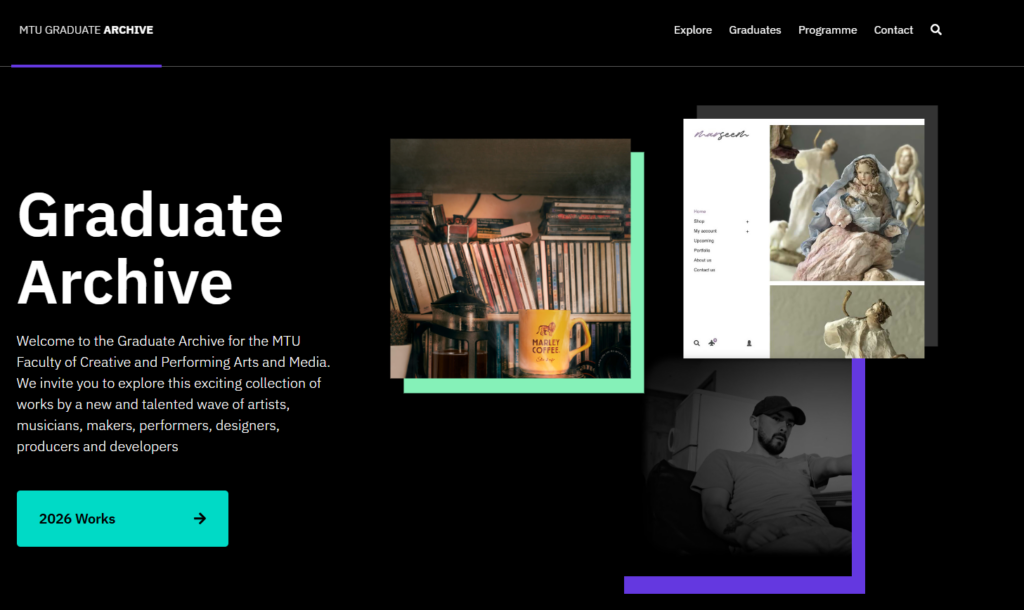
The Graduate Archive Website is a permanent collection of final year artworks and performances across the MTU Faculty of Creative and Performing Arts and Media.
The Archive showcases all works in full detail, which allows the works to function as high quality research material, and creates a key resource for teaching and learning.