

This concise guide considers and details the importance of embedding student partnership in feedback approaches, as well as presenting tips to help achieve this.
Ancillary, supplementary or associated files…
This concise guide considers and details the importance of embedding student partnership in feedback approaches, as well as presenting tips to help achieve this.
This guide explains student partnership and why is it needed when determining how feedback will be gathered. It stresses the importance of clarity, timing, value and inclusion.
Creative Commons Attribution-NonCommercial-ShareAlike (CC BY-NC-SA)
This work is licensed under a CC BY-NC-SA license, allowing sharing and adaptation for non-commercial use with proper attribution, provided derivative works use the same license.
https://creativecommons.org/licenses/by-nc-sa/4.0/
Links open in a new tab.
If you have modified or adopted this resource, share your version here. Tracking adaptations helps us measure impact and connects others with useful updates.
Explore resources sharing the topics attached to this record.
This resource supports inclusive teacher education through findings from the PREP-In project. It combines student and professional perspectives, placement portfolio insights, co-created classroom vignettes and practical recommendations. Designed for teacher educators, student teachers, school mentors and SEN professionals.
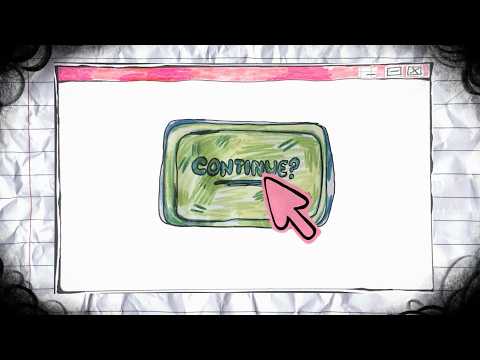
A short animation about barriers to student success in Irish higher education, including financial pressures, travel, workload, isolation, confidence and communication. It considers how these challenges can overlap, and how accessible support, approachable lecturers, counselling, careers guidance, financial assistance, student representation and flexible institutional practices can help.
Published by National Forum T&L.
Credits
Director — Dylan Drea
Producer — Ciara O’Brien
Animation — Robin Bennett, Jack Cahill, Talitha Cole, Dylan Drea, Lumiere Lomingo, Ciara O’Brien, Daniel Ofracio, Tobias Zhang
Compositing — Robin Bennett, Jack Cahill, Dylan Drea, Ciara O’Brien
Sound — Robin Bennett, Dylan Drea
Script — Jack Cahill, Ciara O’Brien, Daniel Ofracio
Voice acting — David Carter, Es McLean
Editing — Jack Cahill, Dylan Drea
Special thanks — Rachel Fitzgerald, Eimhin McNamara, Rebecca Roper, Laura Venables
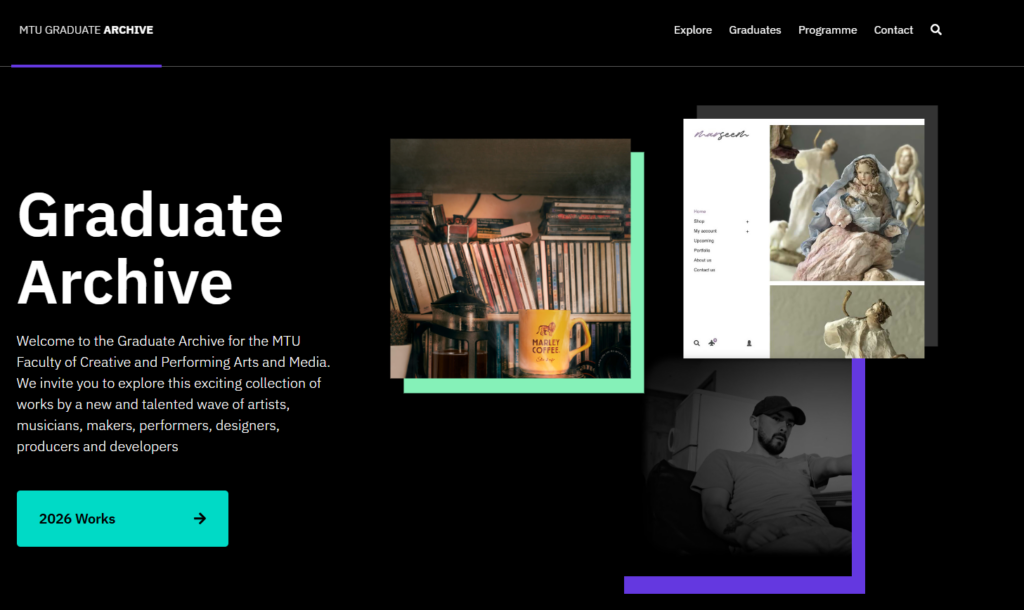
The Graduate Archive Website is a permanent collection of final year artworks and performances across the MTU Faculty of Creative and Performing Arts and Media.
The Archive showcases all works in full detail, which allows the works to function as high quality research material, and creates a key resource for teaching and learning.