The toolkit is a set of 8 modules, delivered and accessible asynchronously, online, incorporating elements of information literacy, critical thinking and academic writing skills to allow students prepare for and complete an assignment in line with best practice in academic integrity.
Benefit of this resource and how to make the best use of it
The Assignment Toolkit is best utilised as an embedded tool to assist lecturers in guiding students through the elements of planning and completing an academic assignment in their particular subject. The modules may be taken together or individually from any device or location with an internet connection. The modules in order are: 1.Getting to know your library, 2.Critical Thinking Skills, 3.Misinformation and News Media, 4.Effective Searching, 5.Completing Assignments: Reading and Planning, 6.Plagiarism, 7.Completing Assignments: Writing, 8.Referencing. In keeping with with the open access credentials present throughout the SATLE funding (2019) submission for the project, the toolkit OER is also available as a set of SCORM files to enable other institutions to add their own visuals and content to the resource to make it a bespoke experience for their student body.
Creative Commons Attribution (CC BY)
This work is licensed under a CC BY license, allowing sharing and adaptation with proper attribution.
?
This citation is automatically generated and may require adjustment. Always verify it against your style guide.
Libraries, M. C. (2022). Assignment toolkit. National Resource Hub (Ireland). Retrieved from: https://hub.teachingandlearning.ie/resource/assignment-toolkit/ License: Creative Commons Attribution (CC BY).
Adapting this resource? Share your version!
If you have modified or adopted this resource, share your version here. Tracking adaptations helps us measure impact and connects others with useful updates.
This is an interactive multimedia open educational resource (OER), created using H5P, on the topic of Open Education. It has been developed by the Department of Technology Enhanced Learning at Munster Technological University.
The purpose of which is to give an overview of OEPs, using interactive features of H5P
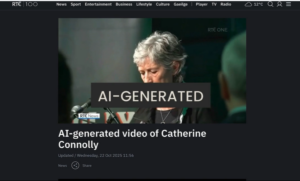
A video that discusses how Artificial Intelligence is impacting the way disinformation is created and spread to manipulate public opinion. It also outlines importance of Media Literacy education and regulatory measures, referencing Ireland’s Online Safety and Media Regulation Act and the EU’s Digital Services Act.
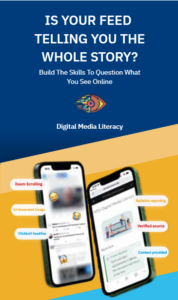
This interactive online resource is a set of eight units to support learners in their online information ecosystem. It is a mix of text, images, video, audio and interactive tasks. The resource can be accessed directly via the link provided or embedded in any Learning Management System compatible with SCORM files.
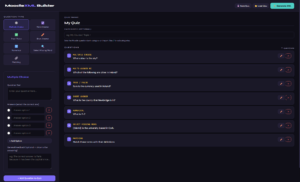
The purpose of this resource is to allow Moodle teachers to quickly create quizzes for Moodle. Users can quickly select between questions types through a single interface and export their questions as an XML file which can be imported into Moodle.