Accessibility and Inclusion

Sort by

Filter by

This Pressbook features an interactive tool that helps you plan and structure your essay step by step. The book provides a clear starting point to reduce stress, prevent overwhelm, and support different learning preferences through examples, , quick guides, and PowerPoint videos with voiceover. This resource is a living document.

The resource comprises of a literature review and an executive summary, developed as part of the Maynooth University Leadership and EducAtion Framework (LEAF) initiative. It explores how education frameworks can enhance teaching, learning and curriculum design in higher education, supporting inclusive, sustainable and values-led academic practice.

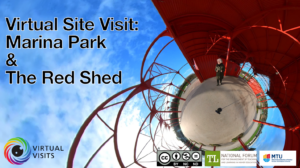
In this 360 immersive video, Dr Mary Moloney – head of the Department of Civil, Structural and Environmental Engineering at Munster Technological University – gives a guided tour of the "Red Shed" at Cork City's Marina Park. Dr Moloney highlights key structural features.

A 45-minute comprehensive foundational lesson on digital accessibility principles, inclusive content creation, and available assistive technologies at university level. Collaboration with Educational Assistive Technology Centre, UL, launched for Global Accessibility Awareness Day. The primary intended audience is students.

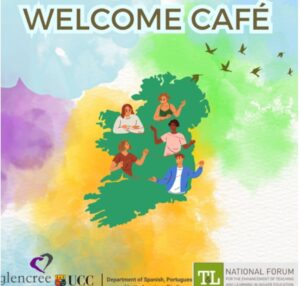
This toolkit draws on our experiences facilitating a SATLE-funded community-engaged learning project that brought students of the School of Languages, Literatures, and Cultures (UCC) together with people in Cork seeking international protection for a series of three wellbeing and creativity workshops.

This resource presents AVINA, an automated visual novel generator using large language models to transform multiple-choice questions into interactive learning narratives. Designed for educators and students, it supports gamified training in academic integrity and ethical decision-making through adaptive storytelling and experiential learning.

The report – Generative AI in Higher Education Teaching and Learning: Sectoral Perspectives – was commissioned as part of the Higher Education Authority’s evidence-led approach to policy development.

The report captures the views of staff, students, and leaders across the Irish higher education system on the opportunities and challenges posed by artificial intelligence.

It brings together insights from ten thematic focus groups and a leadership summit, involving over 80 participants from across Ireland’s higher education institutions, alongside student representatives and sectoral stakeholders.

Contested development is an educational game about urban planning and the environment.
It is designed for use with college students and the public.

Play through stages of the planning process, encounter the real life challenges and solutions faced by teams and try to be first to market!

This resource is for basic introduction team play.

Ideation Arcana is a visual ideation tool designed to assist learners—especially those new to open-ended creative projects—in generating and refining ideas. It does so by offering a structured yet playful approach to thinking, inspired by the layout and concept of tarot cards.

Ffrendi is an online, browser-based tool that makes it easier to learn and generate CSS visually. The name comes from the idea to provide a friendly frontend for learning and applying CSS.

Ffrendi

CC 0

The HTML & CSS Cheat Sheet is a quick-reference site designed to support first-year web development students. It gathers together all the key terminology and concepts introduced during the semester, making it easier to revise and apply them when building websites.

HTML & CSS Cheatsheet

CC 0

This paper describes the foundational principles and design details of the student-staff partnership initiative launched by the Co-creating Inclusive and Equitable Teaching & Learning project, led by Dr. Anna Santucci and situated within the Centre for the Integration of Research, Teaching and Learning (CIRTL) at University College Cork (UCC).

This e-book reports on a SATLE-funded project to explore the use of immersive technologies in Higher Education. It includes case studies, practical guidance and a brief review of the literature on immersive learning from the project team. It is intended for those considering using VR in their teaching, and for those who support learning.