Coding theory is a major component of Applied Algebra. It has many applications in the mathematics of communications and has many links with other scientific disciplines, such as electrical engineering and computer science. Coding theory arises in almost every imaginable digital communications and storage system. In UCD, it is taught at the undergraduate level in the module MATH30180 An Introduction to Coding Theory.
Student success at college is not just achieving high grades The National Forum for Teaching and Learning defines student success as the process by which students fulfil their potential and flourish at college and in society. This is a broader activity than simply achieving high grades. Psychosocial competencies are core to the definition of student success: these are the ‘soft skills’ or ‘non-cognitive skills’ that enable students to cope well with learning challenges, engage deeply in learning, and develop their identities as learners and as active citizens. Transitions are a key issue within this priority area, with transitions such as the move from school to college presenting both challenges and opportunities for students.
The newly formed UCD Library Green Group wanted to foster cross campus collaboration as they believed this would assist in realising their green goals. They saw the Learning Enhancement Project as a direct route to the student cohort who, motivated by their passion for the planet, would be willing to help the Library with this task.
Community Engaged Learning and Teaching is considered to be transformative for students and practitioners, underpinned by civic participation in community and society. One of the strategic themes of the UCD Rising to the Future Strategy is “Building a Healthy World” a core objective of which is to “continue to build our engagement locally, nationally and internationally”. Community Engaged Learning (CEL) and Teaching affords the University an opportunity to build and strengthen strong partnerships with social and community organisations in a meaningful and transformative way. It provides faculty, students and community organisations opportunities to engage in a symbiotic manner, learning from each other whilst bridging the gap between academic learning and the lived reality(ies) of society.
In an applied subject – such as engineering – practical, hands-on learning opportunities are invaluable. Student and external examiner feedback has emphasised the value that students place on laboratory and practical classes, and the desire to incorporate more of these activities into the modules offered. This project focuses on two modules which are delivered simultaneously to two cohorts of students; in-person and online.
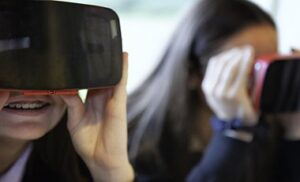
This project is underpinned by an innovative short online course on Immersive Technology in Education. It stems from the research of Rachel Farrell, UCD School of Education, in the area of ‘democratic pedagogical partnerships’ (Farrell, 2021) in teacher education and is designed and facilitated by post-primary school teacher Mark Baldwin of SchooVR.
New technology is expected to have major implications for the future of audit and accounting work. Frey & Osborne (2017) highlight a high probability of accounting and auditing clerk (0.98) and tax preparer (0.99) roles being computerized in the next 10 to 20 years. Espinel, O’Halloran, Brynjolfsson & O’Sullivan (2015) state 30% of corporate audits may be performed by artificial intelligence by 2025. Data manipulation, data visualisation, artificial intelligence and robotic process automation are important skill sets for future accountants and auditors.
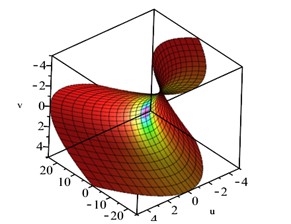
Geometry has been formally studied for more than 2,300 years, since Euclid’s Elements were published circa 300 BC. However, seeing mathematical formulae for objects in geometry and being able to visualise the resulting images in 3D is still difficult for many students. While students may be shown pre-prepared 3D images, this does not directly engage the student nor does it necessarily improve their own visualisation skills.
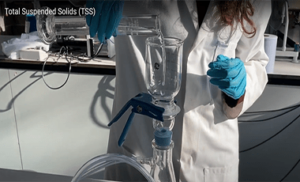
Laboratory-based learning is vital for our Science programme and in particular for Chemistry students to apply new knowledge from accompanying lectures and to train practical skills. This is of particular relevance as our undergraduate students subsequently undertake postgraduate research and seek employment in the Irish chemical industry.
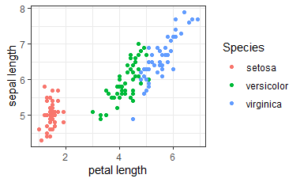
The R statistical programming language is commonly used in many scientific fields, including ecology, biology, and environmental sciences, and is used in multiple modules within the School of Biology & Environmental Sciences (including ZOOL40500, BIOL30030, BIOL40390, ENVB40370, ZOOL40490, BIOL40550). R is also a great tool for visualising your data. Quantitative skills are an important transferable skill being looked for by employers, and R skills are an important qualification for students proceeding to graduate degrees in biology and environmental sciences.
Although academic procrastination is a common feature of university life (affecting 50-95% of students), research suggests it is highly problematic (Scent & Boes, 2014). Academic procrastination is associated with diminished well-being, poor quality of life, high stress, poor university performance, and university dropout (Glick & Orsillo, 2015).
The Learning Enhancement Project set out to supplement existing writing services offered by the UCD Writing Centre, by offering support to students in creative writing. Creative Writing is one of the most successful and fastest growing subjects in the College of Arts and Humanities. With a large elective programme, the new BA in English with Creative Writing, and provision at MA, MFA and PhD levels, there is a real demand for support for creative writing students.
Many subjects undertaken at third level institutions can be highly complex and even abstract, with students expressing difficulty relating the concepts therein to the real world. Fluid Mechanics is one such subject that requires students to embrace mathematical concepts that often seem to bear little resemblance to the flowing world around us. The subject requires an ability to compartmentalise the effects of fluid and flow properties in both isolation and competition with each other. Such mental gymnastics do not come easy resulting in a divide amongst students who can perhaps interpret the mathematics and those for whom a whiteboard sketch is insufficient but have good intuition. Student feedback clearly reflects this disparity and frustration.
Access & Lifelong Learning provides support for thousands of students in UCD: students with a disability, socio-economically disadvantaged students, mature students, part-time students, students entering via a further education pathway, students who are refugees or asylum seekers and students from other equity groups as identified in the National Access Plan.
The need for the project arose from the significant increase in students on DN530 struggling with one or more modules as a result of the change to remote learning during COVID-19. The stage 1 students returning to in-person learning in September 2021 had faced significant disruption to their education throughout the senior post primary cycle and incoming stage 2 students had completed a year of university without attending any in person learning activities on campus.
This project focuses on improving personalised disciplinary advising to meet the learning needs of undergraduate nursing and midwifery students. Academic advising adopts a model of advising for learning that is integrated across the curriculum and focuses on disciplinary socialisation, disciplinary literacy skills, student well-being and learner agency.
The need to review the Academic Advising programme in the School of Law had already been recognised, with recent initiatives such as the integration of the programme as part of the new core first year module, Legal and Professional Skills. However, to further develop the quality and effectiveness of academic advising in the Law School, further research and feedback was needed on the programme.
This project is underpinned by the UCD Veterinary Medicine programme curriculum enhancement activities associated with Clinical Extra Mural Studies (CEMS). Students undertake 24 weeks of placement in veterinary clinical workplaces during the clinical years of their programme. Suitable placements are identified by students that align to their individual learning objectives and goals.
The development of a College Strategy for the Support and Professional Development of Tutors revealed considerable variance in the training opportunities for postgraduate tutors across the College of Arts and Humanities. The differing sizes of schools, together with varied disciplinary teaching practices, meant different capacities and approaches to tutor training.
The need for well-prepared STEM graduates, equipped with data analysis and computational skills, has increased in both modern academia and industry. This has been reflected into attention on computation in Mathematics (Lockwook et al., 2019), and consequently undergraduate maths education has been adapted in different ways. One strategy has been the development of collaborative learning environments, making use of problem-solving and tailored computational activities where students solve complex problems in a realistic context through computation. In this setting, Computational Finance is a relatively new highly interdisciplinary subject taught in Financial Mathematics pathways.
Overview Background Global student mobility or student migration has become a burgeoning phenomenon that impacts on countries and their higher education practices. Ireland is no exception. The Irish higher education…
This project aimed to demonstrate the efficacy of experiential learning to engender a design attitude among students. The design thinking class is inspired by the last several decades of shift towards socially inclusive and engaged design approaches. Human-centred design methods are gaining increased attention and design thinking has become a headline format promoted by firms such as IDEO, IBM, Google, Accenture, and EY. These organisations and others are developing and sharing their methodologies for design thinking and design processes in an open non-proprietary environment.
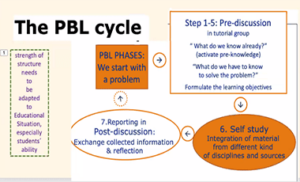
Problem-Based Learning (PBL) seeks to enhance student involvement in the learning process, the quality of the learning experience and the attainment of defined learning outcomes. PBL assumes that students learn most effectively if their learning aims at the resolution of a problem and if this occurs in cooperative small group environments. In a PBL setting, students are presented with a “problem” which they seek to resolve during several group sessions interspersed with individual research and learning activities. As PBL students work in small groups supervised by trained tutors, it is difficult to introduce it into the lecture component of a large undergraduate module comprising several hundred students. The aim of the project was to ascertain how PBL could instead be incorporated into the module’s tutorial component with relatively modest additional resource requirements.
Having been introduced to lightboard technology via the Educause network, the Business eLearning team, in the College of Business, had been aiming to procure the technology for some time. The team had identified a need from academic colleagues for a technology to capture hand written content while retaining student engagement in the classroom. This was of particular importance to those academics from quantitative disciplines, such as accountancy, finance and MIS, who created a lot of hand transcribed content for students in the classroom. In addition, some staff in these subject areas wanted an easy way to create recorded content that could be delivered asynchronously to students and consumed in a self-paced manner.
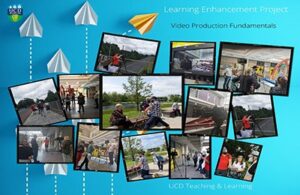
It is widely accepted that most people have access to video/audio recording facilities on cameras and mobile phones. However, very few untrained people have the knowledge or skills to create bite size, clear, coherent, engaging learning materials from such devices. These fundamental skills are critical to development of a large variety of Digital Media Learning Resources including Video & complex 3D Animation.
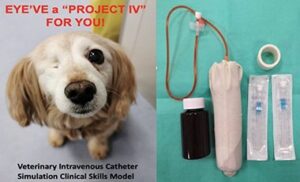
A successful veterinary medicine/ veterinary nursing student is one that upon graduation can evidence professional knowledge and underlying medical principles but also one that has achieved the mastery of defined motor skills involved in practical skills. An example of a challenging yet fundamental skill demanded of veterinary graduates is the ability to place an intravenous catheter.
‘Living Multilingually’ is a pre/co-curricular initiative that empowers language students and graduates to recognise and assert the versatility of their skillset.
In the College of Social Sciences and Law, we aim to inform, inspire, challenge and motivate our students to reach their full potential and contribute to the life of their school, College, University and the wider world.
The Community Drugs Programme (School of Social Policy, Social Work and Social Justice) is a widening participation initiative that seeks to provide students with a well-recognised professional qualification, and since 2010, the opportunity to progress onto the second year of the B.Soc.Sc (Social Policy and Sociology). As a successful and niche community engagement and widening participation programme within UCD, there are around 20 students completing the one-year Diploma in Community Drug and Alcohol Work annually, and between two and seven student progressing each year onto the B.Soc.Sc. (Social Policy and Sociology).
Legacy Classical Mechanics was the undisputed Crown Jewel of Physics until the advent of its quantum counterpart. It has been a major driver in developing modern engineering, with probably the maximum influence in Mechanical Engineering. We have come a long way on the shoulders of giants – right from Aristotle, Bramhagupta, Aryabhatta, Ibn-Sina, Leonardo da Vinci, Isaac Newton, Robert Hooke and Albert Einstein to William Rowan Hamilton, Joseph Louis Lagrange and Henri Poincaré. It is probably an understatement to say that the alumni list on this subject is stellar.
The project relates to ARCV41480 Archives Preservation and Acquisition, a core 10 credit module on the MA in Archives and Records Management programme (Z020) delivered by the School of History. The programme holds professional accreditation from the Archives and Records Association (UK & Ireland) and its learning environment enables students to gain practical experience of various recordkeeping activities, often working in collaboration with external archival repositories. However, this is chiefly in relation to traditional, analogue materials.
One of the key strengths of our Initial Teacher Education(ITE) programmes is the many forms of ‘student advising’ we offer that are associated with the values and programme-level learning outcomes of our programmes. This has been mentioned in our quality review and by external examiners.
The overall objective of the project was the development of an online open access, interactive, communication video repository that would offer the opportunity to build from the basics to the complexities of communication in the professional field of veterinary medicine, but also have elements relatable to veterinary nursing other medical disciplines.
Knowledge of anatomy, at its heart, fundamentally requires an understanding of three dimensional structure. While examination of the actual human body remains the cornerstone of anatomy education, the approach has limitations in certain instances. Some anatomical structures are difficult or impossible to see in reality for practical reasons, such as embryonic development. Also, time available to students in traditional anatomy laboratory classes is limited, so additional supplementary resources can significantly enhance student learning. While textbook diagrams can be useful, they can require a lot of effort on the part of students to recontextualise in 3D. Commercially available 3D models can also be useful, but are generally expensive and limited in what models the manufacturers have available.
Our M.Sc. in Regulatory Affairs & Toxicology has grown significantly in popularity since its introduction in 2016. Our M.Sc. aims to prepare students for careers in a wide variety of fields including pharmaceuticals, biopharmaceuticals, medical devices, foods and food protection, cosmetics, personal care products, chemical and environmental safety. With such a broad range of graduate destinations, the diversity of backgrounds in our student cohorts is highly diverse. Significant proportions of our annual student intake come from chemical, engineering and environmental science backgrounds. While key concepts in biology and pharmacology are covered in the modules, a significant burden is placed on students to undertake any remedial learning themselves. In the past, our student feedback sessions and module evaluations have identified that additional supports for students who do not have a strong background in life sciences would greatly enhance their learning experience.
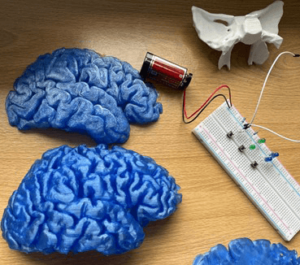
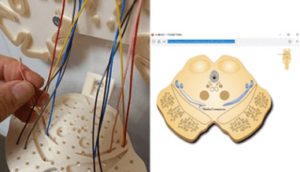
Neuroscience is a highly complex, multidisciplinary subject, and both historically and globally, has been perceived by medical students as the most difficult and daunting subject of their studies. The vastness and complexity of neuroanatomy, in particular, and difficulty in visualizing neuroanatomical structures, have been postulated as major causes of ‘neurophobia’ in students. Innovative teaching strategies for assisting the simplification and understanding of neuroanatomical concepts, and particularly resources associated with improved three-dimensional (3-D) neuroanatomical visualization, are valuable tools to enhance neuroanatomy learning and dispel fears associated with the subject.
Recent research has highlighted a need for courses to increase Equality, Diversity and Inclusion (EDI) awareness to improve students’ overall Teaching and Learning (T&L) experiences. The benefits of EDI coursework for university students are undeniable, and the majority of institutions now require EDI training in some form in their curricula. However, some training that has taken place has been reported to be passive as opposed to activities that allow participants to experience and explore EDI content. In this LEP project, active engagement with the subject matter via a game-based workshop was facilitated. Here, participants experienced a collaborative journey that encouraged awareness and reflection of EDI issues in T&L.
Recent evidence indicates that there is a large gap between the business competencies of veterinary graduates and the expectations of their employers. Weaknesses among the business skills identified as particularly relevant to new graduates included their competence in discussing finances with clients and their confidence in charging for veterinary services. Business orientation, employee development, negotiating skills, leadership and personal finance have also been recognized as deficient.
The LEP student video project grew out of our team’s previous work on a self-paced online digital research skills module that we created for BSc Social Sciences students, to support their development as emerging social scientists and help to prepare them for their research projects in stage four of their programme. The module, now titled SSCI30050 Digital Research Skills for the Social Sciences, invites students to independently work through six learning units focused on foundational research skills, and includes a range of interactive learning activities, utilising new and existing resource collections within the university.
This project proposal was designed in line with one of the key recommendations of the “Yidan Prize Foundation 2018 worldwide educating for the future index” stating that “students need to change from being consumers to co-creators. This is where 21st-century skills such as critical thinking, creativity, collaboration and digital skills are gaining traction” addressing all four priorities of the learning enhancement criteria:
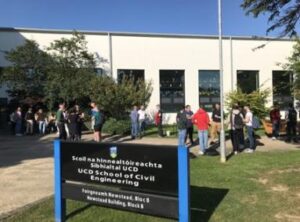
We concur with the findings of the University Group on Academic Advising that there is a significant gap in the formalized provision of academic advice to our undergraduate and taught graduate students. The specific context for the project in the School of Civil Engineering took into consideration two distinct aspects.
The flexibility of our DN200 science programme is one of its unique selling points, but it can sometimes lead to difficulties in module selection. Although B.Sc. students receive detailed guidance in module selection, given the range of degree majors available (27), and the different prerequisites for each, this can be surprisingly complex and invariably some students end up at the end of stage two without the required prerequisites for their desired major. In order to better support students in module selection, we decided to split this project into two separate tasks.
We designed and created two Brightspace modules for the provision of centralised decision making, advice/support, registration, and programme guidance for BA Arts and BA Humanities students to refer to throughout their college experience. The goal is to reduce student stress, reduce stigma of asking for help, and to ultimately lower rates of non-progression and registration errors.
Students often engage in co-curricular activities to improve their academic performance and to avail of opportunities to apply learning gained in the classroom to ‘real-world’, experiential learning activities. Engagement in co-curricular initiatives also play an important role in developing a student’s employability as they provide opportunities for students to develop skills that are transferable to the workplace and that ultimately improve their employment outcomes.
The long-term educational requirement we wanted to begin to tackle was the question of how to significantly enhance the academic advice available to students across all School of Biology & Environmental Science (SBES) programmes. However, in this pilot scheme, we targeted a selected cohort of undergraduate and taught postgraduate students, who were at a crucial phase of their career during the 2021-22 academic year.
Traditionally mature and part-time learners have been underserved with many HEIs lacking bespoke resources to support academic teams deliver on advising for this diverse cohort (age, family status, caring responsibilities, and employment status) as they progress through their learning journey. Through the co-design of TILL21 with mature and part-time student input, our team developed a set of proposals supported by wide ranging international resources and information that can be used to develop relationships allowing for appropriate academic advising of the learning journeys of mature and part-time learners and make their unique capabilities and experiences an asset in enhancing learning processes for all students.
The BSc Social Sciences (DN700) was introduced in Sept 2018, with an annual intake of 500 students. The programme design included an academic mentoring component to enable student success. However delivery of an academic mentoring programme for all students and involving all faculty was challenging for students, academic staff and the college office. In response, a number of changes were made in subsequent years.
The UCD Community Drugs Programme is an innovative widening participation programme that provides both an undergraduate professional qualification for working in the field of community based drug and alcohol intervention, and an access route onto the second year of the BSocSc. Delivered in partnership with Urrus, Ballymun Youth Action Project, the programme features co-location, shared teaching delivery and joint programme recruitment and development. The delivery of the Community Drugs Programme is based on deeply relational practice; between academics and associated staff; between staff and students; and between students themselves.
First year Food Science (DN261) focuses mainly on core sciences (biology, chemistry, and physics), where students are taught in large classes with other Science and Agriculture students. These Food Science students can feel lost, do not readily meet each other either in class, or in extracurricular activities specific to the course. Additionally, many students express that they don’t know what careers are available to them after graduating.
An increasing number of university students are struggling with their wellbeing, notably due to the academic pressures of being an independent learner which is often not formally supported in the transition from secondary to tertiary education. The majority do not seek support due to barriers such as stigma, lack of knowledge of available services, or a lack of necessary skills to identify themselves as struggling to begin with. Policy gaps in the provision of academic advising have been identified in UCD, and a one size fits all approach is not envisaged as a workable solution. Therefore, exploring student-centric approaches and the potential for technology to support academic advising in different contexts and cohorts is warranted.
The original project idea was focused on enhancing the demonstrator training already provided to contribute to their professional development, specifically, it was planned to equip them (the student demos) to gain more immediate feedback from students than is possible using the student feedback on modules mechanism and to consider the effective use of marking guidelines for consistency in first-year science laboratories.
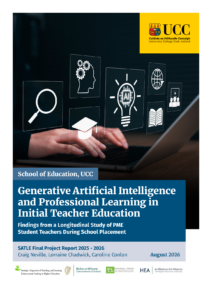
The final report of UCC’s SATLE-funded Smart Support? AI-assisted school placement project. It examines how Professional Master of Education student teachers use generative AI during school placement, how their AI literacy and professional judgement develop, and the implications for teacher education and placement partnerships.