

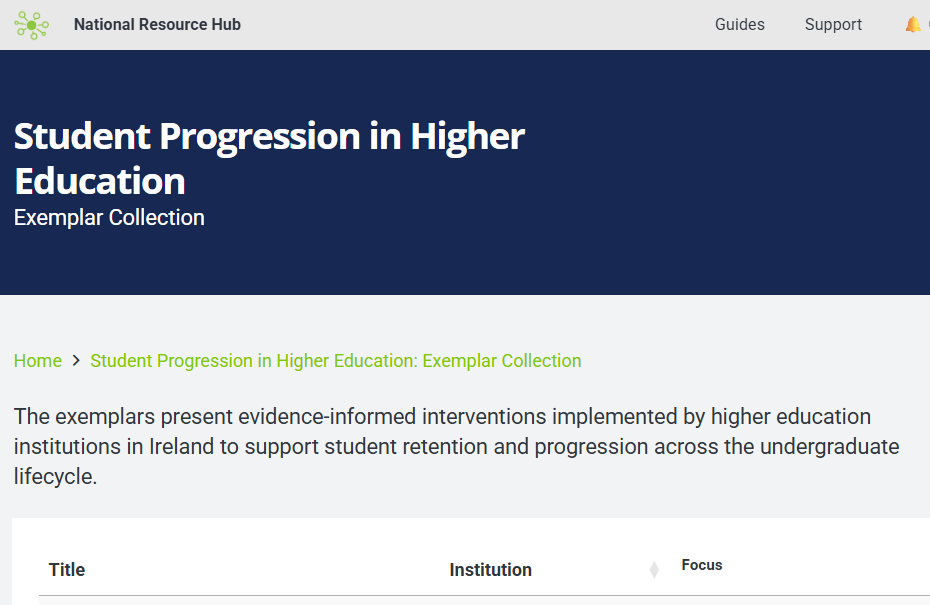
A collection of case studies of evidence-informed interventions implemented by higher education institutions in Ireland to support student retention and progression across the undergraduate lifecycle. These exemplars are presented here as a national evidence base of student progression initiatives.
Benefit of this resource and how to make the best use of it
The case studies have been created to inform educators, academic programme developers, and curriculum designers across the higher education sector about the variety of interventions currently being used to increase student progression and address student non-progression in the Irish higher education context.
Higher education institutions can see at a glance how the initiatives described are implemented and monitored, and how the effectiveness of the initiatives has been demonstrated. Evidence of impact is emphasised in each case study, including quantitative data where possible.
The case studies range across areas including student wellbeing, experience & success, academic & curriculum focus, assessment & examination, data analytics & dashboards, and first-year experience. All case studies pertain to institutional initiatives that apply to full-time in-person programmes (major awards) at NFQ Levels 6–8.
The interventions described in the case studies serve as examples of good practice for higher education institutions aiming to increase student progression.
Creative Commons Attribution (CC BY)
This work is licensed under a CC BY license, allowing sharing and adaptation with proper attribution.
If you have modified or adopted this resource, share your version here. Tracking adaptations helps us measure impact and connects others with useful updates.
This Pressbook features an interactive tool that helps you plan and structure your essay step by step. The book provides a clear starting point to reduce stress, prevent overwhelm, and support different learning preferences through examples, , quick guides, and PowerPoint videos with voiceover. This resource is a living document.
Purpose of the MTU Student Guidelines
Supports Academic Integrity Principles and MTU’s Academic Integrity Policy by:
1. Explaining what academic integrity is.
2. Helping students avoid bad decisions during assessments.
3. Outlines and signposts supports available across MTU
The work presented in this practice paper illustrates how the use of immersive 360o
video and photographs, viewed in virtual reality headsets or via 360o media players,
can enhance and broaden student knowledge and experience when undertaking
Project Based Learning (PBL) assignments.
This resource showcases initiatives from both academic and professional support areas across DCU, which have been funded under SATLE – the Strategic Alignment of Teaching and Learning Enhancement Funding in Higher Education. Examples are provided under the themes of Education for Sustainable Development, Digital transformation & Academic Integrity