This notebook presents an introductory overview to the cognitive perspective on the psychology of human behaviour for social science students.
Benefit of this resource and how to make the best use of it
Whether you’re studying Piaget for the first time be it for psychology, sociology, anthropology, child development, social work, nursing or midwifery, this resource will help students and lecturers alike find their bearings. The resources was developed and expanded from an Introduction to Psychology Course lecture series.
Starting with an introduction to cognitive developmental theories of how babies reason, the overview then moves to discuss how children develop into better thinkers. Adult theories of cognition are subsequently outlined and critically evaluated.
A chronology of topics include: the rise of ‘this thing we call cognition’, Piaget’s theory of cognitive development and its evaluation, problem space theory, and theories of mental representation in adult thought examining, amongst other types of thinking and reasoning, deduction and induction and an evaluation of mental representation theories.
Creative Commons Attribution (CC BY)
This work is licensed under a CC BY license, allowing sharing and adaptation with proper attribution.
?
This citation is automatically generated and may require adjustment. Always verify it against your style guide.
Cowley-Cunningham, M. (2023). The cognitive perspective – introduction to psychology: theory and practice. National Resource Hub (Ireland). Retrieved from: https://hub.teachingandlearning.ie/resource/the-cognitive-perspective-introduction-to-psychology-theory-and-practice/ License: Creative Commons Attribution (CC BY).
Adapting this resource? Share your version!
If you have modified or adopted this resource, share your version here. Tracking adaptations helps us measure impact and connects others with useful updates.
The Technological University of the Shannon (TUS) Compendium of Approaches to Integrating Digital Competencies into the Curriculum exemplifies the University’s commitment to embedding digital capability development across teaching, learning, and assessment.
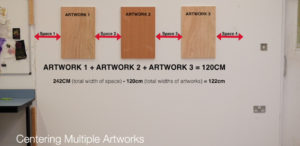
These video resources outline basic hanging and levelling methods used in the hanging and display of a variety of wall-based artworks, as well as demonstrating safe operation procedures for basic hand tools such as a drill, jigsaw, sander and nail gun.
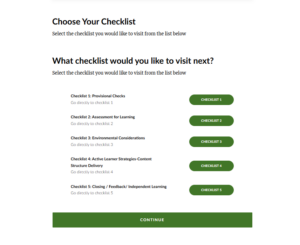
Teaching and Assessment for Learning Checklists aimed at early career & seasoned lecturers. The checklists provide guidance & reliable curated resources for lecturers who want to deliver an engaging and positive learning experience for their students. They act as a guide to check existing approaches, and help analyse how improvements can be made.
This open educational resource provides a step-by-step guide to cataloguing three-dimensional physical objects — primarily material samples — in Koha, the open-source Library Management System.