This tutorial explicates three critical examples of how psychology informs legal professionals of the problems that human behaviour brings to law and its practice.
Benefit of this resource and how to make the best use of it
Starting with an introduction to what psychology is, and what it is not, the tutorial moves to discuss and critically analyse key studies in psychological research demonstrating: the fallibility of forensic profiling, the malleability of human memory relevant to false memory syndrome, and finally the vulnerability of juries to prejudicial evidence. These key studies demonstrate how forensic profiling may sometimes mislead police investigations, how false memories can be planted in the mind of witnesses, and how prejudicing evidence, such as prior convictions, can bias trials in which very little other corroboration is evident. These thought provoking findings are presented in the context of core landmark findings within the psychology of law literatures, and will provide the student and lecturer with much to appraise and work with to advance complementary literatures within law, such as a critique of the rules of evidence and procedure. Finally, a select reading list is provided to aid the student and lecturer for future reference.
Creative Commons Attribution (CC BY)
This work is licensed under a CC BY license, allowing sharing and adaptation with proper attribution.
?
This citation is automatically generated and may require adjustment. Always verify it against your style guide.
Cowley-Cunningham, M. (2023). Psychology of law: 3 critical empirical legal problems. National Resource Hub (Ireland). Retrieved from: https://hub.teachingandlearning.ie/resource/psychology-of-law-3-critical-empirical-legal-problems/ License: Creative Commons Attribution (CC BY).
Adapting this resource? Share your version!
If you have modified or adopted this resource, share your version here. Tracking adaptations helps us measure impact and connects others with useful updates.
This is an interactive multimedia open educational resource (OER), created using H5P, on the topic of Open Education. It has been developed by the Department of Technology Enhanced Learning at Munster Technological University.
The purpose of which is to give an overview of OEPs, using interactive features of H5P
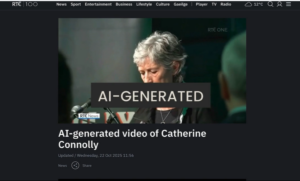
A video that discusses how Artificial Intelligence is impacting the way disinformation is created and spread to manipulate public opinion. It also outlines importance of Media Literacy education and regulatory measures, referencing Ireland’s Online Safety and Media Regulation Act and the EU’s Digital Services Act.
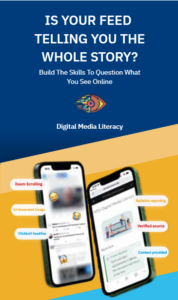
This interactive online resource is a set of eight units to support learners in their online information ecosystem. It is a mix of text, images, video, audio and interactive tasks. The resource can be accessed directly via the link provided or embedded in any Learning Management System compatible with SCORM files.
An open educational resource that supports academic, professional, and support staff to build more neuro-inclusive teaching, services, and policies in higher education. This resource was conceptualised & developed through the experiences of neurodivergent students in third-level education, with co-creation at the heart of every stage of the process