Through the inclusion of insightful provenances and case histories, students are taken on a journey back in time to learn not only from the original donors, but also from the physicians and anatomists who treated and prepared the specimen, offering fascinating insights into the healthcare systems and the education values of the time. Careful consideration was given to which specimens were to be showcased. Specifically, those over a hundred years old, without identifying features or sensitive features such as developmental anomalies.
Benefit of this resource and how to make the best use of it
This initiative addresses Goal 3 of the Trinity Strategic Plan, 2020-25 ‘practicing next generation teaching and learning’. The project aims to enhance the Discipline of Anatomy’s blended offerings through the digitisation of historic anatomical teaching resources via the development of a novel interactive e-learning platform. The Old Anatomy Museum at Trinity College Dublin houses an extensive collection of historical teaching artefacts, many of which retain extraordinary pedagogical value. However, due to their delicate nature, repairs, and potentially sensitive content, these artefacts are rarely used for student learning. Artefacts include historic plaster casts, posters, cadaveric specimen, and wax models that visually describe the human form from unique perspectives revealing key insights into typical and pathological anatomy, and which are very difficult to model or prosect using donors. Learning from the past is also strengthened by the rarity of some specimens which gives students an appreciation of the dedication and skill required to prepare teaching tools of such exceptional quality. To exhibit these teaching artefacts to today’s anatomy students, using funding from the National Forum for Teaching and Learning’s ‘Strategic Alignment of Teaching and Learning Enhancement’ (SATLE) fund, we have developed an interactive online platform which showcases digitized versions of these historical teaching tools.
This work is licensed under a CC BY-NC-ND license, permitting redistribution for non-commercial use with proper attribution but prohibiting modifications.
?
This citation is automatically generated and may require adjustment. Always verify it against your style guide.
Trinity College Dublin (2022). Enhanced blended learning in anatomy education. National Resource Hub (Ireland). Retrieved from: https://hub.teachingandlearning.ie/resource/enhanced-blended-learning-in-anatomy-education/ License: Creative Commons Attribution-NonCommercial-NoDerivatives (CC BY-NC-ND).
Adapting this resource? Share your version!
If you have modified or adopted this resource, share your version here. Tracking adaptations helps us measure impact and connects others with useful updates.
This is an interactive multimedia open educational resource (OER), created using H5P, on the topic of Open Education. It has been developed by the Department of Technology Enhanced Learning at Munster Technological University.
The purpose of which is to give an overview of OEPs, using interactive features of H5P
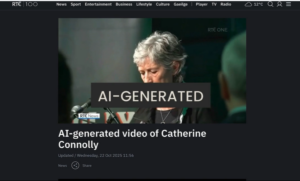
A video that discusses how Artificial Intelligence is impacting the way disinformation is created and spread to manipulate public opinion. It also outlines importance of Media Literacy education and regulatory measures, referencing Ireland’s Online Safety and Media Regulation Act and the EU’s Digital Services Act.
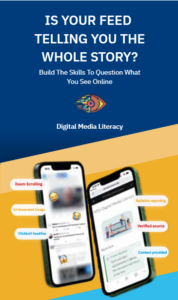
This interactive online resource is a set of eight units to support learners in their online information ecosystem. It is a mix of text, images, video, audio and interactive tasks. The resource can be accessed directly via the link provided or embedded in any Learning Management System compatible with SCORM files.
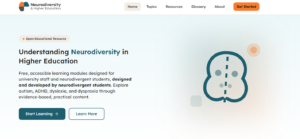
An open educational resource that supports academic, professional, and support staff to build more neuro-inclusive teaching, services, and policies in higher education. This resource was conceptualised & developed through the experiences of neurodivergent students in third-level education, with co-creation at the heart of every stage of the process