Assessment in Practice: Supplemental 1

Assessment in Practice: Supplemental 1

Creator(s) (alphabetical)

David Jennings, Paul Surgenor, Tim McMahon

Organisation(s)

University College Dublin

Discipline(s)

Teaching & Learning

Topic(s)

Assessment and Feedback

License

CC BY

Media Format

PDF

Date Submitted

Submitted by

Export Resource Data

Description

A concise summary of classroom assessment techniques.
Benefit of this resource and how to make the best use of it

This resource presents a summary of various classroom assessment techniques, with a description of how they can be implemented.

Creative Commons Attribution (CC BY)

This work is licensed under a CC BY license, allowing sharing and adaptation with proper attribution.

https://creativecommons.org/licenses/by/4.0/
? This citation is automatically generated and may require adjustment. Always verify it against your style guide.
Jennings, D., Surgenor, P., & McMahon, T. (2021). Assessment in practice: supplemental 1. National Resource Hub (Ireland). Retrieved from: https://hub.teachingandlearning.ie/resource/assessment-in-practice-supplemental-1/ License: Creative Commons Attribution (CC BY).

Adapting this resource? Share your version!

If you have modified or adopted this resource, share your version here. Tracking adaptations helps us measure impact and connects others with useful updates.

Related OER

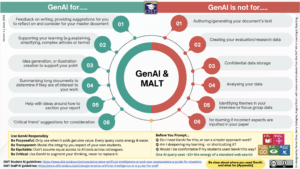
A 1-page guide, co-created by lecturers, tutors & students on DkIT's MA in Learning and Teaching, showing where GenAI can, and can't, support particular postgraduate research/skill development (*reflecting practice 2025-26). Includes student-informed prompts on responsible, sustainable use. An editable PowerPoint supports adaptation to own context.
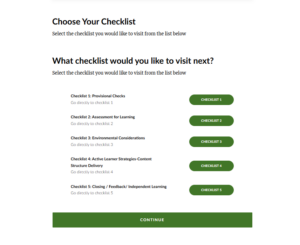
Teaching and Assessment for Learning Checklists aimed at early career & seasoned lecturers. The checklists provide guidance & reliable curated resources for lecturers who want to deliver an engaging and positive learning experience for their students. They act as a guide to check existing approaches, and help analyse how improvements can be made.

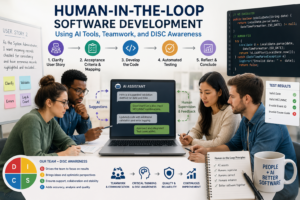
This OER guides students through human-in-the-loop software development, demonstrating how AI tools can be effectively supervised, refined, and integrated across the Software Lifecycle. Designed for computing educators and learners, it combines agile practice, teamwork, DISC awareness, testing, and critical reflection on human–AI collaboration.