


Coding theory is a major component of Applied Algebra. It has many applications in the mathematics of communications and has many links with other scientific disciplines, such as electrical engineering and computer science. Coding theory arises in almost every imaginable digital communications and storage system. In UCD, it is taught at the undergraduate level in the module MATH30180 An Introduction to Coding Theory.
Initiative
TUS Starter Pack
About this initiative
The TUS Starter Pack is a digital platform designed to support first-year students across TUS’s multi-campus environment. It provides a user-friendly digital one-stop-shop, for essential pre-arrival and induction information, helping students navigate registration, IT access, timetables, support services, and campus orientation. This platform also hosts curated resources geared towards supporting students in their onward academic journey. It also aims to streamline communication, reduce student anxiety, improve preparedness, and foster a sense of belonging ahead of commencing university life.
Context and needs addressed
The key strategic drivers outlined in Section 4 below underpin TUS Student Services’ explicit commitment to Digital Transformation to enable us to meet the challenge of supporting TUS students, including our National Access Plan (NAP) target cohorts, across our seven campuses into the future.
TUS identified the pre-arrival and induction stage of the student journey as a primary focus of this project being mindful of the important influence of the students’ first few weeks on student retention and success. TUS is particularly conscious of our diverse student demographic, and explicitly also those who come from socio-economic disadvantage, who might be daunted by the task of commencing third level. Accordingly, the TUS Starter Pack was developed as a Digital Transformation response to these needs.
Goals and key activities
Equitable Access
Our primary goal was to ensure an optimum start to university life by creating a clear, concise and cohesive digital one-stop-shop, which would enable equitable access to support for students attending any of our campuses to:
- Register
- Activate and access IT systems
- Access important student support services and resources
- Receive essential academic information, timetables and learning support resources
- Engage with fellow students both online and at in-person orientation
- Attend on campus Orientation
- Navigate around their home campus and find their way to class successfully.
Integration of Business Processes
At a practical level, the administrative processes associated with registering, securing an ID card, activating email and access to IT, accessing timetables, etc. can be complex and daunting for new students and their families. The project team was inspired to develop a digital platform which integrated and streamlined multiple pre-arrival business processes from functional areas across the Midlands and Midwest campuses in a user-friendly interface.
Engagement, Community and Culture
Strong importance was placed on reinforcing our supportive and welcoming culture to alleviate anxiety and help students and their families feel scaffolded as they embarked on this new stage of their lives. Accordingly, student perspectives, social and mental health and wellbeing resources representative of the student-centred ethos at TUS were included.
Communication
We identified that the period between the publication of CAO Round 1 offers, the closure of the CAO acceptance window, and the distribution of the TUS registration invitations as a time of heightened anxiety for students and their families. We sought to identify an effective, cost effective and environmentally sustainable solution for communicating with students across our geographically dispersed campuses and embraced the use of innovative digital technologies to do so (as described in Section 5).
Key stakeholders involved
This project required cross regional and interdisciplinary collaboration which transcended the legacy institutional profiles of TUS (AIT and LIT). Stakeholders included Student Services, Registry, Admissions, Faculties, Computing Services, Library, the Centre for Pedagogical Innovation and Development (CPID), Equality Diversity and Inclusion, Timetabling, Estates, Students’ Union, Marketing and Communications teams.
Any challenges encountered and how they were addressed
Student Experience Challenges
Time Challenge
The tight timeframe between CAO Round 1 offer publication and classes commencing creates significant stress and anxiety for students and their families. By having a digital one-stop-shop on the TUS website, students were able to navigate administrative tasks, access vital information relating to supports, plan attendance at orientation and classes, and begin the process of making friends both online and at in person orientation sessions prior to the commencement of their classes.
Communication challenges
The gap between CAO offers being published and classes commencing presents significant communication challenges during which TUS and other HEIs experience a huge surge in student/parent phone and email queries. This was addressed in TUS by going live with the TUS Starter Pack on our website the morning of CAO Round 1; colleagues in Registration and Admissions reported a significant improvement to this issue as the Starter Pack addressed the communication challenge, providing user-friendly essential information which helped otherwise avert enquiries from anxious students and parents. The Starter Pack was also linked in acknowledgement emails, post registration and enquiry responses; and was extensively promoted on social media platforms including Instagram and Tik Tok and throughout on campus Orientation events.
Project Management Challenges
Business Process alignment
Legacy business processes were respected and adapted through open communication with stakeholder working groups. Rather than using static text, which requires updating, the platform contains embedded links to the TUS website to ensure that information remains dynamic and up to date. This project created a forum for inter-disciplinary dialogue which has resulted in business process improvements that will be further refined through future development of the TUS Starter Pack.
Managing scope creep
We learned from extensive benchmarking that addressing delivering concise and clear messaging were key success factors. The project team repeatedly reviewed project parameters and sought expert stakeholder and student feedback to ensure that content and messaging was appropriately curated.
Strategic alignment with national policies
Digital Transformation
The need to consider the role of the SATLE priority area of Digital Transformation emerged from a number of important national policies including the QQI based TUS Student Support Services Evaluation Report and Peer Review Group recommendations (2024), the QQI CINNTE Institutional Review and Report (2024) and the HEA Systems Performance Framework 2023-2028 which identifies Pillar 3 Access and Participation as an important pillar with associated performance indicators and which is further underpinned by the National Access Plan 2022-2028.
In 2024, the expert CINNTE review panel commended ‘TUS for its unwavering commitment to students on Access and Widening Participation pathways’ and stressed the importance of providing consistent and equitable support across our geographically dispersed campuses to effectively meet current and future demands. It also recommended that TUS should develop a better way to communicate with students, ensuring they receive important academic and support information at every stage of their university journey, from application to graduation.
Further review and benchmarking identified a critical need for Digital Transformation to address key strategic drivers, improve operational efficiency, and address the challenge of providing equitable access to support in a multi-campus environment.
Amid the broader trend toward digitised service delivery, this project was grounded in two key communication management concepts: the Awareness–Interest–Desire–Action (AIDA) model and the development of TUS’s digital ecosystem—one of the central pillars underpinning TUS’s designation as a Technological University.
TUS has applied the AIDA model, a classical marketing framework, within the Starter Pack to guide new students seamlessly through each stage of engagement as they complete their enrolment and onboarding journey.
TUS is aware that 21st century learners value being able to engage when they want and how they want. Innovative service delivery models are required to meet the challenge of providing support across a multi-campus profile and requires a digital eco-system to ensure equal access for all learners to a consistent and high-quality education and service experience, regardless of physical location or time of day.
TUS is addressing the design and delivery of both the external and internal facing business processes and overall digital ecosystem for a contemporary university with a multicultural and diverse student population in mind and equally is committed to the Altitude Charter striving to embedd inclusive practise in all that we do. The TUS Starter Pack is an excellent example of how digital tools can be used to accomplish this. 21st century students have high levels of digital sophistication, experience, and expectations, however not all students or NAP target cohorts are ‘digital natives’. TUS is committed to equipping its students with high levels of digital skills by offering exposure to digital technologies as described in Attribute 4 of the TUS Graduate Attributes Framework 2022-2025. The learner’s experience will be delivered ubiquitously and effectively across a range of media and digital channels using innovative modes and methodologies of engagement, including in this instance through their immediate exposure to the Starter Pack.
Innovation
Student Partnership
Student partnership was centrally important in the development, promotion, rollout and review of the Starter Pack. This took the form of:
- Short format videos of student perspectives,
- Students’ Union promotional video,
- Student consultation and feedback throughout the development process,
- Student participation in the Orientation aspects of the Starter Pack
- Promotion and awareness building through social media
- Evaluation and consolidation of learnings
Use of emerging tools and methods
The project team employed the ADDIE instructional design model and methodology (Analysis, Design, Development, Implementation, Evaluation) to ensure a structured and iterative development process. A detailed needs analysis identified key content areas, accessibility requirements, and communication gaps. The design and development phases were informed by Universal Design for Learning (UDL) principles and instructional design best practices, ensuring that content was inclusive, accessible, and engaging for diverse student needs.
Innovative emerging tools and methods were utilised to address project goals. For example, Articulate Rise was used to create our Starter Pack platform which included tailored short format videos, apps, interactive way finding maps, social media platforms (Instagram and Tik Tok) as well as more traditional technologies such as the TUS website and email.
Institutional or cultural change
It is widely acknowledged that communication and integration are significant challenges in terms of navigating cultural change following a merger. TUS has experienced a period of significant change following the integration of our legacy organisations AIT and LIT. In this same period, TUS navigated the COVID pandemic, a significant shift in the funding landscape of the higher education sector and increasingly complex needs within the diverse profile of our student body. The TUS Starter Pack project was a cross institutional, interdisciplinary collaboration in which the shared commitment to enhance the student experience and use digital technologies to effectively communicate and engage with students at the pre-arrival stage of their journey was the primary focus. This project is acknowledged internally as being an exemplar of successful change management within our organisation. Together, Starter Pack stakeholders met the challenge of integrating diverse business processes while achieving individual functional area KPIs. This collaboration has effectively transcended legacy organisational silos and contributed to a lasting culture of cooperation, shared purpose, and unified vision to support our students’ transition and progression
Outcomes
| Outcome | Quantitative / Qualitative Indicator |
|---|---|
| Starter Pack was promoted online following CAO Round 1 offers and provided equitable access to enrolment and support resources TUS wide | Received by 100% of 1st Years via email |
| 2. The Starter Pack provided essential on-campus Orientation information for all campuses | Achieved 85% attendance at Midlands and Midwest Orientation sessions across all 7 campuses |
| User Impact – user-friendly digital interface supported pre-arrival tasks and enhanced student experience, engagement and preparedness. | 82% of incoming First Year students surveyed rated the TUS Starter Pack as ‘Very/Extremely Helpful’. |
| Stakeholder Impact and Change Management- Improved cross-functional collaboration, communication, and integration relating to new student intake business processes and KPIs. | Stakeholder feedback indicated improved alignment, communication and shared vision. |
| Reduced Communications Challenges | Midlands and Midwest Admissions teams feedback noted: • Streamlined Registration communications • Significantly reduced phone and email query volumes • Improved access to information for students and parents |
Impact
Potential for replicability and wider institutional/sectoral impact.
Following evaluation and consolidation of student and stakeholder feedback, it is envisaged that the next stage of this project could be the development of the TUS Student Support Pack which will have year round use as a digital one-stop-shop housing student support information and links to digital resources which will be deployed at key post entry junctures to remind students of supports throughout the year.
A TUS Starter Pack Case Study Poster will be showcased at the HEA Teaching and Learning Conference 2025. Key learnings from the TUS experience will be shared to enable wider sectoral learning foster collaborative networks with sectoral colleagues.
Improvements to teaching and learning.
Student and Stakeholder Feedback has been helpful to quantify the impact of the Starter Pack and identify key learnings toward future improvement and development.
In a survey of 1,230 First Year Students from the Athlone Campus (42% response rate), the average rating of the Starter Pack was 4.26 on a scale of 1-5, where 1 means ‘not at all helpful’ and 5 means ‘extremely helpful’. Notably, 82% of respondents found the TUS Starter Pack to be Very/Extremely Helpful.
Survey feedback confirmed early stage design planning in that students were most interested in accessing their timetables and figuring out how to find classrooms and lecture theatres. The next most popular aspects were relating to support information which is consistent with design team expectations.
Starter Pack elements were re-shared over social media during the themed weeks of the TUS Connect & Engage programme which spans the first 7 weeks of the term in the knowledge that students struggle to retain information during the initial commencement stage and benefit from timely reminders.
In terms of measuring the social integration, diversity and inclusion impact, the Starter Pack also enabled digital social connections. Data from the social connections and community building ‘GOIN Connect’ app element of the Starter Pack indicated that 77% of students who engaged with the app made connections and friendships with fellow TUS students outside of their specific programme of study pre-arrival.
18 year old CAO student, Undergrad, Faculty of Science
“I’m very happy. It helped me a lot in finding friends doing the same course as me. It definitely made the induction day much less worrying. I think it’ll definitely enhance my study experience as now I have people I can choose to do any group projects with in the future and people to ask questions to during my studies.”
Strategic partnerships and collaboration (internal/external)
Internal
This project was developed in response to strategically identified needs. The motivation to enhance the student experience and the organisational and personal values underpinning our shared commitment to Access & Participation united inter-disciplinary and cross regional staff to collaborate in building the TUS Starter Pack.
These newly forged internal relationships and shared commitment to enhance the student experience as well as achieve functional unit KPIs will support further process improvement initiatives going forward.
External
Future plans to develop a similarly constructed TUS Student Support Pack to house student support information and links to digital resources will support external pre-entry engagement with NAP target cohorts and stakeholder groups.
Plans for embedding the project/initiative learnings into future T&L work.
The Starter Pack has already been re-packaged for International Students with appropriate adaptations to create the: TUS Global Starter Pack
It is anticipated that evaluation and consolidation of pilot feedback will assist greatly in identifying future developments of the platform. The learning support elements of the Starter Pack such as the Learner Success Toolkit could be further developed and promoted to enhance teaching and learning.
Lead organisations
Affiliated organisations
Initiative details
Funding programmes SATLE
Status
CompletedActivity type
lepAward year
2024End year
2025Related initiatives
Looking Through the Green Lens
The newly formed UCD Library Green Group wanted to foster cross campus collaboration as they believed this would assist in realising their green goals. They saw the Learning Enhancement Project as a direct route to the student cohort who, motivated by their passion for the planet, would be willing to help the Library with this task.
Improving Access to Practical Elements of Environmental Engineering
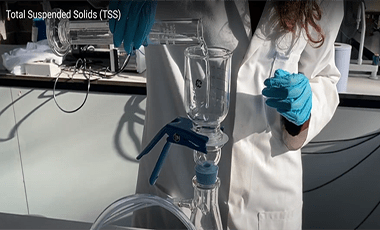
In an applied subject – such as engineering – practical, hands-on learning opportunities are invaluable. Student and external examiner feedback has emphasised the value that students place on laboratory and practical classes, and the desire to incorporate more of these activities into the modules offered. This project focuses on two modules which are delivered simultaneously to two cohorts of students; in-person and online.