


Coding theory is a major component of Applied Algebra. It has many applications in the mathematics of communications and has many links with other scientific disciplines, such as electrical engineering and computer science. Coding theory arises in almost every imaginable digital communications and storage system. In UCD, it is taught at the undergraduate level in the module MATH30180 An Introduction to Coding Theory.
Initiative
Promoting a Culture of Academic Integrity in Unsupervised Assessment through the Co-Design of Instructional Tools
About this initiative
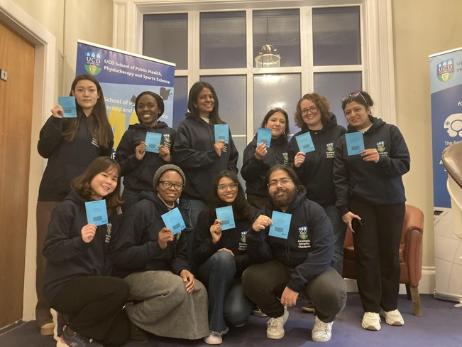
This initiative aimed to promote a culture of academic integrity within a diverse, multidisciplinary School, with a focus on unsupervised assessments. Moving beyond surveillance-based approaches, the project focused on helping students reflect on, promote metacognition of gaps in their academic skills, and embody academic integrity while engaging staff to integrate these principles into their teaching practices.
An interdisciplinary team engaged students through semi-structured interviews and surveys. Findings showed that while students valued academic integrity, many were unsure what constituted misconduct in unsupervised contexts and rarely sought support beyond the induction period. In addition, students did not always recognise that they needed to develop academic skills to uphold academic integrity values. These insights informed the co-design of six instructional resources.
A key resource was the development of student-led workshops, which utilised case studies to spark reflection on essential skills, including academic writing, time management, communication, peer discussions, and addressing non-academic stressors.
SATLE priority area: Academic Integrity
Context and Needs Addressed
The School of Public Health, Physiotherapy and Sports Sciences (SPHPSS) at University College Dublin (UCD) is an interdisciplinary school with a diverse student body. Since 2019—and accelerated by the COVID-19 pandemic—the School transitioned from in-person examinations to a broader range of assessment formats, including online exams, problem-based assessments, essays, and dissertations. This shift, combined with the digitalisation of knowledge and the rise of predictive language models readily available to students, creates new challenges for assessing authentic learning.
At the institutional level, UCD provides several supports for academic integrity and skills development. These include library training on citation, referencing, and plagiarism; plagiarism-detection tools; mandatory ownership statements for online submissions; and honour codes before assessment. Students also have access to a dedicated Academic Writing Centre. The university promotes student representation in faculty committees addressing workload and learning concerns.
Despite these central supports, a School-level initiative was required to embed academic integrity more deeply within teaching, learning, and assessment.
Goals
- Explore students’ understanding of academic integrity in unsupervised assessments—such as essays, dissertations, take-home exams, and online tasks—particularly within the context of digitalisation and the expanding influence of artificial intelligence.
- Co-designing reusable, student-informed resources and activities to address gaps in knowledge, awareness, and academic skill development.
- Collaborate with academic staff to integrate the promotion of academic integrity values and the development of academic skills into their curricula.
Key Stakeholders
The project team included academic leads from various disciplines, the Associate Dean for Teaching and Learning, the School’s education technologist, and four student partners. Additional students from across the School—representing diverse disciplines, ages, ethnicities, nationalities, and genders—contributed through interviews, surveys, and workshops.
Student Consultation
Semi-structured interviews and an online survey were conducted to gather students’ perspectives on academic integrity, its relevance, common challenges during unsupervised assessments, and the types of support they found most useful. Thematic analysis of qualitative data, aligned with established academic integrity frameworks, revealed that while students valued integrity, many were uncertain about what constituted misconduct—particularly in the evolving digital and AI-driven environment. Awareness of university policies was limited, and engagement with central support after induction was rare unless prompted by lecturers.
Three key determinants of honest academic behaviour emerged: 1) students’ individual and peer values, which shaped perceptions of what was acceptable, 2) their academic skill proficiency, as gaps in writing, time management, communication, and critical engagement—often compounded by external stressors—frequently contributed to breaches of integrity, and 3) their perception of how relevant it was for their lecturers.
Development of Reusable Learning Tools
Based on these insights, instructional resources were co-designed with students.. These included two short videos—one explaining plagiarism, intellectual property, and collusion, and another featuring student reflections on integrity—an interactive online unit on UCD’s Academic Integrity Policy, which included case-based exercises, self-assessment and honour code templates for reflection before submission, and guidance on the appropriate use of AI in assessments.
While these tools offered structured learning opportunities, students emphasised the importance of having interactive, safe spaces to discuss academic integrity openly.
Academic Integrity Workshops
To meet this need, a student-led workshop model was developed and first facilitated by a recent graduate. The workshops began with discussions on the meaning and relevance of academic integrity values, followed by analysis of authentic case studies drawn from student feedback. These cases highlighted common academic and non-academic factors that influence integrity, including external pressures (e.g., housing or financial stress during exams), limited academic writing or research skills, communication difficulties, inconsistent expectations, excessive workload, and time constraints.
Through structured peer discussion, students explored these scenarios, reflected on ethical decision-making, and identified academic skills needed to uphold integrity. The workshops encouraged critical thinking, metacognitive awareness, and collaboration, helping students link integrity to broader professional competencies.
Outcomes
During the duration of this SATLE Initiative, thirty-three students completed the workshops and became Academic Integrity Champions. Twelve module coordinators embedded the instructional resources into their teaching.
Results of the consultation with students were presented to staff, and it was agreed by the Teaching and learning Committee that the mandatory embedding of the reusable learning tools into the curriculum.
Challenges and How They Were Addressed
The initial challenge was encouraging student participation in the workshops. Once engaged, positive feedback from early participants motivated others to join.
We also realised that there was an assumption among faculty that students arrive with well-developed academic skills. Findings showed this is not always the case, even at the postgraduate level. Mature students, those from disciplines that focus on practical skills, and students from education systems that emphasise exams often require support to develop their academic skills. Non-academic stressors also add barriers to learning.
The workshops provided a space to explore these scenarios, emphasise the importance of embedding academic skills in learning outcomes and assessments, and ensure students had opportunities to develop them.
Strategic alignment with national policies and relevant SATLE priority area
This initiative demonstrated several layers of innovation within the SATLE priority area of Academic Integrity. From the outset, the student–staff partnership prompted a shift away from developing stand-alone instructional materials that operate outside the curriculum. Instead, the team worked collaboratively with students to understand their experiences and needs, shaping pedagogical resources through direct dialogue and co-creation. This approach ensured that the resulting tools and activities were relevant, adaptable across disciplines, and responsive to students’ needs.
Engagement with students revealed the importance of reframing academic integrity not as a behaviour to be monitored but as a learning outcome embedded within education. Students were more likely to embrace integrity when they understood its intrinsic value, saw it modelled by lecturers and peers, and recognised the academic and personal skills required to uphold it.
The most significant innovation emerging from this partnership was the creation of student-led Academic Integrity Workshops. Using authentic case studies drawn from student feedback and real experiences, the workshops offered safe and interactive spaces for reflection and peer discussion. By examining realistic scenarios, students explored both academic factors—such as academic writing, critical engagement with sources, and workload management—and non-academic pressures that often require students to reach out to module coordinators and lecturers or identify existing support systems. Through these discussions, students were encouraged to identify their own strengths and areas for improvement and were provided with practical resources.
A distinctive feature of this model was its sustainability. Workshop participants who completed the initial sessions were invited to train as Academic Integrity Champions, enabling a peer-to-peer learning cycle. This model created a multiplier effect, embedding integrity across the student body through peer dialogue rather than top-down instruction.
The project’s innovation also extended to its impact on faculty practice. Academic staff involved in the initiative reported a renewed awareness of the importance of making academic integrity explicit in teaching, assessment design, and feedback. Faculty recognised that students require guidance not only on the rules but on the skills that guide ethical academic practice—such as time management, communication, and critical thinking. This insight has influenced how staff frame assessments and discuss expectations with students, promoting a more transparent and supportive learning environment.
The initiative, therefore achieved innovation at three interconnected levels:
- Pedagogical innovation – positioning academic integrity as a learnable skill and reflective practice rather than a compliance requirement.
- Student partnership innovation – empowering students as co-creators, facilitators, and ambassadors for integrity through the Academic Integrity Champion model.
- Institutional innovation – integrating academic integrity into curricula through adaptable resources that complement existing university structures.
In its design and implementation, the project established sustainable mechanisms that can be transferred across disciplines and institutions. Its student-led workshop model and co-designed learning tools provide a replicable framework for other Schools seeking to embed integrity into teaching and learning in meaningful, interactive ways.
The initiative thus moves beyond traditional, policy-driven approaches to academic integrity by using reflection, dialogue, and skill development in the student experience.
Innovation in specified SATLE priority area
This initiative demonstrated several layers of innovation. Initially, the student–staff partnership encouraged the team to move away from creating stand-alone instructional tools (e.g., modules separated from the curriculum) and instead to actively listen to students’ needs, shaping pedagogical resources through that interaction.
Engagement with students revealed the need to reframe academic integrity—not as a behaviour to be monitored, nor simply as a policy to comply with, but as a learning outcome embedded into their education. Students will embrace academic integrity when they understand its value, perceive its importance through the lecturers and peers, recognise the skills they need to develop to succeed, and receive appropriate guidance and support to build those skills.
The most significant innovation resulting from our student partnership was the creation of student-led workshops. Using authentic case studies drawn from real-life experiences, the workshops provided a safe space for reflection and peer discussion. By addressing both academic issues (e.g., engaging with sources, learning academic writing, managing workload) and non-academic pressures (e.g., cost of living, mental health, wellbeing), the workshops helped students to recognise their gaps or strengths in these skills and gave them cues and resources to improve them. Participants then became Academic Integrity Champions, equipped to lead future workshops, ensuring sustainability and scalability.
Impact of Innovation
- Thirty-three students trained as Champions, fostering a peer-to-peer culture of integrity.
- Twelve module coordinators embedded the tools into their curricula, reaching over 200 learners and embedding integrity in disciplinary contexts.
- At the end of the project, it was agreed that the mandatory inclusion of the flexible learning tools into Brightspace -the teaching and learning digital platform used in UCD-
- Faculty gained new insights into the importance of explicitly discussing academic integrity and ensuring they guide students to acquire the necessary skills to uphold its principles.
- Students reported greater clarity, confidence, and ownership of integrity principles.
The initiative therefore achieved innovation at three interconnected levels:
- Pedagogical innovation – positioning academic integrity as a learnable skill and reflective practice rather than a compliance requirement.
- Student partnership innovation – empowering students as co-creators, facilitators, and ambassadors for integrity through the Academic Integrity Champion model.
- Institutional innovation – integrating academic integrity into curricula through adaptable resources that complement existing university structures.
In its design and implementation, the project established sustainable mechanisms that can be transferred across disciplines and institutions. Its student-led workshop model and co-designed learning tools provide a replicable framework for other Schools seeking to embed integrity into teaching and learning in meaningful, interactive ways.
The initiative thus moves beyond traditional, policy-driven approaches to academic integrity by embedding reflection, dialogue, and skill development into the student experience. It demonstrates that integrity can be cultivated not through surveillance or deterrence, but through empowerment, understanding, and active participation—laying the foundation for a culture of shared responsibility that endures beyond individual programmes and cohorts.
Outcomes
| Outcome | Quantitative / Qualitative Indicator |
|---|---|
| Students trained as Academic Integrity Champions, prepared to lead future workshops and promote integrity among their peers. | 33 students completed the workshops and became academic integrity champions |
| All faculty embedded the co-designed institutional tools into their modules, resulting in integration of academic integrity into curricula. | Module coordinators embedded the co-designed instructional tools into their teaching, directly integrating academic integrity practices into curricula |
| Learners Reached | More than 200 students across different programmes engaged with the resources and workshops, increasing the reach of integrity education within the School. |
| Improved Student Understanding | Student feedback reported greater clarity on academic integrity expectations, increased confidence in applying skills (e.g., academic writing, time management, critical engagement with sources), and a stronger sense of ownership of integrity principles. |
| Faculty development | Faculty members gained new insights into the importance of explicitly teaching academic skills as part of integrity education, challenging assumptions about student preparedness and informing future curriculum design |
Impact
The project has generated significant and sustainable impact within the School, across University College Dublin (UCD), and with growing potential for regional and international dissemination. By engaging students as co-creators of teaching resources and peer facilitators, the initiative advanced understanding of academic integrity in the context of digitalisation, artificial intelligence (AI), and assessments. It has also enhanced institutional capacity to integrate ethical academic practices into curriculum design and student development.
At the School level, the initiative directly improved students’ understanding of academic integrity principles and their relevance in contemporary digital learning environments. Thirty-three Academic Integrity Workshops were delivered, each using authentic case studies and peer-led discussion to foster critical reflection. All participants reported improved comprehension of key academic integrity concepts—including plagiarism, self-plagiarism, collusion, and ethical source use—and a deeper understanding of the values underpinning honest scholarship. Students also identified personal skill gaps and areas for development, such as academic writing, time management, communication, and ethical decision-making.
The project leadership coincided with the School Teaching and Learning leadership, which facilitated implementation and ensured impact. For staff, the project prompted meaningful reflection on how integrity is modelled and supported within teaching practice. Over 30 faculty members incorporated the co-created instructional tools into their modules, embedding integrity within assessment design and classroom learning. This integration included the mandatory adoption of the interactive UCD Academic Integrity Policy unit into Brightspace, ensuring consistent student exposure to policy content and reflective exercises across programmes.
Programme Directors also agreed to schedule at least one peer-led workshop each spring trimester to reinforce academic integrity principles introduced during induction week.
Through these activities, faculty recognised that students require explicit guidance on integrity and related skills. The assumption that such competencies are acquired before university entry was challenged, prompting more intentional curriculum design and assessment planning. This led to the incorporation of clearer assessment criteria, formative feedback structures, and the explicit inclusion of integrity discussions in Teaching and Learning Committee and Programme Board meetings. As a result, academic integrity has become a regular agenda item within School governance, ensuring its continued visibility and strategic importance.
Improvement to Teaching and Learning
The initiative strengthened pedagogical practice by embedding ethical reasoning and reflective learning into the curriculum. Staff now approach integrity as a shared developmental process that connects knowledge, skill, and value formation. Students, in turn, experience integrity as part of their ongoing learning rather than as a separate or punitive topic.
The workshops also opened new conversations around emerging challenges such as the ethical use of generative AI. These discussions helped both students and staff navigate the blurred boundaries of AI-supported learning, developing greater awareness of responsible and transparent use. This approach has informed broader School-level dialogue about digital literacy and assessment redesign in response to evolving technologies.
Strategic Partnerships and Collaboration
Externally, the project has catalysed partnerships through the Erasmus+ European Public Health Programme, expanding the initiative’s reach and scalability. Joint online workshops are being co-developed with partner institutions in Europe to extend the model across diverse cultural and disciplinary contexts. These collaborative sessions will promote shared dialogue on integrity, ethics, and digital learning, positioning UCD as a European leader in innovative, values-based approaches to teaching and assessment.
The international engagement also enhances the project’s relevance in shaping cross-institutional policy on academic integrity, particularly as higher education systems collectively respond to the opportunities and challenges posed by AI. The initiative’s co-creation model provides a practical and adaptable framework for embedding integrity in transnational learning environments.
Embedding and Future Work
The project’s outputs have now been incorporated into teaching across multiple programmes within the School. Three Academic Integrity Champions from the initial cohort continue to facilitate peer workshops, ensuring sustainability and student ownership. Programme Directors and the Teaching and Learning Committee have committed to maintaining these sessions annually and to continuing integration of the co-designed tools into course materials.
At an institutional level, the project contributes to UCD’s strategic commitment to ethical, evidence-informed education. It provides a replicable framework that complements central academic integrity supports while addressing School-level needs and disciplinary nuances. The project has also generated a repository of reusable resources available through the School’s website and UCD’s internal teaching repository, supporting future dissemination and adaptation.
Looking ahead, the School plans to expand collaboration with other UCD Colleges and Erasmus+ partners to deliver joint online workshops, creating a community of practice around integrity and ethical learning. Further research and evaluation are planned to monitor the long-term impact of peer-led engagement and to explore how digital tools can continue to support integrity education in an AI-enabled environment.
Resources
- Interactive course unit
- Mandatory self-assessment tools
- AI Assessment scale.docx
- Workshop materials 1 -2 Outline for the Facilitator
- Workshop materials 3 – Workshop presentation
- Workshop Materials 4 – Exit Survey
- SATLE Project – UCD School of Public Health, Physiotherapy and Sports Science
- UCD Teaching & Learning showcase
Lead organisations
Affiliated organisations
Initiative details
Funding programmes SATLE
Status
completedActivity type
lepAward year
2023End year
2024Related initiatives

Improving Access to Practical Elements of Environmental Engineering
In an applied subject – such as engineering – practical, hands-on learning opportunities are invaluable. Student and external examiner feedback has emphasised the value that students place on laboratory and practical classes, and the desire to incorporate more of these activities into the modules offered. This project focuses on two modules which are delivered simultaneously to two cohorts of students; in-person and online.

Immersive Technology in Education: A Collaborative Learning Initiative
This project is underpinned by an innovative short online course on Immersive Technology in Education. It stems from the research of Rachel Farrell, UCD School of Education, in the area of ‘democratic pedagogical partnerships’ (Farrell, 2021) in teacher education and is designed and facilitated by post-primary school teacher Mark Baldwin of SchooVR.