


Student success at college is not just achieving high grades The National Forum for Teaching and Learning defines student success as the process by which students fulfil their potential and flourish at college and in society. This is a broader activity than simply achieving high grades. Psychosocial competencies are core to the definition of student success: these are the ‘soft skills’ or ‘non-cognitive skills’ that enable students to cope well with learning challenges, engage deeply in learning, and develop their identities as learners and as active citizens. Transitions are a key issue within this priority area, with transitions such as the move from school to college presenting both challenges and opportunities for students.
Initiative
Professional Development Capacity Building in Higher Education: Extending Provision for National Impact through a Flexible Pathways Approach
About this initiative
Teaching staff in higher education cite time constraints as a significant barrier to engaging in professional development (Brownell and Tanner, 2012). To address such issues, the literature highlights the need for flexibility and accessibility in the provision of Professional Development (PD) (Rientes, 2013; Teras, 2016). Moreover, findings show that flexible modes of delivery, professional recognition, and pathways to accreditation including inter-institutional recognition of prior learning (RPL) would significantly enhance current programme provision, uptake, and future sustainability. The FLEXIPATH project will illustrate how work-based, formal and informal learning can be combined to provide accredited flexible pathways of PD. It will design flexible PD pathways for the professionalisation of those who teach or support teaching. Building on the success within Teaching &Learning across the Shannon Consortium (Mary Immaculate College, University of Limerick, Limerick Institute of Technology), the project aims to provide a framework for HEI contexts whereby allowing learners to accumulate and evidence non-accredited CPD for conversion to formal credits. FLEXIPATH will demonstrate how learners can successfully engage in flexible learning activities and identify modes of recognition and reward for participation, application and reflection. By modelling PD programmes for staff on innovative pedagogical models of flexible and student-centred learning, it will facilitate the transfer of such approaches to academic practice.
Lead organisations
Affiliated organisations
Linked open educational resources
Initiative details
Funding programmes Teaching and Learning Enhancement Fund 2014-18
Status
CompletedAward year
2018End year
2019Contributors
Related initiatives
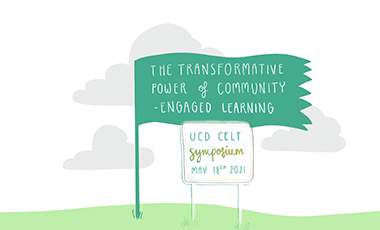
UCD Community Engaged Learning and Teaching (CELT) Community of Practice
Community Engaged Learning and Teaching is considered to be transformative for students and practitioners, underpinned by civic participation in community and society. One of the strategic themes of the UCD Rising to the Future Strategy is “Building a Healthy World” a core objective of which is to “continue to build our engagement locally, nationally and internationally”. Community Engaged Learning (CEL) and Teaching affords the University an opportunity to build and strengthen strong partnerships with social and community organisations in a meaningful and transformative way. It provides faculty, students and community organisations opportunities to engage in a symbiotic manner, learning from each other whilst bridging the gap between academic learning and the lived reality(ies) of society.

Using Acceptance & Commitment Therapy to Reduce Academic Procrastination
Although academic procrastination is a common feature of university life (affecting 50-95% of students), research suggests it is highly problematic (Scent & Boes, 2014). Academic procrastination is associated with diminished well-being, poor quality of life, high stress, poor university performance, and university dropout (Glick & Orsillo, 2015).