


Coding theory is a major component of Applied Algebra. It has many applications in the mathematics of communications and has many links with other scientific disciplines, such as electrical engineering and computer science. Coding theory arises in almost every imaginable digital communications and storage system. In UCD, it is taught at the undergraduate level in the module MATH30180 An Introduction to Coding Theory.
Initiative
FACCtS: Enhancing the Data Literacy and Analytics Learning Experiences of First- and Second-Year University Students
FACCtS
About this initiative
The Data Literacy and Analytics for the 21st Century module (CSC1015, formerly CA179) teaches one of the core transversal skills delivered to over 2,000 first- and second-year DCU students annually across fifteen programmes from the five faculties.
In 2023 and 2024, I was awarded two SATLE grants that significantly enhanced the teaching and learning of the data literacy and analytics module through the co-creation of formative and summative assessments in two phases.
This initiative involved the collaborative development and implementation of Formative Assessments Co-Created with Students (FACCtS) using universal design for learning (UDL) principles, active learning strategies and interactive technologies. The formative assessments were designed and implemented across seven of the module’s fourteen microcurricula in 2024/25.
The project produced 500 formative assessments along with immediate feedback reaching 4,000+ students across two years, deployed in 15 programmes, with 26 module coordinators adopting the microcurricula, demonstrating scalability that challenges traditional assumptions.
SATLE priority area: Interdisciplinary collaboration (under any of the 3 themes)
Context and key activities
Data literacy represents a critical transversal skill for thriving in the 21st-century data-intensive academic, professional ,and personal environment. Recognizing this imperative, DCU initiated a comprehensive re-imagination of undergraduate education, positioning transversal skills development at the core of its pedagogical transformation. As part of this strategic initiative, I designed and implemented the Data Literacy and Analytics module in 2022, serving 7,000+ students across 15+ DCU programmes since then.
The module employs an innovative microcurricula architecture: seven core topics delivered through fourteen modular units (microcurricula), each allocated 0.5, 0.75, or 1.0 ECTS credits along with the corresponding content, discussion forums, formative and summative assessments (Abgaz & Dunne, 2023). This structure enables both standalone delivery as a 5-credit module and seamless embedding within other programmes’ curricula. Microcurricula are organized into core topics (4), elective routes (9)—offering choice among Spreadsheet (3), Python(3), and R (3) technologies—and optional content (1), providing flexible pathways accommodating diverse student backgrounds and programme requirements. By 2024/25, the module expanded to serve 2,000+ students annually across fifteen programmes.
Student feedback collected in 2022/23 revealed a gap: while lecture content and summative assessments were well-received, students requested additional formative assessment opportunities to consolidate learning, practice skills, and prepare more effectively for the corresponding summative assessments.
Project Goals:
- Develop comprehensive formative assessment resources: Created 500 diverse, UDL-aligned formative assessment questions across ten microcurricula using varied interactive formats to support inclusive learning.
- Operationalize student co-creation at scale: Engaged students as authentic pedagogical partners in assessment design, review, and validation to ensure relevance and learner agency (Dewey et al., 1997).
- Implement interactive technology-enhanced assessment: Deployed H5P-based assessments within our VLE (Moodle aka Loop) , offering immediate feedback, unlimited practice, gamified features, and analytics-driven insights (Christersson et al., 2019).
- Establish a replicable co-creation framework: Documented scalable, evidence-informed processes for student–staff collaboration, enabling adaptation across disciplines and enhancing assessment design and engagement.
Implementation Activities (Phase I – 2023/24):
Following SATLE funding award in 2023/24, implementation commenced with systematic planning and stakeholder engagement. High-performing students who had successfully completed the module were recruited through competitive application process, selected based on academic achievement, programme representation, and demonstrated commitment to enhancing peer learning experiences.
The co-creation process unfolded through intensive structured workshops during May 2024. Students and module coordinator invested an aggregate 480 hours collaboratively generating, discussing, critiquing, editing, and implementing questions. The workshop structure incorporated:
- Pedagogical training: Sessions on UDL principles, formative vs. summative assessment theory, effective feedback design, and cognitive load management
- Technical skills development: Hands-on collaborative authoring tools (Google Doc) and H5P training enabling the students to implement their designs directly within the technology platform
- Collaborative design cycles: brainstorming followed by critique and review sessions ensuring quality and coherence
- Iterative refinement: Multiple review rounds involving peer feedback, module coordinator guidance, and alignment checking against learning outcomes
- Content summary creation: Student-authored summaries of each microcurriculum’s key concepts, providing complementary study resources
The 350 resulting FACCtS questions represented all four core and three spreadsheet topic). These FACCtS are fully implemented in the 2024/25 academic year.
Implementation Activities (Phase II – 2024/25 – ongoing):
Recognizing the success of Phase I, DCU awarded additional SATLE funding in 2024/25 for expansion of FACCtS to the Python programming stream (three topics). Following the established framework, two computer science students produced 150 additional FACCtS during summer 2024, extending coverage and demonstrating framework scalability and replicability. These 150 questions were completed in August 2025 and will be embedded in the second semester of the 2025/26 academic year.
Key Stakeholders and Their Roles
Student co-creators: Drawn from Bioprocessing, Computing, Engineering, Science, and Humanities, students developed content reflecting authentic learner perspectives and disciplinary diversity, enriching assessment relevance
Module coordinator: Provided pedagogical guidance, ensured learning outcome alignment, led quality assurance, managed H5P implementation, and coordinated project timelines.
Student beneficiaries: Over 4,000 students across fifteen programmes engaged with FACCtS for formative practice, generating data for impact evaluation.
DCU teaching enhancement unit and studio: Supported UDL training, development, and dissemination.
Adopting module coordinators: Twenty-six faculty integrated microcurricula, evidencing scalability.
Challenges Encountered and Solutions Implemented
- Ensuring assessment quality and academic rigor: Student-created questions risked inconsistent difficulty or conceptual errors, jeopardising validity. A three-stage quality assurance protocol addressed this: (1) Peer Review using rubrics on clarity, accuracy, and feedback quality; (2) Expert Review verifying alignment with learning outcomes and technical accuracy; and (3) Post-Implementation Review simulating the student’s virtual learning environment to ensure consistency and reliability.
- Managing coordination and workflow at scale: Producing questions across ten topics required structured project management. A workflow system was established featuring topic-based task allocation, collaborative workspaces (Google Docs) for real-time editing and version control, bi-weekly check-ins for timely delivery.
- Maintaining UDL compliance across assessments: Ensuring universal accessibility across questions required systemic oversight. A diversity review ensured contextual inclusivity, while varied question formats promoted multiple means of engagement and expression.
Strategic alignment with national policies and relevant SATLE priority area
National Policy Alignment: Digital Transformation
This project directly operationalises Ireland’s national digital transformation agenda by aligning with key policy frameworks. The Ireland’s Talent Landscape 2025 report[1] identifies data analytics and application-tool skills as essential transversal competencies for Ireland’s competitive digital economy. The National Strategy for Higher Education to 2030 emphasizes the importance of delivering an excellent, relevant and responsive higher education system, including high-quality teaching, assessment innovation and strong student-engagement frameworks[2]. Additionally, national infrastructure for teaching and learning enhancement via the National forum for the Enhancement of Teaching and Learning in Higher Education, makes explicit the role of digital capability, inclusive teaching and student-staff partnership in higher education pedagogy[2].
This project supports these national priorities by equipping over 2,000 first- and second-year students annually with practical data-literacy and analytics competencies, delivered through a technology-enhanced, UDL-compliant formative-assessment environment embedded across fifteen programmes from five faculties. The project realises these aims by: (1) systematically applying Universal Design for Learning to ensure accessibility and inclusivity; (2) implementing active-learning strategies to shift from passive content consumption to interactive practice; (3) utilising Moodle analytics for data-driven evaluation of engagement and performance; and (4) positioning students as co-creators in the learning design process, thereby actualising the vision of participatory digital pedagogy.
SATLE Digital Transformation Priority
FACCtS advances digital transformation across three integrated dimensions.
Technology-enhanced pedagogy: Interactive H5P modules (drag-and-drop, matching, flip boards, multimedia embedding) transform formative assessment from static question banks into dynamic, adaptive learning experiences. Immediate, detailed feedback loops support self-regulated learning and metacognitive development in ways not possible in traditional formats. Students highlighted gamified features (star ratings, progress tracking) that significantly enhanced motivation and perseverance. This aligns directly with the HEA’s “Assessment Of/As/For Learning” principles[3] — self-regulated learners, staff-student partnership and a diverse range of assessment methods.
Data-driven decision-making: VLE learning analytics generate granular metrics — completion rates, attempt patterns, time-on-task, error analysis enabling evidence-based refinement of module design. This effectively integrates empirical insight into student learning behaviours and outcomes, a key hallmark of digital transformation.
Scalable digital infrastructure: The micro-curricula architecture enables strategic technology investment across institutional boundaries. Shared high-quality resources are embedded in fifteen programmes, challenging traditional siloed module design and demonstrating how digital resources can support sector-wide scalability, a critical mandate for Irish higher education amid participation growth and budget pressures.
Academic Integrity Alignment (Secondary)
The project also addresses academic integrity through its design: by emphasising formative rather than summative stakes, it reduces grade-driven misconduct incentives; immediate feedback shifts focus from “getting the right answer” to “understanding why”; unlimited practice attempts reduce anxiety-driven shortcuts; and student co-creation fosters resource ownership and ethical engagement.
Institutional Strategic Alignment
The initiative aligns with Dublin City University’s Strategic Plan (2024–2028), particularly Strategic Priority 2: Transformative Education, which emphasises excellence in teaching and learning through student-centred, innovative pedagogy. As a pan-university module serving all five faculties, this project contributes disproportionately to DCU’s teaching enhancement agenda and the DCU Futures mission to prepare students for the unscripted digital world.
[1] https://www.skillnetireland.ie/insights/irelands-talent-landscape-2025
[2] https://hea.ie/assets/uploads/2017/04/Summary-of-National-Strategy.pdf
[3] https://www.teachingandlearning.ie/our-priorities/student-success/assessment-of-for-as-learning
Innovation in specified SATLE priority area
This project demonstrates significant innovation in digital transformation across four interconnected dimensions, while simultaneously advancing academic integrity and sustainable educational practices.
Innovation 1: Efficient Student Co-Creation of UDL-Compliant Formative Assessments
This project represents efficient student co-creation initiative for formative assessment development at DCU. Engaging six high-performing students to produce 500 UDL-compliant formative assessments challenges the prevailing assumption that student partnership is only viable for small-scale pilot projects. FACCtS positioned students as primary pedagogical designers with authentic decision-making authority throughout the entire creation process.
The innovation lies in systematically embedding Universal Design for Learning principles and active learning strategies within both the co-creation process and the resulting assessments. Student co-creators incorporated multiple means of engagement, representation and expression. Each of the 500 FACCtS includes immediate detailed feedback linking to module content and explaining conceptual foundations—transforming formative assessment from static question banks into dynamic, self-regulated learning experiences impossible in traditional paper-based or simple digital formats.
The initiative advances sustainable educational innovation through embedded UDL design and co-creation that fosters academic integrity and conceptual engagement.
Innovation 2: Technology-Enhanced Pedagogy with Embedded Student Experience
The project innovates by integrating sophisticated educational technologies (H5P interactive elements, Moodle VLE) in ways that embed authentic student experience directly into the online learning environment. By involving students who recently completed the module as assessment creators, FACCtS captures genuine learner perspectives on common misconceptions, challenging concepts, and effective explanation strategies—knowledge typically inaccessible to instructors working in isolation.
This student-embedded design transforms digital transformation from technology adoption to pedagogical innovation. H5P’s interactive affordances enable learning experiences fundamentally different from traditional formats: immediate feedback loops support metacognitive development, unlimited practice attempts reduce anxiety-driven shortcuts that compromise academic integrity, gamification features (star ratings, progress tracking) sustain motivation through challenging content, and granular learning analytics enable evidence-based module refinement. The project creates transformative online learning experiences addressing the persistent challenge of engagement in asynchronous digital environments.
Innovation 3: Unprecedented Scale and Cross-Institutional Replicability
The project achieves innovation through scale and systematic replicability rarely documented in educational technology literature. 500 formative assessments (perhaps the largest collection of feedback-embedded formative assessments produced through student co-creation), reaching 4,000+ students across two academic years, deployed across 15 academic programmes spanning all five DCU faculties, with 26 module coordinators adopting the microcurricula-as-service model—demonstrating scalability that challenges traditional assumptions.
The architectural innovation of modular design—where individual credit-bearing units (0.5-1.0 ECTS microcurricula) function as portable, reusable learning objects with integrated content, discussions, formative assessments (FACCtS), and summative assessments—enables sustainable educational practice at institutional scale. Investment in one high-quality microcurriculum benefits fifteen programmes simultaneously, addressing Irish higher education’s strategic challenge of expanding participation amid constrained resources. Students in Business, Engineering, Science, Humanities, and Communications access identical high-quality formative practice regardless of disciplinary context, demonstrating how digital infrastructure enables equitable access to excellence.
The FACCtS co-creation framework offers a documented, scalable model that transforms student partnership into a replicable, cross-disciplinary strategy for sustainable, high-quality teaching and learning enhancement in higher education.
Outcomes
| Outcome | Quantitative / Qualitative Indicator |
|---|---|
| Student engagement in formative assessments increased across the module. | Over 90% of students engaged with FACCtS, and more than 99% of these students successfully passed the module in 2024/25. |
| Student performance improved through participation in FACCtS. | Students completing FACCtS in 2024/25 scored higher in five of seven DLATs, showing statistically significant improvement (p < 0.01) in two topics compared with non-participants. |
| Students experienced enhanced learning satisfaction and engagement. | Post-module survey results showed 97% of students strongly agree, agree or neutral that FACCtS improved their overall learning experience. |
| Student co-creators developed practical skills (H5P) and confidence while contributing meaningfully to module design. | Qualitative reflections revealed increased technical proficiency, pride in peer contribution, and deeper understanding of collaborative digital content creation. |
Impact
The project has the following impacts on the students.
- Enhanced engagement and interaction through multiple pathways: The project introduced multiple means of engagement by incorporating FACCtS designed to summarize the content at the end of each microcurriculum unit. By providing frequent and targeted opportunities for active reflection and practice, students benefited from a more structured and enjoyable learning experience (E.g. “ They (FACCtS) were slightly more challenging but still enjoyable”, “Very engaging and helpful”).
- Improved academic performance: students who completed FACCtS demonstrated improved summative assessment results, including statistically significant improvement in two DLATs. The analysis further demonstrated that overall engagement of students who completed the FACCtS has shown improvement (E.g. “They really helped me to solidify any of my learnings from the topic, and helped me be 100% prepared”).
- Fostered metacognition and self-awareness: FACCtS facilitated metacognition by enabling students to pause and reflect on their learning strategies through peer-embedded experiences, allowing them to recognize strengths and weaknesses and adjust their approaches accordingly. Students developed sophisticated awareness of knowledge gaps and learning progress, enabling informed decisions about study strategies and summative assessment readiness (E.g. “very useful in solidifying the knowledge I gained from the module”, “Intellectually stimulating”, “helped my understanding of the topic”).
- Incorporating student voices through co-creation: Actively involving students in the co-creation of assessment materials ensures that their unique perspectives and experiences were embedded into the module. This approach made the content more relatable and relevant to students and promoted a sense of collaboration and ownership. Through co-creation and engagement, the project cultivated a collaborative and supportive learning environment. The project not only improved students’ learning outcomes but also contributed to a more dynamic, student-centred approach to education and shaped the understanding of learning of co-creators.
- Data-driven feedback and analysis: The initial analysis of this intervention provided valuable insights into its effectiveness by evaluating students’ reaction to the new assessment strategies. This process ensured that students’ voices were heard, and their feedback were actively considered in future module redesigns.
The project benefited the module coordinator and faculty members as follows:
- Validation of the intervention’s value: The project results provided a strong reassurance of the importance and effectiveness of the intervention. Evidence through evaluation and student feedback underscored the value of innovative and co-created assessment approaches. This evidence can be replicated in similar other modules and programs.
- Enhanced expertise in constructive design approaches: The module coordinator and participating students gained valuable experience in the end-to-end process of designing, implementing, and evaluating constructive learning interventions. This hands-on experience has strengthened the capacity of the module coordinator to create student-centred, flexible, and engaging learning environments.
- Broader impact on academic practice: For other module coordinators who adopt content from this module (currently 26 module coordinators are using DLATs), the project serves as a model of best practices in innovative pedagogy. The lessons learned from the design, implementation, and evaluation phases can inform their teaching strategies, fostering consistency and excellence in program delivery.
The key contributions include:
- Alignment with strategic objectives in teaching and learning excellence: As this module is delivered across multiple programs in all faculties, its improvement and enhancement directly support the university’s strategic objective of achieving excellence in teaching and learning.
- Setting a benchmark for innovation in formative assessment design: The project results, combined with its evaluation, has provided invaluable evidence and insight for integrating students into the co-creation of formative assessments.
- Impact beyond the university: The findings from this project serve as a valuable resource for other universities in Ireland and globally.
References
Abgaz, Y., & Dunne, C. (2023, June). Designing Microcurricula-as-a-service: The case of large class, cross programme, and online asynchronous module. Pedagogy for Higher Education Large Classes (PHELC23). https://doi.org/10.5281/zenodo.8014148
Christersson, C., & others. (2019). Promoting active learning in universities. https://hdl.handle.net/10468/7672
Dewey, J., & others. (1997). Constructivism (learning theory). Journal of Social Sciences, Literature and Languages, 9–16.
Lead organisations
Affiliated organisations
Linked open educational resources
Contributors
Related initiatives
Looking Through the Green Lens
The newly formed UCD Library Green Group wanted to foster cross campus collaboration as they believed this would assist in realising their green goals. They saw the Learning Enhancement Project as a direct route to the student cohort who, motivated by their passion for the planet, would be willing to help the Library with this task.
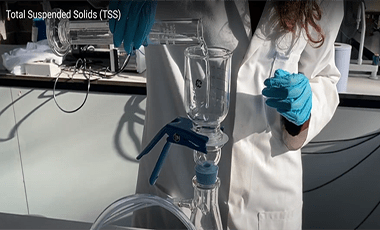
Improving Access to Practical Elements of Environmental Engineering
In an applied subject – such as engineering – practical, hands-on learning opportunities are invaluable. Student and external examiner feedback has emphasised the value that students place on laboratory and practical classes, and the desire to incorporate more of these activities into the modules offered. This project focuses on two modules which are delivered simultaneously to two cohorts of students; in-person and online.