

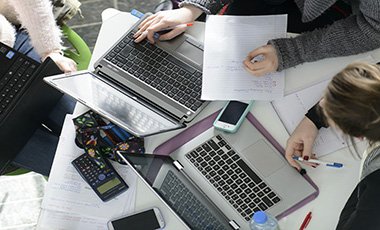
Coding theory is a major component of Applied Algebra. It has many applications in the mathematics of communications and has many links with other scientific disciplines, such as electrical engineering and computer science. Coding theory arises in almost every imaginable digital communications and storage system. In UCD, it is taught at the undergraduate level in the module MATH30180 An Introduction to Coding Theory.
Initiative
Design and Manufacturing of a Formula Student Race Car Using Recyclable Materials and In-House Technology Through Collaboration Between Multidisciplinary Academic Staff and Student Teams – SustainF1 TUS
SustainF1
About this initiative
The SustainF1 project aimed to design a Formula Student car built from recycled parts.
In July, the car qualified into the Concept Class at the International Formula Student competition in Silverstone.
The initiative brought together a diverse, multidisciplinary team from areas in Engineering, Business and marketing. Collaboration engaged academic staff and industry partners in a community of practice. Students designed the vehicle’s major components, while industry supported by producing the chassis. The team sourced a crashed motorbike to repurpose its engine, while many other elements were fabricated within the TUS workshops using existing stored materials.
The project successfully achieved its core aims, by embedding sustainable practices through recycling, and responsible material use. It created a collaborative and inclusive learning environment, encouraging teamwork, innovation, and cross-disciplinary knowledge exchange.
Limerick students have the drive to make iconic Formula 1 circuit – Limerick Live
TUS Motorsport team are headed to Formula Student competition
SATLE priority area: Interdisciplinary collaboration (under any of the 3 themes)
SustainF1 Project – Interdisciplinary Collaboration in Education for Sustainable Development
Context and Needs
SustainF1 is a student-led initiative at Technological University of the Shannon (TUS), designed to develop a Formula Student race car using recycled and upcycled materials. The project was born from a desire to merge motorsport engineering with environmental responsibility, fully aligning with the national focus on Education for Sustainable Development (ESD). Before this project, TUS had never entered the Formula Student competition, identifying a need to create a hands-on learning platform where students could engage in real-world design and manufacturing while prioritizing sustainability.
Project Goals and Key Activities
The core aim of SustainF1 was to build a race car for the international Formula Student competition while minimising environmental impact. The team set out to use as many recyclable or repurposed components as possible. Early on, students salvaged the engine from a crashed 1999 Honda motorbike and integrated it into their vehicle, showcasing both resourcefulness and sustainable thinking. Other components, such as panels and brackets, were fabricated from scrap or leftover materials available in university workshops.
Between early 2024 and mid-2025, the team worked through various key stages: chassis design and fabrication, drivetrain and suspension integration, steering and brake system assembly, and electronics installation. They used TUS facilities including CNC machining, 3D printing, and welding labs to develop parts in-house. By July 2025, the car was complete and accepted into the Concept Class at the Formula Student UK competition in Silverstone, a milestone that validated its technical and sustainable credentials.
In parallel, students created a business plan, built a sponsor network, and developed promotional materials. This comprehensive approach treated the car not just as a technical product, but as a learning and outreach platform across engineering and business disciplines.
Stakeholders and Collaboration
The project’s success was built on broad collaboration among students, staff, and external partners. The team included over 20 students from a mix of disciplines: Mechanical, Automotive, and Electrical Engineering as well as Business, Marketing etc. Students worked in specialised sub-teams, mirroring the organisation of a start-up: engineers handled design and fabrication, while business students led branding and sponsorship efforts: TUS Motorsport team are headed to Formula Student competition .
Staff from across TUS supported the project. Academic mentors contributed expertise in areas like fabrication, electronics, and safety compliance, with regular reviews and technical workshops forming a community of practice (CoP). The Head of the Mechanical and Automobile Engineering Department also endorsed the initiative.
External collaboration was essential. The team secured €13,000 in grant funding through the SATLE and N-TUTORR programmes. Industry support also played a major role. Kent Stainless fabricated the chassis frame, Senator Engineering produced a custom pedal box, and Bolger Engineering supplied lightweight bodywork panel, all designed by students: Limerick students have the drive to make iconic Formula 1 circuit – Limerick Live.
Additional contributions came from companies donating materials, tools, or logistics support, including help with transporting the car to Silverstone TUS Students Find the Right Formula In Drive to Reach Silverstone – TUS .
Challenges Encountered and Solutions
Several challenges arose during the project, all met with innovative solutions:
- – Funding Limitations: Competing against university teams with six-figure budgets required ingenuity. SustainF1 addressed this by leveraging grant support, pursuing sponsorships, and creatively repurposing parts.
- – Time Constraints: Building a Formula student car within one academic year, alongside full course loads, required strategic planning. In order to meet the strict deadline, the team integrated the project with coursework, using it as the basis for final-year projects and technical assignments, which kept academic progress aligned with the car’s development milestones.
- – Interdisciplinary Coordination: Managing a cross-functional team required strong communication. A clear structure with student leadership roles and sub-teams ensured everyone stayed aligned.
- – Technical Uncertainty: Repurposing old parts, particularly the motorbike engine, introduced engineering complexity. The team overcame this by running simulations (using SolidWorks and Ansys), conducting performance tests, and refining components. This maintained competition standards without compromising on sustainable principles.
Impact and Contribution to ESD
SustainF1 achieved its intended outcomes and had wide-ranging impacts. It successfully embedded sustainability into engineering education, showing that principles like recycling, and low-impact manufacturing can coexist with high-performance goals. Students gained meaningful experience applying ESD principles in a real-world setting.
The project also demonstrated the power of interdisciplinary learning. Engineering students developed business skills; marketing students learned technical language and constraints. This cross-training cultivated a new understanding of collaborative problem-solving in sustainable context.
Crucially, the initiative empowered students to lead. They oversaw everything from planning and sponsorship to safety compliance and media outreach. Faculty noted that the students’ drive and strategic thinking were key to the project’s success.
SustainF1’s impact is ongoing. Its successful entry into the Concept Class at Silverstone in 2025 marked a major achievement for TUS and set a foundation for future students.
Strategic alignment with national policies and relevant SATLE priority area
The SustainF1 project strongly aligns with the SATLE priority area of Education for Sustainable Development (ESD) by embedding environmental responsibility, interdisciplinary collaboration, and experimental learning into the core of engineering and business education at Technological University of the Shannon (TUS). Through the design and manufacturing of a Formula Student race car built primarily from recycled and upcycled materials, the project provided a powerful, practice-based example of how sustainability principles can drive both innovation and education.
At its foundation, SustainF1 addressed three central pillars of ESD: environmental consciousness, social collaboration, and economic responsibility.
Firstly, environmental sustainability was demonstrated through tangible design and manufacturing choices. The team adopted a ‘reuse and repurpose’ approach, salvaging a 1999 Honda motorbike engine and repurposing components that would otherwise have gone to waste. Students sourced leftover metals, composites, and other stored materials from TUS workshops, reducing the carbon footprint of production while learning to evaluate material life cycles and waste minimization strategies. This experiential process taught students that sustainable engineering does not simply mean ‘doing less harm’, but also involves finding creative solutions that integrate environmental considerations into every design and production decision.
Secondly, the project promoted social sustainability through interdisciplinary collaboration. The team was composed of over 20 students from Mechanical, Automotive, and Electrical Engineering, as well as Business, Marketing, and Creative Media programmes. This collaboration created a ‘community of practice’ where each discipline contributed distinct expertise, engineers focused on technical design and fabrication, while business students managed sponsorship, budgeting, and marketing. The integration of these skillsets mirrors the collaborative structure of sustainable industries, where cross-disciplinary thinking is essential to address complex global challenges. Faculty mentors from multiple campuses provided guidance and oversight, ensuring the learning experience remained inclusive, academically rigorous, and reflective of TUS’s commitment to ESD.
Competing against universities with six-figure budgets, the team relied on creative problem-solving and local partnerships to achieve more with less. Two education grants (SATLE and N-TUTORR) provided initial funding, while collaborations with regional companies supplied in-kind materials, fabrication services, and technical advice. This model of partnership reinforced local industry engagement in sustainable education and illustrated how innovative thinking can balance cost-effectiveness with environmental responsibility.
Pedagogically, the project exemplified learning by doing, an essential component of ESD. Students developed practical competencies in sustainable design, manufacturing, and project management while experiencing first-hand the trade-offs between performance, cost, and environmental impact. By integrating digital tools such as SolidWorks and Ansys for simulation, the project also enhanced students’ digital literacy, complementing ESD by showing how technology supports sustainable innovation.
Finally, SustainF1’s legacy continues to advance TUS’s institutional commitment to ESD. The project’s outputs, including open-access design documentation, sustainability reports, and educational materials, serve as Open Educational Resources (OER) for future cohorts. These resources allow new student teams to build upon the foundation laid by SustainF1, ensuring that sustainability, collaboration, and innovation remain central to the curriculum.
SustainF1 implemented the ethos of Education for Sustainable Development by combining environmental principles, interdisciplinary cooperation, and community engagement within a real-world engineering challenge.
Innovation in specified SATLE priority area
The SustainF1 project demonstrated significant innovation in advancing Education for Sustainable Development (ESD) at Technological University of the Shannon (TUS) through:
1. Novel Pedagogical Approaches
SustainF1 introduced a transformative learning model that placed sustainability at the centre of applied engineering education. Rather than learning sustainability principles passively through lectures, students actively applied them in a high-stakes, real-world challenge, the design and build of a Formula Student race car constructed from recycled and upcycled materials. This ‘learn-by-doing’ methodology linked theory to tangible outcomes and required students to evaluate trade-offs between performance, safety, and environmental impact. The project’s problem-based structure encouraged iterative learning: students developed designs, simulated them using digital tools such as SolidWorks and Ansys, and then refined them through practical fabrication and testing. This process promoted deep understanding of both technical and sustainability principles. By integrating sustainability directly into assessment and project work, SustainF1 exemplified TUS’s commitment to authentic, practice-based education that prepares graduates for environmentally conscious industries.
2. Student Partnership and Leadership
Innovation was also evident in the project’s governance model, which embodied student-staff partnership. Students led all major project phases, from conceptual design and material sourcing to sponsor engagement and logistics. Academic mentors acted as facilitators rather than supervisors, allowing students to develop ownership, accountability, and leadership skills. This shift from traditional instruction to collaborative partnership represented a cultural and pedagogical innovation within the institution. The interdisciplinary nature of the team, combining students from Mechanical, Automotive, Electrical Engineering, Business, and Marketing, fostered a dynamic exchange of ideas, mirroring the cross-sector collaboration demanded by real-world sustainability challenges. The resulting ‘community of practice’ model enabled peer learning and collective problem-solving.
3. Use of Emerging Tools and Methods
SustainF1 integrated digital innovation to enhance sustainable design and performance analysis. Students employed advanced simulation software (SolidWorks, Ansys, and Minitab) to model aerodynamics, stress distribution, and material efficiency, reducing the need for multiple physical prototypes. These tools supported environmentally responsible design by minimising waste and improving accuracy before manufacturing. The project also made strategic use of TUS’s digital fabrication facilities, including CNC machining, 3D printing, and laser cutting, allowing students to produce precision parts efficiently using recycled materials. This integration of digital transformation within an ESD framework provided students with both technical competence and sustainability literacy, aligning with emerging industry standards.
4. Institutional and Cultural Change
Perhaps the most lasting innovation lies in the cultural shift initiated by SustainF1. It demonstrated that sustainability can be embedded meaningfully into engineering and business curricula without compromising competitiveness or academic rigour. The project’s success, including participation into the Concept Class at the Formula Student UK competition, has inspired new interdisciplinary collaborations across TUS campuses and influenced curriculum discussions around sustainable project based learning. Moreover, the open dissemination of project outputs as Open Educational Resources (OER) ensures that future cohorts can build upon this foundation, extending its pedagogical and cultural impact.
Through its emphasis on sustainability driven engineering, collaborative learning, and technological innovation, SustainF1 has reshaped perceptions of what sustainable education can achieve.
Outcomes
| Outcome | Quantitative / Qualitative Indicator |
|---|---|
| A Formula Student car built using at least 70% recycled or upcycled components by July 2025. | Technical and Business plans assessed and ranked by the Competition judges. Chassis, Pedal break, Engine welded, Outside shell and Suspension built etc. Successful Concept Class qualification and participation at Formula Student Silverstone 2025. |
| Transferrable skills acquired during the project that enabled the team to participate to the NASA APPS Hackathon Challenge this September, in Athlone. | Their proposed Solution to the challenge: 'Design of a Sustainable solution to recycle the inorganic waste generated on Mars', qualified them in the first 6 out of the 50 participating teams. |
| Increased interdisciplinary collaboration among at least 20 students and 6 academic mentors across engineering and business faculties. | Participation records, meeting minutes, and cross-department feedback demonstrating effective multi-disciplinary engagement. |
| Strengthened partnerships with at least 10 local and regional industry sponsors by project completion. | Sponsorship agreements, donation records, and formal acknowledgements of industry involvement. |
| Creation and dissemination of at least five Open Educational Resources (OER) on sustainable engineering and project-based learning by end of October 2025. | OER materials will be uploaded to TUS’s CPID repository and shared with staff and student cohorts. |
Impact
The SustainF1 project has achieved significant and measurable impact for students, staff, and partners both within Technological University of the Shannon (TUS) and across the wider higher education and regional community through:
1. Benefits to Students – Skills, Employability, and Learning Experience
SustainF1 provided students with a unique opportunity to apply classroom learning to a real-world engineering and business challenge. Over 20 students from Mechanical, Automotive, Electrical Engineering, Business, and Marketing programmes worked together to design and build a Formula Student race car from recycled and upcycled materials. This experience gave them practical exposure to sustainable engineering, teamwork, and digital design tools such as SolidWorks and Ansys.
Students developed a wide range of transferable skills, including project management, budgeting, communication, and leadership, while learning to make design decisions that balanced environmental, technical, and financial factors. By managing sponsorships, deadlines, and presentations, they experienced the full project lifecycle from concept to completion.
Feedback from students highlighted the value of ‘learning by doing’, describing the project as ‘the most engaging and career-relevant experience’ of their studies. The initiative improved student confidence, employability, and awareness of sustainability as a key industry priority. Several team members have since used their project experience to secure graduate placements in the engineering and manufacturing sectors.
2. Benefits to Staff – Interdisciplinary Collaboration and Professional Development
For academic staff, SustainF1 created new opportunities for collaboration across disciplines and campuses. Lecturers from Mechanical, Automotive, and Electrical Engineering, as well as Business and Marketing, worked together as mentors, each contributing specialist knowledge. This multidisciplinary mentoring model promoted staff dialogue around sustainability and innovative teaching approaches.
The project also supported professional development by allowing staff to integrate sustainability concepts into their teaching, align learning outcomes with real-world practice, and co-create Open Educational Resources (OER). These resources. including design documentation, sustainability reports, and project management templates will now being used as teaching materials within engineering at TUS.
Staff feedback indicates that participation in SustainF1 encouraged reflection on assessment design, interdisciplinary teaching, and the use of digital tools for sustainability-focused learning. It also helped strengthen relationships between departments, promoting a culture of shared purpose around sustainability and innovation in teaching and learning.
3. Regional and National Impact – Partnerships and Community Engagement
SustainF1 built strong partnerships between TUS and regional industry. The team secured sponsorship and technical support from more than ten companies, including Kent Stainless, Senator Engineering, Bolger Engineering, Beta Tools, etc. These collaborations provided materials, fabrication services, and mentorship, helping students understand real-world industry practices and expectations.
This engagement also raised TUS’s regional profile as a centre for innovation and sustainable education. Local media coverage (for example, Limerick Live and Limerick Leader) and the university’s own communications highlighted the project’s success and the students’ drive to bring their sustainable Formula Student car to Silverstone. This visibility has attracted interest from other institutions and potential sponsors, expanding TUS’s network and demonstrating the power of student-led sustainability projects to build community connections.
At a national level, the project’s recognition under the SATLE fund has positioned TUS as a leader in Education for Sustainable Development. SustainF1’s innovative model, combining technical excellence, digital innovation, and sustainability can be considered as an example within the Irish higher education sector.
4. Replicability and Institutional Embedding
A key success of the SustainF1 project lies in its replicability. The framework established for design, sponsorship, and student-led collaboration is now being embedded into the curriculum to ensure future cohorts can continue the work.
- The project’s documentation and design files are being shared as Open Educational Resources (OER) through TUS’s Centre for Pedagogical Innovation and Development (CPID).
- Engineering and business students will continue to collaborate on the next iteration of the car as part of their coursework and final-year projects.
- Plans are underway to develop the next phase of SustainF1 into a rolling, cross-campus initiative, allowing new teams to build on previous designs while focusing on new aspects of sustainability such as alternative fuels, electrical car, or lightweight materials.
This continuity ensures long-term value and creates a living model for sustainable education, one that evolves each year with new technologies, new students, and new goals.
5. Strategic and Cultural Impact
SustainF1 has also contributed to a cultural shift within TUS, embedding sustainability more deeply into the university’s teaching and learning ethos. It demonstrated that sustainability is not a niche topic but a central principle that can connect engineering, business, and creative disciplines. The project directly supports the goals of the TUS Learning and Teaching Strategy, particularly its pillars on ‘Pedagogies of Engagement’,’Digital Innovation’, and ’Work-Ready Graduates’.
By combining ESD principles with teamwork, digital skills, and industry engagement, SustainF1 has become a model of how collaborative, student-led projects can deliver real educational and social impact. It has influenced how staff design modules and projects, inspired other departments to explore similar interdisciplinary initiatives.
Lead organisations
Affiliated organisations
Linked open educational resources
Initiative details
Funding programmes SATLE
Project acronym
SustainF1Status
completedActivity type
copAward year
2024End year
2025Contributors
Related initiatives
Looking Through the Green Lens
The newly formed UCD Library Green Group wanted to foster cross campus collaboration as they believed this would assist in realising their green goals. They saw the Learning Enhancement Project as a direct route to the student cohort who, motivated by their passion for the planet, would be willing to help the Library with this task.
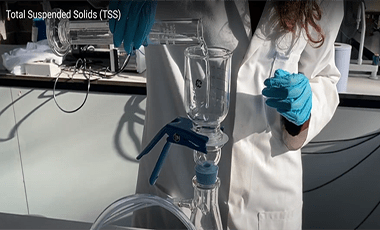
Improving Access to Practical Elements of Environmental Engineering
In an applied subject – such as engineering – practical, hands-on learning opportunities are invaluable. Student and external examiner feedback has emphasised the value that students place on laboratory and practical classes, and the desire to incorporate more of these activities into the modules offered. This project focuses on two modules which are delivered simultaneously to two cohorts of students; in-person and online.