Introduction
This doctoral study presents findings from a cross‑country investigation of how Massive Open Online Courses (MOOCs) are developed, embedded and sustained within Irish and British higher education institutions (HEIs). MOOCs began as open‑education initiatives designed to expand access, strengthen public engagement and support digital pedagogy, while also offering a mechanism for institutional experimentation and learning. However, their long‑term sustainability varies significantly across HEIs.
This study deepens understanding of how MOOC innovation unfolds in practice by foregrounding the experiences of the staff who design, deliver and manage these initiatives. The study investigates why HEIs develop MOOCs, how MOOCs are developed and their future within Irish and British HEIs.
The research sample
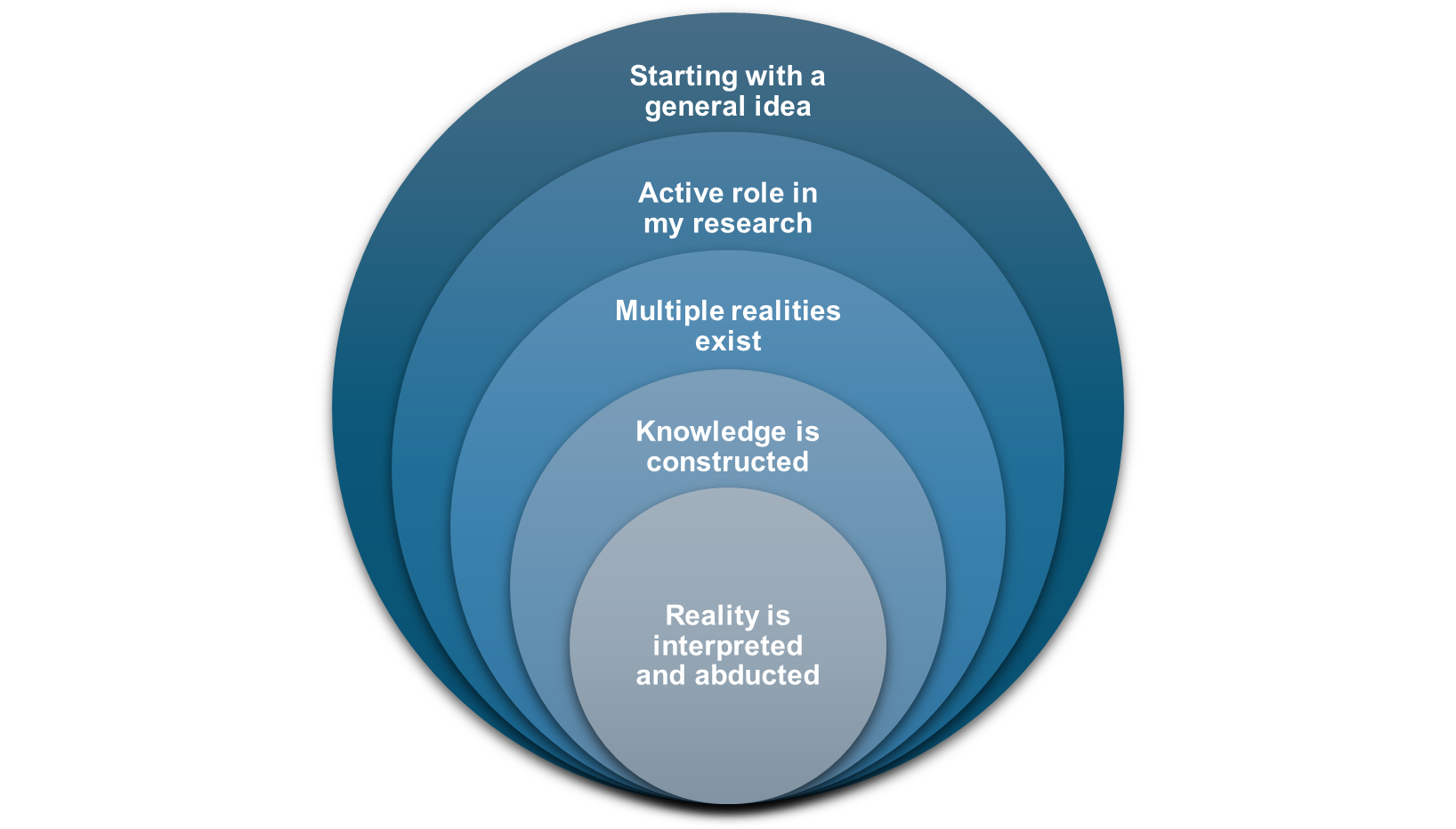
The study is presented from the viewpoint of a Senior Instructional Designer working in an Irish HEI, offering a perspective often underrepresented in existing research. Using a constructivist grounded theory approach, it incorporates insights from 43 one‑hour online interviews across 18 HEIs.
The sample includes 14 MOOC managers, 22 lecturers and 7 course designers working in both traditional and newer HEIs. MOOC managers hold a range of roles, including Deans, Teaching and Learning Managers and Project Managers, while course designers include Instructional Designers, Learning Technologists and Multimedia Developers.
Composite narratives
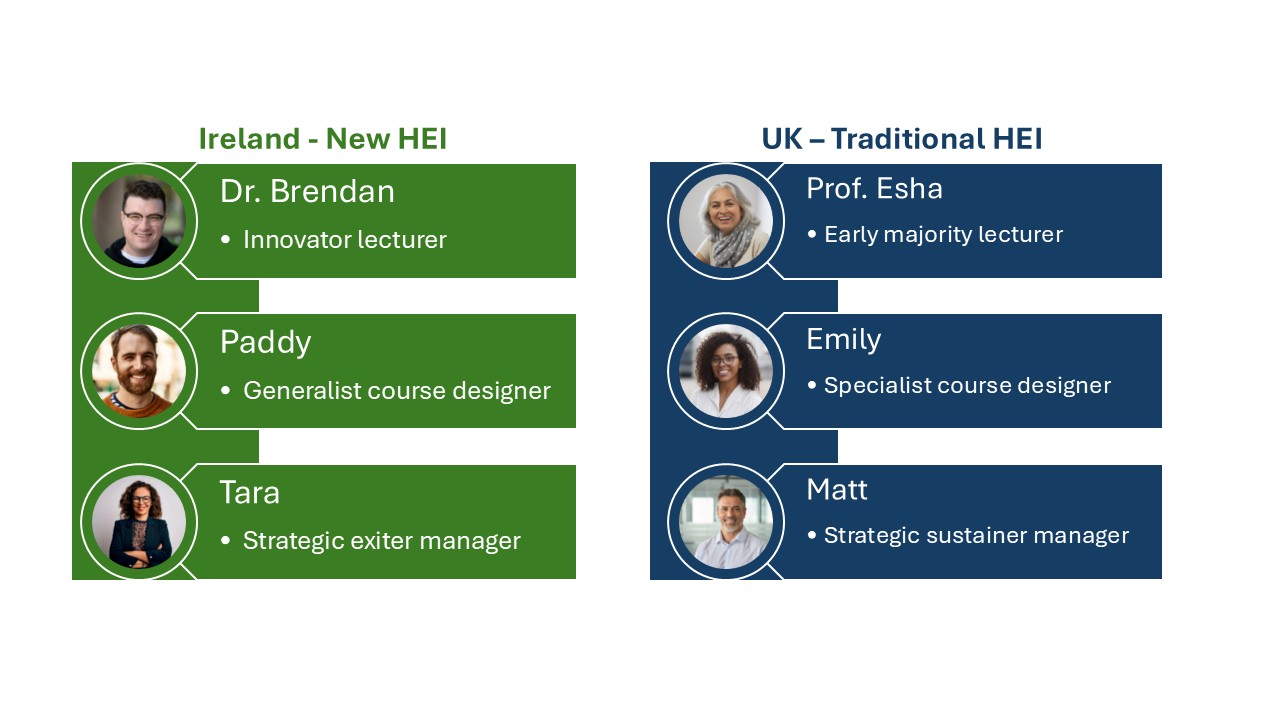
The diversity of MOOC experiences in the sample made it challenging to present findings clearly, so six composite narratives were developed to represent contrasting experiences across each role. Each narrative reflects a distinct MOOC experience, helping readers recognise aspects of their own institutional context. These narratives allow the study to explore open‑education principles within HEIs and examine how staff navigate institutional realities that shape MOOC development. By centring lived experiences, the study moves beyond institutional narratives to understand MOOCs as innovation processes grounded in organisational context.
Analysis
The grounded conceptual analysis indicates that MOOC innovation exists along a spectrum. It also suggests that MOOC sustainability depends on power structures shaped by external control from MOOC platforms and internal managerial gatekeeping. MOOC innovation must navigate institutional cultures that seek to support new ideas while balancing diverse organisational agendas.
The analysis further shows that HEIs foster lasting change when staff at all levels can experiment with MOOC initiatives and explore how they might strengthen their practice. This highlights the value of bottom‑up approaches in building a realistic foundation for MOOC sustainability within an HEI ecosystem. Additionally, innovation can often move beyond its initial purpose when it becomes intertwined with institutional strategy and broader sectoral trends.
Together, these insights inform my interpretive MOOC innovation framework, which centres on power, culture and change within HEIs.
MOOC Innovation framework
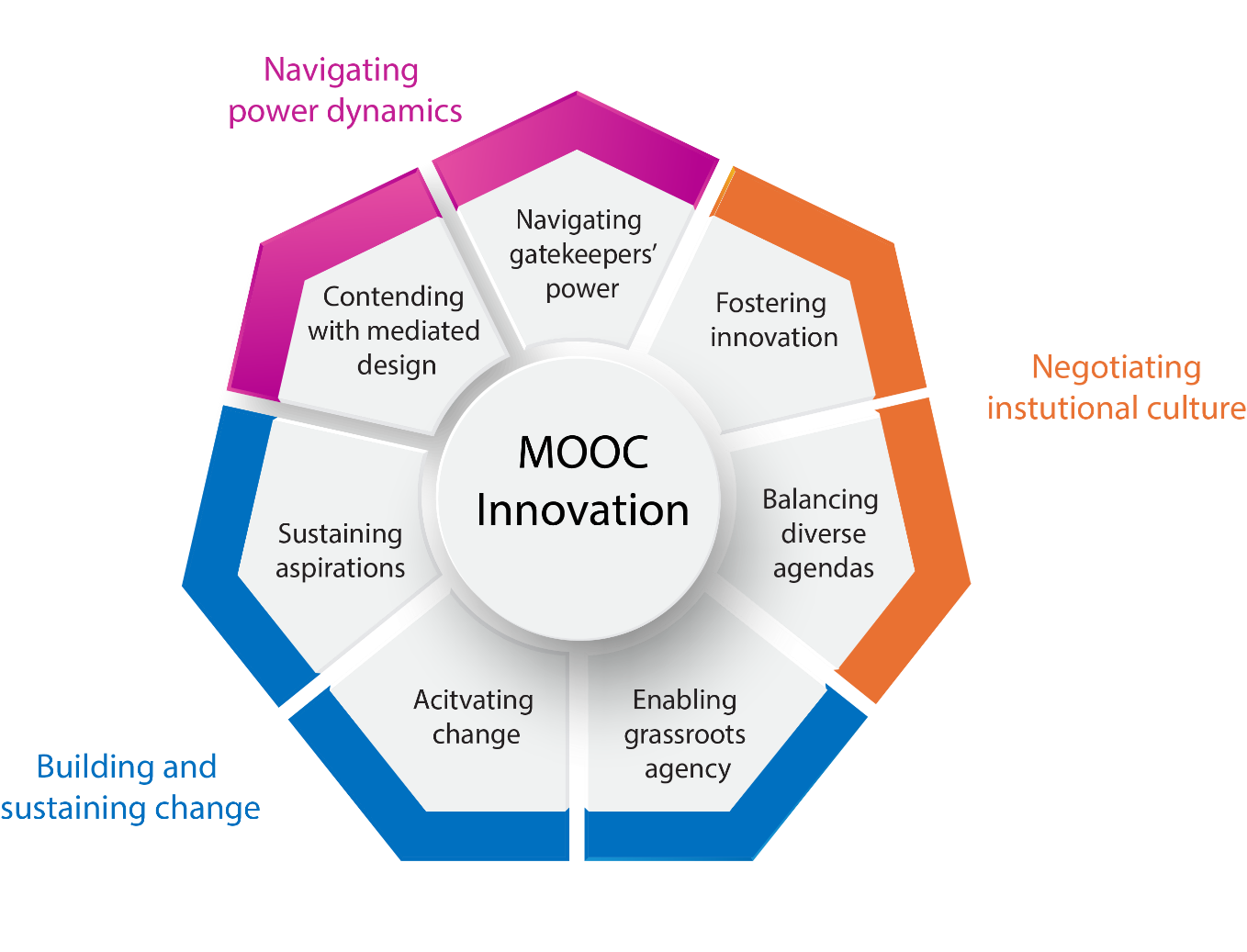
My interpretive framework illustrates how MOOC innovation is shaped by three interconnected concepts: navigating power dynamics, negotiating institutional culture and building and sustaining change.
Navigating power dynamics
MOOC innovation is a fluid, relational process, with influence shifting among senior leadership, commercial MOOC platforms and grassroots staff who carry out the work. This finding indicates that sustainability depends not only on who holds power, but on how that power is exercised, the resources available and the cultural norms that shape innovation‑led change across the organisation.
Negotiating institutional culture
HEIs adopt different approaches to MOOC development. In some cases, MOOCs refine digital teaching practices; in others, they prompt more substantial organisational change, such as piloting digital learning units or shifting strategy to strengthen open‑education activity. This finding indicates that institutional culture, rather than the adopted MOOC model, determines whether innovation becomes embedded.
Building and sustaining change
HEIs with clear strategic alignment around MOOC development are more likely to support or repurpose their MOOCs. In some institutions, MOOCs are maintained as part of widening‑access or engagement strategies, in others, a shift toward a for‑profit agenda drives their use as an introduction to accredited courses. The findings also indicate that where alignment is unclear or contested, MOOC activity often slows, is deprioritised or evolves into other forms of online provision.
Summary
This study shows how open‑education initiatives evolve within real institutional contexts. The composite narratives offer a grounded view of innovation work and the interpretive framework supports decision‑makers in transitioning MOOCs from short‑term experiments to sustainable practice.
Overall, the study demonstrates that MOOC innovation is shaped by institutional priorities and culture, highlighting the importance of strategic alignment and staff agency in sustaining open education within Irish and British HEIs.
|