
Spotlight Series
ESD Case Study Collection
Examples of Education for Sustainable Development initiatives from across higher education in Ireland.
(Deadline: 17 October 2025)
| Initiative Details | |||||||||
|---|---|---|---|---|---|---|---|---|---|
| Title | GreenComp in Curriculum Design: A Case Study on Sustainability Competencies in Higher Education | ||||||||
| Contributor(s) |
| ||||||||
| Institution(s) and Partner Organisations |
| ||||||||
| Discipline(s) |
| ||||||||
| Programme(s) |
| ||||||||
| Student Engagement | Postgraduate students at SETU (one cohorts -15 students) | ||||||||
| Keywords | Micro-credentials, Sustainability Education, GreenComp, Instructional Design, ABC Learning Design | ||||||||
| Initiative Description | |||||||||
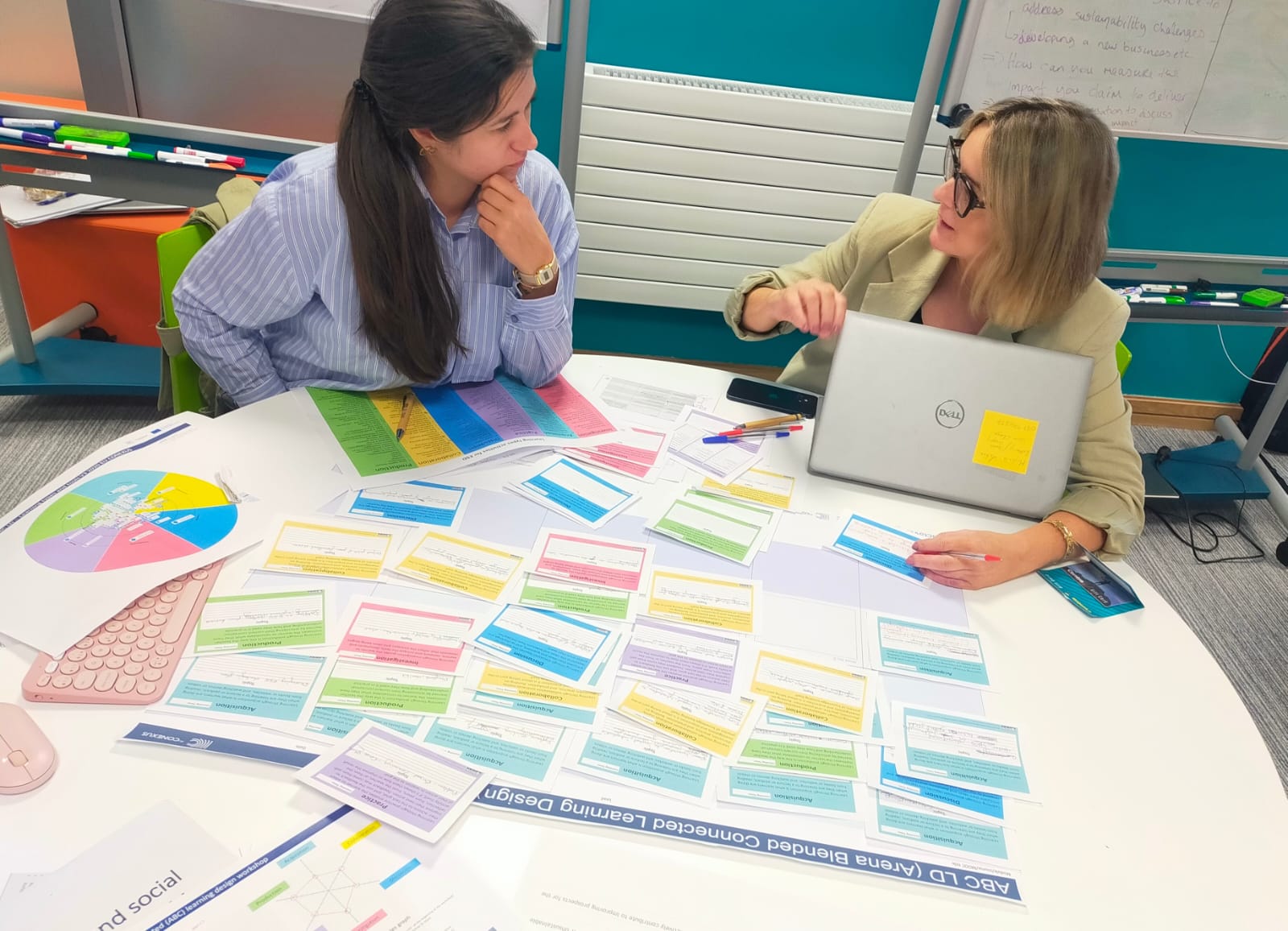
| Outline or Description | This initiative examines the process of design and implementation of a sustainability-focused micro-credential within higher education, developed collaboratively across with academic and student stakeholders in SETU It responds to the growing demand for flexible, skills-based learning pathways that address urgent sustainability challenges while maintaining pedagogical integrity and academic rigour. The project involved the amalgamation of instructional design models along with GreenComp: the European sustainability competence framework, to ensure that sustainability-focused micro-credentials are created specifically to meet the growing need for people to improve and develop the knowledge, skills and attitudes to live, work and act more sustainably. In doing so, the initiative provides a clear, transferable model that demonstrates how sustainability competencies can be meaningfully embedded into higher education curricula through micro-credential design. This initiative, focused on the collaborative instructional design of the Level 9 micro-credential worth 10 ECTS titled Environmental Sustainability in Education, was developed by the research team at SETU. A multi-layered framework was utilised that combined the ADDIE model (Analysis, Design, Development, Implementation, Evaluation), ABC Learning Design (ABC-LD), and the European Sustainability Competence Framework (GreenComp). The pedagogical approach to this needs-driven micro-credential was co-designed using ABC-LD in face-to-face workshops involving academic experts, student representatives, and interdisciplinary teams from within SETU. The design process included persona development, content wireframing, ABC storyboarding, and strategic mapping of GreenComp competencies to ensure that sustainability principles were embedded intentionally and visibly throughout the learning experience. Internal piloting and evaluation of this micro-credential targeted postgraduate students in education-related disciplines. Delivered over six weeks via blended learning, the module included online lectures, guided readings, reflective tasks, and a final assessment. Students engaged with GreenComp-aligned activities that promoted ways to think, plan and act with empathy, responsibility, and care for the planet and for public health. A mixed-methods evaluation was conducted post-delivery, including surveys and interviews to assess learner outcomes. Designer observations and field notes provided additional insights into engagement patterns and pedagogical effectiveness. This initiative demonstrates how micro-credentials can be designed to uphold academic standards while fostering transformative sustainability learning. It offers a replicable model for embedding GreenComp into short-form learning and highlights the value of collaborative, interdisciplinary instructional design in addressing complex educational challenges. | ||||||||
| Collaboration, Partnerships & Student Participation | During the development workshops a participatory co-design methodology was employed drawing on instructional design principles from ADDIE and the ABC frameworks. Students and external stakeholders contributed to the construction of learner personas, the development of instructional materials, and the design of assessment strategies through online and face-to-face workshops. This collaborative approach ensured that both industry perspectives and learner needs directly informed the creation of the sustainability-focused micro-credential. Students participated actively and provided evaluative feedback on the micro-credential via structured surveys at the mid-point and after completion. Participants in the Environmental Sustainability in Education module represented primary, post-primary, further and higher education teachers and educators, ensuring a diversity of perspectives. This shaped the refinement of the micro-credential and highlighted the value of embedding student voice in curriculum innovation. | ||||||||
| Intended Learning Outcomes | Develop sustainability competencies aligned with GreenComp Apply systems thinking and critical reflection in educational contexts Demonstrate agency and adaptability in promoting sustainability in education contexts Engage in interdisciplinary problem-solving and collective action | ||||||||
| Teaching and Learning Approach | The initiative embedded Education for Sustainable Development (ESD) through a multi-layered framework combining ADDIE, ABC Learning Design (ABC-LD), and the European Sustainability Competence Framework (GreenComp). ABC-LD workshops enabled collaborative mapping of learning activities, aligning assessment strategies and content to the 12 GreenComp competencies. Learning activities were designed to foster systems thinking, critical reflection, and transformative learning and included cognitive reframing through the SULI test, reflection points to associated media and literature, group discussions and Climate Fresk Workshop. Delivery was blended, integrating online lectures, face-to-face sessions, and collaborative group work to support a diversity of learners. Universal Design for Learning principles ensured inclusivity and accessibility. Students also engaged with co-creation practices, learning how to design and shape sustainability-focused education projects collaboratively with peers and stakeholders. | ||||||||
| Assessment Strategy | Assessment within the newly developed micro-credential comprised of two formal assignments, each weighted at 50%. The first was a Critical Reflection Assignment (Mindset Reflections), where students completed six structured reflection tasks across the module. These tasks connected theory, literature, and practice, culminating in a cohesive reflective portfolio that demonstrated evolving sustainability perspectives. The second was a Sustainability Project (Co-Creation in Educational Settings), which required students to design and report on a sustainability initiative. This project emphasised co-creation, stakeholder engagement, and alignment with institutional and national policies. Together, these assessments captured both individual reflection and applied collaborative practice, providing robust evidence of learning, engagement and effective enablement of change. | ||||||||
| Impact & Outcomes | Students reported increased sustainability understanding, awareness, confidence, and behavioural change. Surveys indicated a perceived increase in all 12 GreenComp competencies along with the adoption of sustainability practices in their teaching and organisation. Feedback included transformative learning statements such as: “It awakened me to reality” and “I realised sustainability can be taught in many practical ways, not just as theory”. The initiative elevated our professional toolkit and strengthened our ability to embed sustainability within education. For both our own practice and that of our students, it enabled deep learning and supported a shift in teaching paradigms. For the research team, it fostered meaningful interdisciplinary collaboration and informed the development of future micro-credentials. | ||||||||
| Best Practices & Resources | |||||||||
| Top Tips |
| ||||||||
| Useful Resources |
| ||||||||
| Images | |||||||||
| Funding Details | This initiative was supported through institutional funding from South East Technological University (SETU) via the Strategic Alignment of Teaching and Learning Enhancement (SATLE) fund. | ||||||||
| Submitted By | Niamh O' Brien | ||||||||
| Submission Date | October 7, 2025 |
Submitted case studies are shared in the spirit of knowledge exchange and sectoral development in Education for Sustainable Development. The views and opinions expressed in these case studies are those of the individual contributors and not necessarily those of the Higher Education Authority (HEA). Unless otherwise stated, this material is provided under a Creative Commons Attribution 4.0 International License.