Benefit of this resource and how to make the best use of it
This report is based on findings from a National Forum-funded research project on student non-completion on ICT programmes led by a team based at the University of Limerick.
The Paper summarises international literature on student non-completion with a focus on students of ICT ; it outlines proven initiatives and pedagogic practices designed to tackle ICT student non-completion and it presents the results of exploratory case study research on ICT non-completion at the University of Limerick. It also includes further considerations arising specifically from the institutional case study as well as those arising more generally from the question of non-completion in the Irish context.
Creative Commons Attribution (CC BY)
This work is licensed under a CC BY license, allowing sharing and adaptation with proper attribution.
?
This citation is automatically generated and may require adjustment. Always verify it against your style guide.
National Forum, and University of Limerick (11/01/2016). Student non-completion on ict programmes. National Resource Hub (Ireland). Retrieved from: https://hub.teachingandlearning.ie/resource/student-non-completion-on-ict-programmes/ License: Creative Commons Attribution (CC BY).
Adapting this resource? Share your version!
If you have modified or adopted this resource, share your version here. Tracking adaptations helps us measure impact and connects others with useful updates.
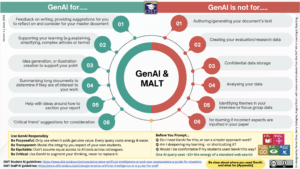
A 1-page guide, co-created by lecturers, tutors & students on DkIT's MA in Learning and Teaching, showing where GenAI can, and can't, support particular postgraduate research/skill development (*reflecting practice 2025-26). Includes student-informed prompts on responsible, sustainable use. An editable PowerPoint supports adaptation to own context.
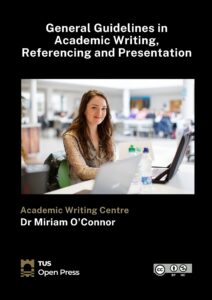
This book is designed specifically for students studying at the Technological University of the Shannon – Midlands Midwest, Ireland. It presents a step-by-step practical guide to academic writing, referencing and presentation, with clear explanations and structured approaches with examples that support the development of clear and concise writing.
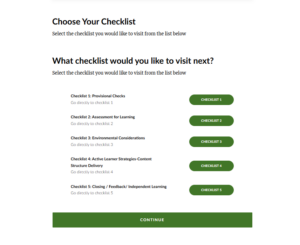
Teaching and Assessment for Learning Checklists aimed at early career & seasoned lecturers. The checklists provide guidance & reliable curated resources for lecturers who want to deliver an engaging and positive learning experience for their students. They act as a guide to check existing approaches, and help analyse how improvements can be made.
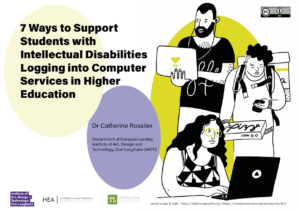
This resource was created to share the learning from teaching adults with intellectual disabilities (ID) in IADT college as part of a national suite of pilot projects.