Guidelines on the implementation of the OER Recommendation Action Area 4: Nurturing the creation of sustainability models for OER and monitoring progress
These guides have been prepared by UNESCO, as part of its programme of support to governments and educational institutions in implementation of the UNESCO OER Recommendation.
Benefit of this resource and how to make the best use of it
These Guidelines cover Action Area 4 of the Recommendation: nurturing the creation of sustainability models for DER. They provide: a description/overview of the recommendations; an introduction to the specificities addressed in the implementation of Action Area 4; a matrix of actions recommended for governments and institutions to implement each point of Action Area 4; a discussion on the specificities related to Action Area 4; and examples of good practice (from different regions and contexts) in the implementation of Action Area 4. The Guidelines offer advice on how to operationalize Action Area 4 of the Recommendation. They are not prescriptive, but aim to offer suggestions for activities, as well as background on the specificities for the Action Area. Users are encouraged to contextualize the elements of these Guidelines as appropriate for their specific national and institutional contexts.
This work is licensed under a CC BY-SA license, allowing adaptation and sharing with proper attribution, provided derivative works use the same license.
?
This citation is automatically generated and may require adjustment. Always verify it against your style guide.
UNESCO (2024). Guidelines on the implementation of the oer recommendation action area 4: nurturing the creation of sustainability models for oer and monitoring progress. National Resource Hub (Ireland). Retrieved from: https://hub.teachingandlearning.ie/resource/guidelines-on-the-implementation-of-the-oer-recommendation-action-area-4-nurturing-the-creation-of-sustainability-models-for-oer-and-monitoring-progress/ License: Creative Commons Attribution-ShareAlike (CC BY-SA).
Adapting this resource? Share your version!
If you have modified or adopted this resource, share your version here. Tracking adaptations helps us measure impact and connects others with useful updates.
This is an interactive multimedia open educational resource (OER), created using H5P, on the topic of Open Education. It has been developed by the Department of Technology Enhanced Learning at Munster Technological University.
The purpose of which is to give an overview of OEPs, using interactive features of H5P
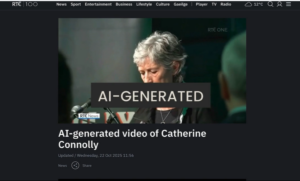
A video that discusses how Artificial Intelligence is impacting the way disinformation is created and spread to manipulate public opinion. It also outlines importance of Media Literacy education and regulatory measures, referencing Ireland’s Online Safety and Media Regulation Act and the EU’s Digital Services Act.
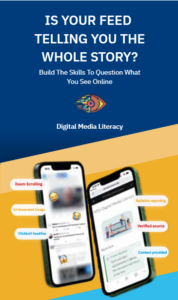
This interactive online resource is a set of eight units to support learners in their online information ecosystem. It is a mix of text, images, video, audio and interactive tasks. The resource can be accessed directly via the link provided or embedded in any Learning Management System compatible with SCORM files.
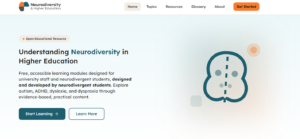
An open educational resource that supports academic, professional, and support staff to build more neuro-inclusive teaching, services, and policies in higher education. This resource was conceptualised & developed through the experiences of neurodivergent students in third-level education, with co-creation at the heart of every stage of the process