
The Higher Education Authority (HEA) is developing a National Professional Recognition Framework for Teaching and Learning to support the recognition of teaching excellence across the sector.
The framework builds on the Professional Development Framework (2016) and aims to provide clear, nationally agreed benchmarks for effective teaching practice. It will help inform career development, support institutional processes, and promote a shared understanding of teaching quality in Irish higher education.
This document presents a discussion draft and invites feedback to guide the development of a robust, relevant, and inclusive framework. Feedback is welcome using the feedback form provided.
1. Introduction
The Higher Education Authority (HEA) has commenced work on the development of a National Professional Recognition Framework for Teaching and Learning in Higher Education (National Recognition Framework). This initiative seeks to address the longstanding challenge that teaching excellence in higher education is sometimes undervalued and insufficiently rewarded relative to research achievements.
This work builds on the Professional Development Framework which was launched in 2016 by the National Forum for the Enhancement of Teaching and Learning. The Professional Development Framework provides a roadmap for staff on how to frame professional development and leverage it for career advancement. The National Recognition Framework will complement the Professional Development Framework by explicitly setting out principles for the recognition of excellence in teaching and learning. For both those who teach and institutional management it will provide a framework for clearly defined expectations, which can be used to benchmark achievement.This project is currently led by Dr. Sharon McGreevy (secondee to the National Forum for the Enhancement of Teaching and Learning at the HEA) and supported by a Professional Recognition Advisory Group comprising of national experts.
The following discussion represents preliminary work undertaken since September 2024 and serves to provide an update to stakeholders, whilst also acting as a starting point for a national conversation around the professional recognition of teaching and learning in Irish higher education. Through dialogue with the sector and the HEA’s Professional Recognition Advisory Group, this material will be revised, updated and developed as the work evolves and progresses.
Please engage and reflect on the content and feedback any comments or observations that you may have. Your feedback and observations will support and inform the development of the draft recognition framework. This work is currently ongoing and will result in the publication of a draft National Professional Recognition Framework for Teaching and Learning in Higher Education in Ireland by the end of 2025. This will be followed by sector wide engagement, usability testing and piloting.
2. Policy Context
The HEA Corporate Strategic Plan (2023-2026) identifies the advancement of work on the Professional Development Framework and a Professional Recognition Framework as a key strategic priority to support the development of staff in teaching and learning. The identification of this strategic priority by the HEA is part of a broader policy context internationally and nationally.
Internationally, increasing priority is being placed on teaching quality in higher education (HE). UNESCO (2024, p1) stresses that the quality of teaching in higher education influences student engagement, retention and academic success. From a European perspective as far back as 2013 the EU High Level Group on Modernisation of Higher Education stated that “public authorities responsible for higher education should ensure the existence of a sustainable well-funded framework to support higher education institutions efforts to improve the quality of teaching and learning” (EU, 2013). Furthermore, this group stressed that “teaching needs to be acknowledged as a skill” (p.30) and that such skill acquisition will result in professionalisation to achieve excellence (p.19).
Subsequently, the Bologna Follow Up Group Rome Communiqué noted that:
“In a reinforced partnership between self-responsible learners in active physical and digital learning spaces in which teaching and research are mutually supporting each other, teaching and research are valued in parity. Teachers are supported through professional development and attractive career pathways, and innovative ecosystem of learning and teaching can develop.” (BFUG 2020).
An EU Council Recommendation in 2024 on attractive and sustainable careers in higher education stressed the lack of recognition given to quality and innovative teaching. This recommendation focused on ensuring attractive and sustainable careers in higher education through the following:
- Diverse Academic Roles: Recognising the multifaceted responsibilities of academic staff, including teaching, research, innovation, leadership, and community engagement.
- Inclusive Career Structures: Advocating for career frameworks that value various academic activities, ensuring equitable recognition (of teaching) and progression opportunities.
- Supportive Working Conditions: Promoting fair, inclusive, and non-discriminatory environments to attract and retain talent in higher education.
In an Irish context, the importance of a National Professional Recognition Framework for Teaching and Learning in Higher Education was highlighted in the National Strategy for Higher Education 2030 (DES, 2011) ‘The dissemination of good practice through national networks for teaching and learning, and the recognition of excellence in teaching should underpin strategy for the ongoing development of higher education’ (p. 59-60). Additionally, the report recommended that ‘all higher education institutions must ensure that all teaching staff are both qualified and competent in teaching and learning and should support ongoing development and improvement of their skills’ (p. 62). Likewise, the National Skills Strategy 2025 (DES, 2016, p.90) stresses the provision of high-quality learning experience and sees teaching and learning as a “core mission of higher education”.
Ireland invests considerably in higher education with over 60% of school leavers progressing to higher education (DES, 2025), while the public perception persists that universities are associated with teaching (Averill 2021, p.7). In this context, ensuring high-quality teaching and student experience is a national strategic priority.
3. Parity of Esteem between Teaching and Research
The National Strategy for Higher Education to 2030 (DES, 2011, p.54) stated that
“The roles of teaching and research should be afforded parity of esteem, and this should be reflected in resource allocation, in promotion criteria, and in the metrics used to assess performance at individual, institution and system level.”
Institutional documents such as strategic plans and performance agreements articulate and reflect the increased value and priority placed on teaching and learning. Teaching and learning is a pillar of the HEA System Performance Framework 2023-28, while Strategic Alignment of Teaching and Learning Enhancement (SATLE) funding is also in place to support teaching and learning at institutional level.
Traditionally research is more highly valued than teaching and that is acknowledged and documented in the academic literature on the subject as a structural imbalance. Recognition mechanisms and metrics for evaluation and achievement in research are widely available and well understood (although contested). They tend to focus on quantitative measures such as quantity of publications and journal rankings (coARA, 2024). Yet, similar approaches and appropriate metrics and indicators are currently largely absent for teaching. The OECD (2025, p10) notes that aspects of teaching are frequently overlooked as it remains challenging to quantify. This results in low status being attached to teaching in terms of career progression.
The lack of parity of esteem between research and teaching is consistently highlighted internationally (UNESCO, 2024) and at European, institutional and individual academic levels. In particular, the European Universities Association (EUA) trends survey (2024) and the Tirana Communique (EHEA, 2024 p.5) both concede that whilst awareness of parity of esteem for research and teaching activities has increased, many institutions confirm that teaching persists as a less important criterion in terms of academic assessment and career progression.
Foster, Gannaway and Moore (2025) argue that a rebalancing between teaching and research is required to value teaching. Persistent undervaluing and the low status associated with teaching undermines incentives to engage in ongoing learning opportunities and innovative practices.
In order to achieve parity of esteem teaching needs to be embedded in a national and institutional environment that recognises the value of teaching and rewards (through career progression) those who demonstrate excellence in this area. The development of a National Recognition Framework will offer a consistent, nationally benchmarked system to support individuals and institutions to meet this challenge.
4. A National Recognition Framework in Higher Education
A National Professional Recognition Framework for Teaching and Learning in Higher Education will clarify expectations in relation to professional learning, personal growth and innovative teaching practices and provide a framework against which achievements in these areas can be progressively benchmarked.
The key value of the National Recognition Framework is that it encompasses the many facets of teaching and learning and provides clear, transparent benchmarks for effective teaching at progressively higher levels. The National Recognition Framework will foster improvement and development whilst providing structure and consistency to highlight elements of excellent teaching practice which may otherwise be overlooked.
The National Recognition Framework will provide policy makers, Higher Education Institutional management and academic and professional staff with a common language for describing and evaluating teaching quality. This shared understanding will place greater emphasis on teaching enhancement and professional development across the sector. The overall goal is to recognise the quality and impact of teaching in higher education in Ireland using a wide range of both qualitative and quantitative indicators appropriately.
The National Recognition Framework will be useful for those seeking to enhance their teaching effectiveness and self-development within their context, disciplines and departments. It will also provide clear expectations to support individuals in recruitment, promotion and performance development but will also have application for those serving on promotion, selection, progression panels or committees.
A National Recognition Framework will support and enhance the direction and uptake of continuous professional development (CPD). Clear and explicit guidelines will be provided for staff wishing to use the recognition framework to demonstrate their personal development, growth and achievements in teaching and learning. The framework will be consistent with and part of broader work at European level which explores Academic Career Assessment (ACA) and will apply holistic indicators (both qualitative and quantitative) of teaching and learning practice. Both the European University Association (EUA) and the Coalition for Advancing Research Assessment (coARA) are currently engaged in progressing work on reforming and broadening the scope of academic careers assessment. In addition, the Advancing Teaching initiative led by Dr. Ruth Graham is informing international approaches to recognise teaching.
5. Definition of Recognition
Recognition is the process of acknowledging a broad range of factors which an individual uses to demonstrate their personal quality in teaching and learning practice and their commitment to ongoing development. Forms of evidence that can be recognised include qualifications (e.g. Post Graduate Diploma or MA in Teaching and learning), accreditations (e.g. Advance HE fellowships), innovations in teaching practice, prizes and awards, digital badges earned, and feedback from students and peers that demonstrates impact. Such evidence will demonstrate their attainment of a given level on the recognition framework.
Significantly, a National Professional Recognition Framework for Teaching and Learning clarifies what is expected in terms of ongoing professional learning, personal growth and innovative teaching practice. It also provides a structured way to progressively benchmark such achievements across an academic career.
An agreed definition of recognition should underpin the development of a National Recognition Framework. The current working definition of recognition is as follows:
Recognition is the appreciation and value shown for another’s achievements, performance, contributions or capabilities in teaching and learning excellence and innovation through a process of peer, student and self-evaluation within a given context.
This working definition has been informed, in part, by international approaches, including the Universitas 21 Teaching Indicator Framework (U21 EISG, 2017, p. 55), and is expected to evolve over time through ongoing consultation with the Advisory Group and other key stakeholders.
An understanding of recognition in the context of the development of a National Recognition Framework is an important initial component of this work going forward.
6. Aims of a National Recognition Framework
The purpose of developing a National Recognition Framework is to recognise individual quality teaching and learning enhancement and excellent practice. In practice, this means valuing sustained engagement in innovative teaching, ongoing professional development and personal growth, with robust evidence of positive impact on student learning. The framework will support institutions and practitioners in recognising innovation and teaching and learning excellence and impact in higher education.
A National Recognition Framework represents a significant development in demonstrating the pivotal importance of teaching excellence at national policy level as a key driver of a high-quality higher education system. It seeks to address the widespread perception that teaching is undervalued, may be career limiting and acknowledges the current lack of reward through career progression. A Recognition Framework aims to achieve a better balance between research and teaching in the assessment processes associated with promotion and recruitment. The aims are twofold, firstly to enhance the status of teaching and secondly to provide incentives to staff actively engaged in teaching to consistently develop their practice for promotions and career advancement (Graham, 2025).
The development of a professional recognition framework for teaching and learning will support institutions to recognise, reward and value teaching in a structured, systemic and transparent way. A recognition framework will also provide a template to define and evaluate teaching achievements progressively throughout one’s professional career.
Any recognition framework developed will be rigorous, evidence based and developmental in nature ensuring the recognition process is fair and trusted. A framework that is valued and respected by the wider academic community will encourage engagement from those who are not already invested in teaching and learning. A transparent, robust, accessible and fair base to evidence excellence in teaching and learning is a vital characteristic to ensure successful adoption.
7. An Irish Framework
Irish Higher Education is uniquely placed to develop a National Recognition Framework in teaching and learning given its scale and the level of collaboration that currently exists in the sector. The development of a National Recognition Framework has the potential to further enhance cooperation and build a strong sense of community within the higher education sector.
When teaching excellence is systematically recognised and encouraged, students benefit from higher quality learning experiences across the board. An Irish framework keeps student success at the heart of the agenda, by ensuring that what’s good for student learning (excellent teaching) is also good for teaching careers.
A National Professional Recognition Framework for Teaching and Learning in Higher Education will facilitate and enable:
- Strategy and Policy Alignment: An Irish professional recognition framework for teaching and learning in higher education can be explicitly aligned with the HEA legislation, System Performance Framework, Institutional Performance Agreements, Funding Requirements and other national teaching initiatives such as Disciplinary Excellence in Learning, Teaching and Assessment (DELTA) awards and Strategic Alignment of Teaching and Learning Enhancement (SATLE) funding.
- Contextual Relevance: A bespoke nationally designed framework can be tailored to the Irish context and will ensure national governance (while respecting institutional autonomy), and responsiveness to local policy and strategic priorities. It may also better cater to the unique diversity of Ireland’s higher education landscape (including universities, Technological Universities, Institutes of Technology, Private HEIs and smaller colleges).
- A Systemic Approach: A national recognition framework can be integrated into institutional promotion, career progression and recruitment processes and will support a coherent approach across the system.
- Flexibility to Adapt: A national recognition framework allows continuous evolution, flexible improvement and refinement based on Irish needs and evidence from Irish institutions.
- International Recognition: A national recognition framework better highlights Ireland’s teaching and learning innovation, bolstering Ireland’s international reputation and influence in European and global higher education contexts.
There is the potential for an Irish Recognition Framework to be aligned with Bologna principles, strengthening the case for collaboration and mobility, which could be understood and respected by partner universities in Europe, aiding academic staff exchange.
An approach consistent with practice in Europe is considered advantageous and meets the Pillar 4 goal of “enhanced European influence in education and research” in Global Citizens 2030 Irelands Talent and Innovation Strategy.
8. Towards a Recognition Framework
The development of a National Professional Recognition Framework for Teaching and Learning in Higher Education will allow staff to benchmark teaching and learning practice to support career development and progression. This framework will not replace existing awards or fellowships but will instead provide an overarching structure into which such accolades can fit, integrating current recognition into a broader career context.
It is anticipated that the recognition framework will consist of clear levels and indicators for each level across dimensions of teaching and learning (which will be agreed with input from the Advisory Group and relevant stakeholders). This will represent a consistent approach to recognising excellence in teaching and learning practice.
It is initially envisaged that the National Recognition Framework for teaching and learning will consist of four levels and recognise educators at four phases of professional growth: Emerging, Developing, Advancing, and Leading. The levels progressively identify growing impact and influence over a sustained period. Each subsequent level builds cumulatively on the skills and achievements of the previous one, reflecting growing expertise, impact on student learning and leadership in teaching. The levels and dimensions in the recognition framework will be broadly designed to capture the full range of teaching activity, including but not limited to teaching practice, educational design, reflective practice, disciplinary contribution and scholarly practice.
The National Professional Recognition Framework for Teaching and Learning in Higher Education will not simply rely on progression based on tenure or stage of career, but rather a more nuanced, developmental or growth approach is being suggested. The levels progressively identify increasing impact, influence, depth of practice over a sustained period. In this sense the framework is not simply linked to career progression but more directly to recognising skills, experience, and expertise in relation to teaching and learning.
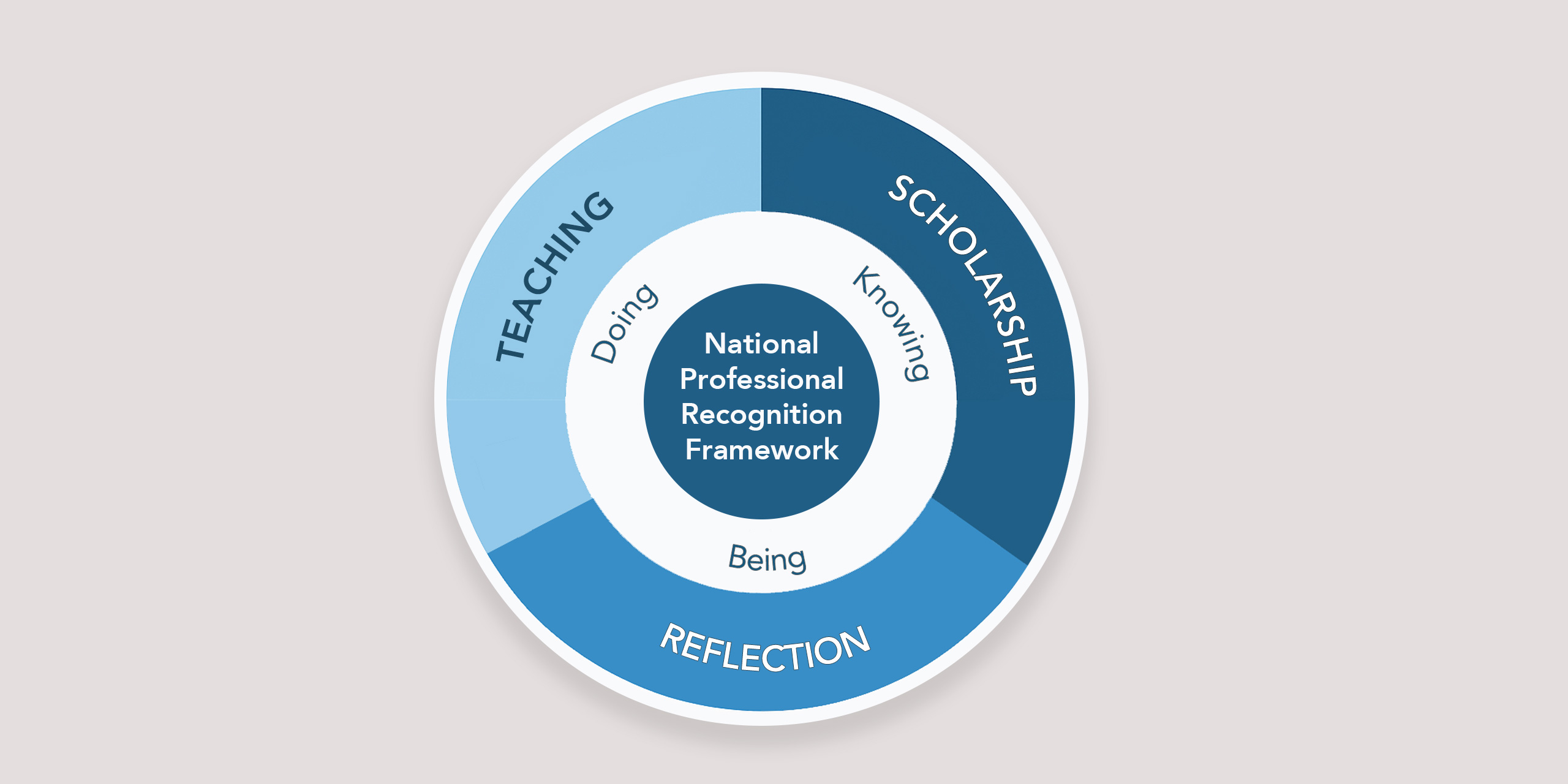
Figure 1: Conceptual outline presenting the core components and developmental structure of the proposed National Recognition Framework.
Bibliography
Bouckaert, M., Galán-Muros, V., Dramé, O. (2024). Do countries aim to enhance faculty teaching skills in higher education?, UNESCO IESALC Policy Insight Series, (20).
Bamber, V. , Anderson, S. (2012) “Evaluating learning and teaching: institutional needs and individual practices”, International Journal for Academic Development, 17 (1), pp5-18. DOI: 10.1080/1360144X.2011.586459
Bamber, V. (2009) “Framing development: Concepts, Factors, Challenges in CPD Frameworks for Academics”, Practice and Evidence of Scholarship of Teaching and Learning in education, 4 (1) pp.4-25.
Bentley, P.J., Coates, H., Dobson, I.R., Goedegebuure, L., Meek, V.L. (2013) “Academic Job Satisfaction from an International Comparative Perspective: Factors Associated with Satisfaction Across 12 Countries” in: Bentley P., Coates H., Dobson I., Goedegebuure L., Meek V. (eds) Job Satisfaction around the Academic World. The Changing Academy – The Changing Academic Profession in International Comparative Perspective, 7. Springer, Dordrecht
Blackmore, P. (2016). “Why Research Trumps Teaching and What can be Done About It.” in Tackling Wicked Issues: Prestige and Employment Outcomes in the Teaching Excellence Framework, edited by P. Blackmore, R. Blackwell, and M. Edmondson, 9–37. Oxford Occasional Paper 13.
Blackmore, P., Blackwell, R., (2003) “Academic roles and relationships” in: R. Blackwell and P. Blackmore, eds. Towards strategic staff development in Higher Education. England: SRHE & McGraw-Hill, pp.16-28.
Blackmore, P. and Kandiko, C. B. (2011) “Motivation in academic life: a prestige economy,” Research in Post-Compulsory Education, 16 (4) pp.399-411, DOI: 10.1080/13596748.2011.626971
Boud, D. (1999) “Situating academic development in professional work: using peer learning” International journal for academic development, 4(1), pp.3-10.
Brew, A, Boud, D. (1995) Teaching and Research: Establishing the Vital Link with Learning Higher Education, Apr, 29, (3), pp. 261-273 Published by: Springer
Bryson, C. (2004) “What about the workers? The expansion of Higher Education and the transformation of academic work” Industrial Relations Journal, 35 (1), pp.38-57.
Byrne, M. Chughtai, A.A. Flood, B. Willis, P. (2012) “Job satisfaction among accounting and finance academics: empirical evidence from Irish Higher education institutions”, Journal of Higher education policy and management, 34 (2), pp.153-167.
Bryant P. (2025) A horizon scanning report on the changing demographic and pedagogical profiles of current and emerging university students and the responses of the global higher education to the generational challenges. Commissioned by N TUTTOR National Digital Leadership Network.
Crone V., Prins F., Lutz C, Meijerman I., Schutjens V, van der Smagt M., Wijngaards-de Meij L, Bovenschen N & Kluijtmans M. (2024) Strengthening educational leadership through a professional development programme in conjunction with a teaching-focused full professor career track: reflections of participants, International Journal for Academic Development, 29:3, 366-378, DOI: 10.1080/1360144X.2023.2207309
Clarke, M., Drennan, J., Harmon, D., Hyde, A., Politis, Y. (2015) The academic profession in Ireland. Dublin: University College Dublin.
Clarke M., Drennan J., Hyde A., Politis Y. (2015) Academics’ Perceptions of Their Professional Contexts. In: Fumasoli T., Goastellec G., Kehm B. (eds) Academic Work and Careers in Europe: Trends, Challenges, Perspectives. The Changing Academy – The Changing Academic Profession in International Comparative Perspective, vol 12. Springer, Cham. DOI: 10.1007/978-3-319-10720-2_6
Christensen, M., Morten, Dyrstad, J.M. ,. Innstrand, S.T (2020) “Academic work engagement, resources and productivity: empirical evidence with policy implications”, Studies in Higher Education, 45(1), pp.86-99, DOI: 10.1080/03075079.2018.1517304
CoARA (2024) Reforming Academic Assessment Coalition for Advancing Research Assessment.
DES, Department of Education and Skills (2011). National strategy for higher education to 2030. Retrieved from https://www.education.ie [accessed on 31 July 2017]
DES, Department of Education and Skills (2016) Irelands National Skills Strategy 2025. Retrieved from Ireland’s Skill Strategy 2025
DES, Department of Education and Skills (2016) , Education Indicators for Ireland (July 2025). Retrieved from Education Indicators 2025 DES
DFHERIS, Department of Further and Higher Education, Research, Innovation and Science (2024) Global Citizens 2030 Irelands Talent and Innovation Strategy. Retrieved from Global Citizens 2030 Irelands Talent and Innovation Strategy
Donnelly, R. (2009) “Supporting teacher education through a combined model of philosophical, collaborative and experiential learning” Journal of the scholarship of teaching and learning, 9 (1) pp.35-63.
Deaker, L. Stein, S. J., Spiller D. (2016) “You can’t teach me: exploring academic resistance to teaching development”, International Journal for Academic Development, 21(4), pp.299-311, DOI: 10.1080/1360144X.2015.1129967
Dubbelt, L., Rispens, S. , Demerouti, E. (2016) ‘Work engagement and research output among female and male scientists: A diary study’, Journal of Personnel Psychology, 15(2), pp. 55–65. DOI: 10.1027/1866-5888/a000150.
European Commission, (2013) High Level Group on the Modernisation of Higher Education: report to the European Commission on improving the quality of teaching and learning in Europe’s higher education institutions. Publications Office. DOI: 10.2766/42468
European Commission, (2024). Council Recommendation of 25 November 2024 on attractive and sustainable careers in higher education (C/2024/7282) Retrieved from https://eur-lex.europa.eu/legal-content/EN/TXT/PDF/?uri=CELEX:32024H07282
EHEA. (2024). Tirana EHEA Ministerial Conference, 29–30 May 2024. Retrieved from https://ehea.info/Immagini/Tirana-Communique.pdf
Ekaterina Efimenko, Agnes Roman, Maria Pinto Fernando Remião, Pedro Teixeira (2018) Enhancement and Recognition of Teaching and Learning in Higher Education The Impact of Teaching and Excellence Prizes Journal of the European Higher Education Area, 2018, No. 2 pp99-118
EU (2024) Council Recommendation on attractive and sustainable careers in higher education Brussels, 27.3.2024 COM(2024) 145 final
Foster, W., Gannaway, D., Moore, G., (2025) Embedding Reward, recognition and promotion in teaching and learning. Advance HE February 2025
Fleming T., (2024) Recognition theory and the recognition of prior learning: Democracy and RPL/VPL keynote address, 5th VPL Biennale Kilkenny, Ireland 6-8th May 2024.
Fleming, T., (2024). Democracy and the Recognition of Prior Learning: Toward a 6-P Model of Recognition of Prior Learning. DOI: 10.13140/RG.2.2.36590.42566
Gaebel, M., Zhang T., Stoeber,H., (2024) European higher education institutions in times of transition. EUA European university association.
Gappa, J. M., Austin, A. E., and. Trice, A. G. (2007) Rethinking Faculty Work: Higher Education’s Strategic Imperative. San Francisco, CA: Jossey-Bass
Graham R (2025) rewarding teaching in academic careers. Mapping the global movement for change. https://www.advancingteaching.com/
Hendrik van der Sluis (2023) ‘Frankly, as far as I can see, it has very little to do with teaching’. Exploring academics’ perceptions of the HEA Fellowships, Professional Development in Education, 49:3, 416-428, DOI: 10.1080/19415257.2021.1876153
IUA/THEA (2021) Research Career Development and employment framework.
Jauhiainen, A., Jauhiainen, A., and Laiho, A. (2009). “The dilemmas of the ‘efficiency university’ policy and the everyday life of university teachers”, Teaching in Higher Education, 14(4), pp.417–428. DOI: 10.1080/13562510903050186
Kandiko Howson, C B, Coate, K. , de St Croix, T (2018) “Midcareer academic women and the prestige economy”, Higher Education Research & Development, 37(3), pp.533-548, DOI: 10.1080/07294360.2017.1411337
Lew, T. Y. (2009) “The Relationships Between Perceived Organizational Support, Felt Obligation, Affective Organizational Commitment and Turnover Intention of Academics Working with Private Higher Educational Institutions in Malaysia.” European Journal of Social Sciences 9 (1): pp.72–87. DOI: 20.500.11937/46030
Lindsay, R. (2004) ‘Teaching for quality learning at university/Learning to teach in higher education (Book)’, Studies in Higher Education, 29(2), pp. 279–286. DOI: 10.1080/0307507042000190831
Lipsett, A. (2005) “Lecturers bored by lessons in teaching”, Times Higher Education Supplement, 1688 (April 22), pp. 1 and 10
Macfarlane, B., (2011) “Prizes, pedagogic research and teaching professors:
lowering the status of teaching and learning through bifurcation”, Teaching in Higher Education,16(1), pp. 127-130, DOI: 10.1080/13562517.2011.530756
Macfarlane, B., Hughes, G. (2009) “Turning teachers into academics? The role of educational development in fostering synergy between teaching and research”, Innovations in education and teaching International 46 (1) pp.5-14
MacGiolla Ri, D. (2019) “Am I doing a good job? Theories of change guiding lecturers self evaluative practices in a third level Institute of Technology in Ireland” AISHEJ 1(1) Spring
Murphy, J. (2014) Managing Professional Development of Academic Staff to enhance University Performance. DBA unpublished dissertation, University of Bath.
McSweeney, F. (2017) “The Changing Role of the University: A Discursive Analysis of Good Teaching and Positioning of Academics and Students in Improving the Quality of Teaching and Learning in Europe’s Higher Education Institutions,” Irish Journal of Academic Practice: 6 (1), Article 3. DOI: 10.21427/D7PH90
OECD (2022) A review of Technological University academic career paths, contracts and organization in Ireland.
OECD (2024) The state of academic careers in OECD countries an evidence review no 91. OECD Education Policy Perspectives Directorate for Education and Skills. Retrieved from OECD 91 Academic Careers
O’Mahony, C., Gallivan, S., Dineen, K. (2025). Staff development in learning and teaching at European universities: Results from the STAFF-DEV focus groups. Cork, University College Cork
Quinn, L. (2012) “Understanding resistance: an analysis of discourses in academic staff development”, Studies in Higher Education, 37(1),pp.69-83, DOI: 10.1080/03075079.2010.497837
Skilbeck, M. (2001) Report on the Action group on access to third level education. Government publications
Shrand, B , Ronnie, L. (2019) “Commitment and identification in the Ivory Tower: academics’ perceptions of organisational support and reputation”, Studies in Higher Education, pp.1-16 DOI: 10.1080/03075079.2019.1630810
U21 Educational Innovation Steering Group (U21 EISG). (2017). U21 Teaching Indicators Project – Final Report. Universitas 21. Available at: https://universitas21.com/wp-content/uploads/2018/03/TIP-reportBR2-0c8.pdf
Shawn R. Simonson, Brittnee Earl & Megan Frary (2022) Establishing a Framework for Assessing Teaching Effectiveness, College Teaching, 70:2, 164-180, DOI: 10.1080/87567555.2021.1909528
Zhang, T. (2025). Staff development in learning and teaching at European universities. Brussels: European University Association
Recognition Advisory Group
- Dr Mary Fitzpatrick, University of Limerick
- Dr Nuala Harding, Technological University of the Shannon
- Dr Iain MacLabhrainn, University of Galway
- Dr Sharon McGreevy, Higher Education Authority
- Dr Gina Noonan, South East Technological University
- Dr Catherine O’Mahony, University College Cork
- Prof Jim O’Mahony, Munster Technological University
- Dr Fiona O’Riordan, CCT College Dublin
- Lewis Purser, Irish Universities Association
- Dr Niamh Plunkett, Atlantic Technological University
- Dr Barry Ryan, Technological University Dublin
Chair: Dr Ross Woods, Higher Education Authority
Secretariat: Imma Zoppi, Higher Education Authority