
Spotlight Series
ESD Case Study Collection
Examples of Education for Sustainable Development initiatives from across higher education in Ireland.
(Deadline: 17 October 2025)
| Initiative Details | |||||
|---|---|---|---|---|---|
| Title | Reflections on Trinity College Dublin’s first-ever Responsible Futures International audit | ||||
| Contributor(s) |
| ||||
| Institution(s) and Partner Organisations |
| ||||
| Discipline(s) |
| ||||
| Programme(s) |
| ||||
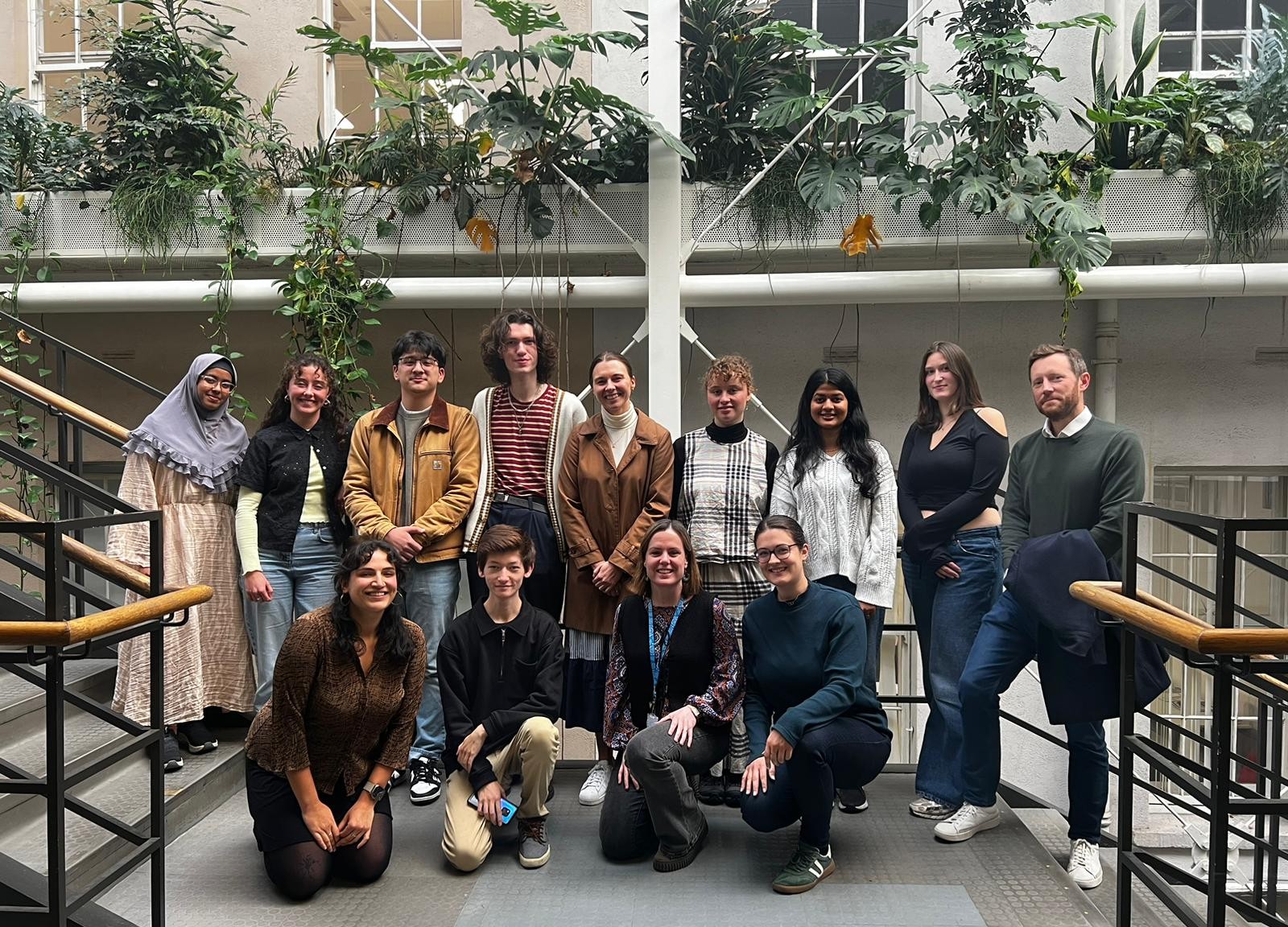
| Student Engagement | 11 students across fields in Natural Science, Biomedical Science, Business Economics and Social Studies, Mathematics, and Humanities, were engaged and played a key role for the audit. There were 10 student auditors and one student intern studying: • Sustainability Intern – Environmental Science | ||||
| Keywords | Student leadership, active learning, audit, international partnership, sustainability | ||||
| Initiative Description | |||||
| Outline or Description | Responsible Futures is a programme partnering universities and colleges with their students to embed sustainability throughout all student learning, including what students learn and how through their courses, extra-curricular activities and the culture and values of their institution. For over a decade, Responsible Futures has worked closely with 53 universities and colleges around the world to mainstream Education for Sustainable Development, ensuring that all learners are supported to develop skills and knowledge to shape a more just and sustainable world. The programme supports universities and colleges to work with their students on a framework to encourage actions, initiatives and approaches to embedding ESD. The framework is designed to be applied in different institutional contexts while maintaining rigorous approaches to evaluating university and colleges’ progress in embedding ESD. It is flexible in responding to dynamic changes in the Further and Higher Education sector and provides bespoke support for each institution while working closely with student unions, academic and professional services staff, senior leadership teams, and more. Every two years, students are trained and empowered to lead an audit to explore ESD activities within their institution and determine whether it can gain or retain the Responsible Futures accreditation, as well as provide recommendations for further work and collaboration. Findings from students’ evidence review, interviews of staff, and focus groups are then consolidated into an individualised audit report outlining findings, successes, and opportunities for improvement. The programme is therefore cyclical and iterative in nature, providing opportunities throughout for institutions to monitor and reflect on progress. In 2023, SOS UK and the International Association of Universities (IAU) partnered to deliver an international pilot of Responsible Futures, having signed a Memorandum of Understanding to jointly advance ESD at the international level. SOS UK and the IAU worked closely with seven selected universities and their students to co-design the pilot, including co-creating the Responsible Futures international framework, and developing the student-led audits. In the pilot year, over 30 student auditors were supported to assess their institutions’ progress in embedding sustainability in learning, receiving positive feedback from students and institutions involved. Trinity College Dublin was one of the seven institutions invited to the pilot and has made an impressive start to its engagement on the programme. As Órla Fitzgerald, an ESD Intern and Environmental Science graduate who played a key role in gathering evidence for the audit, describes, “the Responsible Futures framework is what every [university] should strive for. This is our first year participating, meaning that it is our baseline and we can build on this over the years. It also serves as a support for those who wish to create change, which is something we need more of.” In addition, common feedback from students highlights how the audit enables them to learn more about the ‘behind-the-scenes’ of education and sustainability in their places of learning as well as greater appreciation of the importance of students in taking an active leadership role for this. For example, one Trinity College Dublin student reflected on how taking part in the audit improved their understanding of “how staff and students care deeply about climate change and sustainability and how much the student body are doing to raise awareness around complex environmental and social justice issues.” Finally, when reflecting on their experience with the audit at Trinity College Dublin, one student auditor describes how “[the] Responsible Futures accreditation is important because it embeds sustainability across an institution's curriculum, culture, and operations. Hopefully, this accreditation can help foster a culture of accountability and continuous improvement, ensuring that the institution aligns with global sustainability goals while engaging in meaningful action.” | ||||
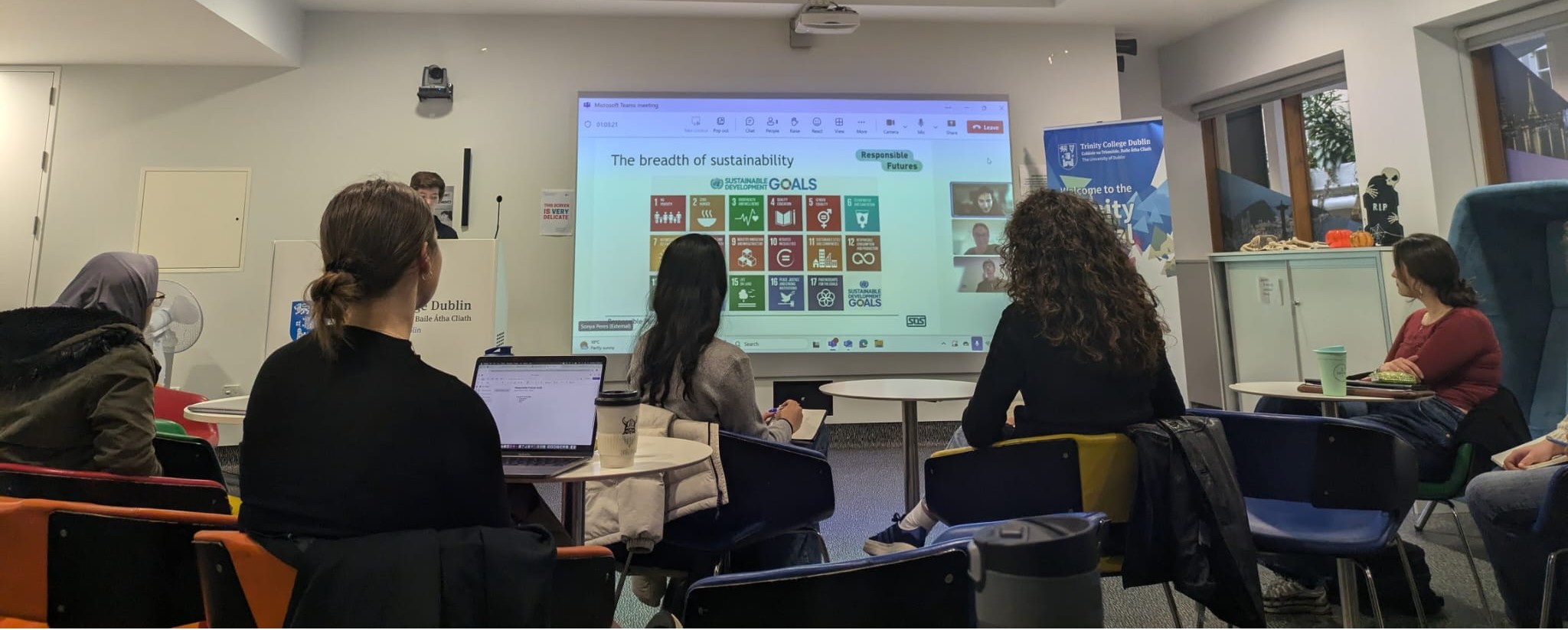
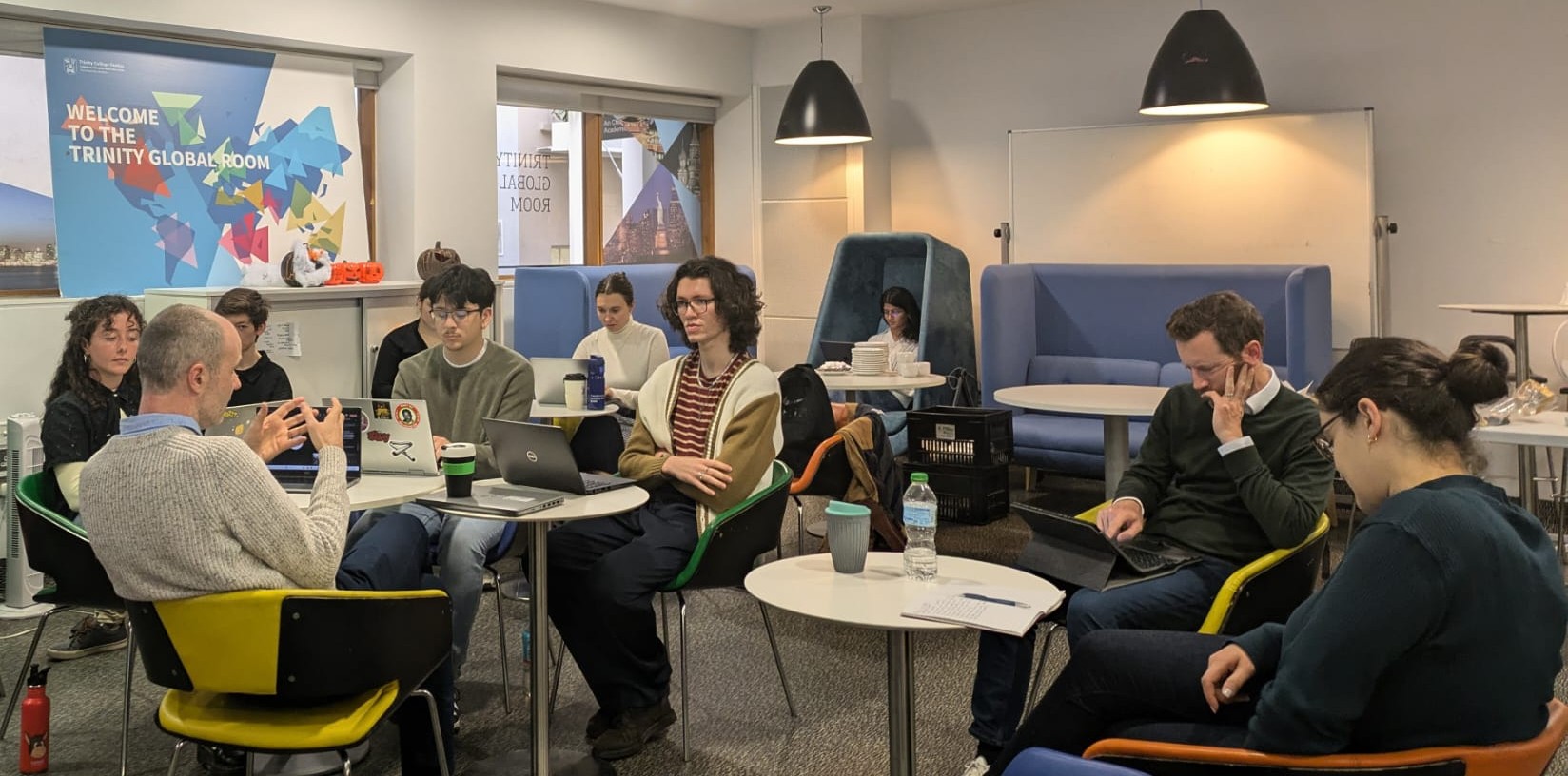
| Collaboration, Partnerships & Student Participation | Trinity College Dublin students and staff have played a significant role in the success of its first-ever Responsible Futures audit. The collation of audit evidence by Sarah Murphy (Sustainability Assistant) and Órla Fitzgerald, (Student Intern) are a testament to the importance of student-staff collaborations in the run-up to the audit. In October 2024, 10 students led a two-day in-person audit of the college's efforts to embed sustainability throughout the curriculum. They played key leadership roles in analysing documentary evidence submitted and in conducting interviews of staff and Students’ Union student officers. Student auditors shared a variety of excellent feedback and recommendations to inform the institution’s audit feedback report and accreditation. A Senior Programme Officer from the International Association of Universities, Isabel Toman, also attended the audit and shared insights into the IAU, while Sarah Murphy provided students with valued perspectives into the behind-the-scenes of sustainability at the institution. | ||||
| Intended Learning Outcomes | 1. Improved whole-institution approaches for sustainability
2. Increased student leadership for ESD
3. Mainstreaming innovative sustainability learning across institutions
4. Increased collaboration between institutions for sustainability
| ||||
| Teaching and Learning Approach | The Responsible Futures audit exemplifies real-world, experiential ESD in practice and holds participatory methods, interdisciplinary learning, and student leadership at its heart. Trinity College Dublin students were supported through active learning techniques to engage critically with the Sustainable Development Goals, understand the importance of ESD for democratising education, and what green skills are needed for high-quality auditing. Teamwork is an essential aspect of the student-led documentary evidence review, thus enabling students to benefit from an interdisciplinary experience by learning from the disciplines, perspectives, and lived experiences of their fellow auditors. Students continued to work in teams to co-create questions for interviewing Trinity College Dublin’s Sustainability Manager, an ESD Academic Fellow, and the President of the Trinity College Dublin Students’ Union. Students enjoyed taking ownership to lead the interviews, which enhanced their understanding of the wider narratives of evidence reviewed. | ||||
| Assessment Strategy | During the audit, students are trained and supported with how to analyse evidence, score, conduct professional interviews, and provide constructive feedback to institutions on their efforts to embed sustainability. On both days of the audit, students complete feedback forms about how the audit has improved their knowledge and skills for employability and what they have learnt from being an ESD auditor and interviewer. Focus groups and interactive discussion are also conducted to enable students to share their perspectives, ideas, and lived experiences in different ways while also enabling opportunities to gather qualitative findings on their experience with the Responsible Futures programme. Following the audit, students had the opportunity to attend a debrief about results from the audit and next steps for progressing sustainability in their institution. The programme also measures impact through peer learning events and bespoke support for each participating institution. | ||||
| Impact & Outcomes | Trinity College Dublin achieved Responsible Futures accreditation in February 2025 and key findings and recommendations from the audit were shared with the student and staff body during Trinity Green Week in March 2025. Surveys demonstrated that students developed skills in delegating responsibilities, leadership, time management, communication, and data analysis. Furthermore, Órla Fitzgerald, the ESD Intern who played a key role in gathering evidence, among wider ESD initiatives, was awarded the Trinity College Dublin Sustainability Leadership Award 2025. Feedback from students included:
| ||||
| Best Practices & Resources | |||||
| Top Tips |
| ||||
| Useful Resources |
| ||||
| Images | |||||
| Funding Details | Institutional funding through Trinity Sustainability allowed for student auditors to be paid for their work. | ||||
| Submitted By | Sarah Murphy | ||||
| Submission Date | October 7, 2025 |
Submitted case studies are shared in the spirit of knowledge exchange and sectoral development in Education for Sustainable Development. The views and opinions expressed in these case studies are those of the individual contributors and not necessarily those of the Higher Education Authority (HEA). Unless otherwise stated, this material is provided under a Creative Commons Attribution 4.0 International License.