
1. Introduction
Within its Corporate Strategic Plan 2023-2026, the HEA has identified the commitment to excellence in teaching and learning, and student development as an area under its “Develop” strategic priority. This area has as a strategic objective of enhancing and rewarding teaching and learning at higher education institution (HEI) level. One of the key performance measures identified is to review and renew the strategy for the enhancement of teaching and learning. In light of this, at the meeting of the Student Engagement and Teaching and Learning Committee (SETLC) on 26 July 2023, the HEA Executive presented a discussion paper on the strategic priorities of the National Forum for the Enhancement of Teaching and Learning in Higher Education under the auspices of the HEA. This paper outlined the rationale for the development of a new strategy for the National Forum. At this meeting it was agreed that the HEA would continue to focus on the strategic priorities identified by the National Forum for the period 2019-2021, with a view to revising this strategy once the Forum had been established within the HEA and was fully resourced. Following the appointment of new staff members in 2024, the HEA Executive outlined plans for renewing the National Forum Strategy at the 22 August 2024 meeting of the SETLC. A consultation process on a new HEA Strategy for Teaching and Learning in Higher Education was launched in November 2024. This process involved an online consultation and an in-person strategy consultation day. The following paper outlines the feedback received from stakeholders as part of this consultation.
2. Online Consultation
The HEA ran a national consultation to inform the development of a strategy for teaching and learning in higher education, which was open for submissions from 1 November 2024 to Friday 24 January. 58 submissions were received from stakeholders across the sector. Stakeholders were invited to share their perspectives to help shape the future of teaching and learning excellence in Irish higher education. Submissions were accepted via an online form and could be submitted by individuals or groups. There were 29 individual submissions and 29 group submissions. Group submissions were received from the following stakeholders:
- Advance HE
- AHEAD
- Aontas na Mac Léinn in Éirinn (AMLÉ)
- ATU – LTA Enhancement Team
- CCT College Dublin
- Consortium of National & University Libraries (CONUL)
- Dundalk Institute of Technology
- Educational Developers in Ireland Network (EDIN)
- HSE Health Promotion and Improvement Department
- MTU Department of Sport Leisure & Childhood Studies DELTA Team
- Munster Technological University
- National Disability Authority
- N-TUTORR Programme Management Office
- Office for Students & Learning, Maynooth University
- Quality and Qualifications Ireland
- RCSI – Royal College of Surgeons Ireland
- South East Technological University
- Student Volunteer Ireland – UL (Lead), UCD, UCC, UG, TUD
- Support Animal Free Research Ireland
- Teaching Enhancement Unit DCU
- Technological Higher Education Association (THEA)
- Technological University Dublin
- Technological University of the Shannon
- The Higher Education Colleges Association (HECA)
- Trinity College Dublin
- UCC Academic Council Learning and Teaching Committee
- UCC Office of the Vice President of Learning and Teaching
- UCD Academic Affairs
- University of Limerick
This document presents an overview of stakeholder feedback received as part of this consultation process. Recurrent themes under each question were identified and responses were coded according to these themes to allow for identification of those which occurred with the most frequency. Sample comments from stakeholders relating to the most frequent themes are provided for illustrative purposes. This stakeholder feedback will inform the development of the final HEA Teaching and Learning Strategy.
2.1 General Comments
In general, the focus of stakeholder submissions varied broadly, and covered a wide range of topics, although some strong signals do emerge across specific questions. Submissions from specific interest groups/organisations tended to have particular areas of focus and, while strong opinions emerge in such submissions, they are equally weighted in terms of priorities that are highlighted across consultation responses.
While the response of higher education institutions to the COVID-19 pandemic and the almost overnight pivot to online teaching and service delivery showed the sector’s flexibility and potential to innovate, there was a sense across a number of submissions that the gains made during this period, particularly for students with disabilities, have been lost as raised by disability advocacy stakeholders AHEAD and the NDA. At the same time, many stakeholders highlighted the changing demographics and needs of students entering HE and wanted to see this acknowledged and addressed as part of the strategy. This reflects feedback provided to the Expert Group that undertook a review of the National Forum’s Student Success Framework in 2025.
Interestingly, despite the long-standing centrality of the student in teaching and learning enhancement in Irish higher education, the desire for any strategy to be student-focused and for it to involve students as partners did not come across strongly in submissions. However, this may be a result of the fact such an approach is now treated as “business as usual” in the practice and processes of Irish HEIs.
While funding and the success of SATLE funding was consistently noted, most stakeholders focussed on high-level teaching and learning issues relating to pedagogy. However, at least two submissions mentioned “upgrading of infrastructure” for teaching and learning as a priority, while another advocated for the widening of SATLE funding conditions to include infrastructure.
While it was directly mentioned by only 3 submissions, there was a clear sense that the sector does not favour the adoption of a system such as the Teaching Excellence Framework (TEF) in the UK to measure or evaluate teaching in Irish HEIs. In this context, stakeholders called for a continued focus on “enhancement”, although other submissions favoured a shift to emphasising excellence, particularly through a national Professional Recognition Framework. A desire to see Ireland positioned as a global leader in terms of teaching and learning in HE came across strongly.
Within the submissions there was a tension between the desire for the HEA to lead on national strategy and policy and the idea of a “Forum”, which facilitates dialogue and collaboration across the sector. This comes out most clearly in responses to question 5 and is discussed below.
2.2 HEA Role in Supporting Teaching and Learning Excellence in Irish Higher Education
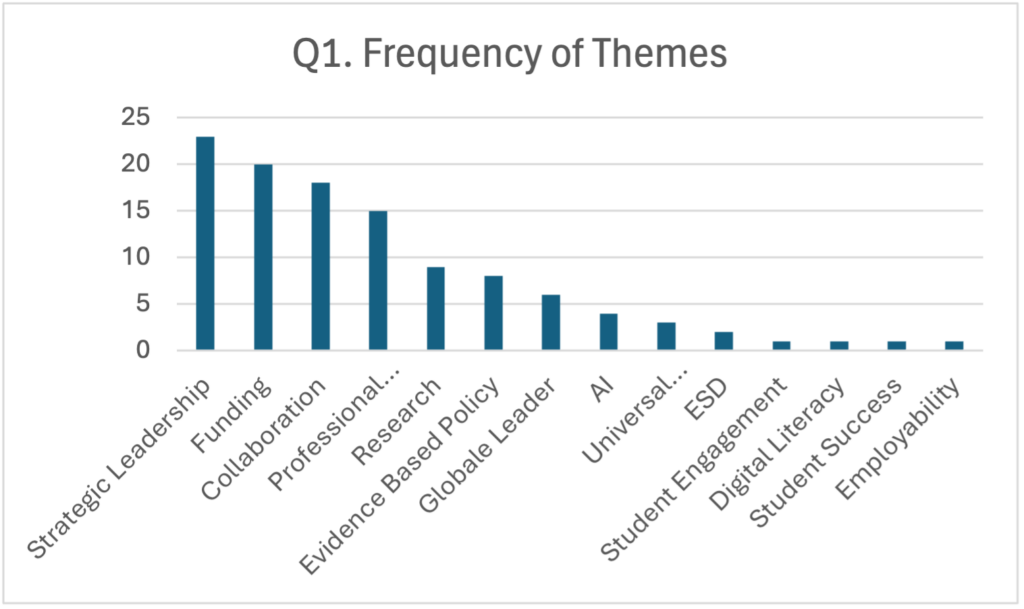
The first question in the online consultation asked stakeholders what they saw as the HEA’s role in supporting teaching and learning excellence in Irish higher education. The familiarity of stakeholders with the remit of the HEA varied widely and this led to many suggestions that misunderstood the HEA’s statutory/regulatory footing and, consequently, simply advocated for the maintenance of the status quo of the Forum as an independent advisory body. In relation to the latter perspective, there was strong consensus on the need for collaboration across HEIs and for this to be facilitated at a national level by the HEA. The most common topics mentioned in responses to this question were: the HEA providing strategic leadership, funding, collaboration, research on teaching and learning in HE, evidence-based policy and establishing the HEA as a global leader in higher education teaching and learning.
In general, rather than comment on the role or remit of the HEA, respondents often focused on providing a list of thematic areas in which they would like to see national policy on teaching and learning in higher education developed or advanced. These included:
- Strategic Leadership
- Funding
- Collaboration
- Professional Development/ Recognition
- Research
- Evidence Based Policy
- Global Leader
- AI
- Universal Design / Equity
- ESD
- Student Engagement
- Digital Literacy
- Student Success
- Employability
The frequency with which they were mentioned is represented in the following chart.
A sample of stakeholder comments on the HEA’s role relating to the most recurrent themes is included below:
Strategic Leadership
“Development of national higher education policy and national T&L strategy, in consultation and close collaboration with Irish HE providers”
“Development of national teaching and learning strategy with input from the sector reflecting the HEA values of ‘excellence, academic freedom and integrity, inclusivity, and social and environmental responsibility, as a means to serving the needs of the people and economy of Ireland’.”
“While the HEA holds an important oversight and governance role within the Irish higher education sector, it also is charged with leading the strategic development of the HE sector. It is vital that the HEA play a key role in advancing and supporting teaching and learning excellence across the sector.”
Funding
“Develop inclusive funding models to support public-private partnerships and expand access to high-quality teaching and learning education.”
“Provide targeted funding for initiatives that promote innovation in teaching and learning. Allocate resources to promote classroom diversity, which includes fostering an environment where students from diverse backgrounds feel included and valued, equity, and inclusion through the decolonisation of curriculum.”
“Funding is a key element in supporting excellence in teaching and learning. While the HEA cannot determine funding allocation across the sector, the recommendations that it makes to DFHERIS and Department of Finance should prioritise funding for teaching, learning and student engagement.”
“Clearly, the funding dimension is centrally important and high-quality teaching and learning requires continued investment, supporting the upgrading of infrastructure and responding to the challenge of ensuring that the sector has the capacity to deliver on its ambitions and those of our students.”
“Increasing capital funding to universities and planning for the future learning and teaching needs of the university sector, taking account of rapidly changing demographics and accessibility needs.”
Collaboration
“Facilitate collaboration among institutions, industry, and community partners to align educational practices with workforce needs and societal challenges.”
“Fostering sector-wide collaboration through shared grants, showcases, and events, while ensuring equitable access to training and research opportunities across all HEIs.”
“Enabling community-building and collaboration: act as an enabler of, and forum for, cross-institutional collaboration, further mobilising and expanding teaching and learning networks and developing sectoral communities of practice in areas of strategic priority.”
Professional Development/Recognition
“Support professional development for educators, including access to training on active learning methods, digital pedagogy, and student-centred teaching approaches.”
“Professional development and recognition are critical to ensuring a valued and informed teaching and learning culture in Irish higher education.”
“Collaborating with the sector to establish quality standards for teaching excellence to support enhanced recognition of teaching and learning excellence in academic career progression.”
“A commitment to the professionalisation of those who support and lead the development of educators should be formalised through a national recognition framework for academic and educational developers.”
Research
“The HEA can support research to understand teaching and learning trends and challenges better: Collect and analyse data on, student engagement, learning outcomes, and graduate success.”
“Establishment of a dedicated and resourced research function and engagement in national HE T&L research particularly research on a scale that would be difficult for individual institutions or networks to execute.”
“The HEA should prioritise funding teaching and learning research so that HEIs can have access to the latest research in academic development and also ensure that Ireland is to the fore in this research internationally.”
Evidence-based policy
“The HEA is positioned to establish benchmarks, collect data and leverage data analytics to guide continuous improvement and resource allocation ensuring that decisions are based on solid evidence.”
Global Leader
“Influencing HE T&L beyond Ireland, through strong input to European and international networks and initiatives.”
2.3 Strategic Priorities for Teaching and Learning in Higher Education
Question 2 of the online consultation asked respondents to identify the strategic priorities for teaching and learning in higher education for the next 3-5 years. Many focused on the priorities of the National Forum Strategy 2019-2021, although topics which have gained prominence in recent years such as Artificial Intelligence, Education for Sustainable Development and Universal Design for Learning also featured. In terms of respondents advocating for a continuation of the Forum’s previous strategic priorities, it should be noted that these were presented for context after the question in the online form, which may have led to a bias towards discussion of the same in submissions.
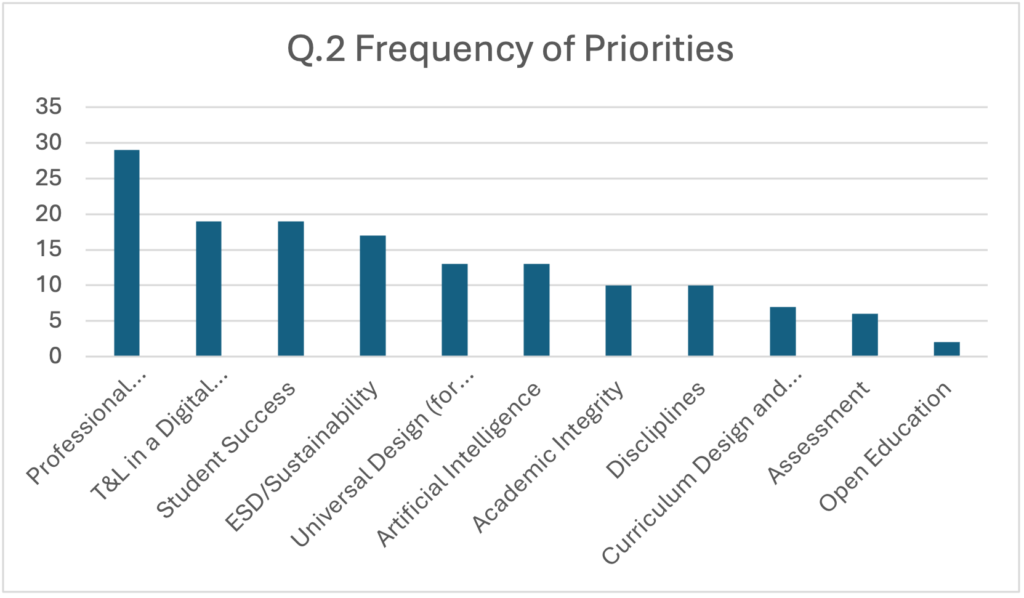
The most important priority for a majority of respondents was Professional Development / Professional Recognition, with over half of submissions referencing these issues (and often seeing them as the same issue). Less prominent themes included T&L in a Digital World / Digital Transformation, Student Success, ESD / Sustainability, UD(L) / Inclusion and AI. Other topics mentioned less often were T&L in Disciplines, Curriculum Design and Development, Assessment, Open Education and Academic Integrity. Interestingly, no new strategic priorities were identified beyond ongoing or previous work of the Forum.
The frequency with which specific priorities were mentioned is represented in the following chart.
A sample of stakeholder comments on the strategic priorities for T&L in HE relating to the most recurrent themes is included below:
Professional Development / Professional Recognition
“Support for the professional development of staff and leadership in Higher Education, with a focus on development, recognition and impact, will be an important enabler of enhancement of the student learning experience in Higher Education.”
“The ongoing professional development of staff in teaching and learning will strengthen and energise all other future strategic priorities. The Professional Recognition Framework can and should be the fulcrum for other priorities.”
“Promoting evidence-based, flexible, and inclusive professional development opportunities tailored to the diverse needs and goals of higher education institutions – this should be a rolling priority.”
“A national recognition framework that encourages staff to achieve and maintain the highest standards of pedagogical skills, digital literacy, and inclusive practices.”
“Particular issues to be addressed include further support for and recognition of the scholarship of learning and teaching, feeding into a return to parity of esteem between learning and teaching and research in higher education strategy and promotional processes; recognising and rewarding staff expertise appropriately in appointments and creating an environment where staff are motivated to engage in CPD for learning and teaching”
T&L in Digital World / Digital Transformation
“Teaching in a Digital World is crucial for many disabled students who are often precluded from travel. therefore, if this is to remain a priority, it must be accompanied by a commitment to implementing accessible digital teaching and VLEs, Assistive Technology (and full training in their usage) and the provision of all class materials prior to lectures.”
“In an increasingly digital landscape, higher education must evolve to embrace technological advancements while ensuring inclusivity, ethical literacy, and collaborative intelligence. This requires a strategic approach that integrates personalised learning, innovative assessment methods, and robust digital ecosystems to support diverse learners and foster long-term academic success.”
“Teaching and Learning in a Digital World: supporting digitally inflected modalities – blended, online, hybrid; enhanced engagement through digital learning, learning analytics and cutting-edge technology in HE – augmented reality, virtual reality, mixed reality.”
“Digital transformation of teaching and assessment practices: This focus will enable the sector to address emerging technological challenges, enable more flexible provision and enhance student and staff digital skills.”
“Supporting staff and students in effectively and ethically applying digital technologies and integrating these technologies into the curriculum is crucial for enhancing learning experiences, ensuring learners have access to user friendly platforms and tools and that digital learning will serve as a driver for equity by addressing barriers related to accessibility, social, economic, and geographical factors.”
Student Success
“We would also advocate for an emphasis on student success and retention, with a focus on an integrated and aligned ecosystem of support and infrastructure whereby a student is empowered to thrive personally, academically, and professionally to reach their full potential. This should champion a whole-of-institutional approach, emphasising staff working in partnership with students.”
“Developing a vision of success, in partnership with students, with the aim of providing all students with the opportunity to fulfil their potential and become creators of new knowledge who are community engaged, ethically conscious, professionally competent and equipped to flourish in a global world.”
“Incorporate a greater focus on mental health and wellbeing and to this end we welcome the development of the HEA strategy for Student and Staff Health and Well-being which could contribute to a student success strategic priority.”
“A shared, comprehensive and meaningful understanding of what is meant by student success should be a priority for HE to remain relevant to all stakeholders, including learners themselves.”
“Student success is an important priority as it puts the student at the centre.”
ESD / Sustainability
“Ireland has the potential to be a world leader in advancing work at an undergraduate level. The existing ESD initiatives need time to mature and develop.”
“Incorporating education for sustainable development (ESD) into the curriculum will prepare graduates to address pressing global challenges. By fostering sustainability awareness and practices, institutions can contribute to creating responsible citizens who are equipped to lead in a sustainable future.”
Universal Design (for Learning) / Inclusion
“Incorporate principles of Universal Design for Learning (UDL) into all teaching and assessment methods.”
“Maximising the Universal Design capacity of the sector at large allows for a more responsive and flexible teaching and learning environment which can provide a more personalised and adaptable student experience.”
“With the growing diversity of Irish student body and increasing accommodation requests amongst second level students, UDL is a vital framework for enabling more flexible and inclusive teaching, learning, engagement and assessment in support of Goal 4 of the SDGs.”
“For comprehensive inclusivity, service units must be designed to support all students, extending beyond classroom inclusion.”
2.4 National Forum Initiatives to Continue or Expand
The third question in the online consultation related to initiatives previously established by the National Forum. Stakeholders were asked which initiatives they would like to see continued or expanded. There were strong signals in these responses as to which initiatives that stakeholders wanted to see continued and these aligned well with those already identified by the HEA in consultation with the HEA Student Engagement and Teaching and Learning Committee.
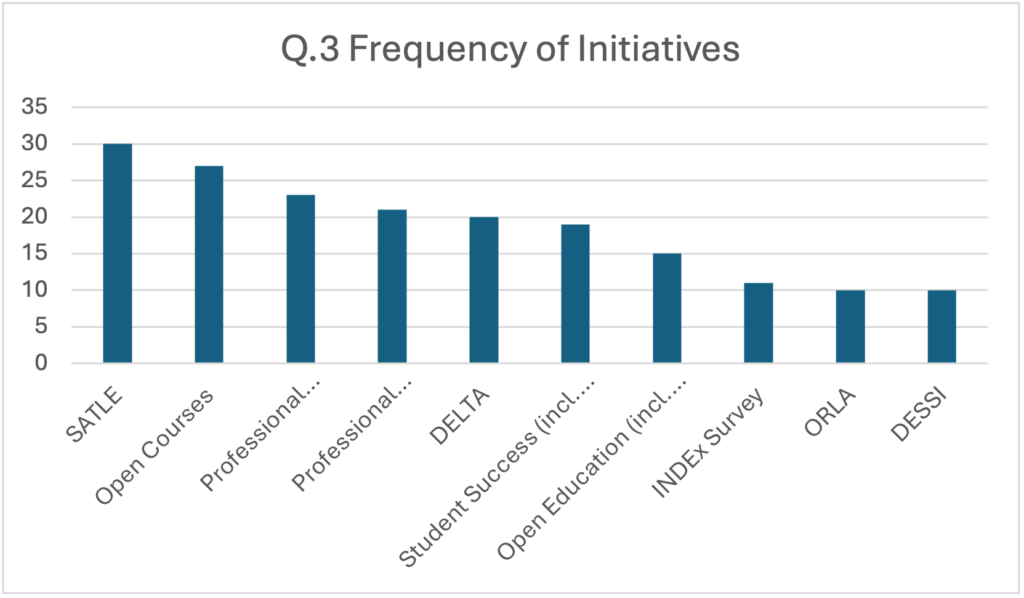
A key concern for respondents was funding and a majority of submissions directly referencing SATLE funding and advocating for it to continue or be expanded. Alongside SATLE, the continuing professional development of all staff who teach was a recurrent theme. Indeed, stakeholders regarded Open Courses, the national Professional Development Framework and a potential national Professional Recognition Framework as key initiatives they would like to see continued and expanded. Interestingly, these three initiatives were seen as interconnected in submissions.
Many responses to this question further emphasized the importance of initiatives linked to the previous strategic priorities of the National Forum. Specifically, respondents highlighted Student Success (including the student success toolkit), the DELTA award and Open Education (including the National Resource Hub) as important initiatives that should remain the focus of future HEA policy on teaching and learning in higher education.
In relation to initiatives that stakeholders would like to see continue but have not been “rebooted” due to capacity issues, there was a focus on data-led initiatives such as the Irish National Digital Experience (INDEx) survey, the Online Resource for Learning Analytics (ORLA) and the Data-Enabled Student Success Initiative (DESSI). While there was a desire to see these continue, this was often in the context of them being updated to reflect developments in the last 5 years, with particular reference to the impact of the COVID-19 pandemic on teaching and learning in HE. In general, there was a sense that the sector would welcome the collection of up-to-date data to inform decision making.
The frequency with which specific initiatives were mentioned is represented in the following chart.
2.5 New Initiatives
Stakeholders were asked what new initiatives they would like to see following the establishment of the National Forum under the auspices of the HEA. The number of initiatives listed was too high and diverse to be fully represented. Rather than include specific initiatives in a high-level strategy document, the HEA will consider suggestions from stakeholders in the context of the priorities and objectives that emerge as part of the strategy development process.
Areas which may merit further investigation relate to recognition, assessment and work-integrated learning. Work-integrated learning was specifically mentioned by some respondents, while the need to produce work-ready graduates was referenced across a number of submissions. Despite the work done to date by the National Forum and QQI on the topic, initiatives relating to assessment were proposed by a number of stakeholders. Indeed, across all responses, assessment emerged as a key issue for many in the sector. As noted above, recognition and professional development were a recurrent theme across a large number of submissions. In fact, professional development was almost always linked to recognition in some way. In this context, there were some calls for the National Forum and/or HEA to provide fellowships or qualifications to staff working in the sector.
Examples of suggested initiatives under specific themes included:
Inclusion and Equity:
- Equity of assessment should be explored in any future strategy
- Support embedding of the ALTITUDE universal design charter and, in particular, the pillars relating to: learning, teaching, and assessment; supports, services and social engagement; digital environment
- Launch a new initiative prioritising equitable, inclusive, and accessible learning, with a stronger focus on Universal Design for Learning (UDL) and comprehensive support for students with learning differences or physical impairments
- Inclusion of the Private and Independent HE Sector
Research and Recognition:
- Support for Applied Research in Teaching & Learning
- Support for the development of the scholarship of teaching and learning, or research into higher education/academic practice to build an evidence base, recognised expertise, and contributions to the international literature
- Establish a national HE research function to help inform policy and practice decision-making, and recognise that research and data is both quantitative and qualitative
- Act as a centre of national and international expertise, including the appointment of in-house full-time, permanent HE T&L practice and research professionals
- To develop parity of esteem between teaching and research, for example, establishing an Irish equivalent of the British Educational Research Association (BERA), as an equivalent authority on educational research in Ireland
- Continued support around the introduction of stackable micro-credentials in the lifelong learning space would align with the speed of transformation in educational practices due to environmental and technological impacts
- While HEIs across Ireland have implemented formal accreditation for professional development through, for example, Microcredentials, Certificates, Diplomas, Postgraduate Certificates, and Masters in Education programmes, the opportunity could be explored to develop unified, collaborative professional development programmes involving multiple institutions leading to joint awards
- Support capacity building across the sector in a range of HE fields Provide credit-bearing CPD.
Digital and AI:
- A HEA initiative to promote and foster information/media/digital literacy, which includes the input of librarians
- National AI Literacy Framework
- A national initiative to examine the integration of AI tools and the challenges and opportunities they present for learning, teaching and assessment would be a most welcome development.
- Conduct a critical analysis of the current conditions of Irish higher education, evaluating whether institutional responses represent best practices or are merely optimal given existing constraints.
- Establishment of various networks (these differed across submissions but collaboration/networks was a strong theme)
- It is important that the National Forum, under the auspices of the HEA, invests time, resources, and funding into examining how the HE landscape will change with GenAI; additionally, the National Forum can ensure all providers of HE (including staff and students) are upskilled and have equity of access to the most advanced AI tools and technologies
- Building AI Capabilities: Literacy, Ethical Use, Assessment Redesign
Collaboration and Networks:
- In addition to the annual conference, the HEA should set up cross university working parties to develop expertise on important topics for Ireland
- Development of Distributed Leadership and Student-Staff Partnerships
- Cross-Institutional and Discipline Forums
- Interinstitutional Collaboration through National Learning Communities
- Enhance international connections leveraging current international university alliances including the benefits of Internationalisation at Home and/or intercultural learning
2.6 The National Forum Identity
Finally, stakeholders were asked to comment on how they felt that the National Forum identity should be carried forward under the HEA. There was a wide variety of opinions expressed in response to this question and no clear consensus emerged. In general responses can be placed under three categories:
- Stakeholders who advocated for a maintenance of the status quo in relation to the National Forum’s identity and function.
- Stakeholders who acknowledged that some change is necessary under the auspices of the HEA, but who also advocated for a maintenance of the status quo in relation to the National Forum’s identity and function.
- Stakeholders who were open to complete change (up to and including the name of the Forum), given that the Forum’s remit is different under the auspices of the HEA.
Themes that arose across individual and group submissions in all the above categories were:
- The National Forum has a strong “brand” and there is a need to maintain the Forum’s identity.
- The Forum’s focus on T&L Enhancement is important to stakeholders.
- There is a need for greater visibility of the National Forum.
- The concept of a “forum” should be supported, and sectoral collaboration remains a priority.
- The establishment of the National Forum under the auspices of the HEA can lead to an evolved mission for the Forum.
- There is an openness to change among stakeholders.
The National Forum has a strong “brand” and there is a need to maintain the Forum’s identity.
Many stakeholders commented on the strength of the “brand” that has been built by the National Forum since 2012. Respondents felt that the branding should be retained due to its recognition value both in Ireland and overseas:
“It is acknowledged that a strong identity has been established for the National Forum which is valued, nationally and internationally, and should be retained.”
“The name and brand of ‘National Forum’ is well recognised and should continue to be used publicly.”
“Branding also takes some time to develop, and the National Forum now has strong national and international recognition.”
“Retain the identity of the National Forum, which has built a strong brand and is recognised nationally and internationally.”
“The National Forum has indeed got a strong identity, nationally and internationally, so it is important that it is maintained and strengthened.”
“The National Forum should maintain its clear branding and identity as it highly regarded, well known and has a rich history within the sector.”
In terms of the National Forum’s identity, there were concerns expressed by some stakeholders that this might be diluted within the HEA:
“It should not lose any element of identity because of having transitioned to being part of the HEA, rather it can be excellently positioned to drive enhancement.”
“To enhance the branding of the National Forum for the Enhancement of Teaching and Learning (NFTL), clarity is essential, as its current visibility is lacking […] Losing this brand recognition would have considerable impact if the brand were to be overshadowed by the HEA.”
“The National Forum has earned a strong international reputation for teaching and learning. It is important to retain this as a distinct and visible identity and to ensure its purpose and function are not overshadowed or lost within a corporate HEA identity.”
“It could damage the identity to portray the forum as a direct extension of the HEA without any functional independence.”
However, the need to retain the name and brand was not held universally:
“A renaming and rebranding to ‘HEA Learning and Teaching’ is suggested together with a wider approach to reaching teaching staff.”
“It is important not to lose the identity, but a rebrand would launch its identity within the HEA.”
Clearly, HE stakeholders felt that the National Forum has established a positive reputation in the sector and there is a need to approach cautiously any changes in terms of brand, name and identity. However, the importance of the work carried out by the National Forum and the HEA was highlighted by one respondent as being of greater significance than branding or nomenclature:
“Branding and promotion are important but the real value is in the work carried out in supporting excellence in teaching and learning under any name.”
The Forum’s focus on T&L Enhancement is important to stakeholders.
Across submissions there was a recurrent desire for the enhancement of teaching and learning in higher education to remain the primary focus of the Forum’s mission.
“Teaching enhancement must remain a priority and focus for the NF. In this vein “excellence in teaching and learning enhancement” would be a useful goal, as currently utilised within the DELTA Awards Framework.”
“The sole focus of the National Forum, from its inception, was the enhancement of teaching and learning in Irish higher education. This is a clear and unambiguous mission […] What should be retained is a body that focuses *solely* on enhancing teaching and learning.”
“it is essential that within this process it is clear that support and development of the enhancement of T&L in HE remains a dedicated stream of work and not only an element of the broader functions of the HEA”
There is a need for greater visibility of the National Forum.
One area that some stakeholders felt had become an issue since the establishment of the National Forum under the auspices of the HEA related to the visibility of the Forum across the sector. Some felt that this had decreased in recent years and that there was a need to ensure that the Forum’s profile was raised.
“There would be significant benefit in raising the profile or visibility of the National Forum further so that it is a focal point that all who teach in Irish Higher Education look to in seeking to strive for excellence in learning and teaching.”
Despite comments relating to the strength of the Forum “brand”, some respondents did question how wide the Forum’s reach actually was outside of those within the teaching and learning community.
“While the National Forum leads many strategic initiatives, we would query how identifiable it is among teaching staff more generally and how well known its initiatives are outside of specialist units dedicated to the scholarship of learning and teaching.”
“My experience is that many academic staff are not aware of the National Forum and what the Forum does.”
In this context there were also calls for visibility not only to be raised but also for the HEA to expand the Forum’s reach outside of those who are already committed to the enhancement of teaching and learning.
“There are benefits to developing an explicit focus on a clear communication strategy to demonstrate the priorities, initiatives and impact of Forum initiatives to a wider audience.”
The concept of a “forum” should be supported, and sectoral collaboration remains a priority.
A number of submissions considered the concept of “forum” and focused on the Forum’s foundational goals of bringing the higher education teaching and learning community together to enhance T&L at third level and to foster greater collaboration across institutions.
“The title “Forum” with its origins in Latin and ancient Rome, evokes a role as a public space, a place for open discussion and sharing of ideas. Indeed, the values of dialogue, inclusion and collaboration have permeated much of the Forum’s work to date and this approach has played a key role in seeding, nurturing and strengthening peer support networks across the sector. These underpinning values and approaches should be retained as should the Forum’s strong ethos of dialogue with the sector.”
“A primary aspect of the identity of the National Forum has always been its role as a “meeting place” for all where practice, challenges and opportunities can be shared in a collegial, safe space. It is vital that this (sometimes formal, but also at times informal) characteristic of the forum is maintained as a collaborative and open network and a rich breeding ground for shared projects and initiatives.”
In line with comments regarding the reach of the National Forum, some stakeholders noted that a “forum” should be open to a wider membership who are involved in teaching and learning in higher education.
“We would strongly support bolstering the ‘Forum’ aspect of the National Forum through a growing membership of people, potentially recognised under the professional recognition framework, who are a community who work together to progress aims including through collaborating on operational and practical matters like the running seminar programme, co- organising a national T&L conference etc.”
“Consider scope for the development of a wider ‘member’ status or category open to any member of staff in the Irish HE sector.”
Some submissions made suggestions as to how a more inclusive “forum” could be achieved.
“If the Forum name is to be retained, greater consideration could be given to how a Forum could serve the needs of the sector. The Associate model has improved in recent years with greater scope for exchange of practice. This is a vital space for connection and to be encouraged.”
“National Forum T&L – currently it is not operating as a forum and many feel it has lost the founding values, vision and practice of collaboration. […] Elect a chair and deputy chair from the sector/HEIs annually for the National Forum to bring colleagues together in a CoP sessions and to support developments in the forum. To encourage active debate and act as a true advocacy group driving enhancements in learning, teaching and assessment nationally.”
The establishment of the National Forum under the auspices of the HEA can lead to an evolved mission for the Forum.
While feedback generally highlighted the strength of the National Forum brand and the achievements to date, some stakeholders saw the establishment of the Forum under the auspices of the HEA as an opportunity for change.
“It is [our] view that an evolved mission could better position the Forum into the future.”
Housed within the HEA’s Policy and Strategic Planning Unit, stakeholders suggested that the Forum should leverage its newfound position within the HEA’s remit to leverage its statutory power to drive strategic coherence to promote the enhancement of teaching and learning in higher education.
“a more explicit connection with the HEA might give it more clout and make for a more coherent approach”
“Leveraging its regulatory function and adopting a strategic approach that fosters a culture of teaching excellence the HEA can significantly enhance the quality of teaching and learning across the sector.”
“[being positioned in the HEA] has enabled it to act, in some cases, as a mediator between institutions and the HEA.”
There is an openness to change among some stakeholders.
As noted above, respondents did not universally hold the position that the Forum’s status quo should be maintained. Some stakeholders were open to a relaunch/rebrand of the Forum, while others wanted teaching and learning policy to be firmly repositioned within the context of broader HEA functions, such as the System Performance Framework.
“There is now, however, probably a need for the National Forum to be relaunched to ensure its visibility across the sector and to bring focus to its support for the achievement of national strategic objectives in teaching, learning and assessment.”
“A complete rebrand might be a good way to attract more people to the website – including a new look and feel to the logos/colours, etc.”
“The National Forum… should now be a central unit in the HEA, with direct policy and funding support to all HEIs, and tied into performance agreements of all institutions, with funding leverage/restrictions, audits and benchmarking in place. Whilst delegated authority is very important, a national standard of good practice, ongoing commitment to teaching and learning enhancement and recognition, public awareness of the ‘best in class’ and a competitive edge to achievement in excellence is needed.”
However, the challenges of such a shift were also highlighted.
“there is the challenge of retaining the term National Forum in new circumstances under the governance of the HEA. It is now a new entity that should be characterised as such reflecting the changed realities of HE in Ireland today”
In the context of a branding change, one stakeholder noted that Teaching and Learning should be clearly recognised as a policy imperative for the HEA.
“The NF needs to be able to articulate its specific merit within the HEA structure, for example, through a strong focus on people. Nonetheless, it could be rebranded to reflect that and to reinforce the essential T&L focus, e.g. HEAT&L. What is critical here is the clear focus on Teaching and Learning as a dedicated and readily identifiable aspect of HEA work.”
In general, feedback implied that stakeholders would like to see the recognisable brand identity of the National Forum maintained but, at the same time, were open to reimagining national policy and strategy in relation to teaching and learning in higher education under the oversight of the HEA.
“Carrying forward the National Forum’s identity under the HEA involves maintaining its core values of collaboration, inclusivity, and evidence-based practices while adapting to the changing landscape of higher education. It is essential to emphasise that significant rebranding efforts are not necessary, as NFETLHE has established a strong identity that effectively supports teaching and learning. However, there is need for clarification around the HEA’s role and the NFETLHE’s identity and values. These need to be clearly communicated to all higher education institutions, their staff and students.”
3. Strategy Consultation Event
As part of the teaching and learning strategy renewal process, the HEA held a teaching and learning strategy consultation event on 12 March 2025. The event brought together student representatives, HEI Stakeholders (3 nominees per institution), representative bodies and other relevant non-HEI stakeholders. The event was facilitated by the HEA T&L unit and took the format of a World Café event. The World Café saw stakeholders engage in two group discussion sessions, the first framed around the conceptual question, “What do we do when we do T&L?”, and the second framed around the future focused question, “What is the future of T&L in HE?”. During each session, groups of stakeholders at 9 different tables were asked to discuss the following questions:
- Group Discussion 1: Conceptual “What do we do when we do T&L?” (1 hour)
- What do you understand by the term teaching and learning?
- What are the spheres of teaching and learning?
- Where does T&L happen?
- Who does T&L?
- What is quality teaching and learning?
- How do we measure quality teaching and learning?
- What is the impact of our work in T&L?
- When we fund teaching and learning, what should we be funding?
- Group Discussion 2: Future focus “What is the future of T&L in HE?” (1 hour 15 minutes)
- With a view to the next 5-10 years, what are the key strengths of Irish HEIs that we can leverage to ensure the continued attainment and maintenance of excellence in teaching and learning in Irish higher education?
- What role should the HEA play in promoting the continued attainment and maintenance of excellence in teaching and learning in Irish HE? What interventions would you like to see at a national level (policy, funding, guidance, etc.)?
- In an ideal world, where neither funding nor bureaucracy were a barrier, what T&L initiatives/innovations/policies would you like to see in Irish HE in the next 5-10 years?
46 stakeholders were in attendance on the day, representing 28 different institutions and organisations. These included:
- Advance HE
- AHEAD
- Aontas na Mac Léinn in Éirinn (AMLÉ)
- Atlantic Technological University
- CCT College Dublin
- Department of Further and Higher Education, Research, Innovation and Science
- Dublin City University
- Dundalk Institute of Technology
- Educational Developers in Ireland Network (EDIN)
- Higher Education Colleges Association (HECA)
- IICP College
- Institute of Art Design and Technology Dún Laoghaire
- Irish Universities Association (IUA)
- Mary Immaculate College
- Maynooth University
- Munster Technological University
- National College of Art and Design
- National Student Engagement Programme (NStEP)
- Quality and Qualifications Ireland (QQI)
- South East Technological University
- Technological University Dublin
- Technological University of the Shannon
- Trinity College Dublin
- University College Cork
- University College Dublin
- University College Dublin Students’ Union
- University of Galway
- University of Limerick
Stakeholders from the same organisation were assigned to different groups to ensure a variety of viewpoints were represented in each group. A HEA notetaker was present at each table. The following section presents an overview of stakeholder feedback collated on the day. As with the online consultation process, this stakeholder feedback will inform the development of the final HEA Teaching and Learning Strategy.
3.1 Group Discussion 1: Conceptual “What do we do when we do T&L?”
3.1.1 What do you understand by the term teaching and learning?
Stakeholders noted that it was difficult to define T&L, noting that it is broader than classroom activity, and includes all contexts and stakeholders. Some argued that the focus should be on learning and that learning should come first in the terminology (i.e. “learning and teaching”). In general, discussions focused on the personal development of the student as a key element of T&L. Teaching is not merely imparting knowledge, it includes supporting students’ learning, igniting students’ curiosity and encouraging active participation in their own learning journey. It was noted that T&L shapes the values and behaviours of future professionals and leaders of a highly educated nation. Ultimately, the term “teaching and learning” was seen as challenging to define, as it encompasses numerous aspects, extends beyond the academic realm, and reaches into experiential and informal opportunities that foster growth and purpose outside the classroom. Some attendees noted a lack of senior management representation for T&L in their institutions, and this was reflected in discussions around the lack of parity of esteem between teaching and research in higher education.
3.1.2 What are the spheres of teaching and learning?
As with the previous question, stakeholders noted that the spheres of T&L are difficult to define. Conversations covered topics including content, curriculum and design. Others considered T&L more broadly and discussed the importance of the places in which teaching takes place. T&L was described as a multifaceted concept that goes beyond traditional classroom instruction and formal education. It covers a broad spectrum of activities, from libraries and research to accredited and non-accredited provisions. In this context, it was suggested that the spheres of T&L extend beyond the classroom, including digital spaces, work-based learning, community engagement, and research-led teaching. This was conceptualised by some in terms of the layers involved in T&L and the spheres were described in terms of the individual, the classroom, the institution and the sector. One group noted that it is important to “separate the teaching from the learning” and to focus on what we do as educators, which is to inspire students, to build relationships and to create an environment that facilitates learning.
3.1.3 Where does T&L happen?
There were a broad range of responses and discussions relating to this question. It was generally accepted that T&L does not just happen in the classroom but that it can occur in any type of learning space, including spaces for socialising (e.g. library, canteen, etc.), and that T&L happens everywhere learners and staff engage with knowledge on campus, online, in workplaces and in communities. Indeed, some stakeholders noted that very little learning takes place in classrooms/formal settings. It was suggested that some spaces might no longer be fit for purpose since the COVID-19 pandemic, and there is now a need to rethink learning space design to facilitate inclusive and collaborative learning experience. It was noted that environments of learning can be beyond the control of educators, with T&L happening in real and virtual spaces, student support services, online, face-to-face, social spaces, reading rooms, bedroom, bus, train, etc. One group noted that in the past teaching was simply about content, but now there is a need to “grow the person” too. It was suggested that authentic assessments are important in this regard and that T&L needs to become more authentic to the learning needs of students.
3.1.4 Who does T&L?
The range of stakeholders identified as “doing” T&L was broad. Examples of responses included:
- All those who support teaching and learning such as librarians, educational technologists, instructional designers, access and support staff (all of whom should be should be encouraged to gain T&L qualifications)
- Not only educators and students but also anyone supporting the process, including institutional staff and external contributors
- Everyone involved in higher education can be part of T&L: academic staff, students (as co-creators), professional/support staff, external partners, alumni, industry mentors, and community organisations
- Academic staff, researchers, support staff, administrative teams, Students (undergraduate, postgraduate), external industry partners, community stakeholders
It was noted that students now “learn” via avenues outside the HEI setting including work, family, social media, influencers, Gen AI, chatbots, and so on. In this context, one group posed the following question: “If students can learn from Google or ChatGPT (even if at surface level) where does this leave us as educators? What is our added value?”
From a positive perspective, T&L was seen as a partnership involving collaborative endeavours between educators and learners. It was noted that you cannot have teaching without learning and vice-versa. Student-staff partnership elevates the T&L experience by fostering engagement, motivation, and shared purpose.
3.1.5 What is quality teaching and learning?
The discussion around this question led to little consensus within and across groups. Quality was defined in a number of ways, including:
- Quality T&L is inclusive, research/evidence-informed, student-centred, innovative, engaging and adaptable to changing needs
- Quality T&L is multi-faceted, measured by student success, engagement and long-term impact on society
- Quality T&L can be very personal experience
- Quality T&L is responding to evolving context and needs
Some felt that key modern indicators of quality were engagement with real world challenges i.e. sustainability, climate action, etc., or engagement in continuous reflection based on feedback from students.
One theme that emerged was that quality T&L was seen as being student centred and that it is determined by the success of every individual student. It was noted that perception of quality varies widely from student experience to student experience and that T&L needs to be engaging, flexible and responsive to the variety of the student needs.
3.1.6 How do we measure quality teaching and learning?
There was consensus that measuring quality T&L was a difficult endeavour. It was noted that while quantitative and qualitative metrics are available, impact is extremely challenging to measure. Some noted that traditional metrics include student progression, retention and performance, but it was also suggested that retention figures are not the only way to measure quality; sometimes students drop out for positive reasons (in their life) and this cannot always be represented in data. Key measures were identified as Studentsurvey.ie and the Graduate Outcomes Survey, and it was noted that there tends to be a high level of satisfaction among Irish graduates. One group suggested that quality should be measured by evidence-based change, with an impact range from individuals to communities.
Stakeholders were critical of using grades as the sole indicator of quality, noting that there can be a tendency to prioritize grades over the actual process of learning. This can lead to students prioritising grades (to pass) instead of focusing on learning outcomes. Feedback was also viewed negatively as a measure of quality and that this is an area that could be improved. Comments included:
- Metrics/measurements often involve collecting student feedback, but should move toward being more informative and conversational rather than standardized surveys
- Feedback from students is often used for promotions but may not adequately capture the collaborative nature of T&L
- There is a need to demonstrate continuous improvement based on feedback and measurable outcomes
- Feedback needs to be followed by demonstrable reflection on the part of the teacher
The most recurrent theme that arose in the group discussions centred on contextual differences in terms of measuring quality. It was noted that evaluation varies significantly from country to country especially in Europe, where there may be different cultural and educational priorities. There is no standard for measuring T&L quality across the sector and measurement can often depend on individual educators who are motivated to enhance their practices, or specific metrics identified at institutional level. Added to this is was noted that there are different levels, dependent on individual students, discipline, year group, module, etc.
Continuing Professional Development was highlighted by some as being an important enabler of quality T&L, and that a mandatory national qualification framework could support quality in T&L. Such a framework could run alongside the Advance HE fellowship model, as the two approaches would not be mutually exclusive.
3.1.7 What is the impact of our work in T&L?
It was suggested that grading systems have a distorting effect on education, shifting the focus away from deeper learning. This may require a critical reassessment of how we approach evaluation to ensure it aligns with the true purpose of teaching and learning. The focus is often on student outcomes in the form of retention and progression rates but there was a view that T&L should be driven by people and that HEIs should be looking at level of engagement with students rather than outcomes. While impact can occur at classroom level (e.g. improved student learning outcomes, motivation, etc.), it was also noted that it can occur at faculty level (interdisciplinary collaboration, research-led teaching, etc.) and at HEI level (e.g. institutional reputation, employer engagement). The importance of transversal skills came across as being important in the discussion of impact of T&L (on learners), with one group noting that impact can manifest in terms of creating a space for learners, enabling critical thinking, equipping students to be creative and innovative citizens, thus contributing to society. Others discussed the need to engage students, which actively supports critical thinking, creativity and lifelong learning skills, while the focus of other conversations was on graduate employability and skills application.
3.1.8 When we fund teaching and learning, what should we be funding?
This question led to much discussion and a wide variety of comments and suggestions across all groups. Some felt that there was a lack of sufficient funding for T&L activities at institutional level, and it was noted that it remains critical that ring fenced supports for T&L are retained, such as SATLE. There were calls to focus on areas that might have a significant and lasting impact. This approach may mean prioritising strategic initiatives at institutional level, as they can drive meaningful change across the entire organization. Most groups focused on specific themes and/or areas that should be funded. At the same time, two specific funding areas were mentioned by a number of stakeholders, namely collaboration and infrastructure.
In terms of collaboration, it was suggested that there should be both collaborative horizontal funding to address wicked problems and individual funding for specific local issues. Collaboration was regarded as a positive, as it ensures small institutions are not left behind. Collaboration across the sector fosters an environment where institutions share their practices and innovations, and projects, stimulating creativity and learning from one another. There were calls to build and support communities of practice for professional growth and shared expertise among educators.
An emerging theme was the call for funding for T&L infrastructure. Stakeholders noted that there was a need for investment in materials, tools, and infrastructure to support both traditional and modern approaches to education, particularly as hybrid learning becomes the new standard. It was suggested that funding should be directed at developing learning spaces, particularly in relation to technology-enhanced learning, flexible learning spaces, accessibility and physical spaces conducive to active and collaborative learning. Technology infrastructure was also identified as an area for investment, to include VLE upgrades, VR/AR, AI tools for personalised learning, and assessment systems. One group noted that while this area was important, funding priorities should be balanced between people (professional development) and infrastructure (innovative tools/spaces).
In general, there was a focus on specific priority themes or areas that should be funded. These included:
- Funding research into teaching, learning, and pedagogy as it informs and enhances educational practices
- Professional development for academics and support staff, including buy out time for CPD for staff
- Recognition and reward systems (fellowships, awards)
- Capacity-building among educational technologists, learning designers, librarians.
- Pedagogical innovation, digital transformation, inclusion and accessibility, interdisciplinary learning
- Innovative pedagogies (e.g. problem-based, collaborative, community-based learning)
- Digital transformation and online learning platforms
- Support services (wellbeing, disability support, library resources)
- Frameworks that embed teaching “excellence” within institutional KPIs and national QA processes
- National strategies for developing digital literacy and lifelong learning pathways
- Creating sectoral space for AI to leverage collective knowledge
- Assessment – secure and inclusive assessment design
- Global challenges i.e. climate action, sustainability, inequality, justice etc.
- Leadership training for teachers
3.2. Group Discussion 2: Future focus “What is the future of T&L in HE?”
3.2.1 With a view to the next 5-10 years, what are the key strengths of Irish HEIs that we can leverage to ensure the continued attainment and maintenance of excellence in teaching and learning in Irish higher education?
It was noted that, as a nation, Ireland values HE culturally, which was attested to by high participation rates and that the establishment of a dedicated government department for HE, an uncommon feature in Europe, underscores Ireland’s commitment to this sector. As well as high participation rates, it was added that Irish HE has good progression and graduation rates and that the employability of Irish graduates nationally and internationally is strong. Ireland also has a robust system of quality assurance, which is internationally recognised.
The HE system itself was seen as a strength. It was noted that the autonomy of Irish HEIs supports innovative and independent practices, while lifelong learning initiatives solidify Ireland’s dedication to continuous education. Added to this, geographical distribution of HEIs across the country ensures higher education is now accessible to anyone. Stakeholders felt the size of the system made it easier to influence national policy in Ireland, as the system is less bureaucratic and closer to parliamentary decision-making compared to other nations. That all HEIs have centres for teaching and learning was seen as real differentiator internationally and it was noted that the Irish system is “envied by other countries”. Multiannual funding was regarded as a “game changer”, and the presence of HR and Finance staff at SATLE meetings with the HEA greatly supported a strategic approach to the use of this funding.
The scale and culture of Ireland’s HE system was also considered to allow for significant collaboration across institutions. A number of groups highlighted this in their discussion, making comments that relationships and networks are valuable in the sector, as is sharing practice and recognising and celebrating achievements. There is a willingness to share best practices across institutions (e.g., National Forum networks), while there is also a growing emphasis on partnership with industry/community. It was noted that Ireland’s HEIs are deeply connected to their local councils, regions and societies, fostering a significant societal impact that reinforces their relevance and value. One group summed up their conversation by stating that Ireland’s collaborative culture, research integration, and inclusivity can position Irish HE as a global leader.
Ongoing efforts to widen participation, support mature students and promote flexible pathways to and through HE was highlighted as a key strength by stakeholders. This is seen in various avenues for higher education (e.g. access programmes, apprenticeship programmes) and is also borne out in flexible approaches to student engagement, such as micro-credentials and personalized learning. These multiple models of progression and programme design were seen as key to ensuring continued excellence in T&L. Collaboration between FE and HE is growing and the integration of FE and HE pathways, allow for seamless movement between these sectors, empowering students with diverse opportunities.
Another strength discussed was Irish HE’s strong commitment to a student-centred approach to T&L, as was its commitment to students’ welfare and success, with numerous initiatives that place the country ahead of many other European countries. In this area, stakeholders also highlighted investment in student support services, as well as the expertise of learning technologists and high-quality professional services staff. In terms of a student focus, the maturity of Universal Design approaches was seen as a strength, with stakeholders noting that while other countries are regressing in the area, Ireland is developing and championing new policies.
3.2.3 What role should the HEA play in promoting the continued attainment and maintenance of excellence in teaching and learning in Irish HE? What interventions would you like to see at a national level (policy, funding, guidance, etc.)?
There was a strong focus in discussions on the HEA’s role in providing funding and guidance to the sector. In terms of funding, it was agreed that it is vital to HEIs that SATLE funding remain in place. Stakeholders called for continued investment in digital tools and technologies, along with efforts to constantly develop and upscale digital capabilities. It was suggested that the HEA facilitate strategic funding targeted towards high-impact teaching innovations and staff development, and that such funding streams be ring-fenced. Another suggestion was that the HEA should provide seed funding for cross-institutional projects and hubs of excellence.
There was also a clear desire for the HEA to take a leadership role in providing strategic policy guidance to the sector. Stakeholders called on the HEA to set clear national T&L policy guidelines and frameworks and to develop position papers on key issues (e.g. digital transformation, ESD, design of T&L spaces) to guide institutional strategy and to empower HEIs to adapt and excel in these domains. One group noted that the HEA’s future role should be to drive a shared vision and mission for T&L in Irish higher education by identifying and addressing supports needed to strengthen the system. It was suggested that the HEA Act explicitly sets out the policy agenda and that the HEA should support the enactment of policy as delineated in the legislation. Others saw an advocacy role for the HEA, stating that the HEA should provide expert advice to officials in DFHERIS.
Again, there was a strong desire among stakeholders for the HEA to foster collaboration across and beyond HEIs. It was suggested that platforms for sharing best practices, resources, and collaborative opportunities should be established, to increase collaborations between HEIs, industry, and government. A need to establish national communities of practice was discussed, as these could bring together educators and stakeholders to collaborate, innovate, and share best practices. Stakeholders also wanted to see more national events for knowledge exchange and collaboration. Open Education Resources (OER) were also identified as a means to share best practice across the sector.
Another focus of conversations was data. Stakeholders noted the importance of the HEA statistics section in providing high quality independent data at system level. It was suggested that the HEA invest in robust data collection/analysis to measure the impact of T&L initiatives. This could be supported through the development of shared national indicators for teaching quality and student success. At the same time, some stakeholders felt that a move away from teaching and learning enhancement was potentially problematic as it might pave the way for the introduction of metrics and that “it is impossible to condense T&L into metrics”. There were also concerns that a system like the UK Teaching Excellence Framework may be introduced in Ireland.
The System Performance Framework was discussed across groups, and was seen as a way to monitor high-level progress on T&L. It was suggested that benchmarks for T&L within institutional performance agreements could be strengthened. It was also noted that it is important that HEIs are given the flexibility to invest in T&L in a non-prescriptive manner and strategic dialogue supports this approach, as does the strategic approach of SATLE funding.
There was also a focus on the importance of professional recognition and professional development. A key sectoral need was identified as the development of a recognition framework/professional development framework to support and enhance T&L by acknowledging and rewarding excellence in teaching. Others advocated for a mandatory qualification framework to set standards across the sector. It was suggested that competency in T&L could be a requirement in contracts for new and early career academics. There were also calls for the reframing of teaching contracts to address challenges faced by educators, ensuring fair conditions that enable them to focus on delivering high-quality teaching.
3.2.3 In an ideal world, where neither funding nor bureaucracy were a barrier, what T&L initiatives/innovations/policies would you like to see in Irish HE in the next 5-10 years?
As could be expected, discussions around this question were wide ranging and a broad variety of suggestions were made. It was suggested that Irish HE should have a global leadership role in this space in 5-10 years, with Ireland positioned as an international hub for T&L research and practice. In general, conversations primarily focused on 2 key actors: students and staff.
It was noted that the aim of Irish HE should be to create the highest value experience for students, but that to achieve this it would be important to understand what students themselves value as part of their higher education experience. In the context of student voice, it was suggested that student fora be created nationally, for instance, a system-wide student forum in conjunction with NStEP and AMLÉ. Other ideas to further engage students included:
- All students would have the chance to actively participate in projects, with initiatives like student partner initiatives and student champion programs (like N-TUTORR)
- Build capacity for undergraduate researchers – skills will improve
- More opportunities for meaningful paid work on campus
- Student stipends via student ambassador roles
Student pathways also emerged as a key theme. In this context, it was argued that the current system is rigid and a goal for the future should be a fully flexible and inclusive student journey. Digital portfolios, or “learner wallets” could be introduced, and act as a lifelong tool for students to document and showcase their professional skills and achievements. Lifelong learning was a key theme and innovations stakeholders would like to see in the future included:
- More personalised learning experiences, micro-credentials, stackable degrees
- Seamless transitions between further education, higher education, and professional practice
- Embedding of part time, online, flex courses at large scale, not at individual little units
- Personalised pathways for students
- Magic timetabling to give students more flexibility in their journey
- Virtual platforms for developing presentation skills could help prepare students for future jobs
- Holistic student experience with comprehensive wrap-around student supports (mental health, career guidance, mentoring) to include co-curricular and extra-curricular learning that is recognised and credited
There were also suggestions relating to innovations in assessment, reflecting earlier conversations around assessment still being an area that needs to be prioritised. It was noted that a substantial discussion on assessment beyond the classroom is required and that a whole of institute approach is now required, which would incorporate support for staff to reflect on assessment practice. Ideas put forward included:
- Peer dissertations, where students assess and provide feedback to one another, encouraging teamwork and shared accountability
- Accreditation bodies being more open to innovative forms of assessment, moving beyond traditional methods
- Flip the model of what students think is fun and valuable and demonstrate achievement of learning outcomes
In terms of staff, there was discussion around the need for better career pathways for those involved in T&L. It was suggested that every institution have an academic promotion pathway to support T&L. It was stated that T&L excellence should be recognised both qualitatively and quantitatively, and that recruitment policies need to be adapted to place a value on this. In general, conversations around staff focused on professionalization and the recognition of teaching and learning in higher education. There was a desire for there to be a focus on professionalization across the sector, with some noting that people do not need to have qualification to teach in HE, and that this should be addressed. It was suggested that there need to be formal qualifications and professional development opportunities for educators, as well as digital progression qualifications to align with evolving technological demands. Stakeholders wanted to see space, time and funding provided for existing staff to gain such qualifications and for a requirement for new staff to have that qualification when they come into the system. Professional Development was another topic of conversation, with discussions around the development of:
- a free to access, national T&L qualification,
- sectoral CPD for T&L (funded nationally, institution release hours)
- a revised CPD Framework (tied to policy to teach and progress)
In this context it was suggested that the sector establish policies and frameworks that visibly recognise and celebrate the value of teaching and learning. A professional recognition framework was seen as key in this regard.
4. Conclusion
Four key themes for the future HEA Strategy for Teaching and Learning in Higher Education arose as part of this consultation process:
STRATEGIC LEADERSHIP The need for strategic leadership at a national level in relation to teaching and learning policy in higher education emerged as a strong theme in feedback provided by stakeholders.
FUNDING The importance of T&L funding and the continuation and enhancement of SATLE funding was also highlighted as a central priority.
PROFESSIONAL DEVELOPMENT AND RECOGNITION The enhancement focus of the National Forum was identified as a key strength of the Forum’s previous strategic approach and this was borne out in submissions and discussions that regarded the reinvigoration of the National Professional Development Framework and the development of a National Professional Recognition Framework as urgent priorities for the system.
COLLABORATION Cross-institution and sectoral collaboration emerged as an overarching theme, which permeated consultation submissions and group discussions at the strategy day.
In terms of the previous themes prioritised by the National Forum, teaching and learning in a digital world, digital transformation and student success remain areas of strategic importance for stakeholders. There was also significant interest in seeing a return of data-led initiatives in the vein of the Irish National Digital Experience (INDEx) survey, the Online Resource for Learning Analytics (ORLA) and the Data-Enabled Student Success Initiative (DESSI). The ongoing importance of Open Education, in the form of Open Courses and Open Education Resources being available on the National Resource Hub, was also clear. Many new initiatives were suggested as part of the consultation process, and these can be roughly grouped under the following themes: Inclusion and Equity; Research and Recognition; Digital and AI; Collaboration and Networks.
It was clear that stakeholders believe the National Forum’s “brand” is strong and that its identity should be maintained. In this context, the concept of a “forum” was important, and sectoral collaboration remains a priority for many. However, it was also evident that stakeholders recognised that the establishment of the National Forum under the auspices of the HEA can lead to an evolved mission for the Forum. There is now a need to reimagine a National Forum for the sector that coexists with a HEA Teaching and Learning Policy Unit that focuses on strategic leadership at a national level.