


Coding theory is a major component of Applied Algebra. It has many applications in the mathematics of communications and has many links with other scientific disciplines, such as electrical engineering and computer science. Coding theory arises in almost every imaginable digital communications and storage system. In UCD, it is taught at the undergraduate level in the module MATH30180 An Introduction to Coding Theory.
Initiative
Online student transition programmes at Maynooth University: ‘My Maynooth on Moodle’ and ‘Second Year & Beyond!’
About this initiative
Digital transformation as an enabler for student success – ‘My Maynooth on Moodle’ and ‘Second Year & Beyond!’ are dynamic, student-centred digital transition programmes that evolve with undergraduates throughout their student journey. These initiatives responded to the need for flexible, accessible, and relevant digital pathways designed to reach students at all stages of their journey, building early confidence and competence with digital tools, laying the foundation for future learning.
Co-created by staff and students, these programmes embody Maynooth’s strategic vision for student success; creating relevant, responsive content that is supportive of students’ academic, personal, and professional success. By integrating empathy-driven student voices and engaging learning activities, ‘My Maynooth on Moodle’ and ‘Second Year & Beyond!’ demonstrate Maynooth’s commitment to student success through digital innovation. They have transformed how the university supports student transitions, ensuring that students are not only prepared, but empowered, to thrive personally, academically, and socially.
SATLE priority area: Digital Transformation
Context and Needs Addressed
A comprehensive online transitions programme was a key recommendation of Maynooth University’s 2020 SATLE-funded Student Success Strategy. Consultation with staff and students identified the need to recognise that our students’ personal development goals, and supports they will require, will vary throughout individual learning journeys, and our transition opportunities need to be flexible and approachable to cater for this.
Goals and Key Activities
The goal was to create a dynamic, student-centred online transition experience that evolves with students over time. Together, ‘My Maynooth on Moodle’ and ‘Second Year & Beyond!’ deliver on this through:
- Asynchronous, self-paced and modular content on Moodle, MU’s Virtual Learning Environment (VLE)
- Holistic support for students’ academic, personal, and professional development across multiple student transition points
- Co-created, peer-led digital storytelling and activities
- Regular content releases tailored to students’ evolving needs
By combining interactive learning, peer-led storytelling, and continuous feedback, the programmes foster engagement, confidence, and a strong sense of belonging. Co-creation between students and staff ensures that programme content remains relevant, responsive, and supportive of students’ academic, personal, and professional success.
Programme Development and Implementation
Launched in September 2023, ‘My Maynooth on Moodle’ has reimagined the traditional fixed-period orientation into a year-long online orientation programme for new undergraduate students. Two modules are available to students when they first register with the university. Content includes: a welcome to the university campus and introduction of our values and expectations; information on student timetables, subject choices and what to expect in your first lecture, what the first 4 weeks on campus will look like; introducing assignments, labs and tutorials; and providing information on areas such as the library, learning supports and extra-curricular activity. This information is complemented with interactive activities, reflections, and student experience videos.
Each month, a new module is released with the aim of meeting students where they are on their first-year journey. For example, our colleagues in Student Services have seen increases in students presenting with issues such as loneliness after the first few weeks have passed- we address this online during the November release, where university colleagues collaborated on content around loneliness, overwhelm, and developing study/life balance. This approach is taken across the programme, with content early on encouraging students to develop their learning style and habits while signposting them to university services and supports that can assist with this.
Building on this model, Second Year & Beyond! launched in September 2025 for students returning for their second year. Research conducted through Maynooth’s Thrive Initiative found that this transition can be challenging for students. Developing purpose, establishing identity, building resilience, and defining life direction become more important to students in their second year- all while adapting to an increased academic workload. This can lead to students encountering difficulties at a time when there is a perception that they should ‘get’ university.
In response, the innovative ‘Second Year & Beyond’ programme was designed to help students prepare appropriately for the new academic year, reminding them of the resources available to them to help them if they face academic or personal difficulties, with the intention of preparing them for success over the remaining years of study. The content covered in the 3 modules includes; information on the options for studying electives, studying abroad and placement; advanced learning techniques; and providing more in-depth information on areas such as the library, learning supports and the careers service. This information is again complemented by student experience videos, created entirely by students from concept development through to final editing.
Co-creation and Stakeholder Involvement
Initial technical set-up for both programmes involved collaboration with services across the university including; IT Services, Registry, Timetabling and the Centre for Teaching & Learning. Content was then co-created with colleagues across all areas of the university community including; Student Services, Library, EDI, Access, Fees & Grants, Programme Advisory, Oifig na Gaeilge, Maynooth Students’ Union, and academic colleagues.
Across both projects, the focus remains on user-centred design, with end-user feedback ensuring resources meet staff and student needs. Students were key stakeholders throughout its development and were involved across the programme in roles as advisors, developers and creators. Programme oversight was provided by the Student Success Officer and an ‘Online Orientation Taskforce’ of staff and students reporting to the Orientation Leadership Group, ensuring alignment with institutional priorities.
Challenges and Solutions
Key challenges included designing content that was inclusive, accessible, and engaging for diverse audiences. To address this, Universal Design for Learning (UDL) principles guided content creation, and the Brickfield Accessibility Toolkit was used to ensure all materials met accessibility standards. Maintaining momentum across multiple departments was addressed by embedding shared ownership and regular communication within the project team.
Strategic alignment with national policies and relevant SATLE priority area
Our programme drew on the learnings from our sector’s response to the pandemic to build on good practice and provide more flexible modes of access to, and participation within, our transition activities. Our online offering enhances our on-campus orientation and transition activities by providing signposts to the academic and pastoral supports available to students, allowing them to refer to this information whenever and wherever it suits them. In co-creating content with students, we provide an opportunity for students to be actively involved with a programme that plays a significant role in laying the foundations for student success.
Our project directly responds to the recommendations of the ‘Next Steps’ report, a key driver for Digital Transformation, in the following areas;
Transversal theme: EDI, Community and Belonging
Our programmes develop community and belonging through meaningfully partnering with students in programme development and delivery. Co-creating content with student micro-interns ensures the programmes are responsive to the current student experience. Involving students as participants in videos and written content builds connection between our current and future student cohorts, ensuring that the information provided is relatable and allows students to see how they could become part of the wider community at Maynooth.
Strategic Alignment & Direction
Maynooth University’s Student Success Strategy recognises that our student’s personal development goals, and supports they will require, will vary throughout individual learning journeys, and our orientation and transition opportunities need to be flexible and approachable to cater for this. The programmes also respond to the NStEP ‘Steps to Partnership’ framework through developing a culture of students being involved as partners and empowered to authentically input to reflection and enhancement of the programme as it moves from year to year.
Review, Support & Develop
The programmes respond to recommendations in this area through introducing students to their Virtual Learning Environment from the outset of their time as a student. This approach allows students to begin developing the digital skills required to effectively engage with their digital learning tools once they undertake their modular studies. Embedding Universal Design for Learning principles ensures accessibility for all, while engagement data analysis allows for continuous improvement.
Key Message 6: Teaching & Learning experiences for students and staff are diversifying and evolving.
Developing our online programmes to work alongside our on-campus orientation and transition activities recognises that our students learn in different ways and through diverse means. Being able to combine digital videos, text content, activities and supplement them with in-person activity enables mixed modes of learning and participation. This sets the tone for Maynooth students from the very beginning of their educational experience with us as one that will be rich and diverse in how we provide our learning opportunities.
In short, My Maynooth on Moodle and Second Year & Beyond! bring the principles of digital transformation: accessibility, flexibility, and co-creation to life. They operationalise national priorities in digital learning and student engagement, contributing to a more connected and inclusive experience.
Innovation in specified SATLE priority area
The ‘Next Steps Insights Collection’ research found that students expressed a preference for using technology to supplement in-person learning as opposed to replacing it. Our transition programmes adopt this approach to digital transformation through their ability to leverage technology to enhance student orientation, transition, engagement, and success.
Reimagining Student Transitions Through Digital Tools
Traditional in-person orientations are often limited by time, space, and resources, making it challenging to deliver personalised, comprehensive support to every student. ‘My Maynooth on Moodle’ transforms this model by harnessing the flexibility and scalability of our Virtual Learning Environment (VLE). By creating a modular, asynchronous, and self-paced experience, the programme ensures all students can access vital orientation content at their convenience and revisit it whenever needed.
Continuous and Responsive Design
The monthly release structure demonstrates a forward-thinking approach to digital transformation. Rather than viewing orientation as a one-off event, the programme provides continuous support, addressing students’ evolving needs. For example, the November module tackles challenges like loneliness and overwhelm, using digital tools to proactively address prevalent student issues. This responsive model is a novel application of digital learning environments in the orientation space. This approach has then been taken a step further with ‘Second Year & Beyond!’, providing students with more in-depth information to match their advanced student status.
Embedding Learning and Feedback
The integration of learning activities and self-assessment tools provides a digital solution to embedding pedagogy into orientation. Students are not just passive recipients of information; they actively engage with content, test their understanding, and receive feedback. These mechanisms allow Maynooth University to collect data on engagement patterns and learning outcomes, driving evidence-based improvements and personalisation.
Amplifying Student Voices Through Technology
Authentic, student-created videos form the programme’s emotional core. Digital storytelling builds empathy and connection, transforming the online space into one that feels human and welcoming. This innovative approach bridges the gap between online orientation and the personal touch of in-person interactions.
Cross-Campus Co-Creation
The development process itself reflects innovation in digital transformation. By engaging diverse stakeholders including staff, faculty, and students the programme embodies a collaborative, cross-functional approach to content creation. This process not only ensures diverse perspectives but also demonstrates how digital tools can be used to bring campus communities together in co-creating an impactful digital learning experience.
Enhancing Access and Equity
By making transition information accessible anytime and anywhere, our programmes break down barriers for students who may face challenges attending on-campus sessions, such as those with disabilities, caregiving responsibilities, or long commutes. This equity-focused use of digital platforms ensures every student begins their journey with the same opportunity to succeed.
Cultivating Digital Fluency Early
By introducing students to the VLE in a supportive way, the programmes build early confidence and competence with digital tools, laying the foundation for future learning.
Together, these innovations redefine what digital transformation can mean in student transitions: using technology not just to inform, but to connect, empower, and include.
Outcomes
| Outcome | Quantitative / Qualitative Indicator |
|---|---|
| The ‘My Maynooth on Moodle’ programme has a built-in evaluation mechanism which students undertake at the end of the second module. Five key metrics were agreed upon and the most recent results (October 2025) are as follows; The topics covered within the online orientation should be relevant to new students. | 98% of students Strongly Agreed or Agreed. |
| The programme should be presented in a manner that makes it likely that students will reengage with it. | 78% of students Strongly Agreed or Agreed. |
| After taking the course, students should be more aware of the University supports and services available to help them be successful. | 97% of students Strongly Agreed or Agreed. |
| The course should be judged as providing important information about the student’s transition to University. | 98% of students Strongly Agreed or Agreed. |
| After taking the course, students should feel better prepared for starting University. | 91% of students Strongly Agreed or Agreed. |
Impact
Potential for Replicability and Sectoral Impact
Both programmes’ modular structure, use of an existing Virtual Learning Environment (VLE), and focus on student-centred design make it highly replicable across other higher education institutions. The approach of delivering transition content through need-based modules can serve as a model for institutions seeking to enhance student engagement and retention.
- Sectoral Impact: This programme offers a roadmap for incorporating self-paced, online tools to complement traditional on-campus activities, particularly useful for institutions aiming to scale or innovate their student transition practices.
- Replicability: The structure is easily adaptable to different institutional contexts, accommodating diverse student demographics, campus resources, and strategic priorities.
Innovative or Pilot Approaches and Potential for Learning
The programmes introduce several novel elements that distinguish it from traditional orientation and transition models:
- Continuous, Modular Support: By extending orientation beyond the initial welcome period into a year-long journey, the programme addresses evolving student needs, such as loneliness and study-life balance, which are often overlooked.
- Student-Led Content Creation: The inclusion of student videos showcasing candid experiences fosters relatability and peer support, ensuring the content resonates deeply with learners.
- Pedagogical Integration: Learning activities and self-assessments embedded within the modules encourage reflection and active engagement, a novel approach to an orientation programme.
Strategic Partnerships and Co-Design
Co-Design was at the heart of this programme’s success, showcasing strategic partnerships and collaboration across internal and external stakeholders:
- Internal Collaboration: Programme development brought together students, staff, and faculty from diverse university departments, ensuring the programme reflected the multifaceted needs of incoming students.
- Student Partnerships: The active involvement of over 30 students in programme design and content development not only enhanced the programme’s authenticity but also provided skills development opportunities for participants.
- External Collaboration: Lessons and methodologies from this programme have already been shared with HE networks in Ireland and beyond, leading to cross-institutional collaboration as institutions seek to integrate online tools to support transitions in higher education.
Plans for Embedding Project Learnings into Future Work
Maynooth University is committed to embedding the learnings from ‘My Maynooth on Moodle’ and ‘Second Year & Beyond!’ into its broader strategic framework:
- Iterative Improvement: Continuous student feedback (from 1000 participants so far) directly informs programme revisions, with updates planned for September 2026.
- A Broader Transitions Programme: The success of this approach with undergraduate transitions will be broadened to include our postgraduate community.
- Institutional Integration: The programme’s alignment with the university’s strategic vision for student success ensures its sustainability and influence on future teaching and learning initiatives.
- Sectoral Sharing: The university is well-positioned to share best practices through conferences, workshops, and publications, fostering sector-wide improvements in student orientation and transitions.
- Staff Development: Insights from this project can inform staff training, particularly in designing and delivering engaging digital content that meets today’s learners’ needs.
- Student Development: Students involved in programme design are building skills not just in areas such as collaboration and communication, but also digital skills through learning how to produce content and build activities in the VLE.
Clear Evidence of Benefit to Students and Staff
Locally, the programme has already demonstrated tangible benefits:
- Student Impact: 8,000+ students have engaged with the programmes so far, gaining confidence in their transition into and through university life. Feedback indicates that the relatable, modular design helped prepare students for university, reduce anxiety, and fostered a sense of belonging.
- Staff Impact: The collaborative model encouraged cross-departmental learning and engagement, fostering a culture of innovation and shared ownership in student success.
Demonstrating Impact
The 2025 release of ‘My Maynooth on Moodle’ was accessed by over 2,600 students by the end of September (67% of the eligible student cohort). An in-built evaluation mechanism which students undertake at the end of the second module reports that; 98% of students agreed the topics were relevant to them; 97% were now more aware of services and supports to help them succeed; and 91% felt better prepared for starting university after taking the course.
Qualitative feedback reinforces these findings:
“Having completed this module I feel less anxiety about my transition and more confident about starting my first year in college.”
“Helped me to navigate Moodle, so I have a better understanding of it for the future. Also covered a wide variety of topics to put me at ease before in-person orientation.”
“this was a very helpful course which allowed me to get a proper insight into my future in MU. The speakers illustrated a wonderful picture of college life.”
Conclusion
‘My Maynooth on Moodle’ and ‘Second Year & Beyond!’ exemplify the power of digital transformation to enhance belonging, inclusion, and student success. Through this work, Maynooth University demonstrates sectoral leadership in creating a sustainable, student-led model for digital engagement- one that others across Ireland can adapt, adopt, and build upon.
Lead organisations
Affiliated organisations
Linked open educational resources
Related initiatives
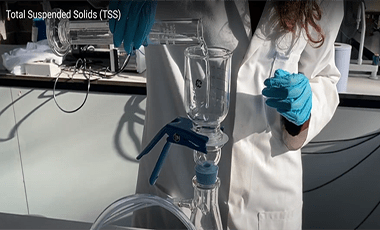
Improving Access to Practical Elements of Environmental Engineering
In an applied subject – such as engineering – practical, hands-on learning opportunities are invaluable. Student and external examiner feedback has emphasised the value that students place on laboratory and practical classes, and the desire to incorporate more of these activities into the modules offered. This project focuses on two modules which are delivered simultaneously to two cohorts of students; in-person and online.

Immersive Technology in Education: A Collaborative Learning Initiative
This project is underpinned by an innovative short online course on Immersive Technology in Education. It stems from the research of Rachel Farrell, UCD School of Education, in the area of ‘democratic pedagogical partnerships’ (Farrell, 2021) in teacher education and is designed and facilitated by post-primary school teacher Mark Baldwin of SchooVR.