


Coding theory is a major component of Applied Algebra. It has many applications in the mathematics of communications and has many links with other scientific disciplines, such as electrical engineering and computer science. Coding theory arises in almost every imaginable digital communications and storage system. In UCD, it is taught at the undergraduate level in the module MATH30180 An Introduction to Coding Theory.
About this initiative
The Literature Wall project aims to create a pioneering digital space for collaborative student engagement and academic integrity practice in English as part of the BA Arts programme at SETU. This is more vital than ever when we consider the multiple challenges to active student engagement that are presented by Generative AI.
Phase 1 delivered a functioning prototype, i.e. a visually engaging wall that could be demonstrated to stakeholders. You can find the link for this here.
SATLE priority area: Academic Integrity
Context and needs addressed:
Phase 1 of the Literature Wall initiative established a digital proof of concept, showcasing a poem at the centre of a first-year English module alongside student commentary. The pedagogical aim of this was to create an interactive, Challenge-Based Learning (CBL) space and to invite students to become co-creators of knowledge. This was an innovative way of promoting academic integrity and mitigating the influence of Generative AI in the classroom, something which will become even more important as AI agents now enter the educational space.
Goals and key activities
- Develop students’ confidence in their own voices through reflective work, facilitated group discussions and small group collaboration. Students reported enhanced confidence in taking part in structured, low-stakes tasks that also helped to socialise first-year students (comments are provided in Section 7).
- Design and build a “proof of concept” Literature Wall that could display curated literary content and student commentary within a central campus location;
- Integrate the Literature Wall into a first-year English module (titled “Introduction to Literary Criticism and Composition”), inviting students to produce and refine written reflections on core texts (here, the poem “Fugue for young fugitive” by Nidhi Zak/Aria Eipe, and selected works of literary criticism) during weekly tutorials;
- Facilitate regular student collaboration and structured classroom discussions to generate commentary for the Wall;
- Pilot and document the process of gathering, selecting, and presenting student work for public display, embedding formative peer review into the process.
Stakeholders:
- Dr Jenny O’Connor, Department of Arts: Co-ordinated project phases and student engagement;
- Cheryl Brewster and Kevin Power, Walton Institute design team: Responsible for technical development and creation of prototype.
- First-year BA Arts students, who were active co-participants, and engaged directly in the creation and revision of Wall content.
Challenges and solutions:
Technical/logistical:
Initial challenges involved designing an interface that could clearly display both literary content and evolving student commentary in a visually engaging, accessible manner. These were addressed through iterative prototyping and frequent feedback from students and staff. Students had the opportunity to meet with the design team and discuss particular barriers to effective design, e.g. they suggested that we should include colours for wire frames that were appropriate for people with learning difficulties. This type of engagement was very important and gave students a sense of ownership over the design as well as the content.
Student engagement:
Some students were initially apprehensive about providing comments that might be available to the public. This was mitigated through structuring the commentary tasks as graded, low-stakes components of the module and collaboratively selecting what we believed to be the most useful comments for display and then further editing or improving them.
Academic integrity:
It was important that students understood and valued authenticity and originality in the chosen comments. In-class discussions and moderator oversight by staff was crucial in helping to guide critical analysis in this respect. Discussions on the comments for the Literature Wall were all face-to-face, meaning that there was very little temptation or desire on behalf of the students to use GenAI for any part of the process.
Critiquing GenAI:
It is often difficult to mitigate GenAI use, particularly among students who feel a lack of confidence in their own voices. By focusing the module on a poem beyond GenAI’s reach, students had to develop close reading and poetry analysis skills and collaborate with one another. However, they were also actively encouraged to critically examine the reliability of GenAI outputs in the classroom and reflect explicitly on issues of academic integrity. One assignment during the module involved engaging directly with GenAI about the poem. Reflections then identified hallucinations, poor analysis or problematic assumptions in the GenAI output.
Sustainability:
We successfully demonstrated Phase 1 at a SATLE Seminar Series event featuring the poet Nidhi Zak/Aria Eipe (whose poem was used in the first year English module). Feedback from Phase 1 informed the identification of potential future interactive features that are needed for the continuation of the project. Furthermore, the collaborative framework established with the Walton Institute and academic staff enables continuous iterative refinement, ensuring the sustainability of both the technical platform and pedagogical practices. Plans are in place to embed CBL approaches centred on academic integrity into additional modules, fostering transferability of this model within SETU.
Strategic alignment with national policies and relevant SATLE priority area
Phase 1 of the project demonstrated strong strategic alignment with institutional priorities centred on enhancing academic integrity within SETU, as well as national frameworks and policies on ethical GenAI use in Higher Education (HE) settings. In September 2025, SETU released a position statement on the use of GenAI that promotes “responsible, transparent, and ethical use of GenAI across our academic community” (SETU, unpublished). The NAIN Generative AI Guidelines for Educators (2023) emphasises the importance of assessments which focus on “process rather than product” (p.18) which is a pedagogical cornerstone of this project. In its Strategy 2025-2028 document, one of NAIN’s stated main goals is to “empower its members to foster a culture of academic integrity” (p.9). Furthermore, the government will update its National Digital and AI Strategy in 2025 to reflect the current digital landscape and the importance of enhancing digital capabilities and innovative pedagogy across HE. This project aligns with the overall objectives of these policies and strategies and offers ways to address the challenges posed by GenAI in the classroom.
The Advance HE document entitled “Integrity in the era of Generative AI: co-creating principles for ethical practice in learning, teaching and assessment” (Hack 2023) outlined fears and hopes for GenAI in HE and underlined the importance of AI literacy, ethical awareness, critical thinking, emotional intelligence and capacity to learn. It also identified problem-based learning (which is closely aligned to CBL), team-based work, creativity, and innovation as the best methods by which to offset fears. By embedding structured reflection, transparent digital authorship practices, and collaborative critique of AI-generated outputs, the project proactively supports the Academic Integrity pillar of the SATLE Impact Award. It also aligns with commitments under the QQI’s White Paper on Academic Integrity (2024) that points to the importance of maintaining academic integrity through valid and robust assessment that encourages reflection and ongoing discussion between students and staff.
The project’s critical digital literacy focus is highly relevant to all SETU programme learning outcomes concerned with preparing graduates for ethical professional practice. At the institutional level, it complements SETU’s Strategic Plan 2023-2028 by embedding academic integrity as a foundational element of the student experience and supporting visible, student-centred learning environments. The project’s pedagogical approach cultivates the student voice and encourages accountability and ownership over students’ own academic work. It also fosters critical engagement with integrity issues such as intellectual property, citation, and the ethical use of AI. The choice to focus module content on a poem unavailable online to date encourages students to develop authentic insights beyond GenAI’s capacity, offering a way to interrogate AI hallucinations and misinformation. However, this aspect of the project is not fixed and the Literature Wall offers the potential to showcase many ways in which incoming GenAI challenges might be productively addressed. Overall, the Literature Wall initiative responds thoughtfully to institutional and national policies related to academic integrity, positioning itself as a model for digitally enhanced, integrity-focused pedagogy, with potential for scalable impact both within SETU and across the HE sector.
Innovation in specified SATLE priority area
The Literature Wall is an innovative pedagogical initiative that offers opportunities to address contemporary academic integrity challenges through student empowerment. First, the development of a non-programmable prototype demonstrates stable and scalable innovation that aims to ensure sustainability. This approach enables the careful co-design of key pedagogical features, promotes user-centred refinement, and ensures the tool’s continued relevance as student and staff needs evolve.
Central to its innovative value is the integration of CBL approaches and visible public engagement. By requiring students to collaboratively interpret literature and publicly share their analysis, the Literature Wall creates a learning space where academic accountability, authorship, and reflective scholarship are modelled in real time. To date, the use of a central poem not available to GenAI has enabled authentic, collaborative meaning-making and has highlighted the critical reasoning that must underpin academic work as AI agents enter the academic landscape. Students not only learn to “stand over” their own ideas but also to critique and question automated claims; thus, they learn to engage with GenAI as an object of analytical enquiry rather than a passive tool. This is an important response to growing anxiety about originality, plagiarism, and AI hallucination in HE.
The technical design of the Literature Wall facilitates the aims of the project. Its hardware and software choices are modular, portable, and scalable and this allows for reconfiguration across multiple campus venues. The deployment of robust, user-friendly display environments, supported by iterative collaboration with the Walton Institute, means the tool is not constrained to a single teaching use-case but may ultimately provide outreach, assessment, and cross-curricular opportunities as well. The design will enable the pedagogical objectives of the project to be borne out and will make the work of BA Arts students more visible on campus, which is an added bonus.
Innovation is also evident in the comprehensive embedding of academic integrity education throughout the project. Students act as ethical practitioners and analysts, responding to GenAI outputs, reflecting on the nuances of citation, attribution, editorial process, and digital authorship. The Literature Wall supports collective authorship and peer feedback while maintaining transparency about individual and group contributions. The project offers a replicable model for addressing integrity issues that can be documented and shared within and beyond SETU.
Finally, the Literature Wall’s role as a student-facing, public forum is itself an institutional innovation, potentially serving as a way of facilitating community dialogue on academic integrity, digital literacy, and pedagogical practice. The programming and assessment structures developed through this initiative lay the groundwork for continual iteration: feedback from users (students) is not only welcomed but structurally embedded, ensuring that the project’s successes and challenges directly shape both its present use and future iterations. Ongoing evaluation and monitoring of student engagement, and collaboration with the design team to ensure scalability and practicality, will ensure that the Literature Wall is retained as a sustainable, innovative response to academic integrity issues in Irish HE.
Outcomes
| Outcome | Quantitative / Qualitative Indicator |
|---|---|
| Increased student ownership of learning | Student reflections outlined growth in ownership of learning and accountability. Comments from students are provided in Section 7 on this document. |
| Enhanced student understanding of academic integrity and GenAI limitations. | In-class feedback and structured reflections indicated increased student awareness of GenAI hallucinations and limitations. |
| Successful development of digital display technology as a scalable, reusable teaching tool within the Arts department. | The prototype of the Literature Wall is available to view. |
| Strengthened partnerships between academic staff, technical experts and students, facilitating innovative approaches to academic integrity through technology. | Minutes of meetings; notes from collaborative sessions between stakeholders; student feedback. |
| Scalable design possibilities | Collaboration between stakeholders supports the potential use of the Literature Wall in other modules or departments. |
Impact
Potential for replicability and wider institutional/sectoral impact
Phase 1 of the Literature Wall demonstrated a clear, replicable model for innovation in student engagement and academic integrity within HE. The format of the next iteration of the Literature Wall can adapt to multiple campus locations and disciplines. The collaborative, CBL approach can also offer a practical roadmap for other institutions seeking to mitigate GenAI challenges and promote original student work in visible ways.
Improvements to teaching and learning
The Literature Wall delivered multiple tangible benefits for teaching and learning at SETU. Students were tasked weekly with analysing aspects of the complex central poem and developing authentic, evidence-based responses, which they presented for class peer review. Tutorial structures promoted accountability, collaboration and reflection, fostering greater ownership of academic ideas and supporting the development of close reading skills. Marks were awarded for meaningful engagement, motivating regular attendance and active participation. Discussions on the quality of student commentary also formed the basis of discussions around what constitutes effective academic critical evaluation or analysis. The project enabled peer learning and more sustained classroom discussion about digital authorship, academic integrity, and the strengths and limits of AI-generated analysis.
Strategic partnerships and collaboration
Collaboration was embedded at every stage of Phase 1. The initiative brought together an Arts lecturer and 115 first year students with the technical design team at the Walton Institute. Pedagogical aims remained at the core of technical development, with student and staff input directly shaping the final prototype. Consultations between stakeholders took place in the classroom and outside (via in-person and Zoom meetings, and email). Management in the School of Humanities and SETU Marketing staff were given demonstrations of the prototype and the poet whose work was studied by students (Nidhi Zak/Aria Eipe) visited the campus and also saw the workings of the Literature Wall. The collaborative and community-facing potential of the Wall was commented upon by all, and Zak/Eipe spoke of being honoured to have her work displayed in a HE institution in this way.
Plans for Embedding project/initiative learnings into future T&L work
Phase 1 concluded with the provision of the Literature Wall prototype and the team then considered how to broaden out the scope of the project. Lessons learned about collaboration, formative peer review, and the technical management of public-facing commentary will inform future iterations. Insights about accountability, digital literacy, and active learning are being disseminated through teaching and learning showcases (one of these will take place in TUS in November 2025 as part of Science Week). Future teaching and learning work will focus on how to embed CBL approaches to academic integrity across other modules. This approach is invaluable in offering students an alternative approach to GenAI integration that does not engage in the type of cognitive offloading that can be detrimental to our students’ intellectual development.
Evidence of Achieved Impact
Over the course of Semester 1, 2024, students engaged in the following: instruction and debate on what constitutes academic integrity in the classroom and beyond; eight dedicated classes for Literature Wall commentary (including peer review and refinement of chosen comments); and a collaborative assignment that asked students to engage with GenAI analyses of the poem and then reflect on the accuracy, effectiveness and verifiability of what was produced. A SATLE-funded seminar with the author of the central poem took place in Semester 2. Here, the prototype of the Literature Wall was displayed and students could engage with the poet in an informal capacity.
The project provided a range of benefits at local and institutional levels. Anecdotal evidence and module survey comments from students showed an increased sense of ownership and accountability over their learning and work, enhanced understanding of GenAI, and greater confidence in collaborating and voicing ideas in class. Some student comments gathered via Moodle at the end of the semester are provided below:
“Working with others for the Padlet tasks weekly was a huge help as sometimes they will have more new knowledge on the topic than you might and different opinions for discussion that broaden my view on the class topics.”
“Getting to talk with other students about the material [was invaluable]. You get to hear different perspectives. When you have to say your own views out loud it really lets you see how much you know/understand.”
“I think the best part is the activities help us understand what we’re studying more and get us to practice really thinking about it and articulating ourselves.”
These findings were further evidenced by reflective assignments that constituted graded module components. Students also reported an improved atmosphere in the classroom due to collaborative work on the Literature Wall content.
Lead organisations
Affiliated organisations
Linked open educational resources
Related initiatives
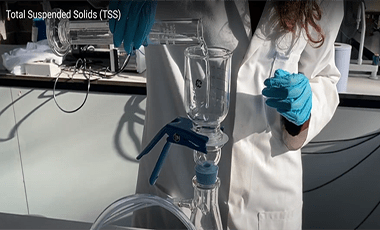
Improving Access to Practical Elements of Environmental Engineering
In an applied subject – such as engineering – practical, hands-on learning opportunities are invaluable. Student and external examiner feedback has emphasised the value that students place on laboratory and practical classes, and the desire to incorporate more of these activities into the modules offered. This project focuses on two modules which are delivered simultaneously to two cohorts of students; in-person and online.

Immersive Technology in Education: A Collaborative Learning Initiative
This project is underpinned by an innovative short online course on Immersive Technology in Education. It stems from the research of Rachel Farrell, UCD School of Education, in the area of ‘democratic pedagogical partnerships’ (Farrell, 2021) in teacher education and is designed and facilitated by post-primary school teacher Mark Baldwin of SchooVR.